
A raving light show isn't just about flicking a switch; it's about turning a gathering into a full-blown sensory experience. Think of it as painting with light to create energy, mood, and unforgettable moments that stick with guests long after the event ends. Whether it’s for a wedding, a corporate launch, or a wild party, a great light show uses technology and artistry to make the space feel alive.
Your Blueprint for a Mind-Blowing Light Show
Look, amazing light shows don't happen by accident. They start with a solid plan long before you even think about plugging in fancy gear. This is your blueprint for turning a cool idea into a real, impactful concept that actually works. It’s where your creative vision gets a reality check from logistics to make sure the end result is stunning, professional, and hits all the right notes for the event.
Nailing the Mood and Vision
Before you even touch a single light, you’ve got to figure out the vibe. What's the goal here? Are we going for the classy, romantic feel of a wedding reception, or the high-energy, hyped-up buzz of a new product launch? The real trick is translating those feelings into specific lighting choices.
For example, if the keyword is "energetic," you're probably thinking fast-moving light beams, quick color changes, and strobes popping off in time with the music. But if the vibe is "elegant," you'd lean into slow, graceful color fades, soft uplighting in warm gold or amber, and maybe a custom monogram gobo shining on the dance floor.
The best light shows tell a story. They take guests on an emotional ride, from that initial "wow" when they walk in to the peak energy of the night.
This whole process is a journey from a simple spark of an idea to a fully fleshed-out concept.
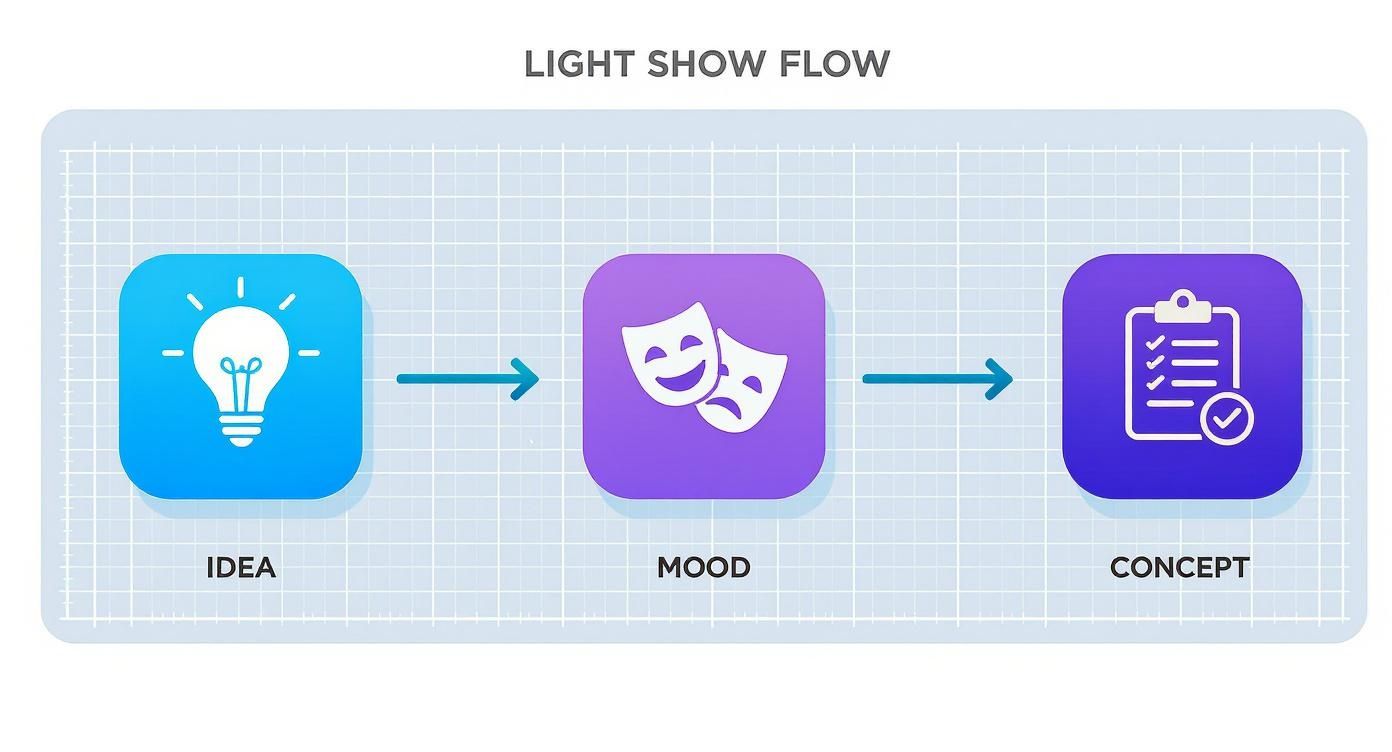
As you can see, a strong concept is built on a clear mood, and that mood comes from the initial creative idea. Get this part right, and everything else falls into place.
Getting on the Same Page with Clients and Planners
This is a team sport. You have to work closely with the clients and event planners to make sure everyone is picturing the same thing. One of the best tools I've found for this is a simple vision board. Just pull together a shared collection of images, color schemes, and even video clips that capture the look you're going for. This visual language cuts through the jargon and gets everyone on board and excited.
Today's light shows owe a lot to the past. The rave and EDM scenes of the '80s and '90s took the psychedelic light shows of the 1960s and cranked them up to eleven with new tech like lasers and programmable strobes. It’s a cool history that shaped the immersive entertainment we create today.
At the end of the day, a detailed plan makes sure every lighting cue and effect has a purpose. To make sure you've got all your bases covered, check out our comprehensive event planning checklist. It's a lifesaver for keeping everything organized and on track.
Picking the Right Lights and Effects for the Job
This is where the magic really happens. Your gear choices are what will bring your vision to life, turning a blank canvas of a room into a full-blown sensory experience. Let's get past the idea of just a shopping list and talk about what these tools actually do and how to use them effectively.
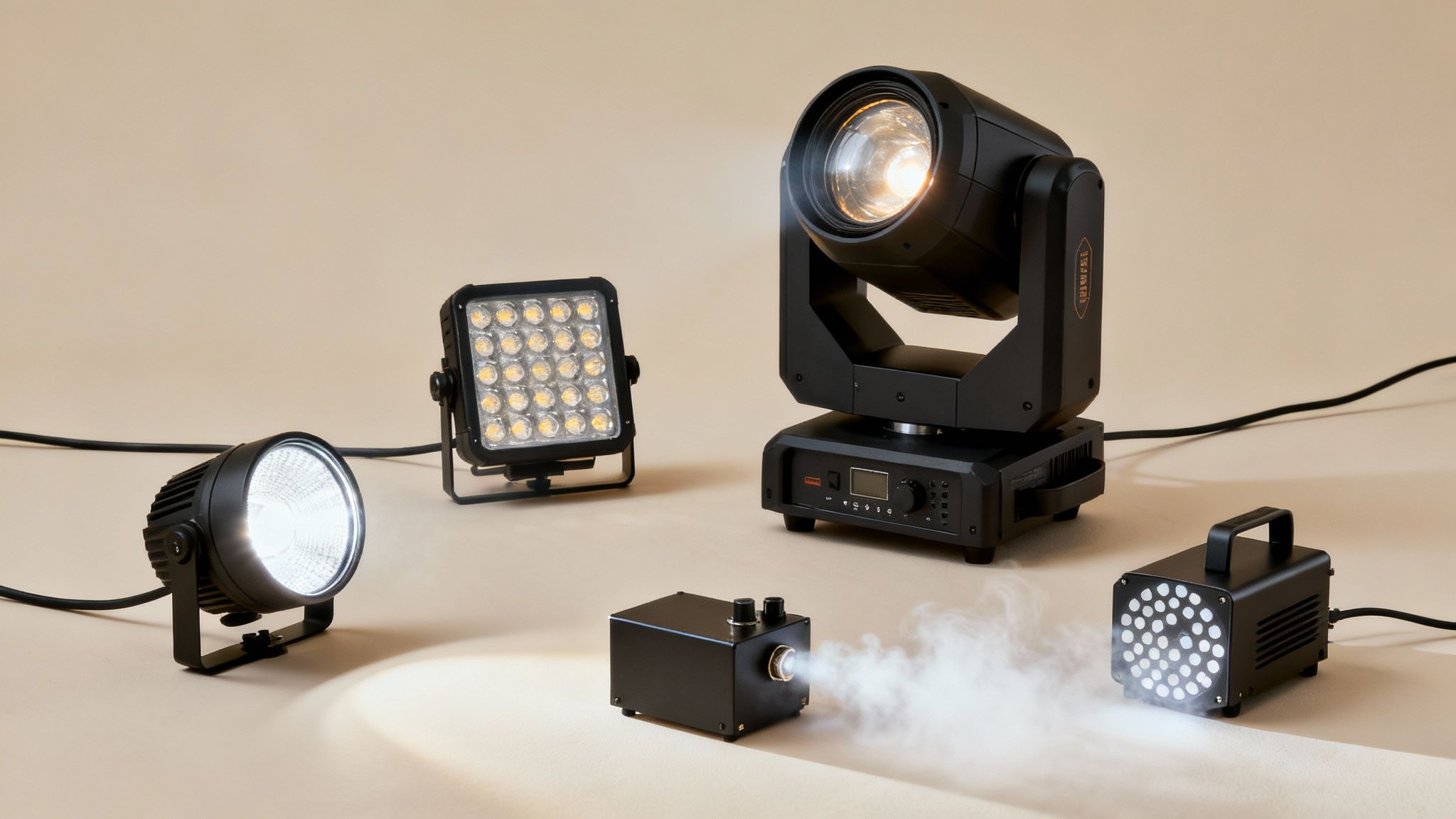
Think of moving heads as your lead actors. These are the workhorses that sweep beams of light across the dance floor and walls, creating that dynamic energy everyone loves. For a wedding's first dance, you could program a slow, romantic sweep. At a corporate launch party? You’d go with fast, sharp movements to build excitement. Their versatility is unmatched.
Building Atmosphere and Making an Impact
Before the main event kicks off, you need to set the mood. That's where your supporting cast of lights comes in.
Uplighting is probably the single most effective way to transform a venue's vibe. Just placing a few of these static lights at the base of walls, pillars, or drapes can wash the entire space in your event's colors. It’s what makes a generic ballroom feel custom and high-end.
Then, when you need to kick the energy up a notch, nothing beats strobe lights. I'm not talking about leaving them on all night—that's a headache waiting to happen. But a quick, perfectly timed blast during a song's drop? That's the stuff of epic party moments. It's all about precision.
To really make your light beams visible, you absolutely need haze or fog. A thin layer of haze catches the light, making every beam from your moving heads and lasers cut through the air. Without it, you just get dots on the walls. With it, you get a breathtaking, three-dimensional show.
Adding Those Signature "Wow" Moments
This is where you get to add a personal touch and create those moments people will be talking about long after the party's over.
- Custom Gobos: A gobo is basically a stencil you put inside a light to project a pattern. Think of a newlywed couple's monogram shining in the center of the dance floor or a company's logo splashed across a feature wall. It's a simple trick that looks incredibly polished.
- Cold Sparks: Want a show-stopping grand entrance or a huge finale? Cold spark machines are your answer. They shoot fountains of glowing sparks that are completely safe to touch, giving you all the drama of pyrotechnics without any of the danger. Perfect for indoor use.
Understanding the tech behind these effects, like digital LED sign technology, can give you a real leg up when choosing gear that packs the most visual punch for your budget.
A killer light show isn't about having the biggest, most expensive lights. It’s about using the right gear to tell a story and make people feel something.
Here's a quick rundown of the essential gear and what each piece is really good for.
Essential Light Show Equipment and Their Best Uses
| Equipment Type | Primary Function | Best For |
|---|---|---|
| Moving Heads | Create dynamic, sweeping beams of light and patterns. | High-energy dance floors, stage performances, grand entrances, and product reveals. |
| Uplighting | Wash walls and architectural features with static color. | Setting the overall mood, branding an event with specific colors, adding depth to a room. |
| Strobe Lights | Emit intense, rapid flashes of light for dramatic effect. | Peak moments in music, high-energy builds, creating a "freeze-frame" effect on the dance floor. |
| Haze/Fog Machines | Make light beams visible in mid-air. | Any event using moving heads or lasers; essential for creating a 3D lighting environment. |
| Custom Gobos | Project monograms, logos, or patterns onto surfaces. | Weddings (monograms), corporate events (logos), themed parties (custom patterns). |
| Cold Sparks | Create safe, non-flammable pyrotechnic-like effects. | Grand finales, special announcements, cake cuttings, and dramatic introductions. |
Choosing the right mix from this list is what allows you to build a show that can go from subtle and elegant to a full-on rave. It's all about having a flexible toolkit.
For a deeper dive, our guide on the best lights for a dance floor has even more practical tips you can put to use right away.
Making Your Lights Dance to the Music
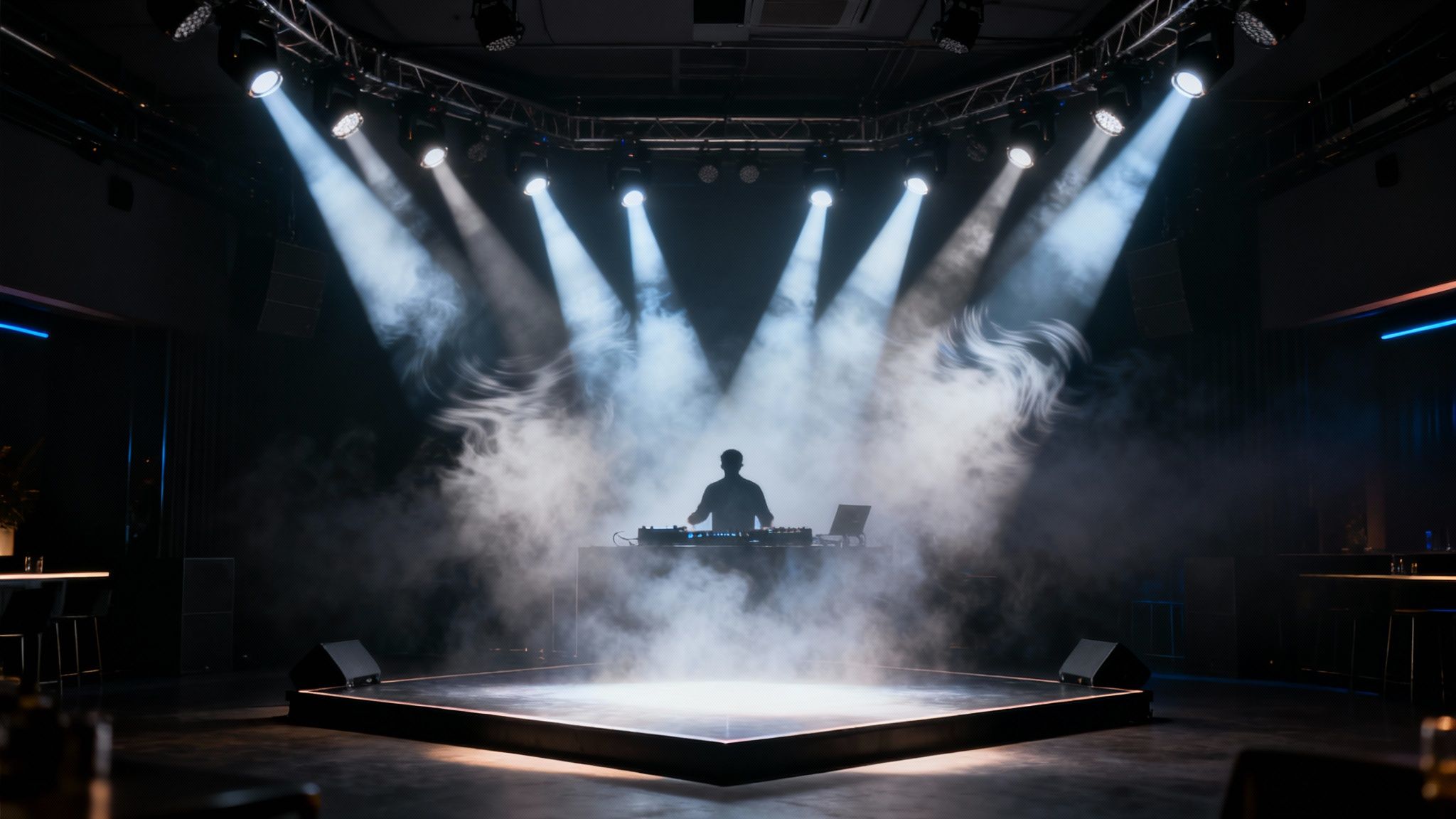
Anyone can set up some flashing lights. But the real magic, the thing that turns a regular party into an unforgettable rave experience, happens when the lights and music become one. It’s that moment when every flash, every color change, every moving beam feels perfectly connected to the beat. This isn't just about random blinking; it's an art form, and it's what separates a professional lighting designer (LD) or video jockey (VJ) from the rest.
The idea of blending light and sound to create something bigger isn't new. It has wild roots stretching all the way back to the psychedelic '60s and '70s. Think of the Merry Pranksters' legendary 'Acid Tests,' where free-form music collided with chaotic, flowing light shows to create a sensory overload. That's the foundation of what we do today—creating a powerful synergy between what people see and what they hear.
Sound-Activated Mode: A Simple Start
Getting started doesn't have to be complicated. For a smaller gig, like a backyard party or a casual get-together, many modern lights come with a built-in sound-activated mode. A tiny microphone inside the fixture listens for noise and triggers changes. It's the "set it and forget it" option.
The catch? It’s not very smart. The microphone reacts to any loud sound—clapping, shouting, you name it—not just the rhythm of the music. This can get messy and chaotic pretty quickly. It's a fun entry point, but if you want that polished, professional feel, you'll need to take the next step.
Stepping Up to DMX Programming
This is where the real pros play. DMX (Digital Multiplex) is the universal language of professional lighting. It’s a protocol that lets a central controller or software program talk to every single light, giving you absolute control over every function—color, movement, intensity, you name it.
With DMX, you can pre-program entire lighting sequences, or "cues," right down to the second. Imagine a bride and groom's first dance where the spotlights gracefully follow their every move, or an awards ceremony where the lighting builds to a dramatic crescendo for the big winner. DMX makes those flawless, perfectly timed moments possible, every single time.
The Art of Live "Busking"
So what happens when the music is unpredictable, like during a live DJ set? That’s where busking comes in. Busking is the art of operating the lights live, on the fly, reacting in real-time to the music and the energy of the crowd. Forget pre-programmed sequences; this is pure improv.
A seasoned LD becomes a true partner to the DJ. They’re listening intently, anticipating the drops, the builds, and the breakdowns. They'll have their controller mapped out with different effects ready to go—blinding strobes for a big drop, a slow, gentle color wash for a melodic part—creating a visual story that perfectly matches the DJ's mix.
This kind of collaboration is what creates legendary nights. The LD and DJ feed off each other's energy, building a cohesive audio-visual experience that hits the audience on a whole other level. To pull this off, you need the right gear and seamless coordination. You can get a better sense of the technical pieces involved by exploring professional DJ sound solutions.
Getting the On-Site Setup and Safety Just Right
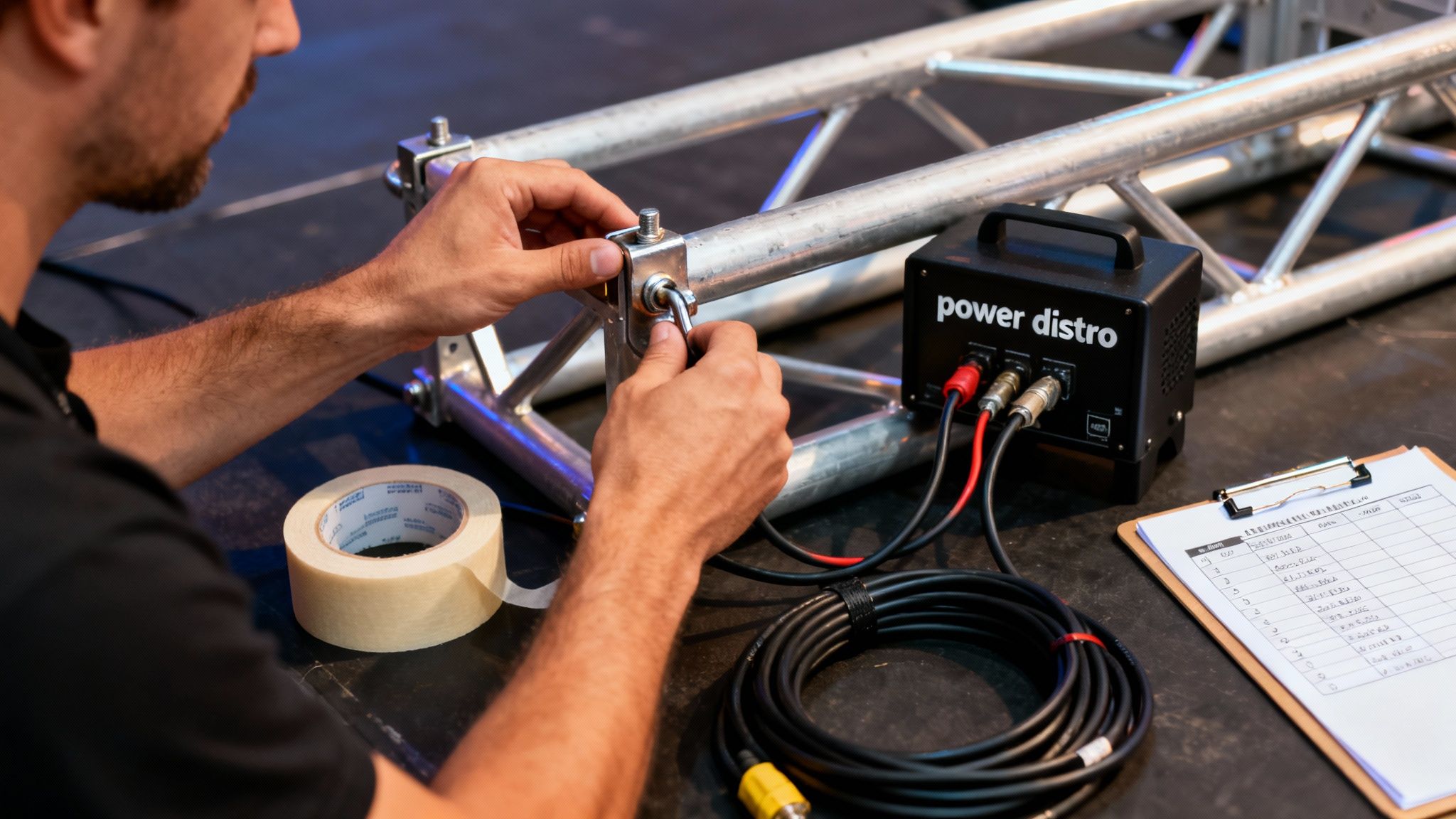
Okay, this is where the rubber meets the road. You can dream up the most amazing light show, but if the technical side isn't dialed in, the whole thing can fall apart. A killer show is built on a flawless setup, and that all begins with a good, hard look at the venue way before show day.
Think of yourself as a detective during that initial walk-through. You're hunting for problems before they become full-blown disasters. Are the ceilings so low your trussing won't fit? Can you even find any structural points to rig from? Spotting these headaches early gives you time to tweak your design instead of panicking on-site with the client looking over your shoulder.
The Power Play: Getting Your Electrical Needs Sorted
Let's get straight to the most important thing: power. Nothing kills the energy of a packed dance floor faster than a tripped breaker. It’s an absolute show-stopper, and you want to avoid it at all costs.
First, do the math. You need to know your total power draw by adding up the amperage of every single piece of equipment you’re plugging in. I’m talking every moving head, every hazer, even your control board.
Once you have that number, you have to find clean, reliable power sources. This means hunting down dedicated circuits that aren't already being taxed by the venue’s kitchen or the DJ's monster sound system. Never, ever just assume an outlet is good to go. Get the venue manager to walk you through their breaker panels. Pro tip: I always bring my own circuit tester to make sure outlets are properly grounded and giving me the voltage I expect.
A professional setup isn’t just about looking cool—it's about being reliable and safe all night. And that starts with a solid power plan.
Keep in mind, a standard 15-amp circuit can only handle so much. For any decent-sized rave setup, you're going to need to pull from multiple circuits. Often, this means arranging for a dedicated power distribution box, or a "distro." This isn't optional; it's the bedrock of a smooth, glitch-free show.
Safety Checks You Can’t Afford to Skip
When it comes to safety, there are zero shortcuts. Period. You have to secure every piece of gear as if you expect it to fail. Any light you hang from a truss or a stand needs a secondary safety cable. It’s a simple piece of steel wire, but it’s the thing that stops a heavy fixture from falling on someone if a clamp gives way.
Cable management is just as critical. Any wire that crosses a floor where people will be walking needs to be taped down flat and secure with gaffer tape. It’s a huge liability if someone trips. For main walkways, I strongly recommend using proper rubber cable ramps.
Finally, think about how your gear affects the environment:
- Ventilation: Haze and fog machines need good airflow. Without it, the effect looks bad, and you risk triggering sensitive smoke alarms. Always ask the venue about their fire system before you even think about turning on the hazer.
- Clearance: Powerful lights can get incredibly hot. Make sure they have plenty of space around them and aren't pointed at anything flammable, like drapes or decorations.
The last piece of the puzzle is touching base with the venue staff, the DJ, and any other vendors. A quick huddle before things get started ensures everyone is on the same page, leading to a much safer and more cohesive experience for everyone involved. And if you're pulling together a big rig, looking into a quality event lighting rental can get you professional, well-maintained gear that makes the whole setup process safer and way more efficient.
Crafting Your Event's Run-of-Show
Look, a killer light show doesn't just happen by accident. It feels like a seamless journey for the guests, but behind the scenes, it's all meticulously planned. That plan is your run-of-show—a detailed timeline that's your bible for the entire event, from the moment you unload the first road case until the last cable is coiled.
Think of it as the playbook that keeps everyone on the same page and guarantees a pro-level execution.
From Load-In to Light Check
Your day starts hours before the doors even open. A common rookie mistake is not scheduling enough time for setup. Your run-of-show needs to have a generous window blocked out for load-in, giving your crew plenty of breathing room to build trusses, rig the moving heads, and run what feels like miles of cable without feeling the pressure.
Most importantly, you absolutely have to schedule dedicated time for programming and testing. This is non-negotiable. It's your only chance to dial in the cues, test every single fixture, and make sure everything fires exactly when you need it to before the show goes live.
Pacing the Energy with Light
The lighting needs to tell a story throughout the night, building and releasing energy along with the event itself.
-
The Arrival: As guests walk in, the vibe should be inviting, not in-your-face. I usually go with static uplighting in the event's core colors and maybe a soft, elegant gobo projection on a wall. You're just setting the mood and building a little anticipation.
-
Dinner & Mingling: Once things settle down, you can introduce some life into the room. Think slow, subtle movements from the moving heads and gentle, almost imperceptible color fades. The goal is to add ambiance without distracting from conversations.
-
Showtime!: When the main event kicks off—the first dance, the CEO's keynote, or the DJ dropping the first big track—the lights have to match that energy spike. This is where you unleash the real raving light show. The moving heads start dancing, strobes pop for emphasis, and all your effects work in perfect sync to create that "wow" moment.
Your run-of-show is a living document. You need to map out the big, unmissable moments—like the grand entrance or a product reveal—but also build in the flexibility to vibe with the crowd, especially when a DJ is reading the room.
The Lighting Arc: From Peak to Send-Off
Your show should have a clear arc. It builds to a massive peak during the high-energy dancing, then gracefully winds down as the night comes to a close.
For the grand send-off, something dramatic like a tunnel of cold sparks or a classic spotlight on the departing couple creates that final, picture-perfect memory. And don't forget the after-party! Once the dust settles, a solid plan to create a standout highlights video is crucial for capturing all those amazing visuals and showing future clients what you can do.
A Professional Wrap-Up
Your job isn't over when the last song plays. The teardown is just as critical as the setup. Your run-of-show must schedule enough time for the crew to safely de-rig everything, wrap cables neatly (no "spaghetti" piles!), and load out without causing chaos. Leaving the venue cleaner than you found it is the mark of a true pro and the easiest way to get invited back.
Sample Event Lighting Timeline
To give you a better idea of how this all flows together, here’s a sample timeline for a typical 5-hour event. It shows how the lighting evolves to match the mood of each phase.
| Time Slot | Event Phase | Lighting Style & Intensity | Coordination Notes |
|---|---|---|---|
| 6:00 – 7:00 PM | Guest Arrival & Cocktails | Subtle & Elegant. Static uplighting, soft gobos. | Coordinate colors with event planner. Keep levels low for mingling. |
| 7:00 – 8:30 PM | Dinner & Speeches | Atmospheric. Slow color fades, gentle movement. | Have a spotlight ready for speakers. Keep effects off the tables. |
| 8:30 – 9:00 PM | Formalities (First Dance, etc.) | Romantic & Focused. Spotlight on key moments. | Cue lighting changes with the MC's introductions. |
| 9:00 – 10:30 PM | Open Dance Floor (Peak Energy) | High-Energy Rave! Full moving heads, strobes, haze. | Sync with DJ's BPM. Operator should be actively mixing lights. |
| 10:30 – 11:00 PM | Winding Down & Send-Off | Dramatic Finale. Cold sparks, spotlight on exit. | Time the final effect perfectly with the last song and guest departure. |
Think of this table as a starting point. Every event is different, so you'll need to adapt your own run-of-show to fit the specific schedule and desired atmosphere. The key is to plan ahead so you can be flexible in the moment.
Alright, let's talk about the part that makes or breaks any great idea: the money. Putting together a truly killer raving light show comes with real costs, whether you're bringing in a pro team or going the DIY route. Getting a handle on these expenses from the start is the key to creating a realistic budget that won't give you a nasty surprise later.
The big-ticket items are pretty straightforward. You've got equipment rental, which is everything from the moving heads and strobes to the trussing that holds it all up and the haze machine that makes those light beams pop. Then there's labor—you're paying for the skilled techs who know how to safely set everything up, run the show flawlessly, and break it all down when the party's over.
But don't overlook the brainpower behind the magic. Design and programming time is a huge piece of the puzzle; this is where someone sits down and turns a creative vision into the perfectly timed sequences that will blow everyone away. Toss in logistical costs like travel and insurance, and you've got a full picture.
Building Your Pricing Packages
If you're new to offering lighting services, tiered packages are your best friend. They make it super easy for clients to see what they get for their money and choose an option that fits their event and their wallet.
Here are a few package ideas you can run with:
- The Party Starter: Perfect for smaller weddings or intimate gatherings. Think foundational uplighting to color the room, a couple of moving heads to get the dance floor moving, and a simple haze machine. It’s all about high impact with low complexity.
- The Main Event: This is your go-to for bigger parties or corporate gigs. It includes everything from the starter package but adds more moving heads for better room coverage, a custom gobo with a company logo or monogram, and a dedicated lighting operator to run the board.
- The Grand Production: For those who want it all. This is for high-end weddings and major corporate events. We're talking advanced effects like cold sparks, a more elaborate truss design, and a dedicated lighting designer who crafts a completely custom show from the ground up.
Believe it or not, large-scale light shows have been around for a while. Back in the 1960s, liquid light shows could use over 30 projectors and a whole team of operators. It just goes to show that the desire for immersive visual experiences is nothing new. You can dive deeper into the history of these old-school productions on Wikipedia.
At the end of the day, your pricing isn't just about your gear and your time. It's about the incredible atmosphere and unforgettable experience you're creating for everyone in the room.
And of course, lights and sound go hand-in-hand. To give your clients a complete quote for their event production, it’s a good idea to know what typical sound system rental prices look like, too.
Got Questions About Raving Light Shows? We’ve Got Answers.
Thinking about bringing a full-on light show to your event? Awesome. You probably have a few questions floating around. Let's tackle the ones we hear most often so you know exactly what to expect.
Will a Raving Light Show Work in My Venue?
The short answer is: probably! We can make magic happen in most spaces, but some venues are definitely more light-show-friendly than others.
High ceilings are a huge win. They give the light beams from moving heads tons of space to sweep across the room, creating those epic, immersive effects you're looking for. We also need to scout out the power situation—having access to several stable circuits is a must. A quick site visit before the event is the best way to assess the potential and map out a plan.
Are Haze Machines Going to Set Off the Fire Alarms?
This is a big one, and something we take very seriously. You can relax—modern professional hazers are not the smoke machines of the past.
We use high-end, water-based hazers that create a super-fine, light mist. It’s this thin haze that catches the light beams and makes them visible, but it's generally not dense enough to trigger modern smoke detectors.
That said, we always touch base with the venue manager beforehand. Every fire system is different, so we work with them to get the green light and, if needed, coordinate the temporary, safe bypassing of specific sensors in the performance area. No surprises, just a great show.
Planning an energetic light show for an event in Fort Atkinson, Southern Wisconsin, or Northern Illinois? 1021 Events can coordinate dynamic dance-floor lighting with professional DJ/MC entertainment, uplighting, pixel tubes, and other enhancements. Explore our lighting and event services, then send an inquiry through EMP DJ to discuss your venue and date.