
When you're staring at a spreadsheet overflowing with venue deposits, floral arrangements, and catering bills, the average wedding photography cost can feel like just another big, scary number. It’s a significant part of any wedding budget, that’s for sure.
Across the U.S., you can generally expect to spend somewhere between $3,500 and $7,000 for a seasoned professional. But remember, that number isn't just for someone to show up and snap a few pictures. It's a real investment in capturing the memories of one of the most important days of your life.
What Is the Real Average Wedding Photography Cost
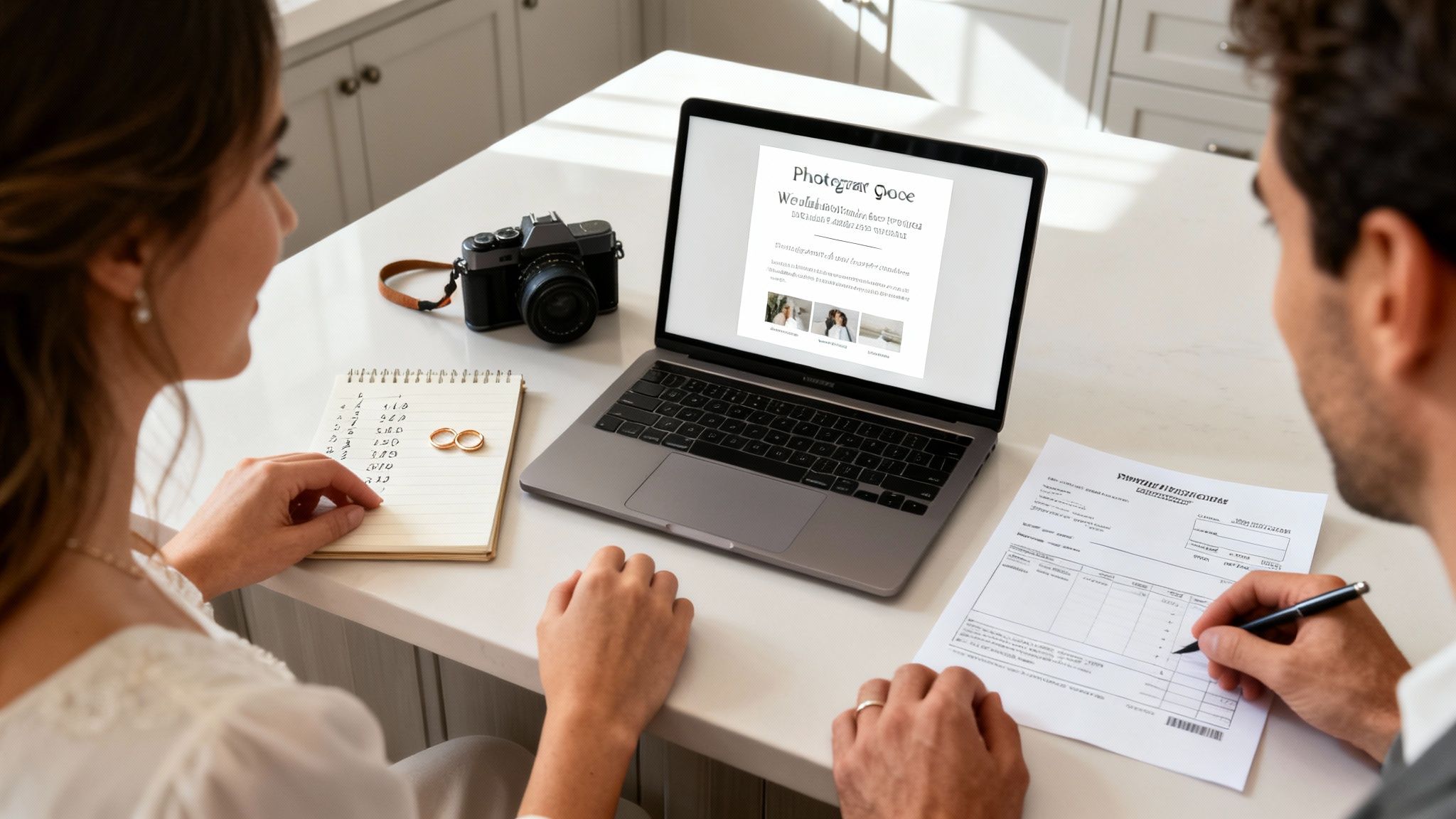
Okay, let's cut through the noise and get down to what you'll actually be paying. That national average is a decent starting point, but the final price tag really boils down to three big things: the photographer's experience, what’s included in their package, and where your wedding is happening.
It’s just a fact of life that a top-tier photographer in a major city like New York or Los Angeles is going to have higher rates than one in a smaller town in the Midwest. Location matters. A lot.
Average Wedding Photography Costs by US Region
To give you a clearer picture of how much geography plays a role, here’s a quick breakdown of what you can expect to see in different parts of the country.
| Region | Typical Price Range |
|---|---|
| Northeast (e.g., NY, MA, NJ) | $5,000 – $10,000+ |
| West Coast (e.g., CA, WA, OR) | $4,500 – $9,000+ |
| South (e.g., TX, FL, GA) | $3,500 – $7,500 |
| Midwest (e.g., IL, OH, MN) | $3,000 – $6,500 |
| Rocky Mountains (e.g., CO, UT) | $4,000 – $7,000 |
As you can see, the numbers can swing quite a bit depending on where you're tying the knot.
Understanding the Different Price Tiers
I find it helpful to think about photographers in different tiers. Each one offers a unique level of service, quality, and, of course, price.
For 2025, you’ll see a wide range. A newer photographer just starting out might charge between $1,000 and $3,000. This can be a great budget-friendly option, but you're taking a bit of a gamble on their consistency and experience.
On the other end of the spectrum, you have luxury photographers. These are artists with a highly specialized style and a long list of rave reviews. They can cost anywhere from $8,000 to $20,000 or even more, but you're paying for a truly premium, white-glove experience. You can find more detailed pricing breakdowns and learn about the factors that influence photographer costs in this 2025 guide.
For most couples, the sweet spot is right in the middle with established professionals. Their pricing reflects not just their incredible talent but also the security that comes with a legitimate business—we're talking backup gear, insurance, and a proven track record of delivering gorgeous galleries, rain or shine.
What Does a Typical Package Include
So, what does that mid-range average actually get you? When you book a professional photographer, a standard package usually covers the essentials.
Here’s what’s typically included:
- 8 Hours of Coverage: This is usually enough time to capture everything from the final moments of getting ready all the way through the main reception events like the first dance and cake cutting.
- A Single Lead Photographer: You're hiring the main artist whose portfolio and style you fell in love with.
- A High-Resolution Digital Gallery: After the wedding, you'll get hundreds of professionally edited images delivered through a private online gallery. From there, you can download, print, and share them with everyone.
- Print Rights: This is a big one! It gives you the legal permission to print your photos wherever you want for your own personal use.
Getting a handle on these basics is the first step in comparing different photographers and their packages. It’s also good to remember that photography is just one piece of the media puzzle. As you map out your budget, you’ll also want to look into the average cost of a wedding videographer to see how both services can work together. This foundation helps you make a smart, informed decision, so you know exactly what you’re paying for.
Why Do Wedding Photography Prices Vary So Much?
Ever get a wedding photography quote for $2,500, only for the next one to come in at $12,000 for the exact same day? It’s enough to make your head spin. But that huge gap isn't random—it's tied to a handful of specific factors that define a photographer's value.
Think of it like buying a car. A base model gets you from A to B, but a luxury sports car offers a totally different experience, performance, and level of craftsmanship. The same logic applies to photographers. You’re not just paying for someone to click a button; you're investing in their skill, service, and unique artistry.
Experience and Skill: The Engine Under the Hood
The single biggest driver of cost is experience. A seasoned pro who has shot hundreds of weddings has seen it all. They’ve mastered tricky lighting, wrangled chaotic family photos with a smile, and developed an intuition for capturing moments you didn't even know were happening.
A newcomer might have a fantastic eye, but they're still learning the ropes and building their portfolio. They charge less because, frankly, there's a bit more risk involved. Paying more for an experienced photographer is really about buying peace of mind.
A professional photographer invests an average of 70 hours of work into a single wedding. This includes all the emails, planning calls, travel, shooting on the day, and then roughly 45 hours spent carefully culling and editing your photos.
That massive behind-the-scenes effort is a huge part of what you're paying for. It’s the difference between a folder of raw snapshots and a polished, curated gallery that tells the story of your day.
The Package and Deliverables: All the Upgrades
Just like adding leather seats or a killer sound system to a car, the items in a photography package can change the price tag dramatically. These are the "upgrades" that create a more complete experience.
Here’s what typically moves the needle:
- Hours of Coverage: Most standard packages cover about 8 hours, which is great for the core parts of the day. But if you want everything from the mimosas at 9 AM to the sparkler exit at midnight, you’ll need to add more time.
- A Second Shooter: Having a second photographer is a game-changer, especially for larger weddings. They can capture your partner's reaction as you walk down the aisle, get more candid shots of your guests, and provide a whole different perspective.
- Deliverables: The final product matters. Are you happy with a digital-only gallery, or are you dreaming of a gorgeous, custom-designed Italian leather album? High-end albums, parent albums, and professional prints are premium add-ons that add significant value.
- Engagement Sessions: Many photographers include these in their packages, while others offer them à la carte. They're an amazing way to get comfortable in front of the camera and score some beautiful photos for your save-the-dates.
- Specialty Equipment: Want to really elevate your gallery? Add-ons like aerial drone shots can provide breathtaking views of your venue. If you're curious, our guide on the cost of wedding drone photography breaks it all down.
Reputation and Artistic Style: The "Brand Name"
Finally, you have the photographer's reputation and unique artistic vision—their "brand name," if you will. A photographer who is in high demand, has been featured in top wedding magazines, and has a distinct, recognizable style can command higher prices. It’s simple supply and demand.
Their style is their signature. Are you drawn to a light and airy, fine-art feel? Or do you prefer a dark, moody, photojournalistic vibe? The best photographers have mastered their niche and attract couples who specifically want that look.
You’re not just hiring a technician; you're commissioning an artist whose work truly speaks to you. That artistic premium is a key part of the investment for top-tier professionals.
What’s Actually Inside a Wedding Photography Package?
When you first see a quote for $6,000, it’s natural to think, "For one day's work?" But that's the thing—it's so much more than just one day. The price you pay is a blend of the photographer's time on your wedding day, countless hours of behind-the-scenes magic, and the gorgeous, tangible products you'll treasure for decades.
Think of a photography package like an itemized receipt. It shows you exactly where your investment is going, breaking down the total cost into clear services and deliverables. So, let's pull back the curtain and see what you're really paying for.
The Visible Work: Your Wedding Day Coverage
This is the part everyone sees. It's the hours your photographer is physically there with you, capturing everything from the nervous excitement of getting ready to the final, joyful moments of your grand exit. This is the heart of their on-site job.
Most standard packages include around 8 hours of coverage, which is usually the sweet spot for telling the full story of your day. This block of time is the foundation of your package, and adding more hours is one of the quickest ways to see the price go up.
These three pillars—experience, deliverables, and reputation—are what truly shape a photographer's pricing.

As you can see, a photographer’s price isn't arbitrary; it’s built on a foundation of skill, the quality of what they produce, and their professional standing.
The Invisible Work: Post-Production and Client Care
Here’s where a massive chunk of your investment goes, and it’s work you’ll never see happen. For every single hour a photographer shoots at your wedding, they'll likely spend several more hours editing back at their studio. It’s not unusual for a photographer to dedicate 40-50 hours to a single wedding after you've already said "I do."
This behind-the-scenes grind is where the real artistry happens:
- Culling: Imagine sifting through thousands of photos. Your photographer carefully selects only the absolute best images that tell your story perfectly, so you don't have to.
- Editing & Color Correction: This is the detailed work. Every single chosen photo is meticulously adjusted for light, color, and tone to create that consistent, polished, and signature style you hired them for.
- Client Communication: Think about all the emails, phone calls, and planning meetings. All that time is dedicated to making sure your day runs smoothly and your vision comes to life.
- Album Design: If you've opted for a wedding album, your photographer will spend hours arranging your photos into a beautiful, flowing narrative—a true work of art.
This is the expert craftsmanship that transforms thousands of raw digital files into the stunning gallery you'll receive. The time and skill required for this process are a huge part of what you're paying for. If you want to learn more about spotting a pro, our guide on how to choose the right wedding photographer can help you find someone whose process you can trust.
Tangible Deliverables and Fun Add-Ons
Finally, your package includes the actual products you get to keep. The non-negotiable here is your gallery of high-resolution digital images. This almost always comes with a print release, which is the official permission you need to print the photos for your personal use.
From there, you can often customize your package with add-ons to make it your own:
- Engagement Session: This is a fantastic way to get comfortable in front of the camera (and with your photographer!) while getting beautiful photos for your save-the-dates.
- Second Photographer: For larger weddings, this is a game-changer. It guarantees more angles are covered so no important moment is missed.
- Fine Art Albums: These aren't your average photo books. They're professionally designed, heirloom-quality albums that will look stunning for generations.
- Prints and Canvases: High-quality, professional prints to hang in your home or give as gifts to your family.
When looking at packages, see if they include pre-wedding shoots or other couples photographic portrait options, as bundling these can often save you money.
A professional wedding photographer often invests around 70 total hours into a single wedding. This includes client communication, planning, travel, shooting, culling, editing, and gallery delivery. The on-site coverage is just the tip of the iceberg.
Once you understand all these moving parts, it's much easier to compare packages and see exactly how a bigger investment translates into more coverage, better products, and more of your photographer's dedicated time and expertise.
How Do Wedding Photography Costs Stack Up Around the World?
Ever wonder if you're getting a fair price? Or maybe you're dreaming of a destination wedding and have no idea what to budget. It’s easy to get sticker shock, but the truth is, the average wedding photography cost isn't some universal number. It’s a wildly different story depending on where you are.
A photographer in downtown London is playing a completely different ballgame than one shooting a romantic elopement in a quiet Italian village. The cost of living, how many other photographers are in the area, and even cultural traditions all get baked into the final price. Think of it as a global pricing map, with each country having its own unique terrain.
Let's take a quick trip around the world to see how the numbers actually compare.
What Couples Pay in North America
Here in North America, wedding photography is a pretty big line item on the budget, and prices are heavily swayed by big city markets. What you'll pay in New York City is going to be leagues away from a quote you’d get in a smaller Midwestern town, but we can still see some clear continent-wide trends.
A fantastic 2025 survey from Fearless Photographers gives us a great snapshot. They pulled data from 138 of their members to find the average for a standard package—we're talking up to 10 hours of coverage and a gallery of 600-1,000 edited photos.
Here's the breakdown:
- United States: The average wedding photographer costs about $5,800 USD.
- Canada: Our neighbors to the north can expect to spend around 4,900 CAD.
- Mexico: Heading south, the average comes in closer to $3,050 USD, which can be a more budget-friendly option.
If you’re a numbers person, it’s worth diving into their full research to see how they crunched the numbers. Knowing these regional averages is a huge help when you start getting quotes, as it gives you a solid benchmark for what's reasonable in this part of the world.
A Peek at European Prices
Let’s hop across the pond. Europe’s wedding photography market is just as diverse as its cultures. The passion for capturing beautiful moments is the same, but the price tags can swing dramatically from one country to the next, often tied to the local economy or how popular a spot is for destination weddings.
A European photographer’s price is a mix of their artistic talent, the cost of running their business, and the economic pulse of their home country. What feels like a high-end luxury price in one place might just be the starting rate in another.
The same 2025 survey from Fearless Photographers also gives us a look at some of Europe’s most sought-after wedding spots. Here's what couples are typically investing, in local currencies:
- United Kingdom: Around £2,100
- Italy: Approximately €2,200
- France: About €2,300
- Netherlands: Roughly €2,700
These figures show that while the numbers differ, hiring a top-tier professional photographer in Europe is still a significant investment.
Whether you're getting married in your hometown or jetting off somewhere incredible, seeing these global numbers helps put everything into perspective. It shows that the average wedding photography cost isn't just a random number—it’s a reflection of skill, location, and economics. With this knowledge, you’re in a much better position to find a photographer whose incredible work fits your budget, no matter where you plan to say, "I do."
Smart Ways to Save on Your Wedding Photos
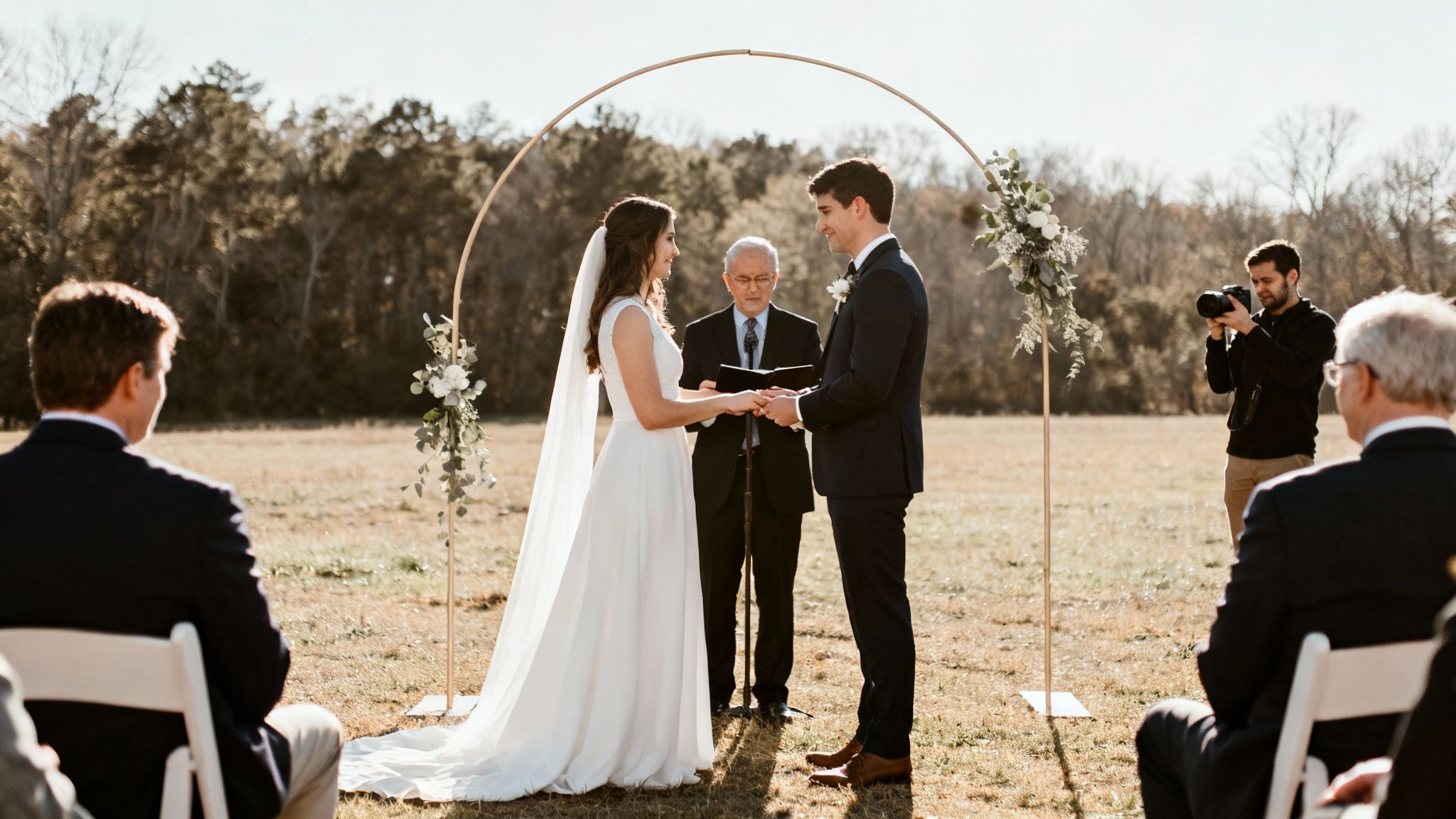
Wedding photography is a serious investment, but that doesn't mean it has to blow up your budget. With some savvy planning, you can absolutely get the stunning photos you've been dreaming of while keeping the average wedding photography cost in a place you’re comfortable with.
The secret is being strategic. This isn’t about cheaping out on quality; it’s about making smart choices that line up your vision with your wallet. A few thoughtful tweaks here and there can lead to some pretty significant savings, freeing up cash for other parts of your big day.
Be Flexible with Your Timeline
Want to know one of the easiest ways to save? Play around with your wedding date and how many hours of coverage you actually need. Photographers, just like venues and other vendors, have their busy seasons and popular days, and those always come with a higher price tag.
- Go Off-Peak: Saturdays in June and October are the wedding world's prime time. If you opt for a Friday, a Sunday, or even a weekday, you'll often find that photographers are more willing to offer a better rate. The same logic applies to the off-season—a cozy winter wedding could save you a bundle.
- Book Shorter Coverage: Let's be honest: do you truly need 12 hours of photo coverage? If you're not dead set on having every single getting-ready moment or the last dance photographed, think about a package with fewer hours. An 8-hour package is pretty standard, but a 6-hour package can still perfectly capture your ceremony, portraits, and all the key reception moments for a lot less.
Bundle Your Services for Better Value
Many photographers do more than just show up on your wedding day, and bundling services is a fantastic way to get more bang for your buck. It’s like ordering the combo meal instead of buying everything separately—you almost always come out ahead.
For instance, lots of photographers include an engagement session in their wedding packages. Booking that on its own could easily run you several hundred dollars, but as part of a bundle, it adds a ton of value. Plus, it's the perfect opportunity to get comfortable with your photographer before the wedding.
Pro Tip: Don't be shy about asking photographers if they offer discounts for bundling services or for paying your balance in full upfront. Some will knock a small percentage off, which can turn into real savings on a multi-thousand-dollar package.
Make Smart Financial Decisions Everywhere
Saving on photography is really just one piece of a much larger puzzle. When you're clever with your entire wedding budget, it makes it so much easier to afford the photographer you really want. As you map out your spending, remember that savings can be found all over the place. Getting practical advice on things like how much to budget for an engagement ring shows how small adjustments can free up more money than you'd think.
Every dollar you save by finding creative wedding reception ideas on a budget is a dollar you can put toward capturing those memories that will last a lifetime. A little creative thinking is all it takes to make your vision and your bank account equally happy.
Questions to Ask Before Signing the Contract
Okay, you found them! The photographer whose portfolio made your heart skip a beat and whose packages actually make sense for your budget. You're ready to lock it in. But hold on for just a second—don't grab that pen just yet. This final conversation, the one right before you sign, is your last chance to make absolutely sure you're on the same page.
Think of the contract as more than just a legal document. It's the game plan for your wedding day photography. It protects you, it protects them, and it makes sure everyone’s expectations are crystal clear. Honestly, a detailed contract is one of the biggest signs you're dealing with a true professional.
Before you make it official, you need a solid list of questions. I’m not talking about the basics you’ve already covered. These are the nitty-gritty questions that get to the heart of what it will actually be like to have this person by your side all day.
Nailing Down Logistics and Style
First up, let's get into the feel of the day. You need to be 100% sure their working style meshes with your vision. The last thing you want is a director telling you what to do when you were hoping for a quiet observer, or vice versa.
Ask them to walk you through their approach on a wedding day. Are they a fly-on-the-wall, capturing candid moments as they unfold? Or are they more hands-on, actively posing you and your guests to get the perfect shot? Neither is better than the other, but one is definitely better for you.
Here are a few more must-ask questions:
- Have you ever shot at our venue before? If yes, fantastic! They know the good spots. If not, ask if they plan to scout it out beforehand to get a feel for the lighting and layout.
- How do you handle family photos? A seasoned pro will have an efficient, organized system to get through those group shots without it turning into a chaotic, hour-long ordeal.
- What's your plan for lighting? Especially for the reception. Will they rely solely on natural light, or are they skilled with off-camera flash to create beautifully lit images in a dark ballroom?
This is also a good moment to acknowledge the elephant in the room: wedding costs are climbing. The average cost of a wedding in the U.S. is projected to hit $36,000 in 2025, with photography alone averaging $5,800. Understanding this context helps. You can see a full analysis of the latest wedding industry cost trends to get a better sense of how vendor prices are shifting.
Getting into the Weeds of the Contract and Contingencies
Alright, now for the important "what if" scenarios. This part of the conversation is all about making sure you're protected if things don't go exactly as planned. A professional photographer will have a rock-solid contract that already addresses all of this.
Crucial Insight: The contract is your safety net. It should spell out everything—deliverables, payment schedules, and what happens in an emergency. Never, ever hire a photographer who wants to work without a formal, written agreement.
Make sure you get clear answers to these questions:
- What’s your backup plan if you get sick or have an emergency? A pro should have a network of trusted colleagues ready to step in.
- Do you carry backup equipment? The only acceptable answer is "yes." Cameras fail, batteries die. They need spares for their spares.
- What’s your policy for cancellation or rescheduling? Life is unpredictable. You need to know the financial implications if your date has to move.
- Can you explain the image rights? You'll typically get rights for personal use (printing, sharing), but the photographer almost always retains the copyright.
- When will we get our photos back? Don't settle for "a few months." Get a specific timeframe, like 6-8 weeks, and make sure it's in the contract.
A solid contract is your ticket to peace of mind. If you want to get familiar with the language and structure, this sample event venue contract template is a great resource. Asking these tough questions now means you can hire your photographer with total confidence, knowing you've found a partner you can truly count on.
Got Questions? We've Got Answers
Let's tackle some of the most common questions we hear from couples trying to figure out their wedding photography budget. Getting these details straight can make all the difference in feeling confident about your choice.
Is a Second Photographer Really Worth It?
Honestly, it depends on your day. If you're hosting a big celebration with 150 or more guests, a second photographer is an absolute game-changer. They're also a lifesaver when you and your partner are getting ready in two separate places at the same time.
Think of it this way: one photographer can only be in one place at a time. A second one can capture your partner's reaction as you walk down the aisle while the main photographer focuses on you. They get more angles, more candids, and a richer story. For a small, intimate wedding, though? One great photographer is usually all you need. The best move is to chat with your photographer about the flow of your day and get their honest opinion.
A second photographer isn't just a backup; they're a second creative storyteller. While you're off taking portraits, they're capturing your guests laughing during cocktail hour. No moment gets missed.
How Many Pictures Will We Actually Get?
This can vary, but a good rule of thumb is to expect somewhere between 50 and 100 edited photos for every hour of coverage.
So, for a typical 8-hour wedding day, you’re looking at a final gallery of 400 to 800 incredible images. Be a little wary of anyone promising thousands and thousands of photos—that can be a red flag for quantity over quality. You want a curated collection of the absolute best shots, not every single blink and test shot.
What's the Deal with a "Print Release"?
A print release is simply a document from your photographer that gives you the green light to print your own photos for personal use. It means you can make prints for your walls, create albums for your parents, and post them all over social media.
This is different from copyright. The photographer still owns the actual image (they are the artist, after all!), but the release gives you the freedom to enjoy your photos. Before you sign anything, double-check that the contract clearly states you'll get a print release for your high-resolution, watermark-free images. This is a total non-negotiable and a standard for any pro.
At 1021 Events, we're all about making this process clear and stress-free so you can focus on your day. Whether it's photography, videography, DJ services, or lighting, we're here to build the perfect experience for you. Let's start planning your perfect package.
Comparing wedding-photography costs in Fort Atkinson, Southern Wisconsin, or Northern Illinois? 1021 Events offers flexible photography coverage that can be coordinated with videography, DJ/MC service, and other wedding enhancements. Explore our wedding photography and event services, then send an inquiry through EMP DJ to discuss your coverage and date.