
Before you even think about typing "wedding photographer near me" into a search bar, let's take a step back. The absolute first thing you need to do is figure out what you actually want your wedding photos to look like. Think of it as the emotional lens for your entire day. Getting this right from the start makes everything else fall into place so much more easily.
First Things First: What’s Your Photography Style?
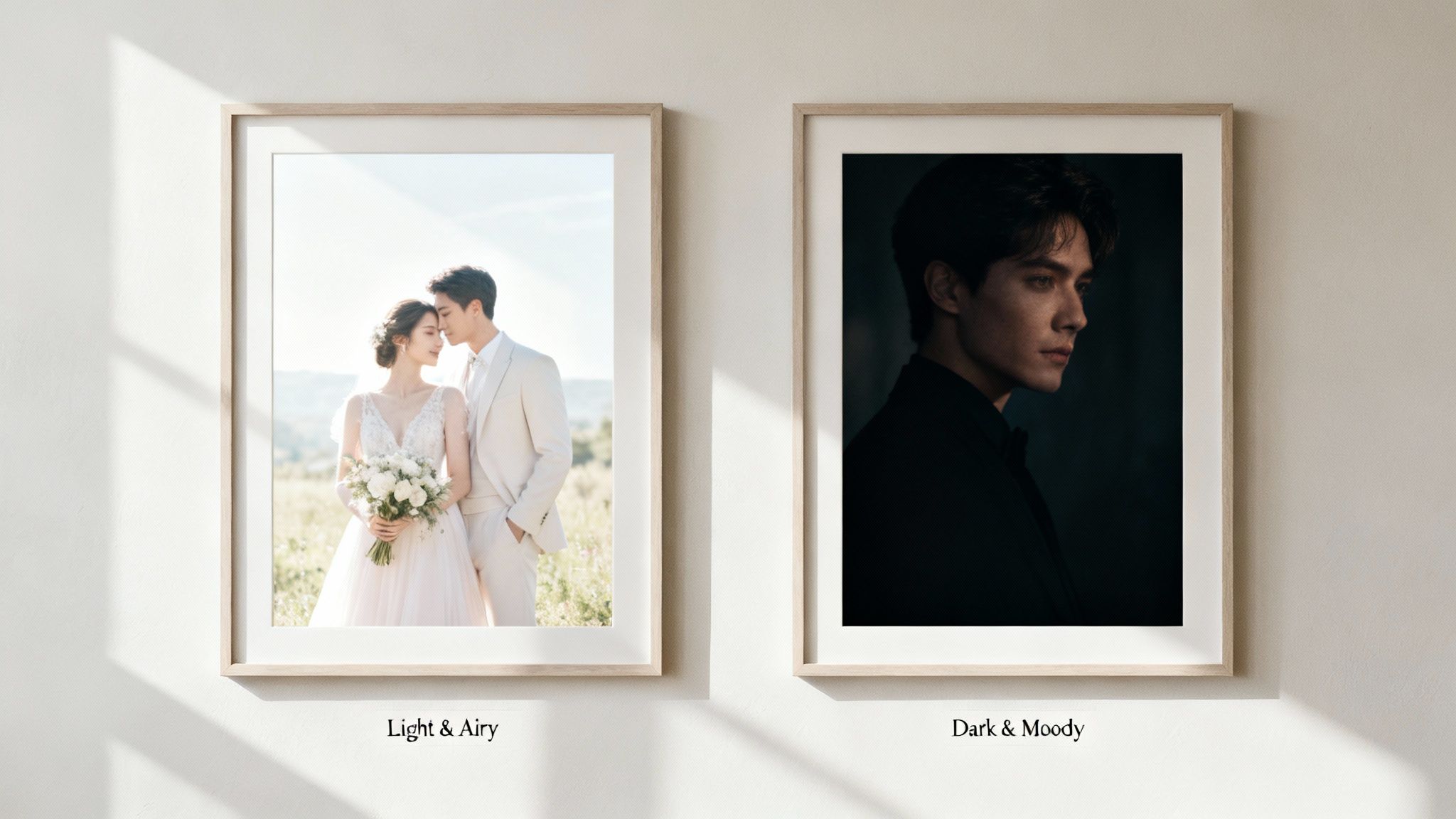
It’s so easy to get sucked into a rabbit hole of photographer websites without a clear vision. Before you know it, you're comparing two completely different artists—one who shoots light, airy, fairytale-style photos and another who creates dark, moody, cinematic images. It’s like trying to pick between a classical oil painter and a modern street artist for the same portrait. Both are amazing, but the vibe is worlds apart.
Defining your style isn't about memorizing fancy photography terms. It’s about the feeling. When you look back at your photos in 20 years, what emotion do you want to feel? Do you want them to be bright, romantic, and timeless? Or are you drawn to dramatic, candid shots full of deep shadows and raw emotion?
Find Your Vibe
Time for the fun part: make a mood board. Seriously. Hop on Pinterest, tear pages out of magazines, whatever works for you. Start saving images that make you stop and stare. And don't just stick to weddings—pull from fashion, art, nature, and even movies. Once you’ve got 20-30 images, take a look at what you’ve collected. You'll start to see patterns.
- The Colors: Are you pinning photos with bright, soft, pastel tones (light and airy) or images with deep, rich, and saturated colors (dark and moody)?
- The Posing: Are the couples in your saved images looking elegant and perfectly posed (traditional or fine art), or are they laughing, crying, and caught in the moment (photojournalistic)?
- –The Energy: Do the photos feel quiet, intimate, and romantic, or are they full of high energy and fun?
This little exercise gives you a visual language to use when you start talking to photographers. If your board is full of candid, unscripted moments, you'll know that a photographer who specializes in classic, formal portraiture probably isn't your person, no matter how gorgeous their portfolio is. Need a little inspiration to get the ball rolling? Checking out some creative wedding photography ideas can help you figure out what really speaks to you.
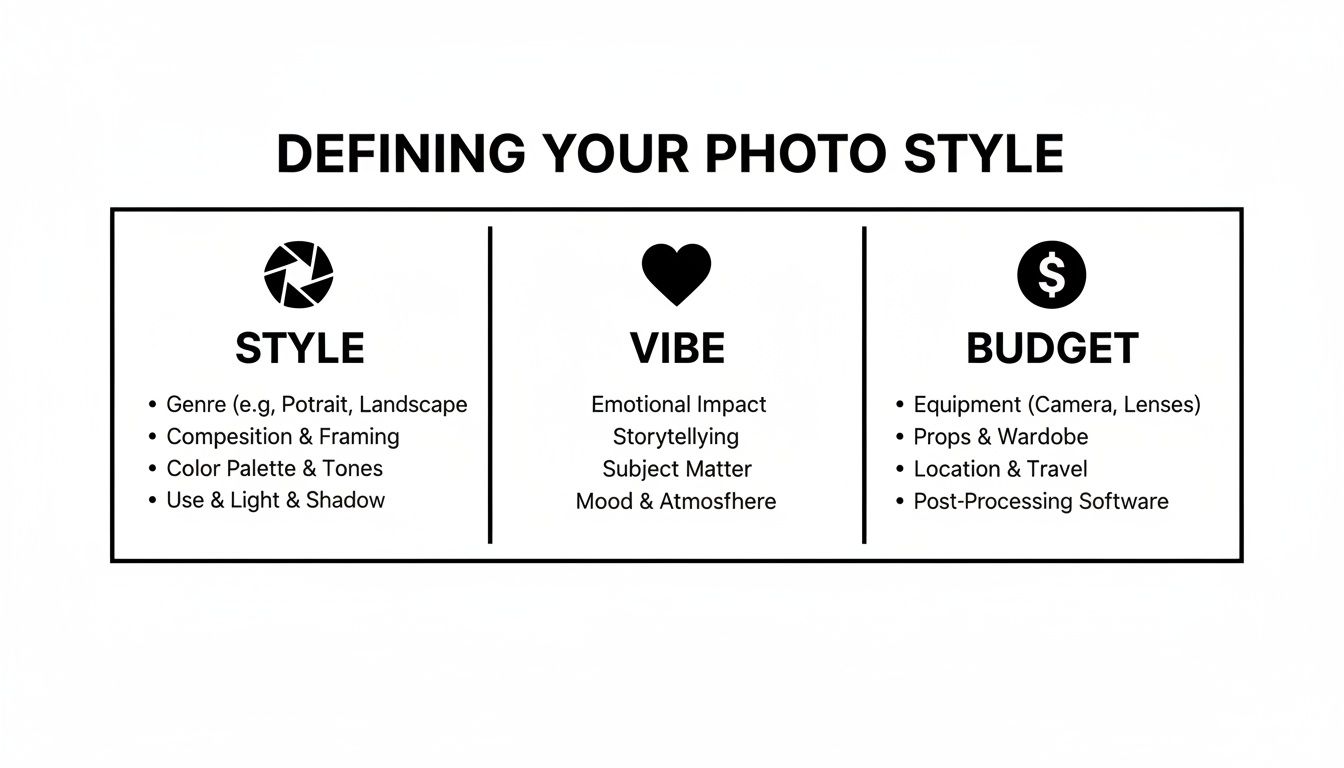
As you can see, it all comes down to finding that sweet spot between the artistic style you love, the vibe you want for your day, and what works for your budget.
My Two Cents: Your wedding photos are one of the few things you'll have left after the cake is eaten and the music stops. Think of them as a long-term investment in your memories. Picking a photographer whose style genuinely feels like you ensures you'll still be obsessed with them decades from now, long after trends have come and go.
It’s also helpful to have a basic idea of what certain editing choices look like. For instance, understanding photographic editing techniques like vignetting can help you explain why you might prefer a darker, more focused feel in your portraits. The more clearly you can articulate what you like, the better a photographer can serve you.
Wedding Photography Style Cheat Sheet
Feeling a little lost in all the terminology? No worries. This quick guide breaks down the most popular styles to help you find the one that feels right.
| Style | The Vibe | Perfect For Couples Who… |
|---|---|---|
| Photojournalistic | Candid, unposed, and emotional. It’s all about capturing the day as it naturally unfolds. | Want to remember the real, in-between moments and prefer a hands-off approach. |
| Fine Art | Light, airy, and romantic. Photos are intentionally composed to look like artistic masterpieces. | Dream of soft, painterly images and love a timeless, elegant, and slightly posed feel. |
| Traditional/Classic | Timeless and formal. Think classic poses and a focus on capturing the key moments beautifully. | Value family portraits and want a polished, reliable record of their wedding day. |
| Dark & Moody | Dramatic, cinematic, and intense. Uses shadows and deep colors to create a powerful, emotional mood. | Love bold, artistic shots and aren't afraid of a little drama in their photos. |
| Editorial | Posed, high-fashion, and glamorous. Looks like it came straight out of a magazine spread. | Want to feel like celebrities for a day and love creative, fashion-forward photography. |
At the end of the day, there’s no right or wrong answer. The best style is the one that authentically reflects who you are as a couple. Use this as a starting point to find the perfect artist to tell your story.
How to Set a Realistic Photography Budget
Alright, let's talk about money. Figuring out your wedding photography budget can feel like pulling a number out of thin air, but trust me, there's a method to the madness.
First, you need to understand why photographers charge what they do. You've probably seen prices all over the map, from a few hundred bucks to a figure that looks more like a down payment on a car. This isn't random. A photographer's price tag is a reflection of their experience, their gear (which is wildly expensive!), business insurance, and the countless hours they'll spend editing your photos long after you've said "I do."
An established pro with a decade of experience and an arsenal of top-tier equipment is naturally going to cost more than someone just starting out. It's not just about clicking a button; it's about art, experience, and running a sustainable business.
The 10% Guideline for Wedding Photography
A great place to start is the 10% rule. In most major markets, couples typically set aside 8–12% of their total wedding budget just for photography. This is a solid benchmark because it scales with your overall spending and expectations.
So, if your total wedding budget is $30,000, you should plan for a photography budget somewhere between $2,400–$3,600. This guideline helps you see if a photographer's packages are in line with what's typical for a wedding of your scale.
My Two Cents: Don’t just get fixated on the price tag. Think about what that investment is truly buying you. Sometimes, a slightly higher price means a smoother experience, better communication, and a final gallery that completely blows you away. It's often worth it.
Getting a feel for the average wedding photography cost in your area can also give you some much-needed context. It helps you understand what's realistic for your investment.
Decoding Photography Packages
Once you've got a number in your head, you can start digging into what photographers actually offer. Packages are just bundles of services, and knowing what's what is key to comparing your options and finding the best value for you.
The biggest factor influencing the price is almost always the number of coverage hours on the wedding day. Be realistic about your timeline. Do you need someone there from the first mimosa during hair and makeup all the way through the final sparkler exit? Or are you okay with just capturing the main events like the ceremony and reception?
Beyond just the hours, here are some other things you'll see bundled into packages:
- A Second Shooter: This is a second photographer who can capture different angles—like your partner's face when you walk down the aisle. It's a lifesaver for larger weddings.
- An Engagement Session: I highly recommend this! It’s the perfect way to get comfortable in front of the camera and build a rapport with your photographer before the wedding.
- Digital Files: High-resolution, edited images, usually delivered in a slick online gallery.
- Print Rights: This is the permission you need to print your photos wherever you want for personal use.
- A Wedding Album: A professionally designed, high-quality album that tells the story of your day. It’s the kind of thing you’ll actually look at, unlike a USB drive tossed in a drawer.
Hidden Costs to Keep in Mind
Don't get caught by surprise. When you're finalizing your budget, remember to ask about the potential extras that might not be in the initial package price. These can add up quickly.
Make sure you get clarity on these things upfront:
- Travel Fees: If your photographer has to travel, they’ll likely charge for mileage, flights, or a hotel room.
- Overtime Hours: What happens if your party is still going strong and you want them to stay? Ask about their overtime rate.
- Album Upgrades: What’s the cost for adding extra pages, upgrading to a leather cover, or getting smaller albums for your parents?
- Taxes: Yep, sales tax is almost always added to the final invoice.
Thinking about these details now will help you set a budget that's actually realistic and prevent any awkward money conversations later. You'll be able to choose your photographer with total confidence, knowing their value and your investment are perfectly aligned.
Finding Photographers and Creating a Shortlist
Alright, you’ve figured out your style and know what you can spend. Now for the fun part—actually finding the artist who will capture your wedding day. But let's be real, a quick Google search can feel like drinking from a firehose. The trick is knowing where to look and how to narrow the field without going crazy.
Your first stop should probably be the big wedding platforms like The Knot and WeddingWire. They’re honestly great for an initial sweep. You can filter by location, budget, and style, and most importantly, read real reviews from other couples. It’s a fantastic way to cut through the initial noise.
But please, don't stop there. To find someone whose work truly speaks to you, you've got to dig a little deeper, and that's where social media comes in.
Mastering the Social Media Search
Instagram isn't just for scrolling—it's one of the best visual search engines out there for finding wedding vendors. The key is to get specific and local with your hashtags. A generic search like #weddingphotographer is going to give you millions of results from all over the world. Useless.
Instead, think like an insider and search for hashtags tied to your actual wedding:
#[YourVenueName]Wedding(e.g.,#BlackCreekGardensWedding)#[YourCity]WeddingPhotographer(e.g.,#DenverWeddingPhotographer)#[YourState]Bride(e.g.,#CaliforniaBride)
This is my favorite trick: go to your venue’s Instagram profile and click on their "tagged photos." This is an absolute goldmine. You'll see real weddings shot by a ton of different photographers, giving you an unfiltered look at how they capture that specific space.
Pro Tip: Found a photographer you love on Instagram? Go check out who they follow and tag. Great local vendors tend to run in the same circles. You might just discover your dream florist or planner by seeing who your favorite photographer loves to work with.
The Power of Personal Recommendations
As great as the internet is, nothing beats a recommendation from someone you trust. Seriously, good old-fashioned word-of-mouth is often the most reliable way to find a fantastic professional.
Start with your recently married friends and family. If you loved their photos, ask them what it was really like working with their photographer. Were they a calming presence? Did they handle that little bit of family drama well? You get the honest, behind-the-scenes scoop this way.
Your other secret weapon? Your venue coordinator or wedding planner. These people have seen it all. They've worked with dozens, if not hundreds, of photographers and know exactly who is a dream to work with and who… isn't. They know who nails the lighting in their ballroom and who shows up on time, every time.
Juggling all these potential vendors can get messy. I always tell my clients to use a good wedding vendor checklist to keep track of everyone they're researching and their notes.
Building Your Shortlist
As you find photographers you like, start bookmarking their websites and saving their Instagram profiles. The goal here is to get from an overwhelming list of dozens down to a super-focused shortlist of your top 3-5 candidates. These are the people you'll actually hop on a call with.
Before you add someone to that final list, do a quick "consistency check."
- Their Website: Look beyond the "best of" gallery. Do they show a variety of weddings at different venues, with different lighting, that all look amazing?
- Their Blog: This is where you see the full story. A blog post showing an entire wedding day, from getting ready to the sparkler exit, proves they can capture it all, not just one or two perfect portrait moments.
- Their Social Media: Scroll through their feed. Is their editing style consistent, or is it all over the place? Consistency is a huge sign of a seasoned pro who has their craft dialed in.
Once you have your solid list of contenders, it’s time to reach out and see if their vibe matches their portfolio.
What to Ask a Wedding Photographer Before Booking
So, you've stared at a dozen portfolios until your eyes have crossed, and you've finally got it down to a handful of photographers whose work you absolutely love. Awesome. Now for the real test: the interview.
This isn't just a formality to confirm prices. Think of it as a vibe check. You're about to spend 8+ hours with this person on one of the most intense, emotional, and wonderful days of your life. You need to make sure you actually like them and feel comfortable with them.
Heading into this chat armed with the right questions is everything. We need to go way beyond, "So, what are your packages?" and get into the stuff that really matters—the questions that reveal their experience, how they handle chaos, and what they're truly like on a wedding day. The goal is to hang up feeling totally confident and excited, with zero lingering doubts.
Questions About Their Vibe and Style
First things first, let's connect the beautiful photos you saw online with the actual human who created them. Their answers here will tell you if their on-the-ground approach aligns with the kind of day you’re planning.
- Walk me through your approach on a wedding day. Are you a ninja or a director? Some photographers are like a fly on the wall, capturing moments as they unfold. Others are more hands-on, directing people for portraits and making sure everything looks perfect. Neither is wrong, but one is probably more right for you.
- When you think about a wedding day, what are the moments you get most excited to capture? This is a great open-ended question. It tells you what they prioritize. Is it the big, epic portraits? The quiet, teary-eyed moments between family members? The wild dance floor action?
- Let's be real, we're a little awkward in front of the camera. How do you help people relax? This is a huge one. A great photographer has a knack for making even the most camera-shy couple feel at ease. Their answer will show you a lot about their personality and people skills.
- Have you shot at our venue before? If not, what’s your game plan? Knowing the venue is a definite plus, but it's not a deal-breaker. What you're looking for is a pro who says, "No, but I always schedule a walkthrough beforehand to scout the best spots and check out the lighting." That shows true dedication.
Talking Logistics and "What Ifs"
Okay, let's get into the nitty-gritty. This is where you separate the pros from the hobbyists. A seasoned photographer has a plan B, C, and D for anything that could possibly go wrong, from a freak thunderstorm to a dead battery. Their answers here are a direct reflection of their professionalism and reliability.
What happens if the day isn't a perfect, sunny fairytale? You need to know they've got it covered.
I always say a professional doesn't just hope for the best; they plan for the worst. You need to ask about their backup gear and, most importantly, what happens if they get sick. A solid answer involves a network of trusted associate photographers ready to step in at a moment's notice.
Here are the must-ask logistical questions:
- What does your backup equipment situation look like? They should have at least two professional camera bodies, a variety of lenses, and more batteries and memory cards than they could ever possibly need.
- What's your emergency plan if you physically can't be there? Do they have a specific associate shooter they work with? Or a network of pros with a similar style they can call? Get the details.
- How do you handle tricky lighting or a sudden change in weather? Ask for real-world examples. What would they do if your outdoor ceremony gets washed out by a downpour and moved into a dimly lit reception hall?
- Do you offer services like drone photography? If you're dreaming of those incredible aerial shots, now's the time to ask. It's a specialized skill, so you might want to look into expert resources to understand the ins and outs of drone wedding photography and what it involves.
Getting Clear on Packages and What You Actually Get
Finally, let's talk about the deliverables. You need to have a crystal-clear understanding of what you're paying for, what you'll get, and when you'll get it. A quick conversation now can prevent so much stress and confusion down the road. This isn't just about the price tag; it's about managing expectations for the whole process.
Be specific and make sure there are no surprises waiting for you after the wedding.
- What's the realistic turnaround time for our full gallery? Don't settle for a vague "in a few months." Ask for a specific window, like 6-8 weeks.
- Roughly how many edited images can we expect to receive? This number can vary wildly between photographers, so it's good to have a ballpark figure in mind.
- What are the rights to our photos? Can we print them and post them? You should receive high-resolution files with personal print rights. It's also good to clarify if there are any specific rules for sharing on social media (like a required photo credit).
- Can we see a full wedding gallery from a recent wedding? This is non-negotiable. It's the only way to see how they handle an entire day—from the bright getting-ready rooms to the dark, chaotic dance floor—not just the ten best shots they put in their portfolio.
Diving Deep: How to Review Portfolios and Check References
Alright, so you’ve chatted with a few photographers and have a good vibe from your top contenders. Awesome! Now comes the real detective work—making sure their actual work lives up to their amazing personality and curated Instagram feed.
Think of an online portfolio as a movie trailer. It’s packed with all the best, most dramatic, and beautiful shots. But your wedding day isn’t just a two-minute highlight reel; it’s the full feature film, complete with changing light, different locations, and a whole lot of moving parts.
The only way to see if they can truly handle an entire event is to ask for one or two complete wedding galleries. Seriously, this is a non-negotiable step. It’s your backstage pass to see the whole story, from the chaotic getting-ready moments to the last dance, not just the perfectly posed sunset portraits.
What to Look For in a Full Gallery
Once you get that gallery link, grab a cup of coffee (or a glass of wine) and get ready to do a deep dive. You’re looking beyond just pretty pictures here. You're assessing their skill and storytelling ability when they have to deliver hundreds of photos from a single day.
- Is the quality consistent? Do the getting-ready photos look just as good as the ceremony shots? Is the editing style the same from the bright, sunny portraits to the dark, moody reception? You're looking for a consistent look and feel throughout.
- How do they handle tricky lighting? The reception is the real test. Capturing a dark, candlelit ballroom with people dancing wildly is one of the toughest challenges in photography. Are the photos sharp and well-lit, or are they grainy and blurry? Do they capture the vibe without making it look like a flash-bomb went off?
- Don't forget the "boring" stuff. How do the family formal portraits look? It might not be the most creative part of the day, but these photos are precious. Are people arranged nicely, in focus, and lit well, or does it look like a chaotic mess?
- Can you feel the story? Does the collection of images take you through the day? A great photographer captures the big moments, sure, but they also get the little in-between glances, the happy tears, and the small details that tell the complete story of the day.
My Two Cents: If you can, ask for a gallery from a wedding at a venue similar to yours. If you’re getting married in a dark, historic hotel, seeing a gallery from a bright, outdoor beach wedding isn't going to show you if they can handle your specific lighting challenges.
Don't Skip the Reference Check
You wouldn’t hire someone for a job without checking their references, right? Same rule applies here. While online reviews on sites like The Knot or WeddingWire are a decent start, nothing beats a quick, five-minute chat with a past client. It's where you get the real, unfiltered scoop.
Asking to speak with a couple from a recent wedding is a totally normal request. Any pro who is confident in their work will be more than happy to connect you. If a photographer gets weird about it or says no, that’s a pretty big red flag. This step is all about confirming they are as professional and easy to work with as they seem. For a bit more on what makes a photographer a true pro, these event photography tips are a great resource.
The Right Questions to Ask a Reference
When you get a past client on the phone, keep it short and sweet. You don’t need their life story, just a few key details to give you peace of mind.
- How was their communication before, during, and after the wedding?
- What was their vibe like on the actual wedding day? Did they add a sense of calm or did they feel stressed or intrusive?
- How were they with your family and friends? Were they good at directing people for photos without being bossy?
- Did you get your final photos on time, and did they live up to your expectations?
- Is there anything you wish you’d known beforehand or would do differently?
That last question is pure gold. It’s so open-ended that it often prompts the most honest and helpful feedback you’ll get.
By taking the time to review a full gallery and chat with a real human reference, you can feel 100% confident that you're not just hiring someone with a camera—you're investing in an artist you can truly trust.
Understanding the Photography Contract Before You Sign

You’ve found them! After all that searching and interviewing, you’ve picked the perfect photographer. Before you pop the champagne, there’s one last crucial step: the contract. Please, don't just skim this and sign.
A solid contract is your best friend. It protects you and your photographer by making sure everyone is on the same page. Think of it as the official roadmap for your whole experience, covering everything from the deposit to when you’ll get to see your final photos. It’s all about preventing surprises and awkward conversations later on.
Yes, reading through a legal document can feel like a chore, but this is the time to pay attention. This piece of paper is your safety net.
Key Clauses You Cannot Ignore
Every photographer's contract looks a little different, but the good ones all cover the same essential ground. Your goal here is to make sure there’s zero room for interpretation. Don’t sign a thing until you’ve found and understood these parts.
- Payment Schedule: It needs to be crystal clear. Look for the total cost, the non-refundable retainer (usually 25-50%), and the exact due dates for every payment. Most photographers require the final balance 30 days before the wedding, so check that date.
- Cancellation & Postponement: Life happens. What if you have to cancel? What if they have to cancel? And a big one these days: what's the plan if you need to reschedule? A professional contract will spell out the terms for both scenarios, explaining what’s refundable and what’s not.
- Contingency Plans: This is the "what if" clause. It should explain what happens if your photographer gets sick or their camera decides to die mid-ceremony. You want to see language about a backup photographer of equal skill and a plan for how they safeguard your images (like shooting on dual memory cards).
Don't Be Afraid to Ask: If a clause seems vague or you don't understand something, ask for clarification in writing. A professional will be happy to explain their terms. Vague contracts are a major red flag.
Understanding Your Image Rights
This is probably the most misunderstood part of a photography contract, so let’s clear it up. Who actually owns the photos?
Almost always, the photographer retains the copyright. This means they are the legal owner of the work they created. What you get are personal usage rights or a print release. This is what gives you permission to download, print, and share your photos all over social media for non-commercial purposes.
This is completely standard industry practice! But you need to know exactly what those usage rights include. Are there any restrictions? Do they require you to credit them every time you post on Instagram? Getting this sorted out now saves headaches down the road.
Final Delivery Details
Your contract has to spell out exactly what you're getting and when. Don’t ever settle for a verbal promise of "a lot of photos" delivered "soon after the wedding." You need specifics.
Here’s what your contract should state in black and white:
- Image Count: An estimated number of high-resolution, edited images (e.g., “500-700 images”).
- Delivery Timeline: A specific timeframe for receiving your final gallery (e.g., “within 8-12 weeks of the wedding date”).
- Delivery Method: How the photos will be delivered, which is typically a password-protected online gallery.
- Editing Scope: It should mention that the images you receive will be edited in the photographer's signature style, consistent with their portfolio.
Contract Red Flag Checklist
The contract is your final gut check. Before you sign on the dotted line, run through this list. A professional, legitimate photographer will have a contract that makes you feel secure, not suspicious.
| Contract Section | Potential Red Flag | What You Want to See Instead |
|---|---|---|
| General | Overly simple, one-page agreement with no details. | A multi-page, detailed document covering all key areas. |
| Cancellation | The policy is one-sided, only protecting the photographer. | Clear, fair terms for both parties in case of cancellation or postponement. |
| Contingency | No mention of a backup plan for illness or equipment failure. | A clear clause stating they will provide a substitute photographer of equal skill. |
| Image Rights | Vague language about "usage" or restrictions on sharing. | A specific "print release" or "personal usage license" is granted to you. |
| Delivery | No specific timeline or image count is provided. | A clear promise of an estimated image count and a firm delivery window (e.g., 8-12 weeks). |
| Liability | A clause that removes all liability from the photographer for any reason. | A "Limitation of Liability" clause that is reasonable, often capping liability at the contract value. |
Making sure all these details are locked in your contract isn't just about hiring a photographer; it’s about building a professional partnership based on trust. This is the final, crucial step in choosing your wedding photographer with confidence.
Still Have a Few Questions? Let's Clear Them Up
Alright, even with the best game plan, a few nagging questions can pop up when you're zeroing in on the perfect wedding photographer. It’s completely normal. Let's walk through some of the most common ones I hear from couples, so you can make your final choice feeling totally confident.
"Do We Really Need a Second Shooter?"
This is a big one. Honestly, it depends on your day. For a smaller, more intimate wedding with under 75 guests, one amazing photographer can usually handle it all without breaking a sweat.
But if you’re having a larger wedding, a second shooter is worth its weight in gold. Think about it: while your main photographer is capturing that perfect shot of you walking down the aisle, the second shooter can be getting your partner’s emotional reaction. It's those simultaneous moments you'd otherwise miss.
"What If They've Never Shot at Our Venue Before?"
Totally fair question, but don't let this be an automatic deal-breaker. Sometimes, a photographer seeing a space for the first time brings a fresh, creative perspective that you wouldn't get otherwise.
What’s far more important is their mastery of lighting and their overall experience. A true pro will always do their homework. They should be willing to do a venue walkthrough with you before the big day, or at the very least, show up extra early to scout the best spots and see how the light works in the space.
A photographer's ability to adapt is everything. Ask them how they'd handle a dimly lit reception hall or harsh afternoon sun. If they can confidently talk you through their techniques—like using off-camera flash or finding beautiful pockets of natural light—that's a fantastic sign.
"How Far in Advance Do We Need to Book?"
The simple answer? As soon as you have your date and venue set in stone. The best, most sought-after photographers often get booked up 12-18 months out, especially for those prime Saturdays in peak season. If you have your heart set on someone, don't wait.
And for more great tips to help you along the way, you can find some fantastic additional wedding planning advice.
At 1021 Events, we know your wedding photos are more than just pictures—they’re the beginning of your family’s story. Our team of photographers and videographers, including options for stunning aerial drone footage, is here to capture every moment with artistry and care. Learn more about how we can tell your story at 1021events.com.
Choosing a wedding photographer in Fort Atkinson, Southern Wisconsin, or Northern Illinois? 1021 Events offers professional photography coverage that can be coordinated with videography, DJ/MC service, and other wedding enhancements. Explore our wedding photography and event services, then send an inquiry through EMP DJ to discuss your coverage and date.