
Alright, let's talk about finding your wedding photographer. This is a big deal. These are the photos you'll look back on for the rest of your lives, so getting it right is key. It all starts with three things: figuring out your style, setting a realistic budget, and then, and only then, starting the actual search. Nailing these upfront will save you so much time and stress down the road.
Before You Start Your Search
Hold on! Before you lose an entire weekend scrolling through endless Instagram feeds, we need to do a little homework. I know it's tempting to just dive in, but trust me on this. Going in without a plan is a recipe for getting completely overwhelmed. This first part isn't about finding a photographer; it's about figuring out what you actually want.
Define Your Wedding Photography Style
First things first: what kind of photos do you love? Are you all about those light, dreamy, and romantic shots? Or do you gravitate toward images that are more dark, moody, and intense? Pinpointing your preferred style is the single most important thing you can do to narrow down the pool of potential photographers.
Think about the feel of your wedding day. If you want to be in the moment and not worry about posing, a photographer with a documentary, candid approach is going to be your best friend. But if you're dreaming of those stunning, magazine-worthy portraits, you’ll want a fine-art photographer who knows how to craft and compose a perfect shot. One isn't better than the other—it's all about what feels right for you.
Decoding Wedding Photography Styles
Here’s a quick rundown of the most popular styles to help you find the one that speaks to you.
| Style | What It Looks Like | Best For Couples Who… |
|---|---|---|
| Documentary | Candid, unposed, and journalistic. Captures the day as it naturally happens. | Want to feel like guests at their own wedding and prefer authentic, in-the-moment shots. |
| Fine Art | Soft, romantic, and often has a film-like quality. Very intentional and artistic. | Dream of epic, editorial-style portraits and love a curated, timeless aesthetic. |
| Traditional | Classic and formal. Think posed portraits of the couple, family, and wedding party. | Value creating timeless family heirlooms and want to ensure all the key group shots are captured. |
| Moody & Dramatic | Uses deep shadows, rich colors, and contrast to create emotional, cinematic images. | Love a bold, artistic vibe and want photos that feel intense and full of atmosphere. |
Getting a handle on your style is the best filter you can have. It immediately cuts through the noise and helps you focus on photographers whose work you'll genuinely adore.
This whole process is pretty straightforward when you break it down.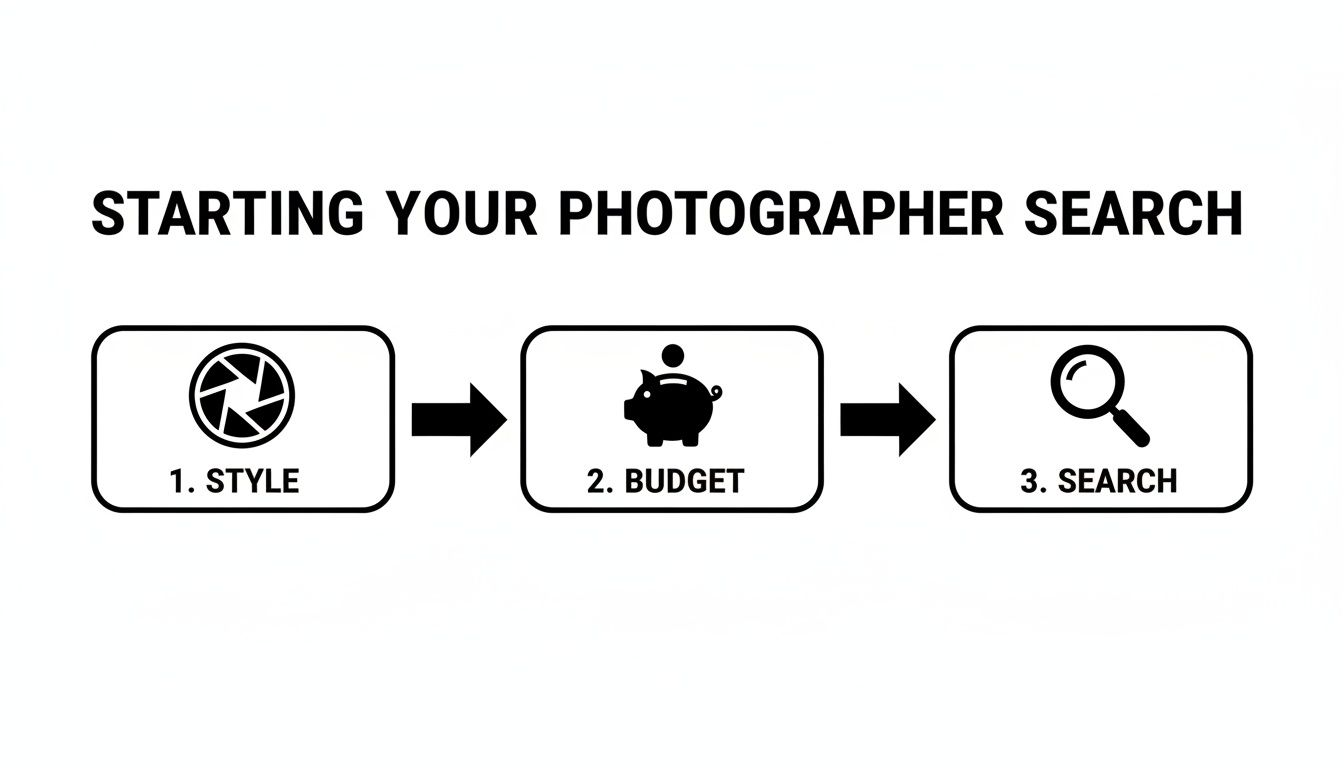
Starting with style and budget keeps your search focused, making sure you don't fall in love with a photographer who is a total mismatch for your vision or your wallet.
Establish a Realistic Budget
Okay, you know the vibe you're going for. Now it's time to talk money. Photography is one of the bigger investments you'll make for your wedding, and there's a good reason for that. With the global wedding photography market valued at nearly USD 28 billion, it’s clear couples are prioritizing it. And with the average wedding now costing around $36,000, it's no surprise that a decent chunk of that goes to capturing the memories.
A good rule of thumb is to set aside 10-15% of your total wedding budget for photography. This isn't just for the 8-10 hours they spend with you on the day. It covers their expertise, high-end equipment, insurance, editing time (which can take weeks), and so much more. Generally, a higher price tag comes with more experience and a more polished, consistent final gallery. A good https://1021events.com/wedding-vendor-checklist-template/ can be a lifesaver for figuring out how to divvy up your funds.
Expert Tip: Never just look at the final number. Dig into the packages. What do they actually include? An engagement shoot? A second photographer? How many hours of coverage? Do you get the printing rights? Understanding the value is way more important than just comparing price tags.
To keep everything on track, it's a great idea to follow an essential wedding preparation timeline. This will help you know when you should be booking your photographer so you don't feel rushed into a decision. When you have your style and budget sorted, the whole process becomes way less daunting and a lot more fun.
Alright, you’ve figured out your dream wedding photo style and what you’re comfortable spending. Now for the fun part: finding the one. The search for your wedding photographer is more than just a quick Google query; it’s about finding an artist who truly gets your vision.
Your venue is secretly your best friend in this search. Seriously. The venue coordinator has seen it all—the good, the bad, and the photographers who know how to make their space look absolutely magical. Ask for their list of preferred vendors. These are the pros they trust, who know the lighting, the best photo spots, and won't be a headache on your big day.
Where to Look Beyond the Obvious
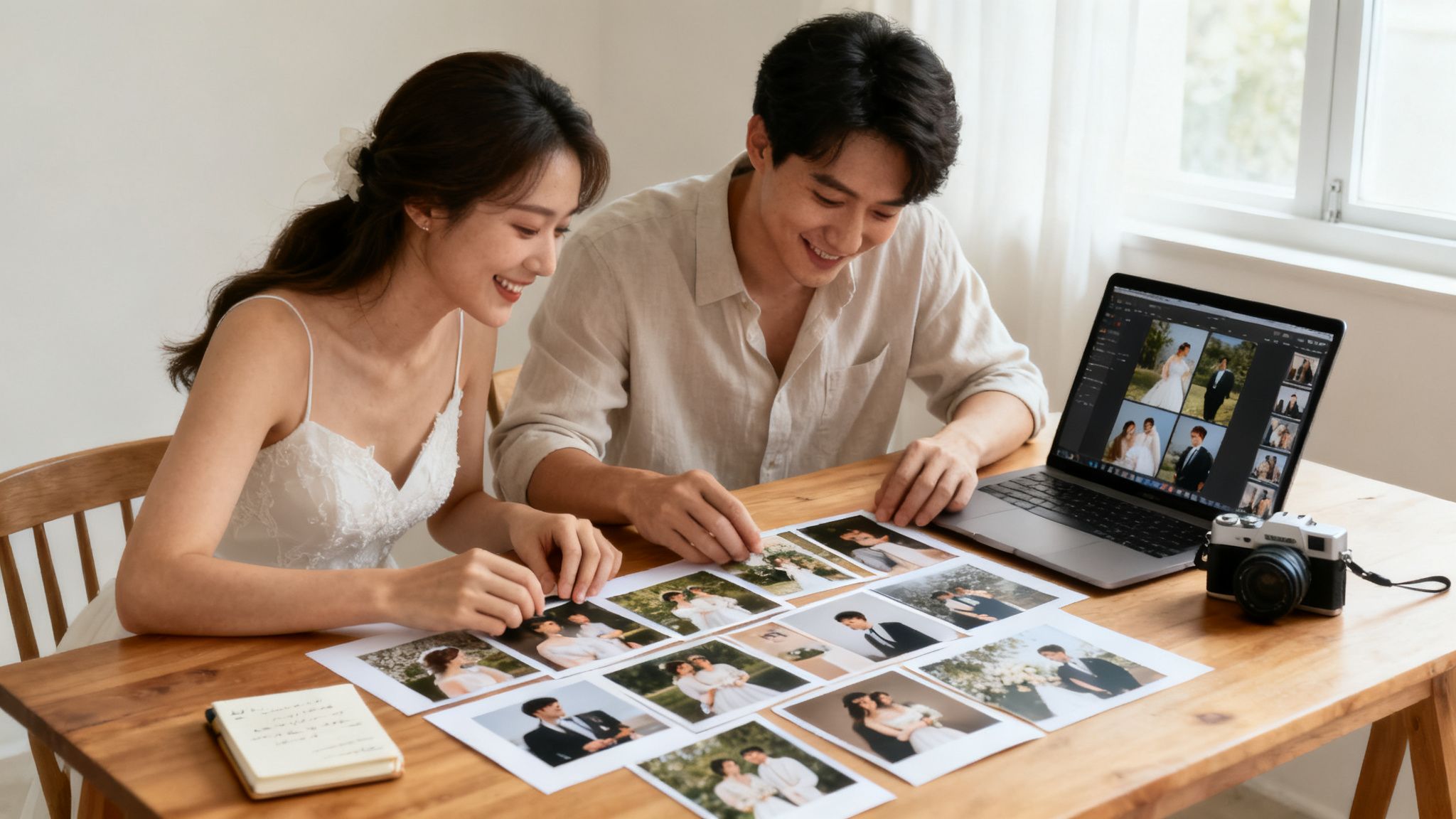
To build a solid list of potential photographers, you need to go where the real weddings are. Here are some of my go-to sources:
- Wedding Blogs & Magazines: Find a real wedding feature that makes you swoon? Scroll right down to the vendor credits. This is a goldmine for finding photographers whose style you already know you love.
- A Smart Social Media Search: Instagram is your visual playground. Get specific with your hashtags, like #chicagoweddingphotographer or #moodyPNWwedding. Another pro tip? Search for your venue’s location tag to see who has shot there and how they captured the space.
- Word-of-Mouth: Chat with friends who’ve recently tied the knot. They'll give you the real scoop—not just on the quality of the photos, but what it was actually like to have that person around all day.
As you find photographers you like, start a simple spreadsheet. Jot down their name, website, and Instagram handle, and maybe a link to a gallery that really stood out. Your goal here is to get a solid list of about 10-15 names to start with.
From a Long List to a Shortlist
Okay, time to trim that list down to your top 3-5 contenders. This is where you put on your detective hat and look for consistency. A photographer's website portfolio is their greatest hits album—it’s designed to wow you.
You need to see the B-sides. Dive into their blog and look for full wedding galleries. This is the only way to see how they handle the entire day, from the chaotic getting-ready moments to the sweaty, joyful dance floor shots. Can they tell a complete story?
A photographer's social media is a great indicator of their professionalism. Is their feed cohesive? Does it reflect the style you see on their website? A consistent and active online presence usually means you're dealing with a well-organized and passionate professional.
While you're sleuthing, keep your dream style front and center. If their entire feed is dark and dramatic but you’re aiming for bright and airy, they're probably not your person, no matter how talented they are. This is also a good time to think about your budget and approach. Our guide on how to negotiate with vendors has some great tips that can help as you start thinking about contracts and packages.
Once you’ve got your final 3-5 photographers, it’s time to reach out. The next step is all about checking their availability and setting up a chat to see if your personalities click. After all, you'll be spending a lot of time with this person
How to Analyze a Photographer's Portfolio
You’ve landed on a few photographers whose websites are absolutely stunning. But let me tell you a little secret from inside the industry: a portfolio is a highlight reel. It’s the best of the best from dozens of different weddings. Your mission, should you choose to accept it, is to dig deeper than those glossy "hero shots" and figure out if they can deliver that same magic for your entire wedding day.
This means you need to see a full gallery. Seriously, don't be shy about this. Ask to see one or two complete wedding galleries, preferably from a wedding with a similar vibe or venue to yours. Any pro worth their salt will be happy to share. It's the only real way to see what you're actually paying for.
Look Beyond Just the Pretty Pictures
Once you have that full gallery link, you're on a mission to find evidence of skill, not just a handful of lucky, beautiful moments. A complete wedding gallery tells the whole story, from the jittery excitement of getting ready all the way to the uninhibited chaos on the dance floor.
Here's what I always tell my clients to look for:
- Emotional Depth: Do the photos feel like something? You should see real laughter, happy tears, and those quiet, stolen glances between the couple. A great photographer captures the emotion of the day, not just a checklist of events.
- The Dreaded Group Shots: Pay close attention to the formal family and wedding party photos. Does everyone look like they're in a police lineup, or do they look relaxed and genuinely happy? Wrangling big groups is a special skill, and you want someone who can do it with a smile.
- Those In-Between Moments: How good are they at capturing the candid stuff? The best photos are often the unscripted ones—your uncle roaring with laughter, a guest's reaction during the vows, or a quick hug between your parents.
You’re looking for a cohesive narrative. The images should flow together and feel like they all belong to one beautiful, singular story.
Pro Tip: An Instagram feed shows you a photographer's best work. A full wedding gallery shows you their typical work. You’re hiring them for their typical work, so make sure you're in love with it.
Master of Light or Just Getting Lucky?
Lighting is, without a doubt, the trickiest part of wedding photography. Think about it: your day could have everything from harsh, direct sun during an outdoor ceremony to a super dark, moody reception hall lit only by candles. A photographer's ability to handle these shifts is non-negotiable.
As you click through a full gallery, be a detective and hunt for these specific lighting situations:
- Harsh Midday Sun: How do they shoot when the sun is high and bright? Look out for "raccoon eyes" (dark shadows under the eyes) or blown-out details where the delicate lace on a wedding dress just becomes a blob of white. A pro knows how to find shade or use a flash to make it look gorgeous.
- Dark Reception Halls: This is where you separate the pros from the amateurs. Are the dance floor photos grainy, blurry, or lit with that awful, deer-in-the-headlights on-camera flash? A skilled photographer uses off-camera lighting to create images that are dynamic and beautiful but still capture the party's true atmosphere.
If the gallery they sent was shot on a perfect, overcast day, ask to see another one with more challenging light. You need total confidence that they have the technical chops for whatever your wedding day throws at them. For a little inspiration on what's possible, check out these creative wedding photography ideas and see how pros can truly master light.
Reading Between the Lines of Reviews
Okay, you’ve analyzed their work and you're impressed. Now it's time to see what past clients have to say. Hop on sites like Google, The Knot, and WeddingWire to do some digging. But don't just glance at the 5-star rating; read the actual comments.
Look for patterns. Are couples constantly raving about how the photographer made them feel at ease and comfortable in front of the camera? Do multiple reviews mention professionalism, quick communication, or how they blended in seamlessly? These personal stories are golden. A photographer who acts as a calming, positive force on a potentially stressful day is worth every single penny.
The Interview: Finding Your Perfect Match
Alright, you’ve spent hours scrolling through Instagram, you’ve narrowed down the portfolios, and you’ve read all the glowing reviews. Now for the most important part: the human connection.
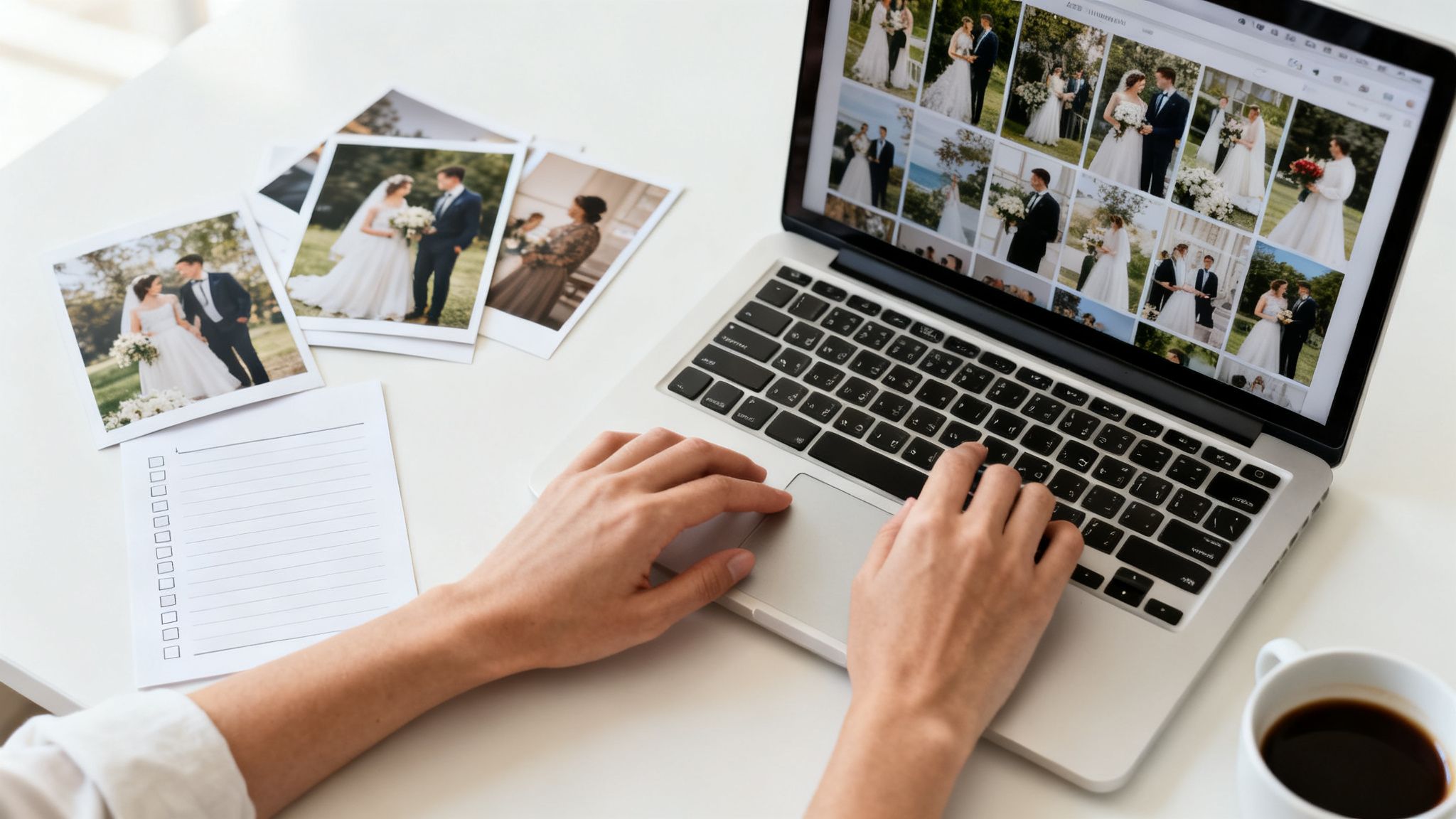
Think about it—this person will be with you for almost every moment of one of the biggest days of your life. You need to vibe with them! The interview is your chance to see if your personalities click and if their working style feels right for the energy you want on your wedding day. This chat goes way beyond just confirming package details. It's about getting a feel for their philosophy, their process, and how they navigate the beautiful, emotional chaos of a wedding.
Uncovering Their Vibe and Philosophy
Every photographer has a totally different approach. Some are like photo ninjas, blending into the background and catching moments you didn't even know were happening. Others are more hands-on, guiding you and your wedding party into those perfectly composed, magazine-worthy shots. Neither is wrong, but one is definitely right for you.
Your goal here is to figure out which one they are.
Start with some open-ended questions to get them talking about what they love about their job. You’re not just listening for the answer; you’re listening for genuine passion.
Here are a few questions I always recommend:
- How would you describe your style on the actual wedding day? Are you more of a quiet observer or do you like to direct the action? This gets right to the point.
- What’s your philosophy on candid moments versus posed portraits? This helps you understand their priorities and see if they match up with yours.
- Can you walk me through how you usually handle the family photos? This is a big one. A pro will have a clear, efficient, and friendly system for wrangling everyone. Trust me, it can get chaotic.
- How do you help a couple who says they’re awkward in front of the camera? Their answer here is everything. It reveals their ability to make you feel comfortable, which is a non-negotiable skill.
The secret is to listen for answers that show they have a solid plan but are also flexible. A great wedding photographer knows how to stick to a timeline while also being ready to capture the spontaneous, unscripted magic that really tells your story.
Gauging Their Technical Skills and Professionalism
While finding someone you click with is huge, you also have to trust that they know what they’re doing behind the camera. You don’t need to be a tech expert, but a few smart questions can tell you if they’re prepared for anything. There are no do-overs on your wedding day.
Wedding photography is a serious profession. With the rise of intimate micro-weddings and unique venues, you need a pro who can adapt. You can find some great insights into how the industry is evolving over at adorama.com.
Here’s how you can test their technical readiness:
- How do you handle tricky lighting, like a really dark reception hall or harsh midday sun? You want to hear more than "I have a good camera." Look for them to mention things like off-camera flash, diffusers, or how they find the best light and angles.
- What’s your backup plan if a camera or lens breaks? The only right answer here is that they have backup gear with them on-site. Period.
- What happens if you get sick or have an emergency on our wedding day? A true professional will have a network of trusted photographers with a similar style who can step in.
Logistics and The Fine Print
Okay, time to get down to business. These questions will make sure there are no surprises later, clarifying the entire process from the moment you book them to the day you get your gallery.
- From your perspective, what does a typical wedding day timeline look like?
- When can we realistically expect to get our full photo gallery back?
- What are the usage rights for our photos? Can we print them and share them online?
- Do you carry business liability insurance? (This is a must—the answer should be an immediate "yes!")
This is also the perfect time to ask how they work with other vendors, especially a videographer. Making sure they can play nice in the sandbox is crucial. If you're looking for what to ask on that front, our guide on questions to ask your wedding videographer is a great place to start. An experienced photographer will be a team player, making sure everyone gets the shots they need without stepping on any toes.
Making Sense of Contracts and Packages
So, you’ve found the one. A photographer whose style you adore and who you actually clicked with. Awesome! Now comes the slightly less romantic part: digging into the contract and the package details.
It's not the most glamorous step, but trust me, this is where you ensure there are zero stressful surprises later. A solid, detailed contract isn’t just legal mumbo-jumbo; it's the hallmark of a true professional and your ultimate peace of mind.
Think of the contract as the official roadmap for your wedding photography. It needs to spell out exactly what you're getting, when you're getting it, and what happens if life throws a curveball. Don't just skim it. Seriously, grab a drink, sit down together, and read every single line. If a sentence feels fuzzy or unclear, ask for clarification before your pen goes anywhere near that signature line.

Unpacking the Photography Package
Before getting lost in the legal terms, let's break down the package itself. Every photographer structures their offerings a little differently, but most packages are built around a core set of services and products. You need to know what you’re actually buying.
Here’s what you should be looking for in any package:
- Hours of Coverage: This is the big one—how long will your photographer be there? Make sure the timeframe covers everything important to you, from getting ready with your crew to that epic sparkler exit. Eight hours is a pretty standard starting point for a full day.
- Number of Photographers: Are you getting one photographer or two? For larger weddings, say with over 100 guests, a second shooter is an absolute game-changer. They can capture the groom's reaction while the primary focuses on the bride, or get candid shots of guests during cocktail hour.
- Deliverables: What do you get at the end of all this? The package should specify how many edited, high-resolution images to expect. Will they be in an online gallery? Does it include a physical album or prints?
- Engagement Session: A lot of photographers include an engagement shoot. This is a brilliant way to get used to being in front of the camera and build a real connection with your photographer before the big day.
Getting a handle on these items helps you compare different photographers fairly. It also gives you a clear picture of where your investment is going, which we break down even more in our guide to the average wedding photography cost.
What Your Contract Must Include
A good contract protects everyone involved. It’s a sign that the photographer runs a legitimate business, and it should make you feel secure. If a potential photographer is cagey about providing a detailed contract, see that as a massive red flag and walk away.
Here are the non-negotiable clauses your contract must have:
- Contact and Event Details: Seems obvious, but you’d be surprised. Double- and triple-check that your names, contact info, wedding date, times, and all venue locations are 100% correct.
- Payment Schedule: The contract should clearly state the total cost, the non-refundable retainer (or deposit) needed to lock in your date, and the due dates for the remaining payments.
- Deliverables and Timeline: It needs to state the approximate number of photos you'll get and, crucially, a delivery timeline. A typical turnaround for a full gallery is 6-12 weeks, but whatever it is, it has to be in writing.
- Image Rights and Usage: This part explains what you can and can't do with your photos. You'll almost always get a personal use license, meaning you can print them, post them on social media, and share them with family. The photographer keeps the copyright (the ownership).
- Cancellation and Rescheduling Policy: What if you have to postpone? What if the photographer gets sick? This section should clearly lay out the what-ifs, including any fees or refund policies.
Never, ever sign a contract that feels one-sided or has vague language. A true pro will have a fair, easy-to-understand contract and will happily walk you through any section you have questions about.
Finally, before you sign, make sure you're both on the same page about what happens after the wedding. Ask about their post-production workflow. How do they edit? Do you get any say in which photos get a little extra retouching? Getting these details sorted out now prevents any mismatched expectations and ensures you’ll absolutely love your final gallery.
Your Final Photographer Checklist
Before you make it official, run through this quick checklist. It's the last step to ensure you're completely confident in your choice.
| Checklist Item | Status (Yes/No) | Notes |
|---|---|---|
| We absolutely love their portfolio and style. | ||
| We've seen at least 2-3 full wedding galleries. | ||
| Their personality is a great fit for us. | ||
| We've read their reviews and they're glowing. | ||
| The package includes everything we need. | e.g., hours, second shooter, album | |
| The contract is clear, fair, and detailed. | ||
| We understand the payment schedule. | ||
| The delivery timeline is in the contract. | ||
| We've discussed a backup plan (illness, weather). | ||
| All our questions have been answered. |
Once you can confidently say "yes" to all of these, you're ready. Go ahead and book them! You've done the hard work, and now you can relax knowing your memories are in the hands of a professional you trust completely.
Common Questions About Wedding Photographers
Even after you've done all the digging, made a shortlist, and sat through interviews, a few final questions always seem to pop up. Hey, it’s a big decision! It’s totally normal to want every last detail nailed down before you sign on the dotted line.
Think of this as the last little confidence boost you need, where we tackle those nagging "what if" scenarios that can keep you up at night. Once these are sorted, you can move forward feeling excited and 100% sure you've found the right person to capture your day.
Should We Do an Engagement Session?
I get this question all the time, and my answer is almost always a huge, enthusiastic yes! An engagement session is so much more than just a way to get nice photos for your save-the-dates. It's basically a dress rehearsal.
This is your chance to get a feel for your photographer's vibe, see how they direct you, and just get comfortable in front of their camera. Let's be real, most of us aren't models, and an engagement shoot is the perfect way to work through those "what do I do with my hands?!" jitters.
An engagement session is your single best opportunity to build trust and chemistry with your photographer. By the time your wedding day arrives, you’ll feel like you’re hanging out with a friend, which leads to more natural, relaxed, and authentic photos.
This trial run pays off big time. You learn their cues, they learn what makes you laugh, and you build a rapport that makes the wedding day itself run so much more smoothly. Plus, you walk away with a beautiful set of photos from this amazing time in your life.
What Happens if It Rains?
Ah, the weather—the one thing nobody can control. A seasoned wedding photographer doesn't just have a plan for rain; they often get a little excited about the creative possibilities it brings. So please, don't let the forecast stress you out.
A real pro will have already checked out your venue for gorgeous indoor spots with great natural light. They’ll also show up ready with stylish clear umbrellas, turning what could be a downer into a super romantic and memorable photo op.
A solid rain plan usually includes:
- Pre-Scouted Indoor Spots: They’ll already know the best nooks inside your venue for portraits and family photos.
- The Right Gear: This means weather-sealed cameras and lenses, plus accessories like umbrellas and towels to keep everyone dry and happy.
- A Flexible Attitude: The best photographers know how to work fast when there's a break in the clouds and can find the beauty in the moody, dramatic light a storm creates.
Do We Need to Provide a Meal?
Yep, you absolutely do. Your photography team is on their feet for 8-12 hours straight, lugging heavy gear and staying focused the entire time. They need to eat to keep their energy and creativity up all the way through your reception.
It’s a standard courtesy to provide a hot meal for your photographer and their second shooter. The perfect time for them to eat is while you and your guests are having your main course—trust me, no one looks their best mid-chew anyway. This gives your crew the downtime they need. Just chat with your caterer or venue coordinator beforehand to get it sorted. It's a small gesture that means a ton.
At 1021 Events, we know that every single detail contributes to the magic of your day. From capturing breathtaking photos and video to setting the perfect mood with our Pro DJ and lighting services, we’re obsessed with making events unforgettable. Find out how we can bring your vision to life at https://www.1021events.com.
Choose Wedding Photography That Fits Your Vision
Planning a wedding in Fort Atkinson or elsewhere across Southern Wisconsin and Northern Illinois? Explore 1021 Events photography, videography, and wedding services, then start your wedding inquiry to discuss the moments and coverage that matter most to you.