
When you start planning a wedding, one of the first big numbers you'll encounter is for photography. Let's get right to it: the average wedding photography cost in the U.S. is about $2,900.
Of course, that's just an average. The reality is that prices can swing wildly, from a more budget-friendly $1,500 all the way up to $10,000 or more for a top-tier professional. It’s a huge chunk of your budget for a good reason—you're not just paying for pictures, you're investing in the memories you'll look back on for the rest of your life.
The Real Cost of Wedding Photography Explained
Knowing the national average is a great starting point for figuring out your own budget. It gives you a solid baseline so you're not completely surprised when you start getting quotes.
But think of that $2,900 figure like the MSRP on a new car. It gives you a ballpark idea, but the final price tag will change based on the make, model, trim package, and even the dealership you buy it from. Wedding photography works the same way.
Why Prices Vary So Widely
So, why the massive price range? It really boils down to a few key things that make each photographer's service unique. No two quotes will be identical because you’re paying for a specific blend of skill, experience, and service.
- Where You Live: It's no surprise that a photographer based in New York City or Los Angeles is going to have higher prices than one in a small Midwestern town. The cost of living and running a business there is just plain higher.
- Experience and Reputation: A photographer who has been shooting weddings for over a decade and has a calendar booked solid a year in advance will naturally command a higher price than someone who is just starting out and building their portfolio.
- What's in the Package: The final cost is directly tied to what you're getting. Are they there for 6 hours or 12? Is a second photographer included? Do you get a beautiful handcrafted album or just the digital files?
It’s also clear that couples are willing to invest more in photography than ever before. You can see how the average spend has been creeping up over the last few years.
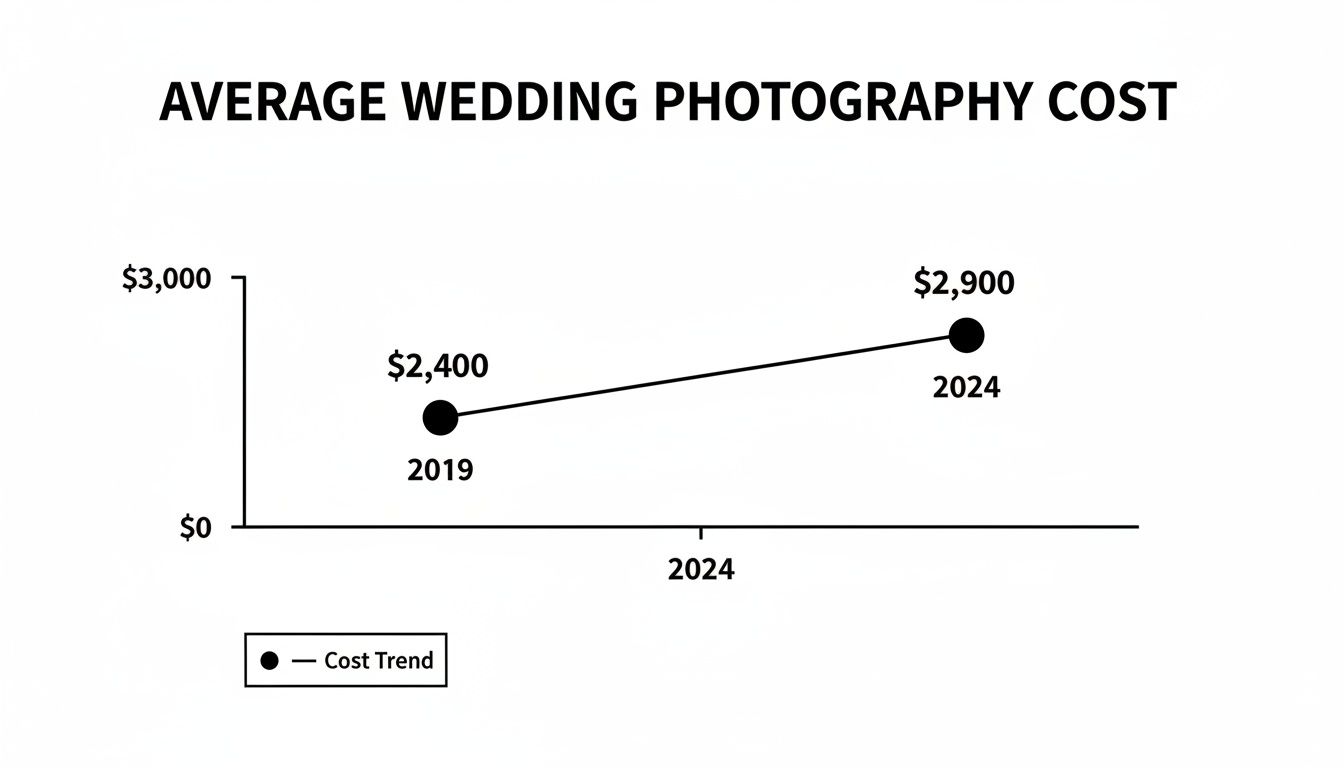
The numbers don't lie. The average price has jumped by about $500 in just five years, which really shows how much couples value having amazing photos of their big day.
In fact, with a whopping 87% of couples hiring a professional photographer, it's now the fourth-priciest vendor you'll book. This tells us that couples are prioritizing high-quality, lasting memories more than ever.
To help you get a better feel for what you can expect at different price points, here’s a quick breakdown of the typical tiers you'll find.
Wedding Photography Price Tiers at a Glance
| Photographer Tier | Typical Price Range (USD) | What to Expect |
|---|---|---|
| Budget/Emerging | $1,500 – $2,500 | Newer photographers building their portfolio. Often includes 4-6 hours of coverage and digital files. |
| Experienced | $2,500 – $4,500 | Established professionals with a solid portfolio. Typically includes 8 hours, a second shooter, and an online gallery. |
| Luxury/High-End | $5,000 – $10,000+ | In-demand, highly-experienced photographers. Often includes full-day coverage, premium albums, and other custom add-ons. |
This table should give you a general map for navigating the different options out there.
Industry-wide studies back all of this up. In 2024, the average hit $2,900, a significant climb from $2,400 back in 2019. Your location plays a huge role, too. Couples in the Mid-Atlantic, for instance, are looking at a range between $2,649 and $3,574, while those in the Southwest might find slightly lower prices. If you want to dive deeper, you can read the full research on wedding photographer costs to see how your own region stacks up.
Ultimately, getting a handle on the average wedding photography cost is the best first move you can make. It empowers you to find a photographer who not only fits your budget but will also capture your day perfectly.
How Your Wedding Location Impacts Photography Prices
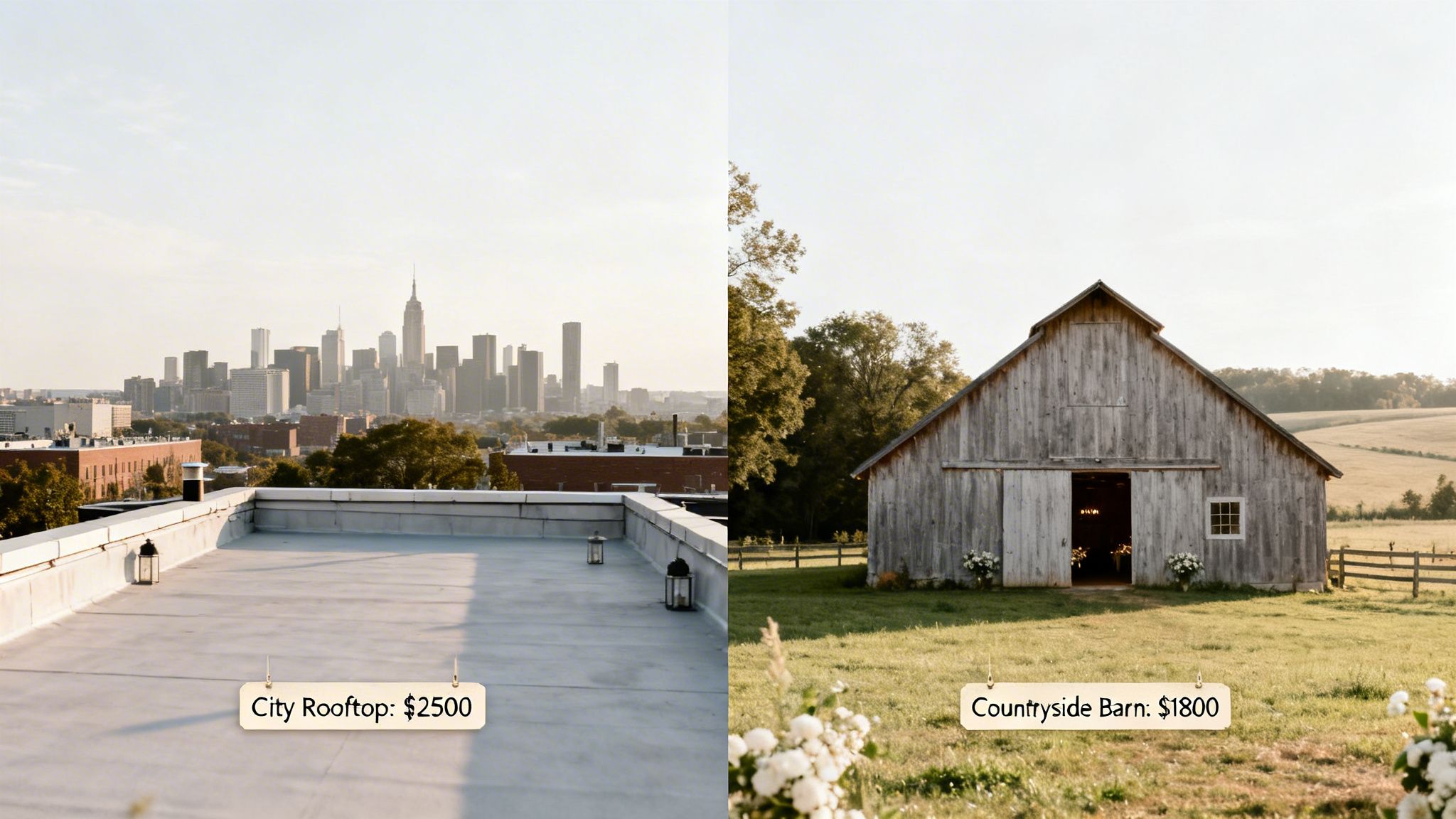
Ever wonder why a wedding photographer in New York City might charge double what a photographer in a small Midwestern town does for seemingly similar work? It’s the same reason an apartment in Manhattan costs more than one in Omaha: location, location, location. Your venue's zip code is genuinely one of the biggest factors that will shape the photography quotes you receive.
Just like everything else, the cost of running a business is wildly different from one place to another. A photographer based in a major city has to contend with higher studio rent, steeper insurance costs, and a much higher overall cost of living. Those business expenses have to get factored into their pricing. It isn't about being greedy; it's just the reality of running a sustainable business in that specific market.
Think of it like buying a cup of coffee. You know that latte from a corner cafe in Des Moines will cost less than the same drink from a hip spot in downtown San Francisco. The coffee might be equally delicious, but the overhead for the San Francisco shop is in a totally different league. That exact same principle applies to wedding photography.
Big City Premiums Explained
It’s no secret that major cities like Los Angeles, Chicago, and Miami are wedding magnets. They pull in couples from all over the globe, which means they also have a ton of talented, in-demand photographers. This high demand, mixed with the higher cost of doing business, creates a premium market where photographers can—and frankly, have to—charge more to stay afloat.
Working in a bustling city also comes with its own set of logistical headaches that add to the cost. Think about it: navigating insane traffic to get from the hotel to the ceremony, hunting for (and paying for) parking, or even needing an assistant just to help manage gear in crowded urban spaces. These aren't just little annoyances; they're real, tangible costs that add up.
The bottom line is this: a photographer’s rates are a direct reflection of their local economy. Expecting a photographer in a high-cost area to match the prices of one in a more affordable region is like expecting a Manhattan penthouse to rent for the same price as a suburban apartment.
Regional Price Differences in Action
The price gap becomes incredibly obvious when you start looking at the numbers from across the country. States with a higher cost of living and a booming wedding scene will always have higher average photography costs. It’s just how it works.
For example, looking at data for 2025-2026, you can see just how much location moves the needle. In pricey states like Massachusetts, where a wedding can average $45,000, or California, at $39,170, it’s common for experienced photographers to start their packages around $6,500. In luxury markets like the Bay Area, Southern California, and the greater NYC area, that number can easily soar past $10,000.
This doesn't mean you're out of luck if you're in one of these areas, but it does mean you need to be realistic when setting your budget. Understanding what's normal for your local market is the first step. It also helps you appreciate the value a photographer is offering when they send you a quote. This is also why your venue choice is so important—it sets the financial tone for most of your vendors. For more on that, you can check out our guide on how to choose a wedding venue.
What's Actually Inside a Wedding Photography Package?
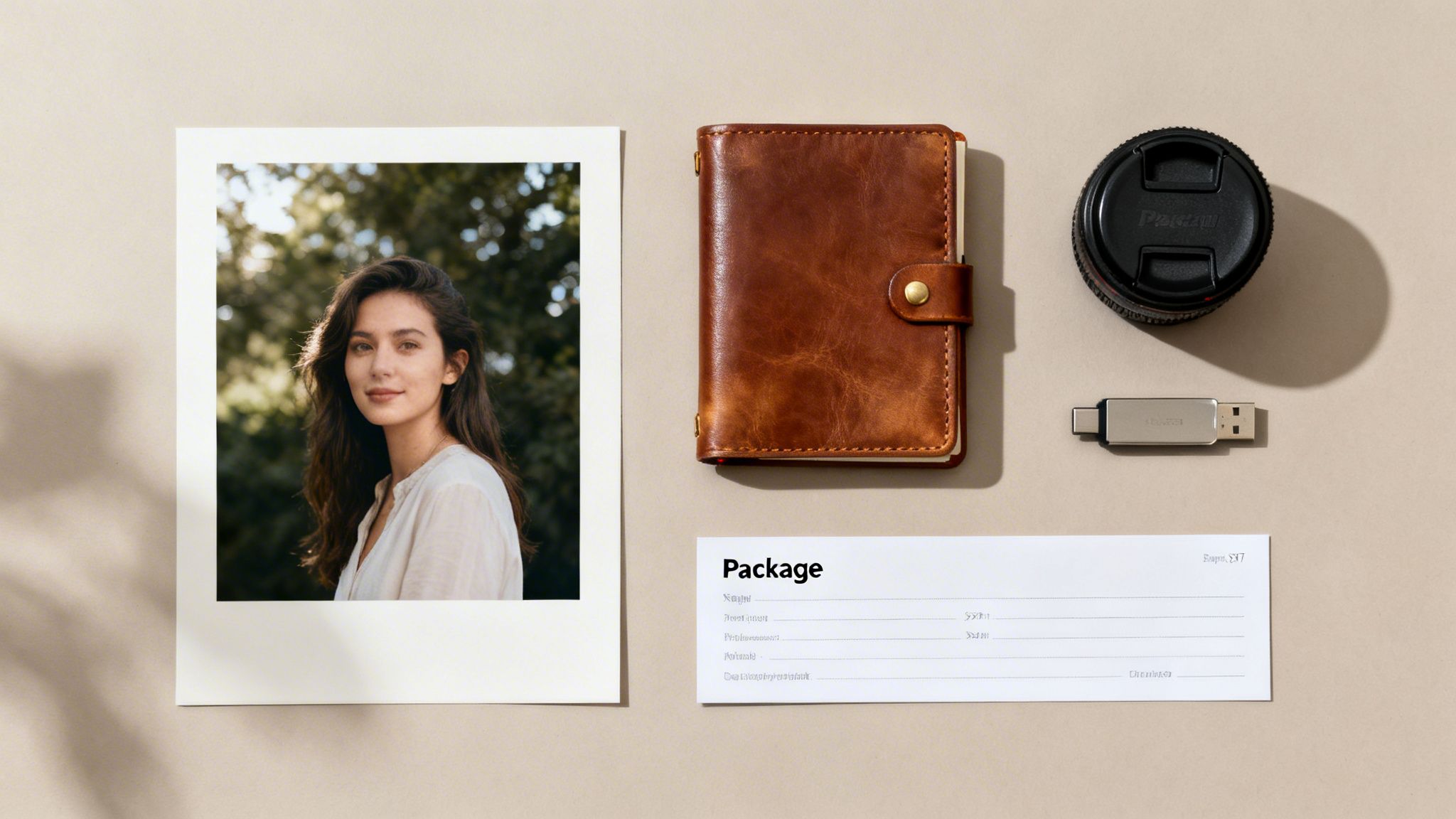
When you first start exploring wedding photography prices, you'll find that nearly everything comes in a "package." It’s a lot like ordering at a restaurant. You’ve got your main course—the photographer's time and talent—but the final bill changes depending on what appetizers, sides, and desserts you add.
Every photographer structures their packages a bit differently, but if you know the basic components, you can compare them apples-to-apples. A cheaper package might catch your eye, but it could be missing key ingredients that another, slightly more expensive option already includes.
Let's break down the menu so you know exactly what you’re ordering.
The Main Course: What Every Package Should Have
At the heart of any solid photography package are the absolute must-haves. These are the essentials that ensure the story of your day gets told right, from getting ready to the grand exit. Without these, you’re missing the whole point.
Here are the fundamentals you should see in every option:
- Hours of Coverage: This is how long the photographer will actually be there shooting. Most standard packages offer 8 hours, which is usually enough to capture everything from the final touches of hair and makeup to key reception moments like the first dance.
- A Professional Photographer: Seems obvious, right? But what you're really paying for is their specific artistic eye, their years of experience, and their professional-grade gear. Their skill is the main ingredient here.
- Digital Gallery of Edited Images: After the confetti settles, your photographer will sort through thousands of shots to pick the very best ones, then professionally edit them. You'll get these high-resolution images in a private online gallery, ready to download, share, and print.
Popular Side Dishes: Common Package Add-Ons
Once the basics are covered, you can start customizing your meal with popular add-ons. Think of these as the "side dishes" that make the whole experience even better, adding more depth and variety to your collection of memories.
Many photographers build these into their mid-tier or premium packages, but some also offer them à la carte. Common additions include:
- A Second Photographer: I always recommend this for weddings with more than 75 guests. A second shooter is a game-changer; they can capture your partner's reaction as you walk down the aisle while the main photographer focuses on you. You get two perspectives at once.
- An Engagement Session: This is more than just a pre-wedding photoshoot. It's the perfect chance to get comfortable in front of the camera and build a real connection with your photographer before the big day. Plus, you get gorgeous photos for your save-the-dates!
- Print and Usage Rights: This simply gives you the legal permission to print your photos wherever you'd like. Most photographers include this, but it’s always smart to double-check the contract.
Remember, a package is more than just a list of services—it's a curated experience. A photographer with a higher price might be including valuable items like an engagement session or a premium album, which could cost you more if purchased separately from a cheaper vendor.
The Dessert Menu: Premium Upgrades and Bundles
And finally, we have the "desserts"—the luxurious extras that really take your wedding coverage to the next level. These are the showstoppers that create a complete and immersive memory of your celebration.
Consider these high-value additions:
- Custom Wedding Albums: There is nothing like a professionally designed, heirloom-quality album. It's the ultimate way to tell your story and share it with family for generations.
- Parent Albums: These are typically smaller, duplicate copies of your main album and make for an incredibly thoughtful gift for parents and in-laws.
- Aerial Drone Coverage: For those stunning, cinematic shots of your venue, nothing beats a drone. You can learn more about the cost of wedding drone photography in our dedicated guide.
- Videography Services: Companies like 1021 Events often bundle photography and videography. This is a huge win for couples—it simplifies planning with one point of contact and ensures a consistent artistic style across both your photos and film.
- Photo Booths: A photo booth is pure, interactive fun for your guests. It provides endless entertainment and leaves you with a collection of candid, hilarious snapshots from the reception.
What Goes Into a Wedding Photographer's Price Tag?
Ever wondered why one photographer quotes you $2,500 and another comes in at $6,000? It’s rarely a case of one being a “bargain” and the other a “rip-off.” Think of it like building a custom car. The base model is one price, but every feature you add—leather seats, a sunroof, a killer sound system—adjusts the final sticker.
Your wedding photography package works the exact same way. It's a blend of experience, time, physical products, and extra services. Let's pull back the curtain on the main factors that drive the cost up or down so you can make choices that feel right for your day and your wallet.
A Photographer's Experience and Style
This is the big one. You're not just paying for someone to point and shoot; you're investing in their artistic eye, their ability to wrangle a rowdy wedding party, and their cool-headedness when things inevitably go off-script. A seasoned pro knows how to find gorgeous light in a dimly lit church and can anticipate that tear-jerking moment between a father and daughter before it even happens.
That kind of expertise is in high demand. A photographer with a decade of five-star reviews and a stunning portfolio can command a higher rate than someone just starting out. Their signature style—whether it's moody and cinematic or bright and airy—is also part of the package. You're paying for a specific, sought-after look.
The right photographer brings more than just a camera; they bring peace of mind. Investing in experience means trusting that your memories are in the hands of a professional who can deliver beautiful results, no matter what surprises the day throws your way.
How Many Hours of Coverage You Need
This one is pretty straightforward: the longer your photographer is with you, the more it will cost. The time they spend on-site is a direct driver of the final price, not just for their shooting time but for the thousands of photos they'll have to edit later.
Most standard packages hover around 8 hours of coverage. This usually gets you everything from the final touches of getting ready, through the ceremony and portraits, and well into the reception.
- Going Shorter (4-6 Hours): Perfect for elopements, courthouse ceremonies, or intimate weddings where you just want the key moments captured. This is a smart way to save if you don't need photos of breakfast mimosas or the last song of the night.
- Going Longer (10-12 Hours): If you have separate locations for getting ready, the ceremony, and the reception, or a big gap in the middle of the day, you'll need more time. This is also for couples who want every single moment covered, from the prep to the grand exit.
Your Final Deliverables (Digital vs. Physical)
What do you actually get after the wedding is over? The answer to that question is a huge piece of the pricing puzzle. These days, almost every package includes a high-resolution digital gallery of your edited images.
But many couples want something they can hold. This is where costs can really vary. A package that includes a gorgeous, custom-designed $1,000 leather-bound album will naturally be priced higher than one that only offers a link to a digital download. Things like parent albums, professional prints, and big canvas wraps are popular add-ons that also affect the total.
Fun Add-Ons and Extra Services
Here's where you get to customize your coverage and make it truly your own. Think of these as the fun upgrades—not always essential, but they can make your wedding memories even more incredible.
Some of the most popular extras include:
- Videography: Bundling photo and video together with a team like 1021 Events is a great way to get a cohesive style and often a better deal.
- Drone Footage: Nothing captures the epic scale of your venue quite like cinematic aerial shots.
- A Photo Booth: It’s an amazing way to keep your guests entertained and get hilarious, candid snaps from the reception.
- A Second Photographer: For weddings with a large guest count, this is a must-have to ensure you get shots of both partners getting ready and different angles during the ceremony.
We've laid out how these choices can affect your budget in the table below. It’s a quick-glance guide to see how different decisions can swing your final number.
How Different Choices Impact Your Photography Budget
| Cost Factor | Lower Cost Option | Higher Cost Option | Budget Impact |
|---|---|---|---|
| Experience Level | Emerging Photographer | Seasoned Professional | A pro with 10+ years can cost 2-3x more than a newcomer. |
| Hours of Coverage | 4-6 Hours (Elopement) | 10-12 Hours (Full Day) | Each additional hour can add $250–$600+ to the total. |
| Deliverables | Digital Gallery Only | Custom Album + Prints | A premium album can add $800–$2,000+ to a package. |
| Team Size | One Photographer | Two Photographers | Adding a second shooter typically costs $500–$1,000. |
| Extra Services | Photography Only | Photo, Video & Drone Bundle | Bundles can add $2,000–$5,000+, but offer savings over booking separately. |
Ultimately, understanding these building blocks empowers you to create a package that fits your vision perfectly. You can decide where to invest—maybe a top-tier photographer is your priority, but you’re happy with a digital-only gallery—and where you can save.
For more insider knowledge, take a look at our essential event photography tips to help you get the most out of your investment.
Understanding the Business Behind the Camera
Ever get a photography quote for a few thousand dollars and think, "Wait, am I just paying someone to click a button for eight hours?" It’s a totally fair question, but the real answer is a hard no. That price tag is a lot like the bill you get at a fancy restaurant—it covers way more than just the food on your plate.
What you're really paying for is a professional, sustainable business. That one number has to cover years of training, tens of thousands of dollars in gear, specialized software, insurance, marketing, and a ton of other business costs that you never even see.
More Than Just a Day of Shooting
Those eight hours your photographer is with you at the wedding? That’s just the tip of the iceberg. Seriously. For every single hour they spend actively shooting, you can count on another three to four hours of work happening behind the scenes. This is where the real magic happens.
This hidden work includes stuff like:
- Culling: This means painstakingly sifting through thousands of photos to find the absolute best ones that tell the story of your day.
- Editing and Retouching: Meticulously tweaking the color, lighting, and composition on hundreds of images to create that consistent, polished look you fell in love with.
- Album Design: Thoughtfully laying out your best photos to create a beautiful album that flows like a story.
- Gallery Delivery: Prepping and uploading all your final, high-resolution images to an online gallery for you and your family to enjoy.
Toss in the time for client meetings, planning your timeline, and travel, and a single wedding can easily take up 40-50 hours of a photographer's time.
The Hidden Costs of Running a Business
Let’s be real: running a photography business is expensive. The gear alone—we’re talking professional cameras, a whole arsenal of lenses, lighting equipment, and reliable memory cards—can easily cost over $20,000. And that gear needs constant maintenance, repairs, and eventually, upgrades.
But it doesn't stop with the equipment. There's a whole host of other expenses that keep the business running smoothly and legally.
Think of a photographer as a small business owner, because that's exactly what they are. They've got the same overhead as any other company, from software subscriptions and insurance to marketing and self-employment taxes.
These ongoing costs add up fast. For example, a professional might have over $25,000 in business expenses each year, covering everything from gear and software to advertising. When you do the math, that means a single 9-hour wedding has a built-in cost of nearly $1,000 before the photographer even makes a dime of profit. If you're curious, you can see a full breakdown of wedding photographer business costs to get a better idea.
Once you see all the behind-the-scenes work, the price starts to make a lot more sense. You’re not just hiring a person for a day; you're partnering with a creative professional who has built their entire business around capturing your most important memories perfectly.
Finding the Right Photographer and Maximizing Value
Trying to find the perfect wedding photographer can feel like you're constantly weighing your dream photos against your real-world budget. It’s so easy to get fixated on the price tag, but the real win is finding the best possible value.
Let's be real: the cheapest photographer is almost never the best choice. But that doesn’t mean you have to hire the most expensive one, either. The sweet spot is finding someone whose price fits, whose artistic style you love, and whose personality just clicks with yours. You’re looking for a partner in crime for the day, someone who makes you feel amazing while they capture your memories.
Looking Beyond the Price Tag
A photographer's portfolio is your first stop. As you scroll through their work, look past just the "wow" shots. Is their quality consistent? Can they capture those little, authentic moments of pure joy or quiet emotion? Make sure you see examples of their work in different lighting—from a bright, sunny outdoor ceremony to a dark, candlelit reception.
Next up, dive into the client reviews. Don't just glance at the 5-star ratings; read the actual stories. Did the photographer make the couple feel relaxed and natural in front of the camera? Were they a calming presence on a chaotic day? These little details give you a huge glimpse into what it’s actually like to work with them.
Once you’ve narrowed it down to a few favorites, set up a call or meeting. You’re going to spend a massive chunk of your wedding day with this person. You want someone who feels like a friend, not a vendor who adds to the stress.
Essential Questions to Ask a Potential Photographer
To figure out if a photographer is really the right fit, you need to ask more than just "how much?" These questions will help you understand their whole process and what you can expect.
- Can you describe your photography style? This is a big one. You want to make sure their vibe—whether it's documentary-style, classic and traditional, or light and airy—matches the one you're dreaming of.
- What’s your backup plan for equipment failure or if you get sick? A pro will always have a plan B. We’re talking backup cameras, extra lenses, and even a network of trusted photographers they can call if there's an emergency.
- How long after the wedding will we get our photos? This sets your expectations right from the start. Turnaround times can vary like crazy, from just a few weeks to a few months.
- Can we see a full wedding gallery you've shot recently? A portfolio is a highlight reel. A full gallery shows you how they tell the entire story of a wedding day, from the chaotic getting-ready moments to the dance floor shenanigans.
The ultimate goal is to find a photographer whose work you love and whose presence you'll genuinely enjoy on your wedding day. This combination of skill and personality is where true value lies.
Simplifying Your Search with Bundled Services
Let’s face it, juggling a bunch of different creative vendors can be a massive headache. This is where a multi-service company like 1021 Events can be a lifesaver.
When you bundle photography with videography, drone coverage, and maybe even a photo booth, you get a single, cohesive team that already knows how to work together. This approach not only simplifies your planning but often delivers incredible value and ensures a consistent style across all your photos and videos. For a deeper dive, our complete guide on choosing a wedding photographer walks you through everything.
And after all that planning and investment, you’ll have a gallery full of beautiful photos. Don't let them just sit on a hard drive! Start thinking about fun ways of displaying your wedding photos at home to keep those amazing memories front and center.
Common Questions About Wedding Photography Prices
Figuring out wedding photography pricing can feel like a whole new language. You're suddenly talking about coverage hours, second shooters, and deliverables, all while trying to stick to a budget. Let's clear up some of the most common questions couples ask.
How Many Hours of Coverage Do We Really Need?
This is a big one, and honestly, it all comes down to the flow of your wedding day.
Most couples find that 8 hours of coverage is the sweet spot. That’s usually enough time to capture the tail end of you getting ready, the ceremony, all the family photos, and the main events at the reception—think first dance, toasts, and cake cutting.
But not all weddings fit that mold. If you're having a shorter, more intimate elopement, 4-6 hours might be perfect. On the other hand, if you've got a packed schedule, multiple locations, or a long gap between the ceremony and reception, you'll probably want 10-12 hours to make sure the whole story gets told without feeling rushed.
Is a Second Photographer Worth the Extra Cost?
For weddings with over 75 guests? I'd say it's an absolute must. It might feel like just another expense, but the value you get is incredible.
Think of it this way: a second photographer gives you two different perspectives on every single important moment.
While your main photographer is focused on you walking down the aisle, the second shooter can capture the look on your partner's face. While the lead is organizing family portraits, the second is getting amazing candid shots of your guests enjoying cocktail hour. You end up with a much richer and more complete wedding gallery.
Can We Negotiate Prices with a Photographer?
It’s natural to want the best deal, but asking a professional photographer for a flat discount usually isn't the best approach. Their prices are carefully set to cover their business costs, gear, insurance, and the immense amount of time they put into your day.
Instead of asking for a discount, try asking if they can build a custom package that fits your budget.
You could see about reducing the coverage by an hour, or maybe swapping a physical album for a digital-only delivery. Many photographers are willing to get creative, especially if your wedding is during the off-season (think November through March) or on a weekday.
What Is the Benefit of Booking a Multi-Service Company?
Booking your photography with a company that also handles videography, DJ services, or a photo booth can be a game-changer for your planning process. It means one contract, one point of contact, and a lot less juggling.
Plus, you often get a better deal than if you hired each vendor separately. The best part? It guarantees that everyone is on the same team, working together with a consistent style to make your event look and feel cohesive.
Ready to see how bundled services can simplify your planning and elevate your wedding day? 1021 Events offers cohesive photography, videography, drone coverage, and more to capture every moment perfectly. Explore our wedding packages today!
Choose Wedding Photography That Fits Your Priorities
Planning a wedding in Fort Atkinson or elsewhere across Southern Wisconsin and Northern Illinois? Explore 1021 Events photography, videography, and wedding services, then start your wedding inquiry to discuss your date, coverage needs, and budget.