
The toast is about to start. The lights are down, the couple is waiting for the first dance, or the keynote speaker is already at the lectern. Phones rise across the room, but the event hashtag is missing from the screen, nobody knows which account to tag, and the few posts appearing online are blurry, repetitive, or impossible to find later.
That scramble is common because planners treat social media as promotion instead of production. Social media at events works best when someone plans it before doors open, captures it without interrupting the experience, and follows up while the memory is still fresh. The same pipeline works for a wedding, corporate gala, private party, or charity fundraiser, but the content, permissions, and success measures should change with the occasion.
The Moment Everyone Goes Quiet on Their Phones
A wedding planner can spend months choosing flowers, lighting, music, and table settings, then discover during the reception that guests are posting beautiful moments under three different hashtags. A corporate emcee may deliver a strong opening, only to find that nobody captured the quote in a format the company can reuse. At a charity gala, the room can be full of emotion while the online story remains a single sponsor logo and a dark photograph of the stage.
The problem isn't a lack of phones. It's a lack of direction.
Guests already document the moments they care about. They share a friend's reaction, a dramatic entrance, a funny speech, or a room reveal because those moments give them a way to participate. Your job as the producer is to make that participation easy without turning the event into a content factory.
A deliberate plan matters because social content now shapes how people remember an event, not just how they discover it. A guest who leaves early can still see the first-dance highlight. A prospective attendee can understand the atmosphere before registering. A sponsor can see whether its presence appeared naturally in the story or only in a closing slide.
Practical rule: If nobody owns the social plan during the event, the plan is “hope guests post something.”
Treat the work as a three-stage production pipeline:
- Plan: Decide the audience, channels, visual style, hashtag, permissions, and approval process.
- Capture: Assign people to record the moments that matter, while protecting the experience in the room.
- Follow up: Turn live content into highlights, thank-you posts, sponsor recaps, donor stories, and useful reporting.
A social wall, photo booth, livestream, or drone can support that pipeline, but none of them replaces it. A polished feature without a clear purpose often produces attractive footage that nobody can use. The strongest event campaigns are quieter and more deliberate. They know which moments deserve attention, who can approve them, and where the finished content belongs.
How Social Media Became Event Infrastructure
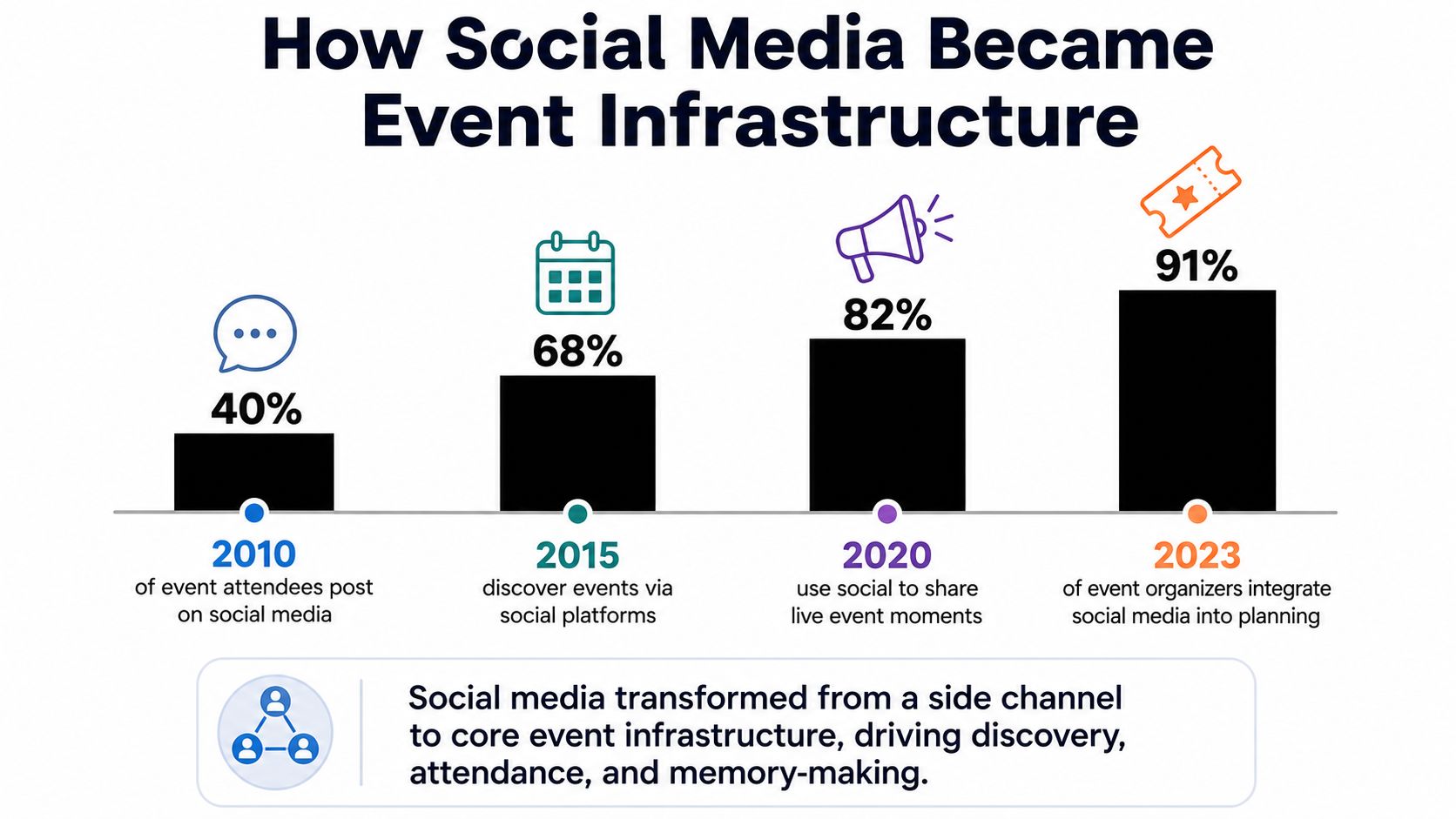
A wedding guest posts the entrance before the couple reaches the dance floor. At a corporate gala, an executive clip travels while the next speaker is still preparing. At a charity fundraiser, a donor story can reach people who never entered the room. These moments explain why social media moved from invitation channel to event infrastructure.
The shift followed the platforms themselves. LinkedIn launched in 2003, Facebook in 2004, and Twitter in 2006, while Facebook later expanded its brand pages and Events features. The history of social connections in event technology traces how events moved beyond digital invitations toward ongoing promotion, conversation, and post-event amplification.
The potential audience is now too large to treat social as a side channel. Around five billion people used social media worldwide in 2023, with more than one billion users in China and over 860 million in India, according to Statista's social network overview. Event teams use that reach for discovery, attendance signals, live updates, and memories across markets.
Reach is not attention. In one Facebook-based study of 38 live community events, videos averaged 23 minutes and 1 second, while average watch time per video was 23 seconds, a contrast reported in the event research summarized by Statista. That gap should shape the production brief. A complete recording may serve an archive, but viewers decide quickly whether a clip deserves their time.
Design for the scroll, not the room
A keynote can work in a ballroom and fall flat on a phone. A wide group photograph may include everyone while communicating little in a crowded feed. Social content needs a clear subject, an immediate visual cue, readable framing, and enough context for people who were absent.
The answer is not frantic vertical video. Capture should reflect how guests consume content after the applause ends. A short reaction, strong soundbite, or clean room reveal can carry more value than an unedited programme recording.
Social media functions as infrastructure because it links discovery, participation, and follow-up. The planner's advantage comes from controlling the handoffs between discovery, participation, and follow-up. That requires deliberate choices about what gets captured, who can appear, and how each platform is used.
Pre-Event Planning That Actually Pays Off
The pre-event plan should fit on a working page. If the social strategy needs a sprawling deck to explain it, the team probably won't use it during setup.
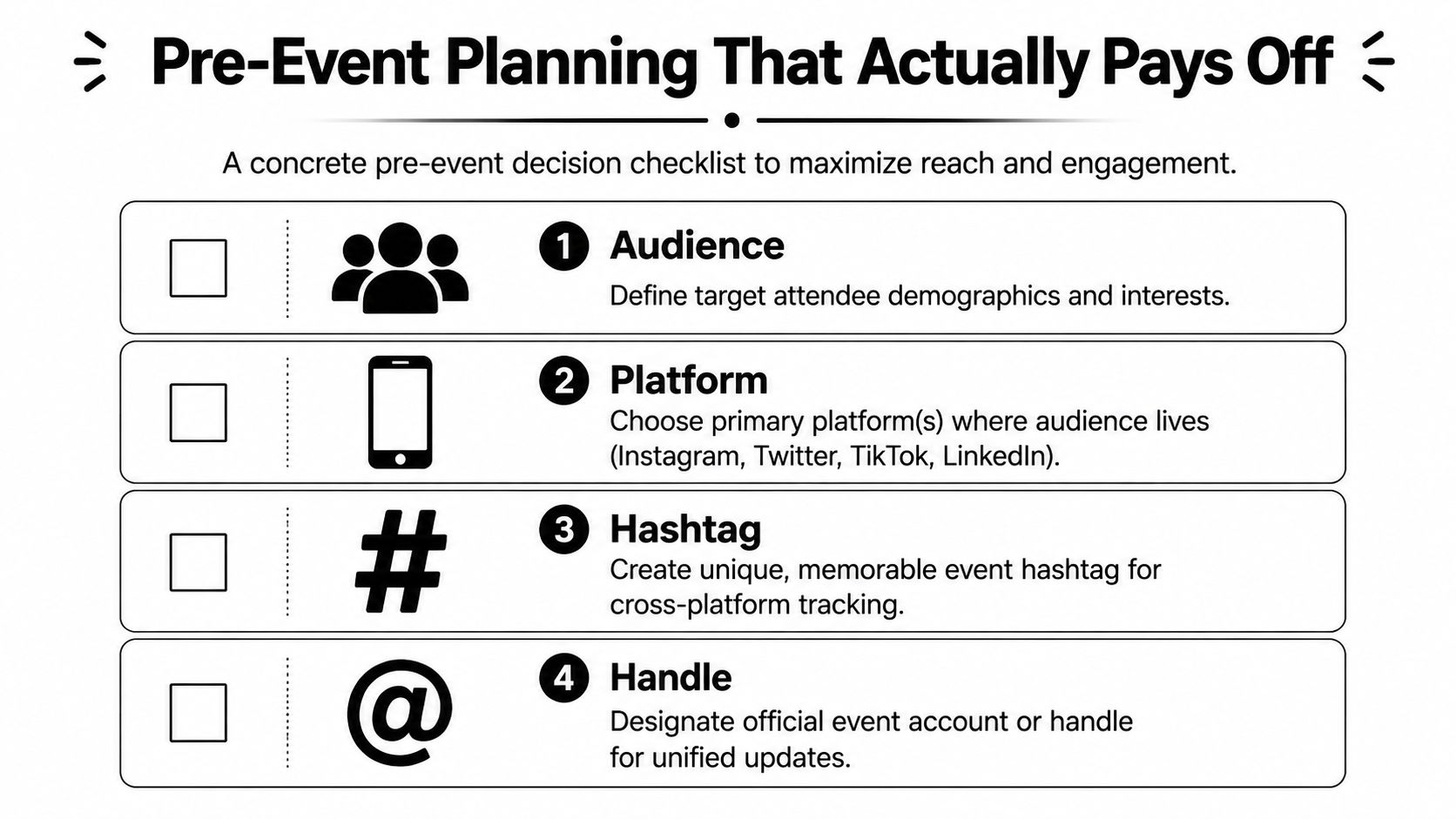
Start with four decisions: who you're speaking to, where they already spend attention, how they'll identify the event, and what you'll publish before and after the doors open.
Choose the audience before the platform
A wedding audience may respond to visual, phone-native posts and a shared family hashtag. A corporate audience may need polished executive clips and LinkedIn-ready framing. A charity audience often needs a clear mission story, donor recognition, and a direct next step after the event.
Don't select every platform because a vendor lists it in a proposal. Pick the channels that match the people you need to reach and the content your team can produce well. The social survey of business-event attendees found that 83% used social media in connection with a professional event before, during, or after attending, and 89% considered it at least somewhat valuable. The data supports treating social as part of the attendee journey, but it doesn't justify posting identical content everywhere.
Build an identifier people can actually use
Create a hashtag that is short, easy to spell, distinctive, and connected to the event name. Search it before publishing. If it already carries unrelated conversations, choose another. Keep a backup option in your internal notes, but don't confuse guests with multiple public tags.
Pair the hashtag with one official account handle. Put both on registration confirmations, venue screens, table cards, programme pages, and the photo booth. For a practical registration workflow that keeps event information consistent, review these event registration best practices.
Plan the final stretch without overproducing it
The final two weeks need a light calendar, not a content marathon. Schedule an announcement, a useful attendee reminder, a speaker or vendor introduction, a practical arrival post, and a clear prompt for what guests can share. Then reserve space for real-time updates and a post-event thank-you.
Influencer outreach should stay grounded. A local creator whose audience matches the event can be more useful than a large account with no connection to the occasion. Give creators a brief, arrival information, approved talking points, disclosure expectations, and a direct contact for questions.
Finally, brief the venue, photographer, DJ, caterer, speakers, sponsors, and registration team. Tell them the official handle, what can be filmed, which moments are restricted, who approves social-wall posts, and where final assets will be delivered. Planners often skip this step, then spend the event correcting inconsistent captions and accidental reveals.
On-Site Tactics Worth the Budget
The right on-site stack depends on the event's purpose, layout, audience, and tolerance for interruption. A feature earns its budget when it creates content or participation that the core crew couldn't capture as efficiently on its own.
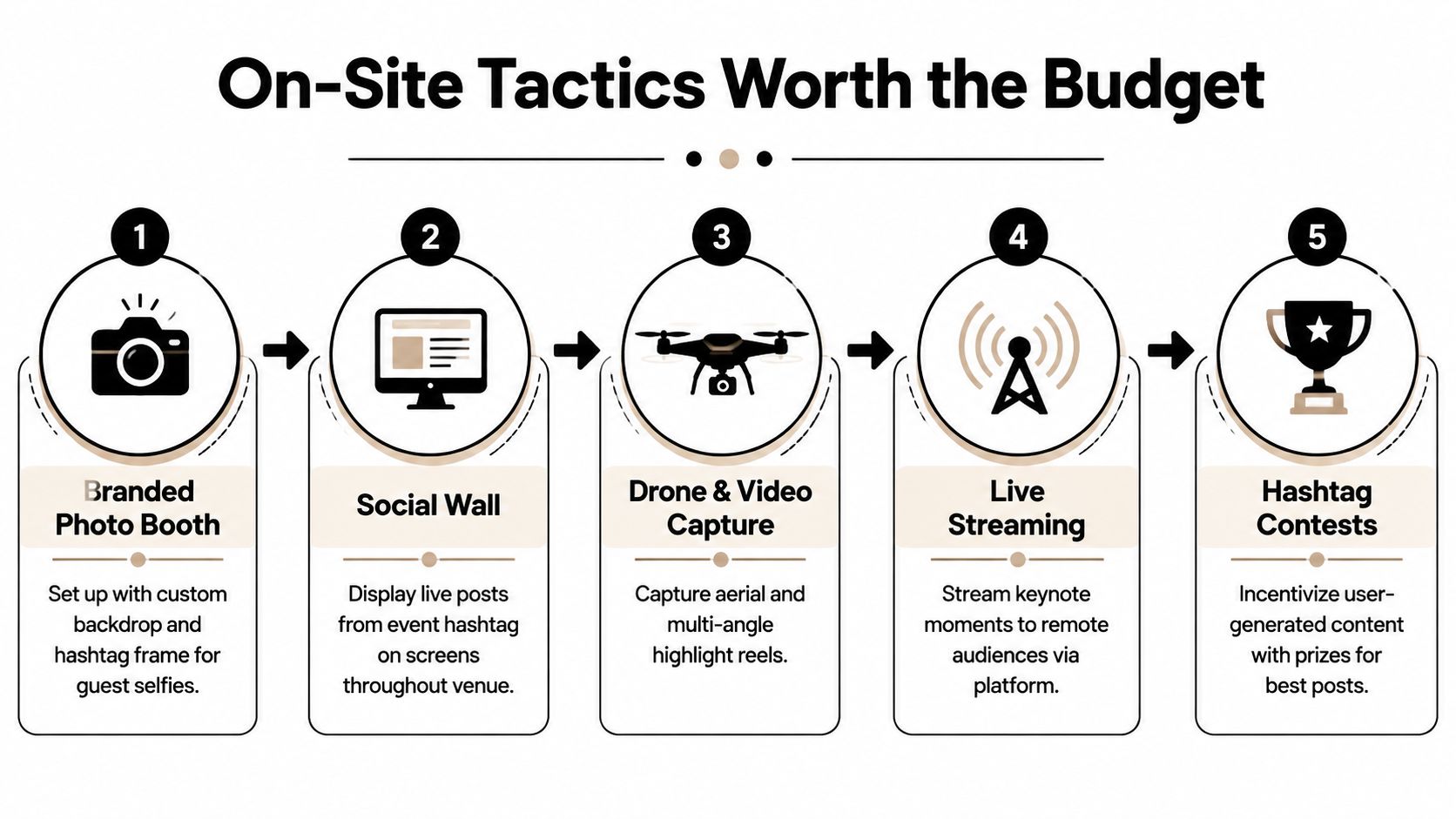
A branded photo booth is a strong choice when guests need an obvious reason to create and share. It works particularly well at weddings, milestone parties, and gala receptions, where a custom backdrop, event handle, and clear sharing prompt can turn a portrait into a memory guests distribute themselves. For planning the physical setup, compare the options in this guide to a branded photo booth.
Match the tool to the moment
A social wall can energize a charity gala or product launch when the room wants to see its own activity. It can also become a distraction at a ceremony, expose an unapproved image, or make a quiet corporate dinner feel like a live comment feed. Use a moderation queue and display only approved posts.
Drone footage suits a large outdoor reveal, venue showcase, or corporate production with a meaningful spatial story. It's overkill for an intimate wedding where the emotional value sits in close reactions, vows, and family interactions. It also needs venue permission, a qualified operator, and a clear decision about where the footage will be used.
Live streaming makes sense when remote supporters, staff, family members, or customers need access to a defined programme segment. Streaming every minute of a private event usually creates a long, difficult-to-watch recording. Choose one or two moments, test the audio, and assign someone to monitor the feed.
Hashtag contests can encourage participation, but prizes shouldn't be the only reason people post. Make the prompt specific, such as sharing a favourite design detail, a mission-related moment, or a reception reaction. For teams refining short-form distribution, this resource on how to get more video views in 2026 offers relevant channel and editing considerations.
Staff the system, not just the camera
Assign separate responsibilities where possible:
- Capture lead: Records hero moments, reactions, room details, and short interviews.
- Community monitor: Watches the hashtag, replies to useful comments, and flags problems.
- Approver: Clears posts for a social wall, sponsor mention, or executive account.
- Runner or producer: Coordinates timing with the emcee, venue, speakers, and photographer.
1021 Events is one example of an event production provider that combines photography, videography, aerial drone coverage, photo backdrops, and photo booth services. The point isn't to buy every capability. Choose the smallest stack that protects the guest experience and produces the content your follow-up plan needs.
Weddings, Corporate Events, Parties, and Charity Galas in Practice
The same social framework changes shape as the stakes change. A wedding protects intimacy. A corporate event protects the brand. A private party protects access. A charity gala has to turn emotion into continued support.
Weddings
Keep capture discreet. Assign one person to collect the couple's key moments, immediate family reactions, reception details, and a few vertical clips that can become a same-day highlight. Use one shared hashtag and print it where guests can see it without making the room feel branded.
A couple usually doesn't need a social wall during vows or speeches. They may want a curated display during cocktail hour or the reception instead. Make the opt-out process easy for guests who don't want to appear online, and keep the focus on the experience rather than asking everyone to perform for the camera. Couples planning their video approach can also review these Veo3 AI wedding video tips for ideas on turning event footage into a coherent story.
Corporate events
Corporate content needs brand-safe framing and fast approvals. Capture executive soundbites, product demonstrations, audience questions, room reveals, and sponsor or partner moments with clean audio and enough context for LinkedIn.
Coordinate closely with the person responsible for corporate event video production. Decide in advance whether the event is promoting a product, recruiting talent, strengthening customer relationships, or giving employees a shared moment. Those goals produce different shots and different calls to action.
Private parties
Private parties rarely need a full production stack. Use phone-native vertical clips, a shared album, a simple private link, and a single contact who can remove unwanted content. A photo booth can work if the host wants an activity, but a public hashtag may be inappropriate for a guest list that expects privacy.
Charity galas
A gala needs more than attractive room shots. Capture the mission in human terms, the programme's emotional turning point, donor and volunteer participation, sponsor visibility, and the action supporters can take afterward. Avoid filming beneficiaries without clear permission, particularly when personal circumstances are sensitive.
A post-event package might include a thank-you video, an impact story, a sponsor recap, a donation link, and a private album for attendees. Social media opens the relationship, but the charity should move interested supporters toward channels it can manage directly, such as an email list or donation page.
Consent, Privacy, and Moderation You Cannot Skip
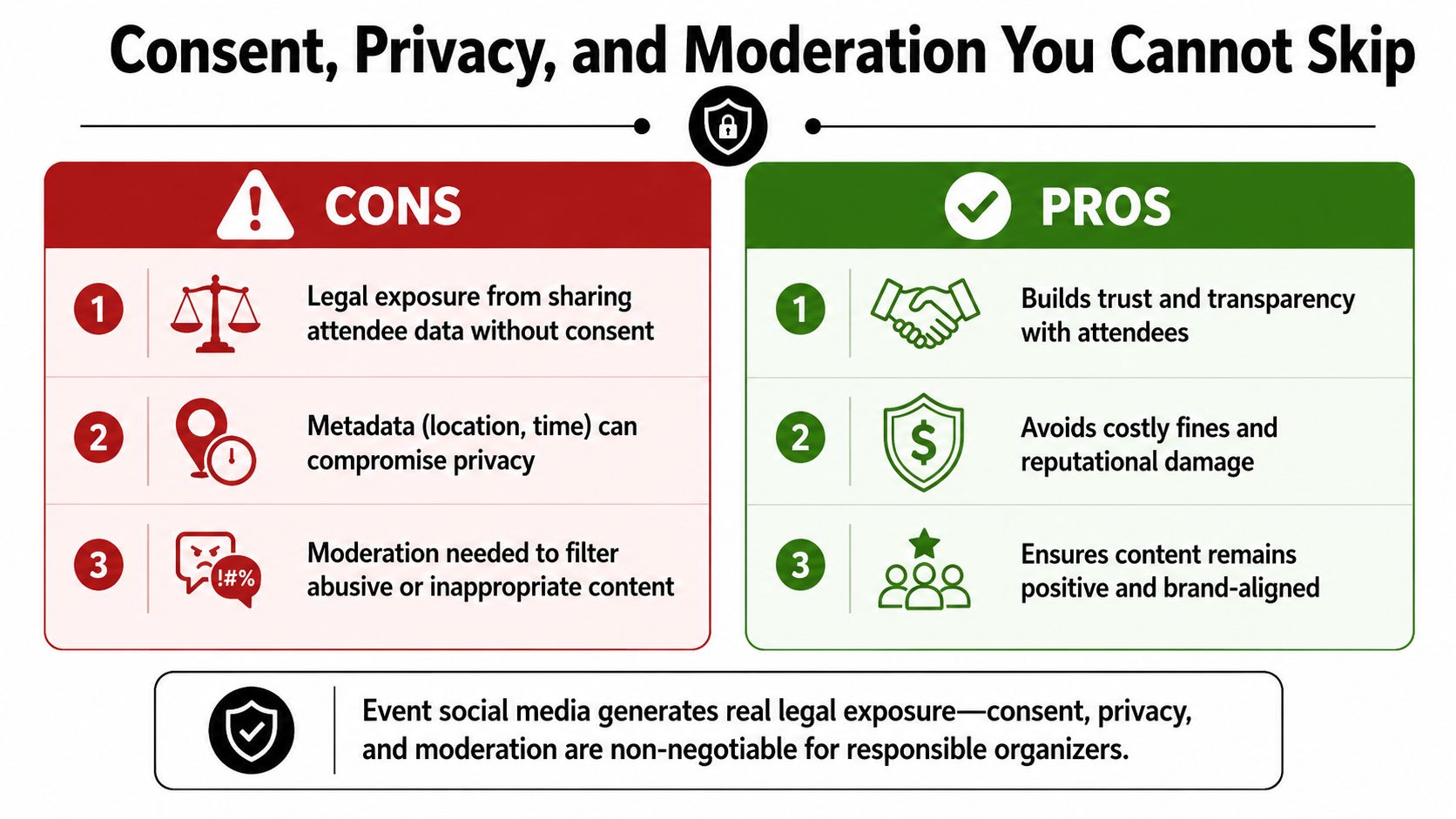
More sharing isn't automatically better. Event content includes faces, voices, locations, timestamps, relationships, and sometimes sensitive personal information. Public visibility doesn't erase the responsibility to explain what you're collecting, where it may appear, or how long the material will remain available.
The Social Media Data and Publicising Your Event activity book advises organizers to minimize data collection, publish clear privacy terms, disclose how social data is used and retained, and remember that public posts and metadata may travel beyond the event.
Treat consent as part of the run of show
A hashtag can invite voluntary participation, but it isn't a substitute for a clear notice. A direct request to film someone, collect their contact details, or reuse their image requires a more deliberate permission process.
Use plain-language signage at entrances and capture areas. Explain whether content may appear on a social wall, event account, sponsor channel, website, or future promotion. Offer a visible opt-out route, brief staff on how to honor it, and avoid treating a guest's presence as permission for every form of reuse.
Geotagging deserves special care at private homes, workplaces, retreats, and venues serving vulnerable communities. Location metadata can reveal where people are, where they stayed, or when a private gathering occurred. Turn off automatic geotagging for official capture when the location itself creates risk, and ask whether the venue should be named at all.
Moderate before content reaches the screen
Minors change the consent equation. Don't assume a parent's presence settles every use case, and don't place children on a public display without a process that addresses permission and the intended audience.
A social-wall policy should define:
- Approval rules: What content is allowed, restricted, or rejected.
- Escalation: Who handles harassment, accidental disclosures, or complaints.
- Removal: How staff remove content from the wall and request takedown elsewhere.
- Retention: When downloaded posts, contact details, and captured media are deleted.
For larger media libraries, establish permissions and folders before the event. A structured cloud storage system for photos can help separate approved assets from raw files and limit unnecessary access.
Post-Event Follow-Up and Measurement That Proves Value
The event doesn't finish when the last post goes live. The follow-up phase turns scattered content into a usable record and connects social activity to the reason the event existed.
Start with a small publishing sequence. Send a thank-you while the event still feels current, release a concise highlight, share a moderated user-generated-content roundup, and prepare custom recaps for sponsors, donors, executives, or the host. Don't dump every photograph into a gallery without labels or context. Give each asset a job.
Platform behavior should shape the report. In the 2026 experiential marketing forecast, only 61% of respondents who captured event content shared it on Facebook, 55% on Instagram, and 48% on YouTube, according to Event Marketer's EventTrack forecast. That pattern argues against a generic “post everywhere” report. Track the channels people used for the event and distinguish capture from publication.
Match the metric to the outcome
| Event Goal | Metric to Track | Why It Matters |
|---|---|---|
| Drive registrations | Clicks and completed registrations from campaign links | Shows whether social interest became attendance |
| Support donations | Donation-page visits and completed gifts from social traffic | Connects event storytelling with fundraising action |
| Build brand awareness | Qualified reach, video retention, and meaningful comments | Shows whether the right audience noticed and understood the message |
| Satisfy sponsors | Approved sponsor appearances, tagged posts, and recap delivery | Demonstrates promised visibility without reducing the event to logos |
| Strengthen community | Attendee posts, replies, saves, and direct feedback | Reveals whether guests participated and felt represented |
For a deeper reporting framework, use this guide to measure social media with Sift AI, then keep the final report readable. Include the original objective, selected channels, strongest assets, notable audience responses, conversions, privacy issues, and recommendations for the next event.
Don't report likes alone. A wedding client may value a fast highlight reel and a private archive. A corporate team may value an executive clip that sales can reuse. A charity board may care more about donation activity and donor follow-up than a large reach number. The event ROI measurement guide can help connect those outcomes to the broader event budget.
Planning a social-ready event in Fort Atkinson, Southern Wisconsin, or Northern Illinois? Explore 1021 Events photography, videography, DJ/MC, lighting, photo booth, and production options on our Services page, then tell us about the moments you want to create and capture.