
The event photography and videography service market reached USD 2.78 billion in 2025 and is growing at a projected 9.5% CAGR, which puts professional coverage firmly in mainstream event budgets rather than the luxury-only category. The practical question isn't whether your event needs visual coverage, but how photography and video should work together to create useful, lasting content.
A phone can capture a moment. It can't reliably manage coverage across a ceremony, keynote, reception, auction, or crowded dance floor while protecting audio, lighting, composition, privacy, and delivery. Professional event coverage turns a live occasion into a usable visual system, one that serves memory, marketing, internal communications, social content, and future event promotion.
Why Event Photography and Videography Matter More Than Ever
The USD 2.78 billion 2025 market for event photography and videography services, with a projected 9.5% CAGR, signals a clear change in buyer behavior. Professional visual coverage has moved beyond a decorative add-on. Couples want polished memories, corporate teams need brand-safe content, and charity organizers need images that show participation, generosity, and atmosphere. The event photography and videography service market estimate reflects that broader shift toward faster, more usable event content.
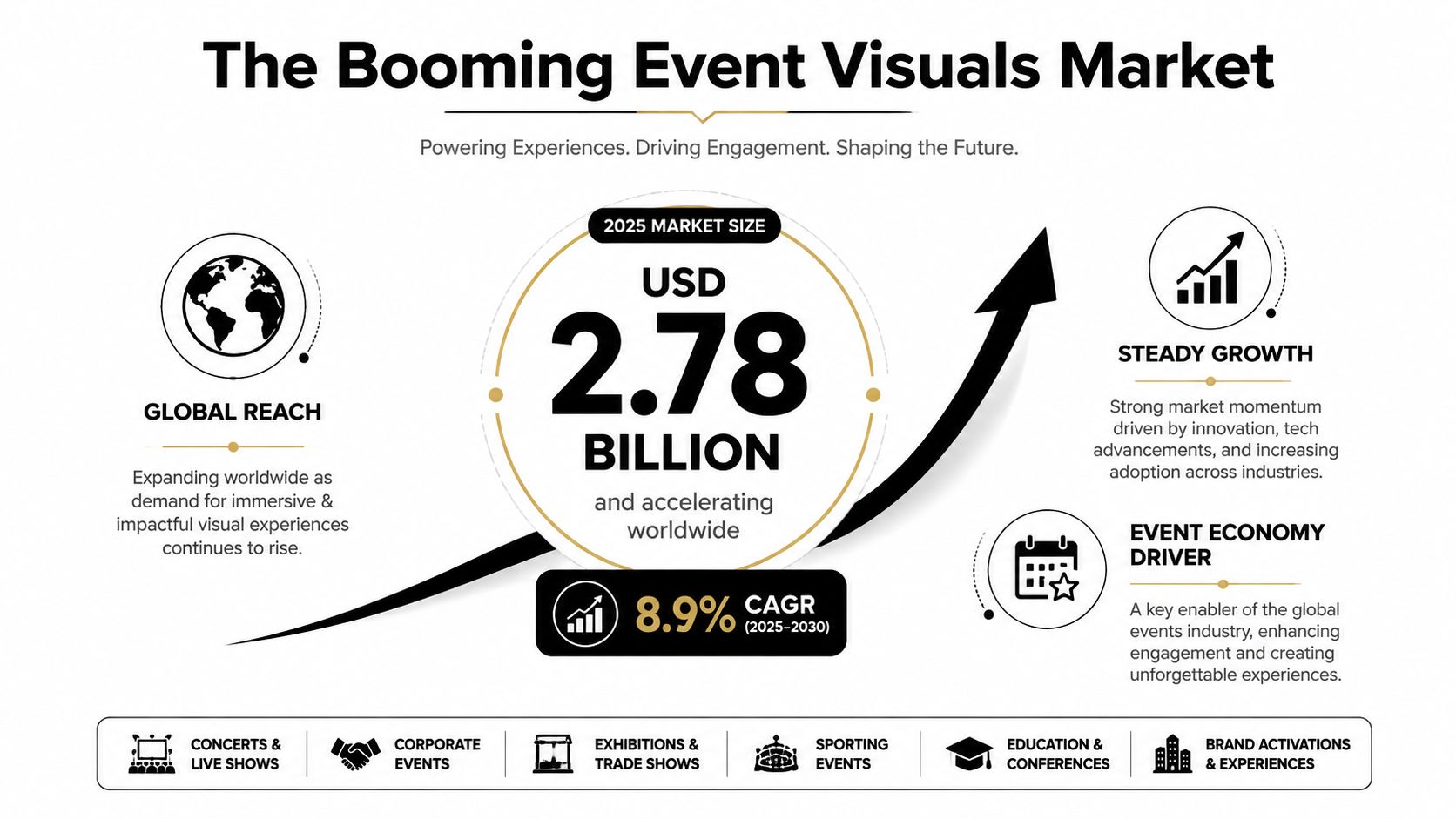
The reason is simple. Events now live in several places at once: in the room, in private galleries, on social platforms, in internal presentations, and in future promotional campaigns. A strong photograph can sell the atmosphere of a gala or preserve a family connection. A short video can carry the sound of a speech, the reaction to an announcement, or the energy of a packed dance floor.
The value goes beyond memory
For corporate and nonprofit teams, coverage supports event ROI, not just personal nostalgia. A well-planned gallery can provide speaker portraits, sponsor visibility, networking scenes, branded details, and audience reactions. A video edit can extend the event's useful life by giving absent stakeholders a way to experience the program and giving the communications team material for future campaigns. A practical framework for connecting content to outcomes appears in this guide to measuring event ROI.
Weddings have helped normalize this expectation across the wider event economy. Recent wedding market estimates vary substantially, but one report places the category at USD 20.44 billion in 2022, rising to USD 21.83 billion in 2023 and projecting USD 36.80 billion by 2030. The wedding photography market overview shows why professional visual storytelling is now treated as a core event investment.
Practical rule: Budget for the story you want people to remember, not merely for someone to carry a camera.
If you're comparing regional specialists for a destination celebration, a curated guide to the best wedding photographer Mauritius 2026 can help you assess portfolios and coverage styles before you start requesting proposals.
Event Photography Versus Videography, What Each One Captures
Photography and videography overlap in subject matter, but they solve different problems. Photography freezes decisive moments into images that work immediately for albums, websites, social posts, press releases, sponsor reports, and framed prints. Videography captures a narrative through motion, sound, pacing, and context.
At a wedding, a photograph preserves the instant a couple sees each other at the ceremony. Video preserves the vows, the tremble in a voice, the applause, and the movement into the next scene. At a corporate event, photography gives a communications team a sharp keynote portrait and a wide room image. Video records the argument, delivery, audience response, and speaker interviews. At a charity function, stills show connection and generosity, while video can carry the emotional rhythm of the appeal and the reaction to the auction.
For a more detailed foundation, what event photography is offers useful context on the still-image side of the service. The key decision isn't choosing the supposedly superior medium. It's identifying which parts of the event require a single strong frame and which require sequence, sound, or movement.
Photography vs Videography, Quick Comparison
| Aspect | Photography | Videography |
|---|---|---|
| Primary strength | A decisive, polished frame | A moving story with sound |
| Best for | Portraits, details, reactions, publicity, archives | Speeches, interviews, performances, atmosphere |
| Audience use | Fast viewing and sharing | Longer engagement and replay |
| Corporate value | Brand assets and event documentation | Thought leadership, testimonials, internal communication |
| Wedding value | Ceremony moments, family groups, details, candid emotion | Vows, speeches, music, movement, full narrative |
| Charity value | Donor recognition, auction scenes, atmosphere | Appeals, reactions, interviews, emotional storytelling |
| Main technical concern | Timing, focus, composition, exposure | Audio, camera movement, continuity, editing |
| Typical final form | Curated gallery and selected portraits | Highlight film, social clips, or full edit |
A serious event usually needs both because the strongest frame and the strongest sequence are rarely the same deliverable. One supports instant recognition. The other preserves how the moment felt and sounded. To compare approaches in practice, you can also see wedding photographers' videos and look for differences in pacing, audio treatment, framing, and emotional coverage.
What You Actually Receive, Deliverables and Shot Lists
A professional proposal should describe deliverables in plain language. “Photo and video coverage” isn't enough. Ask what gets captured, how it gets edited, what format you'll receive, and whether the content is designed for personal use, public promotion, internal communication, or all three.
A typical package may include a curated edited gallery, a selection of carefully processed images rather than an unfiltered camera dump. Video deliverables may include a highlight reel, short social clips, interviews, ceremony or keynote coverage, and a longer event edit. Aerial footage can add venue context and scale when the location, permissions, and weather make it appropriate.
Build the shot list around decisions
For a wedding, give the team a priority list rather than a vague request to capture everything:
- Ceremony sequence: Processional, key vows, ring exchange, first kiss, recessional, and meaningful reactions.
- People: Couple portraits, immediate family, wedding party, older relatives, friends, and candid interactions.
- Details: Invitations, rings, florals, table settings, signage, attire, venue architecture, and personal objects.
- Reception: Entrance, speeches, toasts, cake cutting, first dance, guest reactions, and open dancing.
- Video priorities: Clean vows, speeches with usable audio, natural guest sound, and transitions that tell the day in order.
Corporate events require a different emphasis. Capture the keynote speaker, panelists, audience engagement, sponsor marks, registration, signage, networking, product demonstrations, staff interactions, and room-wide views. Ask the videographer to identify interview subjects in advance and confirm whether the communications team needs vertical clips, widescreen edits, subtitles, or clean speaker audio.
Charity events benefit from deliberate coverage of donor recognition, auction activity, volunteers, beneficiaries where appropriate, table conversations, applause, decor, and the overall room mood. Respect privacy and consent, especially when an event involves sensitive personal stories.
Low light rewards preparation
Event photographers often work in rooms with changing stage lights, dark reception spaces, and fast-moving guests. A practical baseline is a fast aperture around f/1.4 to f/2.8, a shutter speed near 1/125s for static subjects, and around 1/160s to 1/250s for talking or mingling guests, with ISO commonly between 1600 and 6400. Dancing may call for 1/250s to 1/500s, while modern cameras can produce usable files at ISO 12800 and above when sharpness matters more than noise, as explained in this low-light event photography guide.
The trade-off is unavoidable. A faster shutter reduces blur but demands more light, a wider aperture, or a higher ISO. Good editing then matters, which is why you should clarify the event video editing workflow before signing.
The Power of Integrated Photo and Video Teams
Hiring photography and videography separately can work, but only when both vendors coordinate closely. Otherwise, they may compete for the same position, miss different moments, interrupt one another's angles, or follow incompatible schedules. The planner then becomes the traffic controller, passing timelines and priorities between two businesses.
An integrated team creates one coverage plan. The photographer knows when the videographer needs clean audio and an unobstructed frame. The videographer understands when the photographer needs a formal group shot. Both can prioritize the same entrance, speech, reveal, or award presentation without treating the other discipline as an afterthought.
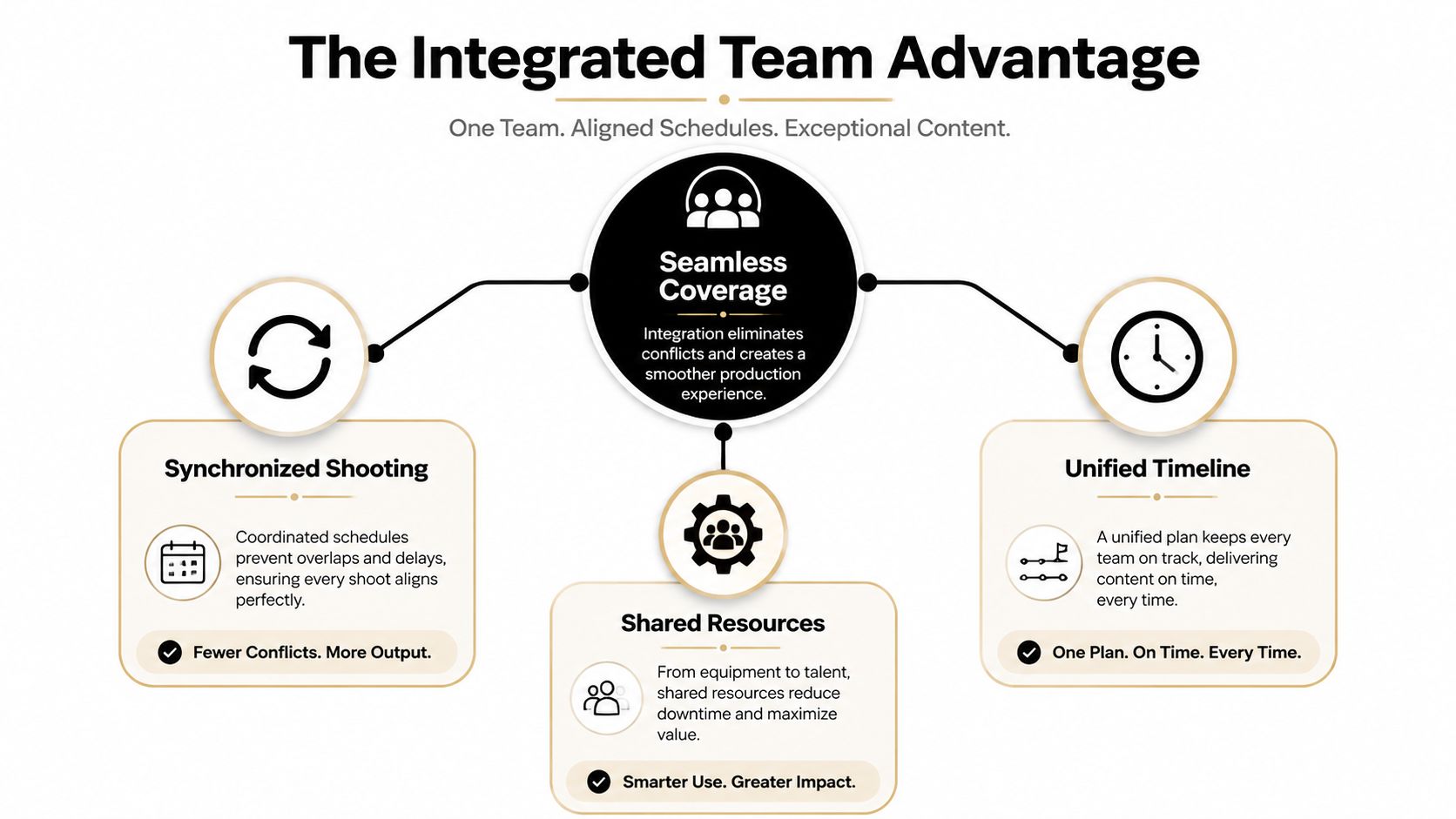
One brief creates a stronger story
A unified team can share the run-of-show, venue map, lighting notes, contact list, and priority moments. That reduces contradictory instructions and makes it easier to maintain a consistent visual treatment across stills, reels, interviews, and longer edits.
The advantage also extends beyond cameras. 1021 Events offers photography and videography alongside aerial drone coverage, atmospheric haze, cold sparks, custom photo backdrops with photo booths, monogram Gobo projections, sound, lighting, and DJ or MC services. Those options don't belong in every event, but an integrated production plan can place them in the right moments instead of treating them as disconnected rentals.
Integration improves the handoff
You should also ask who owns the post-production plan. A shared team can coordinate color, music direction, branding, naming conventions, and delivery priorities. That matters when a corporate client needs a fast social clip while the editor continues building a longer recap, or when a couple wants a short highlight film alongside a carefully organized gallery.
A coordinated crew doesn't just capture more. It makes each medium reinforce the other.
The strategic benefit is consistency. Your stills should look like they came from the same event as your video, not from two unrelated productions with different interpretations of the room, the people, and the brand.
Pricing Structures and How to Choose a Vendor
Event coverage usually uses hourly, half-day, full-day, or bundled photo-video pricing. Add-ons can include extra operators, drone work, interviews, rush editing, photo booths, additional editors, specialized lighting, and extended delivery. Compare proposals only after matching their scope.
| Coverage model | Photo-only | Photo-video bundle | Best fit |
|---|---|---|---|
| Hourly | Short, focused coverage | Brief highlights or key moments | Small events |
| Half-day | Several priority segments | Ceremony, speeches, and selected reception coverage | Medium schedules |
| Full-day | Continuous still coverage | Coordinated coverage across the full run of show | Weddings and complex events |
Bundling often costs more upfront than hiring one discipline, but an integrated team can share schedules, coordinate positions, and avoid gaps between stills and video. That makes the comparison about usable coverage, not just the lowest quote.
The wedding market offers context, not a budget target. One report estimates wedding photography at USD 21.83 billion in 2023 and projects USD 36.80 billion by 2030. The reported wedding photography market figures show a competitive category, while your quote still depends on hours, crew size, event complexity, deliverables, and usage rights.
Read the proposal line by line
Check these points before accepting a quote:
- Coverage scope: Confirm arrival, departure, breaks, overtime, and crew numbers.
- Portfolio: Review complete galleries or full films, not only selected highlights.
- Audio and lighting: Ask how panels, interviews, dark rooms, stage lights, and noisy receptions will be recorded.
- Delivery: Confirm gallery format, resolution, social crops, editing style, turnaround, and revisions.
- Rights: Clarify use for advertising, internal communication, press, social media, print, and sponsor reporting.
- Contingency: Ask about replacement crew and backup equipment.
- Integration: Confirm who coordinates both disciplines and the shared schedule.
Use this vendor selection criteria checklist to compare proposals consistently. A low quote may omit coverage, reliable audio, prompt delivery, or broad usage rights. A higher quote earns its place when it clearly connects crew, production plan, and final assets to your event's purpose.
Preparing for Your Event Shoot, Timelines and Best Practices
Preparation begins with a conversation about priorities, not equipment. Share the event purpose, audience, schedule, venue restrictions, key people, sensitive moments, brand requirements, and intended uses. A capable team can then turn those details into positions, timing, coverage responsibilities, and a delivery plan.
The preparation schedule should match the event's complexity. Book early enough to secure the right crew, especially for weddings, conferences, and dates with several simultaneous activities. Before the shoot, provide the run-of-show, speaker list, family or donor priorities, venue contact, parking instructions, access rules, and any restrictions on flash, drones, movement, or recording.
Match preparation to the event
Weddings need a family-photo list, ceremony order, portrait locations, reception details, and a clear plan for speeches. An engagement session can help a couple become comfortable in front of the camera, but the bigger operational win comes from naming a family coordinator who can gather people quickly.
Corporate events need agenda alignment, speaker briefings, sponsor priorities, media restrictions, and a decision about whether interviews or social clips are required. Give the crew the correct speaker names and titles. A misspelled name can undermine an otherwise polished asset.
Charity functions need donor and beneficiary guidance, auction sequencing, consent awareness, and a plan for capturing generosity without making people feel ambushed. Identify the moments that communications staff must receive quickly, such as an award, pledge, announcement, or supporter interview.
Treat the run-of-show as a production document
A useful run-of-show includes more than times and program titles. Add the expected visual action, the responsible contact, the required medium, and any technical constraint. For example, a keynote might require stills, a clean recording, audience reactions, and a short vertical clip, while a formal group photo may require a dedicated pause.
Use an event run-of-show template and schedule a venue walkthrough when possible. Check sightlines, power, changing light, audio feed access, restricted areas, weather exposure, and safe drone launch conditions.
Smartphones still have a place. Guests can capture spontaneous personal moments, but professional teams protect consistency, audio quality, permissions, brand presentation, and organized delivery. For serious events, those are not interchangeable.
Real Results, What Professional Coverage Looks Like in Practice
Consider a wedding reception where the couple asks guests to rely on their phones. The first dance appears from several angles, but the clips vary wildly in exposure and stability. One guest blocks the view, another records only the beginning, and the best audio is buried under room noise. The couple receives scattered files through messages and shared albums, with no consistent sequence and no reliable record of the speeches.
The problem isn't that guests lacked enthusiasm. They lacked a production plan. Nobody was assigned to protect the vows, monitor sound, find the right reaction, photograph older relatives, or preserve the event's visual details. Once a moment passes with blurred focus or clipped audio, editing can't recreate it.
The integrated version tells the whole story
With a coordinated professional team, the coverage begins before guests arrive. The photographer documents the venue, details, preparations, and family connections. The videographer checks speech audio, identifies useful positions, and records movement and sound without disrupting the room.
During the reception, both crews work from the same priorities. The photographer captures the decisive still frame during the entrance and toast. The videographer preserves the words, applause, music, and reactions around it. Drone coverage may establish the venue when permissions, weather, and location allow. A curated gallery, highlight film, and organized edit then give the couple distinct ways to revisit and share the day.
That same logic applies to a corporate awards night, private party, or charity fundraiser. Stills support immediate communication and recognition. Video supplies context and emotion. Together, they create a coherent record instead of a pile of disconnected files.
The right question is not whether phones can produce images. They can. The question is whether your event deserves planned coverage, dependable sound, thoughtful editing, and assets people can use after the room empties.
Looking for coordinated photography and videography coverage in Fort Atkinson, Southern Wisconsin, or Northern Illinois? Explore 1021 Events services for Southern Wisconsin and Northern Illinois, then request availability.