
Alright, let's talk numbers. When you start budgeting for your big day, one of the first questions you'll ask is, "How much does a wedding photographer actually cost?" The short answer is that the average cost of wedding photography in the U.S. lands right around $2,900.
But let's be real—that number is just a starting point. Think of it like the sticker price on a car before you add any of the good stuff.
Your Quick Guide to Wedding Photography Costs

That $2,900 figure is a helpful national average, but the final price you'll pay depends on a ton of different factors. Everything from your photographer's experience and your wedding's location to how many hours you need them on-site will move that number up or down. Getting a handle on these variables is the key to making a smart, confident choice that fits your budget.
Deconstructing the National Average
So, where does that average come from? It's a big number, but it makes sense when you see how much couples value amazing photos. Real wedding data shows that photography is often the fourth-biggest expense, and a whopping 87% of couples hire a pro. It’s clear that capturing those once-in-a-lifetime memories is a top priority for most people.
Keep in mind that where you live plays a huge role. A photographer in a high-demand area like the Mid-Atlantic will naturally have higher rates than someone in a less expensive market. If you want to dive deeper into the data, The Knot's comprehensive study is a great resource.
The big takeaway here is to do your homework locally. Your town's market will have the biggest impact on the quotes you receive.
A quick way to estimate where you might fall is by looking at your guest count. Larger weddings often require more coverage, which influences the price.
Average Wedding Photography Cost at a Glance
| Guest Count | Average Price Range |
|---|---|
| 0-50 Guests | $1,500 – $3,500 |
| 50-150 Guests | $2,500 – $5,000 |
| 150+ Guests | $4,000 – $7,000+ |
This table gives you a ballpark idea, but remember that every wedding and every photographer is unique.
Simplifying Your Budget with Bundled Services
Juggling quotes from a dozen different vendors can feel like a full-time job. You're trying to find a photographer, a videographer, a DJ, maybe even someone to handle lighting—and they all have separate contracts, prices, and personalities to manage.
This is why a lot of couples are now looking for companies that bundle services together. It's just… easier.
By combining photography with other essentials like videography and event production, you not only simplify your planning but often unlock significant value. This integrated approach ensures all your creative vendors are working in harmony.
At 1021 Events, this is exactly what we do. We offer all-in-one solutions that bring your photography, videography, and event production under one roof. Instead of juggling multiple contacts, you get one cohesive team that's completely dialed into your vision. It’s a move that saves you headaches and helps your budget.
For more tips, check out our complete guide on how to choose a wedding photographer.
Understanding How Photographers Structure Their Prices
Ever feel like you need a secret decoder ring just to figure out what a wedding photographer costs? One website shows a simple hourly rate, the next has three different packages named after precious metals, and a third gives you a whole menu of options. It's a lot to take in, but there’s a method to the madness.
Think of it like going out to eat. You could order just an entrée (à la carte), go for the three-course special (a package), or just pay the chef to cook for you by the hour. Photographers use these same basic ideas to make sure there's an option for every kind of wedding and budget.
The Three Main Pricing Models
Most wedding photographers will fall into one of three camps when it comes to pricing. Getting a handle on these is your first step to making sense of those quotes. Each model is really built for a different kind of celebration, whether you're planning an intimate elopement or a massive, all-day party.
Let's unpack the big three.
Hourly Rates: This one is as simple as it gets. You pay for the photographer's time, plain and simple. It's a fantastic option for smaller weddings, elopements, or courthouse ceremonies where you don’t need someone there from sunrise to sunset. Just be aware that most will have a minimum booking time, usually around two to four hours.
Flat-Rate Packages: This is the industry gold standard and what you'll run into most often. Packages are designed to bundle the most popular services—like a set number of hours, an engagement shoot, and your digital photos—into one clean price. It makes budgeting way easier because you know exactly what you’re getting.
À La Carte Options: For the couple who wants total control, this is the way to go. You start with a base fee for the photographer's time and then add on only what you truly want, whether that's a second shooter, a fancy leather-bound album, or a pre-wedding bridal session. It gives you incredible flexibility, but you'll need to be more decisive about what's important to you.
Decoding the Standard Wedding Package
Since packages are king in the wedding world, let's look at what's usually inside the box. While every photographer puts their own spin on things, a standard package gives you a great baseline for a typical wedding day. It’s the best way to compare what different pros are offering for a similar price.
A solid mid-tier package, which often hovers around the average cost of wedding photography, will probably look something like this:
- 8 Hours of Coverage: This is the sweet spot. It's typically enough time to get those final getting-ready moments all the way through the major reception events.
- A Second Shooter: Having that second photographer is a game-changer. It means you get photos from different angles (like your face and your partner's during the first look) and ensures nothing gets missed.
- An Engagement Session: This is more than just a freebie. It’s your chance to get comfortable in front of the lens and build a real rapport with your photographer before the big day.
- A Digital Gallery: You’ll get a collection of high-resolution, beautifully edited images delivered through an online gallery, ready for you to download, print, and share.
Keep in mind that anything beyond these core items—like physical albums, extra hours, or drone shots—is usually an add-on that will bump up the final cost. Always ask for a detailed breakdown of what's in the package versus what's extra.
The Value of Bundled Services
When you start adding everything up separately, the numbers can get scary fast. A photographer for $3,000 here, a videographer for $2,500 there… it all adds up. This is where an all-in-one event company like 1021 Events can be a lifesaver for your budget and your sanity.
By bundling photography with other key services like videography, DJing, and event production, you often get way more bang for your buck. But it’s not just about saving a few dollars. It’s about having one cohesive team that’s completely in sync and working together to bring your day to life. This streamlines all the planning and guarantees a consistent style and quality across every part of your wedding.
If you're also thinking about video, our guide on the average cost of wedding videography is a great place to start.
What Really Influences Photography Prices
Ever see quotes ranging from $1,500 to $10,000 and wonder if photographers are just picking numbers out of a hat? I get it. But trust me, there's a method to the madness. Behind every price tag is a blend of factors that shape the final cost, and knowing what they are is the secret to finding a photographer whose value clicks perfectly with your vision and budget.
Think of it like hiring a chef. You wouldn't expect a world-renowned, Michelin-starred chef to charge the same as a fantastic local caterer. Both can cook an incredible meal, but the experience, skill, equipment, and reputation they bring to the table are worlds apart. Their prices reflect that. Wedding photography works the exact same way.
You’re not just paying for someone to click a button. This is an investment in artistry, peace of mind, and the one thing you'll have left to remember it all by.
The Photographer's Experience and Style
A photographer’s experience is, without a doubt, the single biggest driver of their price. A seasoned pro with a decade of weddings under their belt has seen it all. They've shot in every difficult lighting situation you can imagine, wrangled every kind of unruly wedding party, and developed an instinct for knowing exactly when those fleeting, magical moments are about to happen.
Their price doesn't just cover the hours they spend at your wedding; it’s built on the thousands of hours they've invested in mastering their craft. That includes knowing their gear inside and out, developing a unique artistic eye, and building a rock-solid reputation. You're paying for their confidence and their proven ability to deliver stunning images, no matter what the day throws at them.
Here’s a general breakdown of what to expect:
- Emerging Photographers (Lower Price Tier): These are talented artists who are still building their portfolios. They bring a ton of fresh energy and creativity but might have less hands-on experience navigating the chaos of a real wedding day.
- Established Professionals (Mid-Range Price Tier): These photographers have a solid portfolio, a consistent style, and years of wedding experience. They're reliable, skilled, and make up the sweet spot of the market.
- Luxury & In-Demand Photographers (High-End Price Tier): These are the true masters. They have a distinct, sought-after style, often work with high-end clients, and you’ve probably seen their work in wedding magazines. Their rates reflect their exceptional skill and the high demand for their time.
Location Location Location
Just like in real estate, where your wedding is happening plays a huge role in the final bill. A wedding in a major city like New York or San Francisco will almost always cost more than one in a small town. It all comes down to the higher cost of living and running a business in those areas.
Travel is another big piece of the puzzle. If your photographer has to drive a few hours or hop on a plane, you’ll likely need to cover their expenses for transportation, a place to stay, and meals. This is especially true for destination weddings, where travel costs can add a pretty significant chunk to the base package.
The demand for amazing wedding photography isn't just local; it's a global phenomenon. The industry is projected to be worth a staggering $25.05 billion in 2025 and is on track to hit $52.04 billion by 2034. This just shows how much couples everywhere value professional photos, with the U.S. market alone expected to reach $8.5 billion by 2032. You can dive deeper into this expanding market from Fortune Business Insights.
Coverage Time and Second Shooters
So, how long do you need your photographer on-site? The number of hours they're with you is a fundamental building block of your final price. It makes sense, right? A four-hour elopement package will naturally cost way less than a 10-hour package that captures everything from getting ready in the morning to the final sparkler send-off.
Most standard packages hover around eight hours of coverage, which is usually plenty for a traditional wedding day. If you need more time, nearly every photographer will offer it at an hourly rate.
Adding a second shooter is another common choice that affects the price. While it does add to the cost, having that second photographer can be invaluable. It means you get more angles covered at the same time—think about getting a shot of your partner's face as you walk down the aisle while the main photographer focuses on you. It ensures no moment gets missed and adds a richer, more dynamic story to your final gallery. If you want to nerd out on the gear that goes into a professional setup, check out our guide on the best cameras for event photography.
The Final Deliverables
Finally, what you actually get after the wedding plays a huge role in the overall cost. Are you happy with a beautiful online gallery of digital files, or are you dreaming of a luxurious, custom-designed wedding album to put on your coffee table?
These final products can really influence your total investment:
- Digital Files: Almost every package these days includes edited, high-resolution digital images. They’re usually delivered in an online gallery that makes it super easy to share and download.
- Prints and Canvases: Many photographers offer professional printing services to make sure your favorite images look their absolute best when you hang them on your wall.
- Custom Albums: A handcrafted, heirloom-quality wedding album is a serious investment, but it creates a timeless keepsake you'll pass down for generations. The expert design process and high-quality materials are what contribute to the cost.
- Engagement Sessions: These are often included in mid- to high-tier packages and are a fantastic way to get comfortable in front of the camera before the big day. Plus, you get great photos for your save-the-dates
Budgeting Scenarios For Every Type Of Wedding
Let's move past abstract numbers and national averages. To really understand what goes into the average cost of wedding photography, it helps to see how different choices and priorities shape the final bill. We'll walk through three common scenarios to give you a feel for where your own wedding might fit.
Think of it as turning a big, scary budget item into a clear, manageable plan. Once you see what's possible at different price points, you can decide what truly matters to you.
Scenario 1: The Intimate Elopement
Meet Alex and Jordan. They're all about simplicity and adventure, so they're planning a beautiful, private elopement at a scenic overlook with just a handful of family members. Their goal? To capture the raw emotion of the ceremony and get some stunning portraits without the fuss of a full-day event.
- Their Budget: Under $2,000
- What They Booked: A photographer for three hours of coverage, paid at an hourly rate. This was just enough time for the ceremony, some family photos, and a relaxed newlywed portrait session.
- What They Got: A high-resolution digital gallery with about 150-200 beautifully edited images. They skipped the physical albums and prints to keep costs low, planning to create their own photo book later.
For a couple like Alex and Jordan, paying by the hour is a perfect fit. It gets them professional-quality photos without having to pay for coverage they simply don't need. It's a smart, budget-savvy move.
Scenario 2: The Classic Celebration
Now, let's picture Maya and Ben. They're planning a more traditional wedding with about 100 guests. They want the whole story told, from the getting-ready jitters in the morning to the big dance party at night. Capturing candid moments with friends and family is just as important to them as their own portraits.
- Their Budget: $2,500 – $4,500
- What They Booked: A standard eight-hour package. This came with one photographer and an engagement session, which was a huge plus. The package was designed to cover all the key events: final prep, the first look, the ceremony, family portraits, and all the main reception highlights.
- What They Got: A full digital gallery of 500-700 edited images, plus all the photos from their engagement shoot. That pre-wedding session was a game-changer, helping them feel way more comfortable and connected with their photographer before the big day.
This scenario is the sweet spot for most couples and lines up well with the national average. It’s a fantastic balance of coverage and value, ensuring no big part of the day gets missed. Making your photography fit into your overall financial plan is key. For more tips on managing your finances, looking at guides for your total wedding budget can be really helpful.
This chart breaks down the main things that influence what you'll pay: a photographer's experience, where your wedding is, and how long you need them.
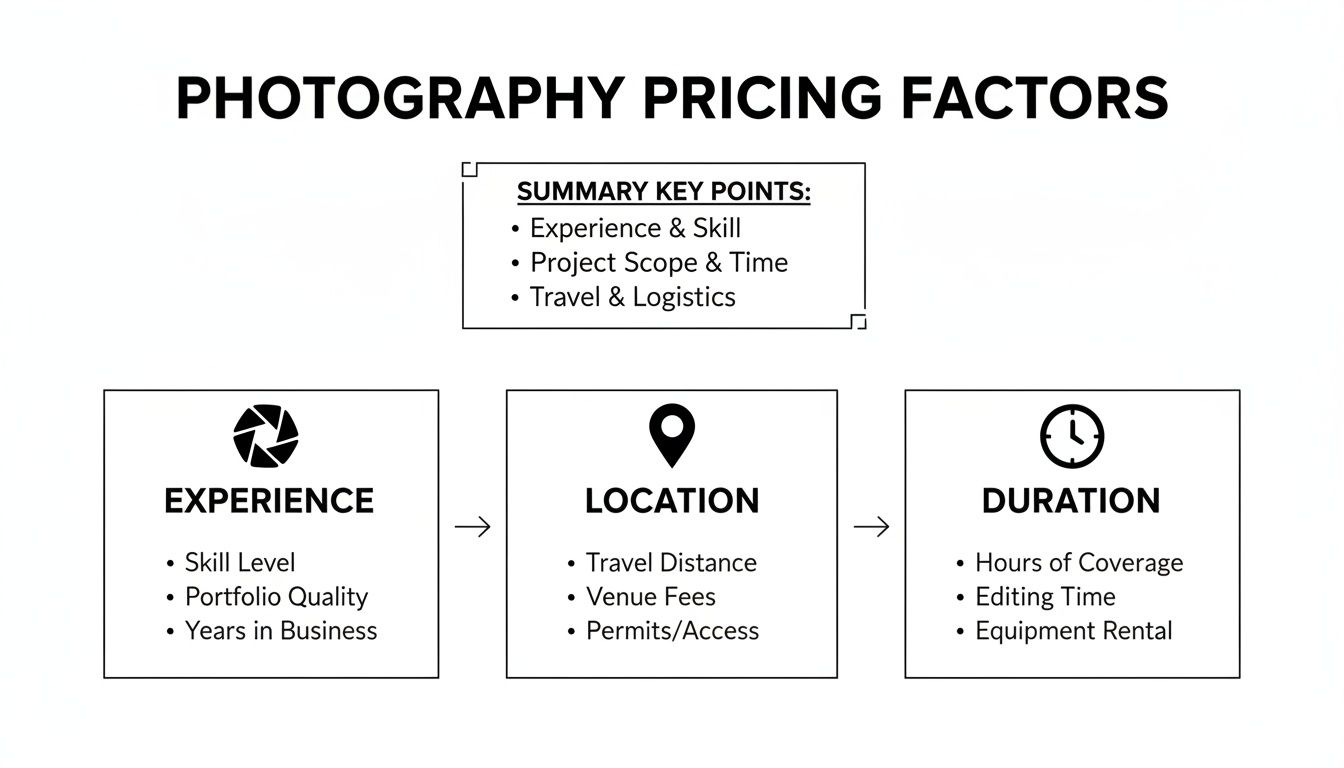
As you can see, these three elements are the foundation of pricing, which explains why you'll see such a wide range of quotes from different photographers.
Scenario 3: The Luxury Affair
Finally, we have Chloe and David. They're hosting a lavish, multi-location wedding for over 200 guests. For them, photography isn't just a line item; it's a top-tier investment. They want a cinematic, all-encompassing experience where no detail is missed—from stunning aerial shots to a gorgeous heirloom album.
- Their Budget: $5,000+
- What They Booked: A premium, all-inclusive package. This included 10-12 hours of coverage, a lead photographer, a second shooter to catch every angle, and even drone photography for those epic, sweeping views. Want to know more about what that involves? You can dive deeper into the specifics in our guide on the cost of wedding drone photography.
- What They Got: An enormous gallery of over 800 images, a custom-designed luxury leather wedding album, and a set of smaller parent albums. The second shooter was essential for capturing all the guest reactions, while the full-day coverage created a complete and immersive story of their celebration.
An investment at this level gives you far more than just pictures. It delivers a comprehensive artistic documentation of your day, complete with premium products and a totally stress-free experience.
Sample Wedding Photography Budget Breakdowns
To make it even clearer, here's a table that breaks down what you can generally expect at different budget levels.
| Budget Tier | Typical Price Range | What's Usually Included |
|---|---|---|
| Essential Coverage | $1,500 – $2,500 | 4-6 hours with one photographer, high-res digital gallery, basic editing. Perfect for shorter weddings or elopements. |
| Standard Package | $2,500 – $4,500 | 8 hours with one photographer, engagement session, full digital gallery. This is the most common choice for full-day weddings. |
| Premium Package | $4,500 – $7,000 | 8-10 hours with a lead photographer and a second shooter, engagement session, a basic wedding album, and a larger digital gallery. |
| Luxury All-Inclusive | $7,000+ | 10-12+ hours of coverage, two photographers, a luxury custom album, parent albums, drone footage, and potentially other add-ons. |
Seeing it laid out like this can help you pinpoint which tier aligns best with your vision and budget, making the whole process feel a lot less overwhelming.
Getting the Most Bang for Your Photography Buck
Getting amazing wedding photos doesn't have to mean draining your bank account. The real secret isn't just about spending less—it's about spending smarter. When you start thinking of your photography as a strategic investment in your future memories, you can find incredible value without sacrificing the quality you deserve.
Let's be real: you're not just buying a few pictures. You're investing in the only thing that will let you relive your wedding day over and over for the next 50 years. With a few practical tips and a clear idea of what matters most, you can make your budget go a lot further than you might think.
Work Your Timeline and Pinpoint Your Priorities
One of the easiest ways to save a little cash is to get creative with your wedding date. Photographers, like most wedding pros, have their busy seasons and their slow seasons. Booking your wedding on a Friday or a Sunday, or choosing a less popular month like January or November, can often unlock some serious savings.
It’s just simple supply and demand. A Saturday in June is prime real estate, so photographers can charge top dollar. But a Friday in February? You might find they’re more flexible on pricing or offer special off-season packages.
Beyond the calendar, you’ve got to figure out what’s actually important to you. Sit down with your partner and have a frank chat about your must-haves versus your nice-to-haves.
- Is an extra two hours of reception coverage more important than a fancy leather-bound album? If you know you're all about capturing those late-night dance floor moments, then prioritize the coverage time.
- Would you rather have a second shooter capturing more angles or a pre-wedding engagement shoot? There's no right or wrong answer here, only what feels right for you.
Getting crystal clear on these priorities means you can ask photographers for a custom quote that fits you perfectly. That way, you’re only paying for the things that will genuinely bring you joy.
The Magic of Bundling Your Services
Trying to coordinate a bunch of different vendors can be a massive headache and a real drain on your budget. Just imagine trying to sync up a photographer, a separate videographer, a DJ, and a lighting company—all with their own contracts, schedules, and personalities. This is exactly where bundling your services into a single package can be a total game-changer.
An all-in-one approach doesn't just save you money; it simplifies the entire planning process. With one point of contact, you get a cohesive creative vision and a team that’s already in sync on your wedding day.
That’s what we specialize in here at 1021 Events. By bringing photography, videography, DJ services, and professional lighting under one roof, we're able to offer a much better value than if you sourced each vendor on their own. This approach guarantees everything looks and feels consistent, letting you focus on what really matters—celebrating your love.
It also helps to know the lay of the land. The national average for wedding photography hovers around $2,900, but that number can skyrocket in major cities. In places like Washington D.C. or San Francisco, you could be looking at $4,400 for photography alone. On the flip side, couples in states like Alaska or Oklahoma can save 60-70% on their total wedding costs. You can dig into more of these wedding photography cost statistics on KandePhotobooths.com.
Treat Your Photographer Like a Partner
At the end of the day, one of the best ways to get more from your investment is to build a genuine relationship with your photographer. A photographer who clicks with you and truly understands your vision will go the extra mile to capture your day perfectly. Good communication is everything.
When you trust your photographer, you’ll feel more comfortable in front of the camera, and that always leads to more natural, authentic photos. Don't ever be afraid to talk openly about your budget. Most photographers are more than willing to work with you to find a solution that makes sense. For a little more help with these conversations, check out our guide on how to negotiate with wedding vendors.
Essential Questions to Ask Before You Book
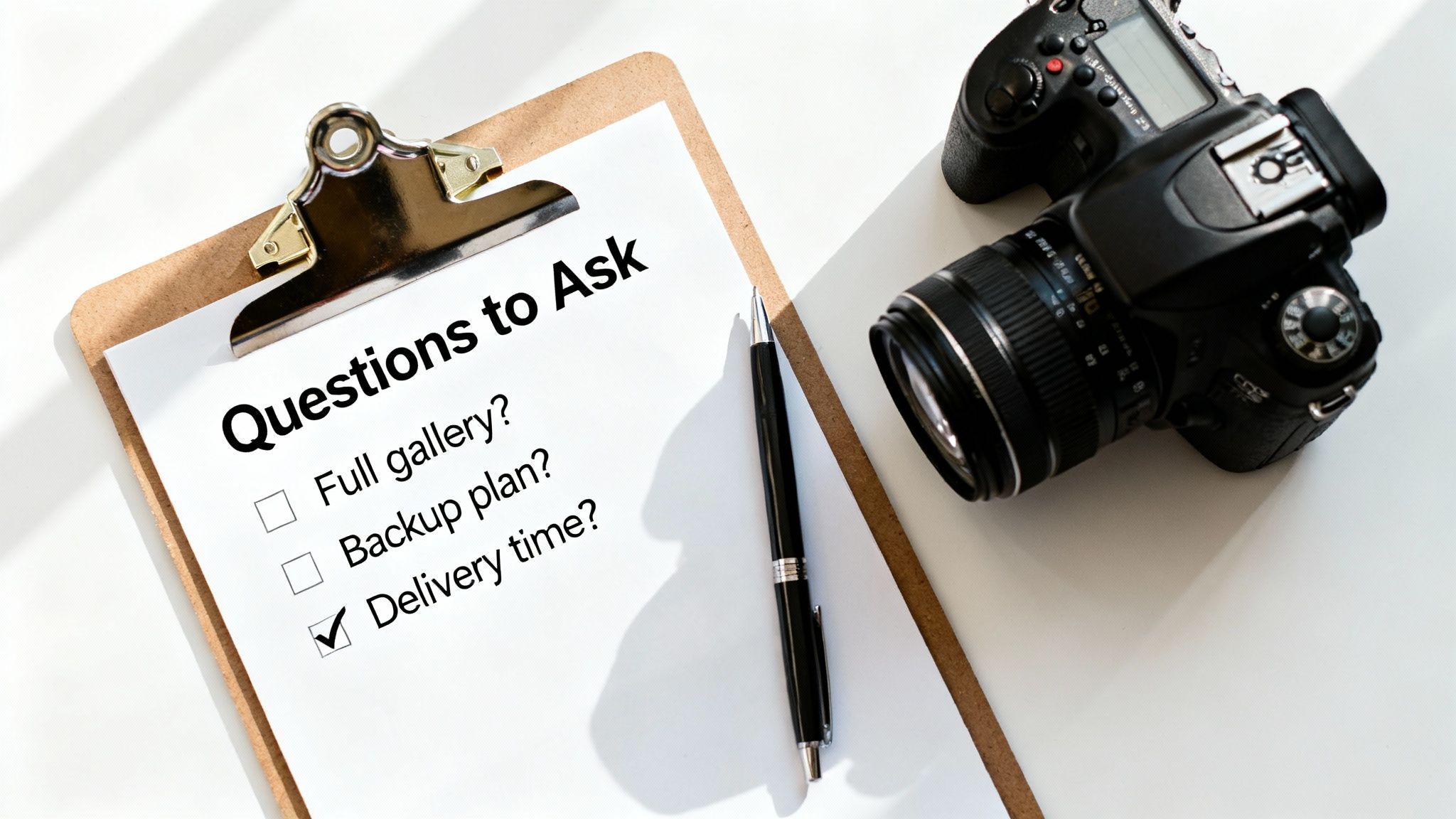
Finding the right photographer is about so much more than just loving their Instagram feed. You're looking for a creative partner you genuinely trust, someone who makes you feel comfortable and confident in front of the lens. The real secret is asking the right questions before you sign anything.
This isn’t just a formality—it’s how you make sure your vision and their delivery are perfectly aligned. A great photographer will welcome these questions because they want you to feel completely at ease. When everyone is on the same page, it sets the stage for a fantastic experience and protects you both.
Vetting Their Style and Experience
First things first, you need to look beyond the highlight reel. Any photographer can cherry-pick their absolute best shots for a portfolio. What you really need to see is what a full wedding gallery looks like. This gives you a true sense of their consistency and how they tell a story from start to finish.
Here are the essential questions to get the conversation started:
- Can we see a few full wedding galleries? Try to get specific here. Ask for galleries from a venue similar to yours—like a dark, moody reception hall or a bright, outdoor ceremony—to see how they handle different lighting.
- How would you describe your photography style? Are they all about candid, photojournalistic moments? Or do they lean toward more traditional, posed portraits? You want to make sure their creative approach matches the vibe you’re going for.
- How long have you been shooting weddings? Experience really matters when it comes to navigating the beautiful, organized chaos of a wedding day.
Understanding Logistics and Backup Plans
Now, let's get into the practical stuff. A true pro doesn't just show up with a camera; they have a bulletproof plan for every possible scenario. Asking these questions will reveal their level of preparedness and give you that all-important peace of mind.
"A prepared photographer has a plan A, B, and C. Asking about their backup equipment and what happens if they get sick isn't being difficult—it's being a smart client. It ensures your memories are protected no matter what."
Make sure you cover these crucial logistical points:
- What’s your backup plan if you're sick or have an emergency on our wedding day? They should have a network of trusted photographers ready to step in.
- Do you carry backup equipment? The answer to this should always be a confident "yes."
- Are you insured? Professional liability insurance is a non-negotiable. It’s a clear sign you’re dealing with a legitimate business.
- What does the payment schedule and contract look like? Get a clear understanding of the deposit, the final payment date, and the cancellation policy.
Clarifying Deliverables and Timelines
Finally, you need to know exactly what happens after the last dance. Talking about the post-wedding process is vital for managing your expectations and making sure there are no surprises later on.
Ask about the final product and when you can get your hands on it:
- When can we expect to see our photos? Get a clear timeline for both the sneak peeks and the final gallery. The industry standard is typically between 4 to 12 weeks.
- How many edited images are included in the package? You'll want to know if you're getting a curated selection or every usable photo from the day.
- What are our rights to the photos? Double-check that you have the rights to print your images and share them online for personal use.
Armed with these questions, you can move forward and confidently choose a photographer who not only takes stunning pictures but also delivers a professional, stress-free experience from start to finish.
Got Questions? We’ve Got Answers.
Let's clear up a few of the most common questions couples ask when they're trying to figure out their photography budget. A little clarity here can make a world of difference.
Do We Really Need to Pay for an Engagement Session?
Yes, and you'll be so glad you did. It might feel like just another thing on the checklist, but think of it as a dress rehearsal for your wedding day photos. This is your chance to get comfortable with your photographer—and with being in front of the lens together—without the pressure of the main event.
When you're relaxed and have a real rapport with your photographer, the photos on your actual wedding day will look and feel so much more natural. It’s why so many photographers bundle an engagement session into their most popular packages; they know it makes the final product that much better.
Why Does Videography Cost Extra?
Great question. Photography and videography are often talked about together, but they’re completely different beasts. Each requires unique gear, a distinct set of skills, and a totally different post-production workflow.
It’s like hiring an incredible DJ and a live band. Both create the soundtrack for your reception, but you wouldn’t expect the DJ to pick up a guitar. One captures still moments in time, the other captures motion, sound, and the unfolding story of your day. That specialization is why video is its own separate service and investment.
How Much Should We Tip Our Photographer?
First off, tipping is never mandatory, so don't feel pressured. But if your photographer absolutely knocked it out of the park and you want to show some extra appreciation, a tip of $100 to $200 is a very kind gesture.
Honestly though, one of the best "tips" you can give is a glowing online review. A thoughtful, detailed review is pure gold for a small business and helps them connect with other amazing couples just like you. A handwritten thank-you note is a beautiful touch, too.
Ready to see how photography, videography, and full-scale event production can come together seamlessly? The team at 1021 Events is all about creating a cohesive, stress-free experience from start to finish. Check out our integrated event services and let’s start dreaming up something incredible.
Plan Wedding Photography Around Your Priorities
Planning a wedding in Fort Atkinson or elsewhere across Southern Wisconsin and Northern Illinois? Explore 1021 Events photography, videography, and wedding services, then start your wedding inquiry to discuss the coverage that fits your celebration.