
Let's ditch the stuffy, dictionary-style definition for a second. At its heart, a Master of Ceremonies (MC)—or emcee—is the host, guide, and storyteller of your event, all rolled into one charismatic package.
Think of them as the director of a live movie. They're not just making announcements; they're the one making sure every scene flows perfectly into the next, keeping the audience hooked from start to finish.
What Is the Real Job of a Master of Ceremonies?
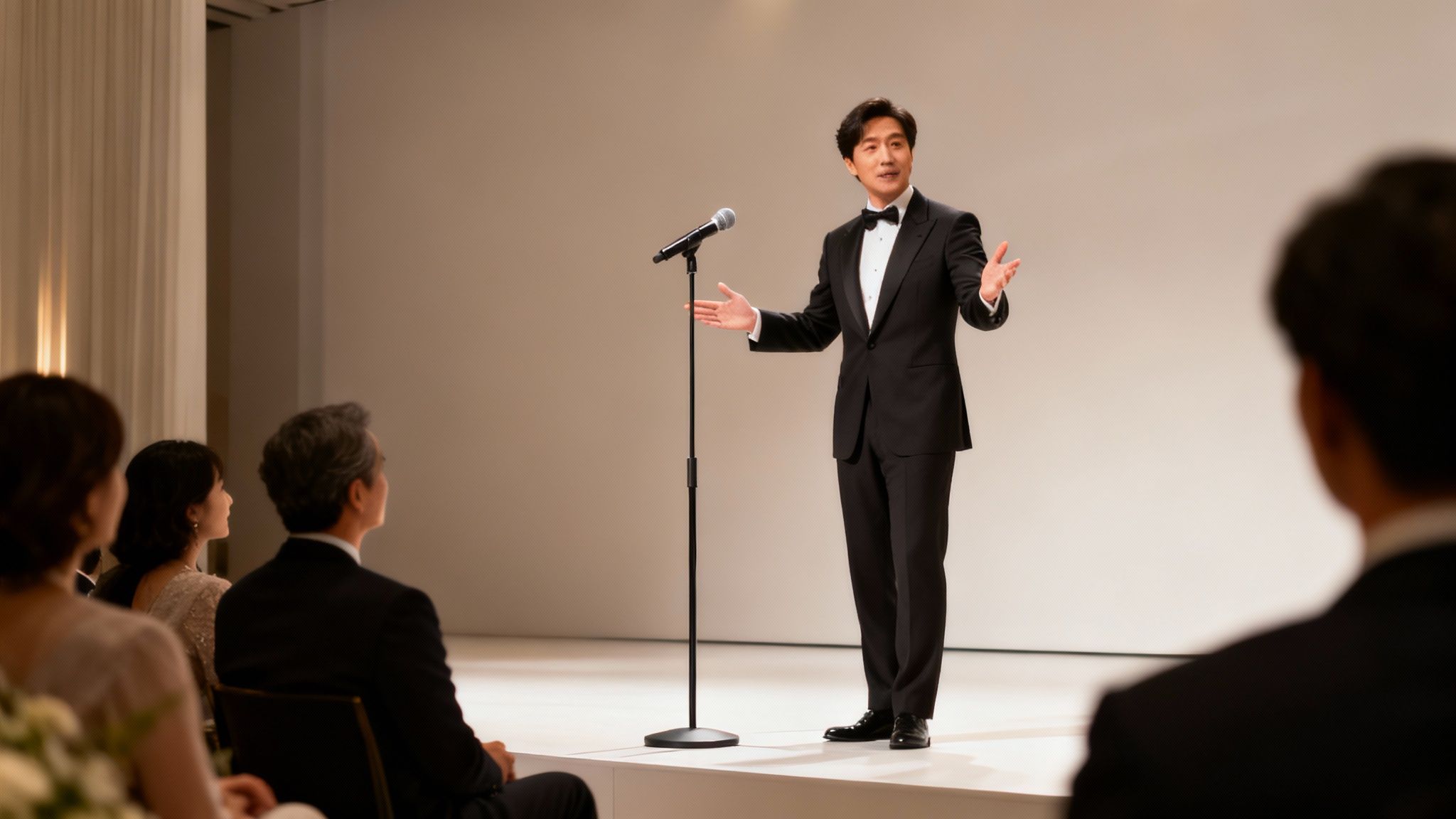
The real job of an MC is to be the audience's trusted guide for the entire experience. They are the architect of the event's energy, weaving individual moments—like speeches, awards, or performances—into a single, cohesive story that everyone remembers.
A great MC does way more than just read from a script. They set the tone from the moment they step on stage, keep guests engaged, and ensure every transition feels completely natural. It's their job to turn a simple schedule into a dynamic, shared experience for everyone in the room.
Ever been to an event that just felt… off? Maybe there were awkward pauses, lulls in the energy, or guests looked confused. That’s what happens without a skilled guide. The MC is the glue holding it all together.
The Architect of Atmosphere
Picture your event as a road trip. Your MC is the tour guide who makes sure everyone enjoys the ride, knows what amazing stop is coming up next, and doesn't miss any of the highlights along the way.
Here’s what they’re really doing behind the scenes:
- Setting the Tone: From their very first words, the MC establishes the mood—whether it’s fun and celebratory, serious and formal, or just buzzing with energy.
- Guiding the Audience: They keep everyone in the loop, making sure guests know what’s happening now and what to look forward to next. No confusion, just smooth sailing.
- Managing Energy Levels: A true pro can read the room. They know exactly when to inject a bit of humor, when to be more serious, and how to keep the audience connected from start to finish.
Mastering effective body language for public speaking is a huge part of this, as it helps the MC build rapport and project confidence that puts the whole room at ease.
A Role Steeped in History
While we think of MCs for modern events like weddings and corporate conferences, the title itself has some pretty deep roots. It’s a role that’s been around for centuries, with its first documented use tracing all the way back to the Catholic Church in the 5th century.
Back then, the Master of Ceremonies was an official of the Papal Court responsible for making sure massive, elaborate rituals went off without a hitch. This historical context really drives home how long we've recognized the need for one person to guide the proceedings.
The role has definitely evolved, but the core idea is the same: creating order, flow, and a sense of purpose. It's a very different skillset from https://1021events.com/what-is-event-coordination/, which is more about the behind-the-scenes logistics, but the two roles work hand-in-hand to create a flawless event.
Understanding an MC’s Core Responsibilities
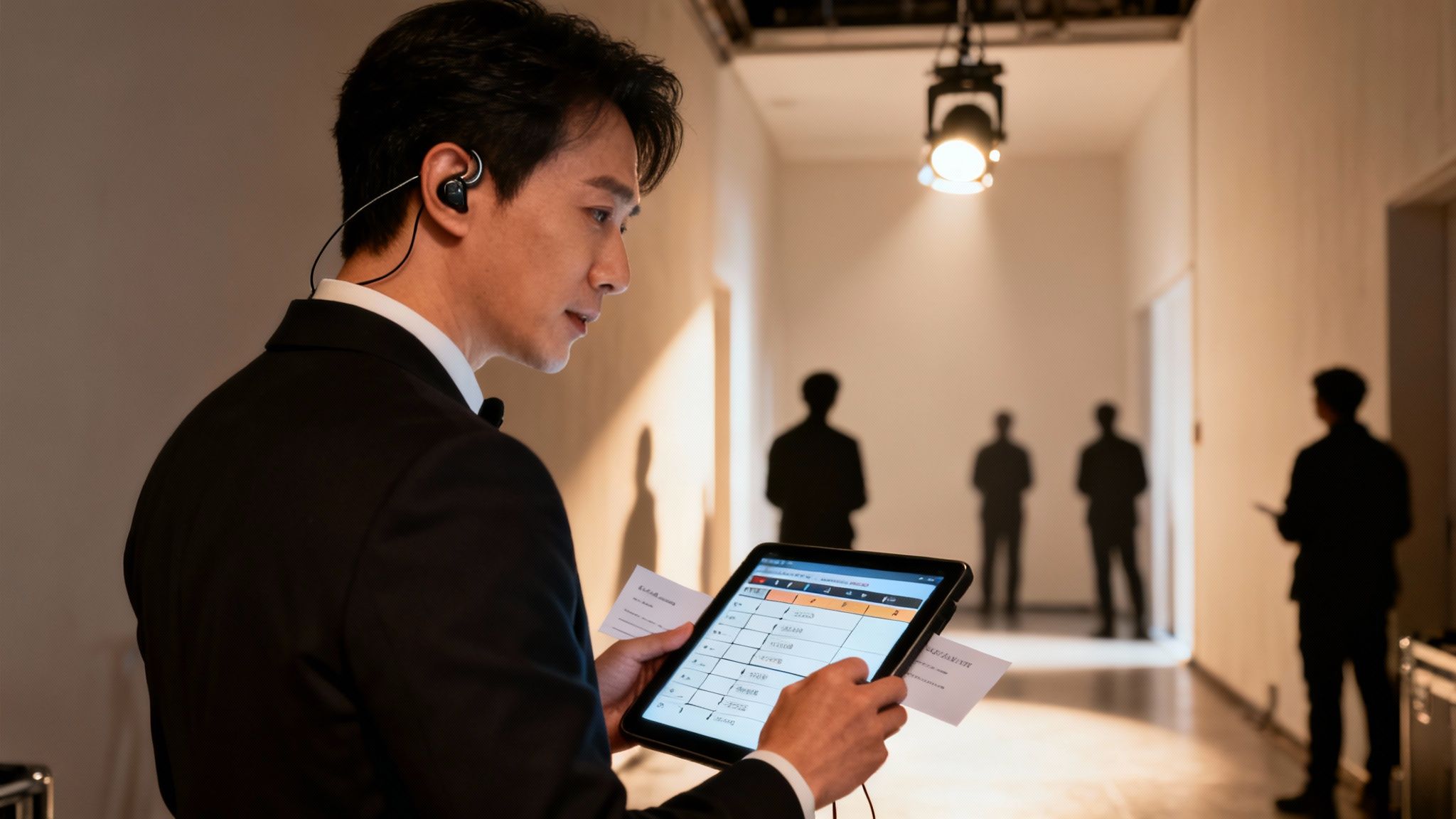
So, what does a Master of Ceremonies really do besides make a few announcements? It’s a common question, and the answer is a whole lot more than just holding a microphone. An expert MC is a proactive force, deeply involved in your event’s success long before the first guest even thinks about showing up.
Think of them as the event's central nervous system. They're the connection point for every vendor, speaker, and timeline detail, making sure information flows smoothly and every part of the day works in perfect harmony. This behind-the-scenes work is the secret sauce that turns a good event into a seamless, unforgettable one.
Their duties are a special mix of art and science—blending a charismatic stage presence with meticulous logistical oversight. They have one eye on the audience and the other on the intricate gears turning backstage.
Before the Event Kicks Off
A professional MC’s job often starts weeks, sometimes even months, before the big day. This planning phase is absolutely critical. It’s where they lay the groundwork for a flawless event, working closely with you and your team to get inside your head and understand the vision.
Here’s what’s happening before the doors open:
- Timeline & Script Development: They help you build a dynamic event timeline, pinpointing potential lulls and crafting a script that keeps the energy high from start to finish.
- Vendor Coordination: A great MC is constantly talking to the DJ, caterer, photographer, and venue manager. They make sure everyone is on the same page with cues, timing, and transitions.
- Speaker & VIP Briefings: They gather intel on key speakers, award recipients, and honored guests. This means learning correct name pronunciations and digging up interesting tidbits for warm, personal introductions.
This proactive approach is everything. When an MC understands the complete picture, they can adapt to anything on the fly without missing a beat, because they already know what you want to achieve with every single segment.
During the Event: In the Spotlight
Once the party starts, the MC steps into their most visible role as the on-stage guide. They are the face and voice of your event, responsible for executing the plan you built together with confidence and grace. Their performance directly sets the tone and energy for the entire room.
Their on-stage checklist is surprisingly long:
- Opening & Welcoming Guests: Kicking things off with an energetic and welcoming vibe.
- Making Key Announcements: Clearly communicating housekeeping items, schedule updates, or calls to action.
- Introducing Speakers: Not just reading a name, but actually building excitement and credibility for each person who takes the stage.
- Facilitating Transitions: Seamlessly moving the event from one moment to the next, like from dinner to speeches or from awards to the dance floor.
- Managing Audience Engagement: Keeping guests clued in and involved through smart interaction, humor, and storytelling.
- Timekeeping: Expertly keeping the event on schedule without making anything feel rushed or frantic.
The Unseen Skills: Grace Under Pressure
Beyond the checklist, a true professional MC brings a powerful set of skills that you just can't script. These are the qualities that separate a decent announcer from a real Master of Ceremonies. For a peek into how this works, checking out a well-crafted wedding MC script template can show you how they structure the flow while leaving room for that personal touch.
A great MC's skillset is both broad and deep, covering everything from public performance to behind-the-scenes coordination.
The Anatomy of a Professional MC's Skillset
A truly exceptional MC possesses a unique blend of hard and soft skills. The hard skills are the tangible, teachable abilities, while the soft skills are the interpersonal qualities that allow them to connect with an audience and manage a room. Here’s a closer look at what they bring to the table.
| Skill Category | Specific Skills | Why It Matters for Your Event |
|---|---|---|
| Public Speaking | Clear articulation, vocal projection, engaging tone, confident body language, storytelling. | Keeps your audience captivated and focused. A great speaker can make even routine announcements sound exciting and important. |
| Logistics & Time Management | Timeline creation, vendor coordination, cue management, keeping the event on schedule. | This is the "insurance policy" for your event. It ensures everything happens when it should, preventing awkward gaps or rushed moments. |
| Adaptability | Improvisation, quick thinking, handling unexpected technical issues or delays. | Events rarely go 100% according to plan. An adaptable MC can solve problems on the fly without your guests ever knowing something went wrong. |
| Interpersonal Skills | Reading the room, humor, empathy, connecting with guests, making people feel comfortable. | Creates a warm, inclusive atmosphere. The MC sets the emotional tone, ensuring guests feel welcomed and engaged from start to finish. |
In the end, an MC’s core job is to shoulder the stress of the event’s flow so that you, the host, don’t have to. Their skillful management, both on and off the stage, ensures your event’s story unfolds exactly as you envisioned it.
How the MC Role Adapts to Different Events
A truly skilled Master of Ceremonies isn't a one-trick pony. Their real magic lies in their versatility—that ability to walk into a room, read the vibe, and instantly adapt their style to fit the moment. The same person who brings a tear to your eye with a heartfelt story at a wedding has to pivot and bring polished, high-energy professionalism to a corporate awards night just a day later.
That's what separates the good from the great. They are chameleons of charisma. They understand the core job is always the same: guide the audience and create an amazing experience. But how they get there? That changes with every single event. Let’s look at how the role shifts across different settings.
The Wedding MC: The Heartfelt Storyteller
At a wedding, the MC plays one of their most personal roles. The air is thick with love, celebration, and family history, and the MC’s job is to protect and amplify that feeling. They're part trusted friend, part friendly guide for the guests.
The tone is all about warmth and celebration. A great wedding MC shares personal anecdotes about the couple, introduces family members with genuine affection, and makes sure the spotlight never, ever leaves the newlyweds.
Here's what they're really doing behind the scenes:
- Building the Hype: They're the ones creating that electric moment for the Grand Entrances, making sure the wedding party and the happy couple get the roaring welcome they deserve.
- Juggling the Toasts: They seamlessly introduce each speaker, making sure everyone knows when it’s their turn and keeping the speeches flowing naturally.
- Directing the Spotlight: They gently guide everyone’s attention to the big moments—the first dance, the cake cutting, the bouquet toss—without ever feeling like a drill sergeant.
A wedding MC has succeeded when you barely notice they were there. If guests leave talking about how smoothly the night went and how much fun they had, it’s because the MC perfectly wove every moment into one beautiful story.
The Corporate MC: The Polished Professional
When the event is a corporate conference, product launch, or a fancy awards gala, the MC role does a complete 180. The audience is different, the goals are business-focused, and the tone has to be professional, sharp, and perfectly on-brand. The MC essentially becomes the voice of the company for the night.
They have to command the stage with confidence, keep a room full of executives and clients engaged, and make sure the event's message lands with impact. There is zero room for error—professionalism and punctuality are everything.
Their focus shifts to things like:
- Being a Brand Ambassador: Their script, their energy, their very presence has to align with the company's culture. Are they formal and prestigious, or are they innovative and fun? The MC has to nail it.
- Mastering the Clock: Corporate events live and die by their schedules. The MC is the timekeeper, ensuring speakers stick to their slots and the whole agenda moves forward without a hitch.
- Keeping the Audience Hooked: It takes real skill to keep a business crowd focused. A pro MC will use interactive bits, manage Q&A sessions, and deliver key info in a way that’s easy to digest.
This is exactly why expert corporate event production is so crucial. A seasoned MC is the link that connects a detailed agenda to a memorable audience experience.
The Charity Fundraiser MC: The Passionate Advocate
At a charity event, the MC takes on what might be their most important role. They're more than just a host; they have to be a passionate advocate for the cause. The entire night hinges on their ability to connect with the audience emotionally and inspire them to be generous.
The tone here is a delicate dance between inspiration, urgency, and sincere gratitude. A great fundraising MC can tell the "why" behind the event in a way that makes every single guest feel like they're part of something bigger than themselves.
Their most critical jobs are:
- Telling the Story: They need to share powerful stories and stats that show the real-world impact of the organization. This isn't about numbers; it's about heart.
- Driving the Donations: This is the moment of truth. They run the live auction or the paddle raise, creating an atmosphere of excitement and friendly competition that gets people to give. A 2021 study actually found that events with a professional, engaging MC raised significantly more money.
- Celebrating the Givers: From the largest corporate sponsor to the individual guest, a great MC makes every single contributor feel seen and deeply appreciated. This is how you build a community of long-term supporters.
So, while the title "Master of Ceremonies" stays the same, the job itself is completely different from one night to the next. This knack for transforming to connect with any audience, anywhere, is the true mark of a pro.
MC vs Host vs DJ: What's the Real Difference?
It’s the question we hear all the time: “Can’t the DJ just be the MC?” It's a fair question, and while some talented pros can juggle multiple roles, these are three totally distinct jobs. Mixing them up can leave your event feeling a little clunky and leaderless when it matters most.
Think of it this way. Your Master of Ceremonies is the general contractor building your house—they see the big picture, follow the blueprint (your timeline), and make sure everything happens exactly when it's supposed to.
Your DJ is the electrician, focused on one critical job: wiring the house for energy and setting the right mood. And the Host? They're like the homeowner throwing the housewarming party, making everyone feel welcome and showing off the final product.
Each role is super important, but they aren't interchangeable. Nailing down the differences is the key to making sure you have the right expert in the right spot.
The Master of Ceremonies: Your Event's Director
The MC is the strategic guide for your event. Their entire focus is on the flow, the energy of the room, and creating seamless transitions between every single moment. They’re the person who keeps the audience locked in, clued in, and excited for what’s next.
This isn't just about making a few announcements. It's active, on-the-fly event management from the stage.
- Main Job: Directing the event’s story and managing the audience's energy.
- What They Do: Introduce speakers, run activities, keep everything on schedule, and make sure the whole experience feels smooth and effortless.
- Their Goal: To be the audience's trusted guide from the very beginning to the final farewell.
The Event Host: The Face of the Party
An event host is usually more of a personality or a representative. While they absolutely engage with the crowd, their main job is to be the warm, welcoming face of the event or brand. Think of the host of a charity gala or the person who kicks off a big corporate conference.
Their role is all about presence and representation, not the minute-by-minute timeline management that an MC lives and breathes.
A host makes guests feel welcome; an MC makes them feel guided. The host is the "what" and "why" of the event, while the MC is the "how" and "when."
The DJ: The Vibe Curator
A DJ lives and breathes sound. Their true expertise is in reading a room, blending tracks perfectly, and using music to create an incredible atmosphere. A lot of great DJs can handle basic announcements, but their training is in music and audio engineering, not public speaking or event direction.
Their tools are turntables and speakers, not a detailed run-of-show. Asking a DJ without specific training to be a full-blown MC is like asking your band's amazing drummer to conduct the entire orchestra. For a deeper dive, our guide on how to choose a wedding DJ breaks down what to look for. A professional DJ-MC, on the other hand, is a specialist who has truly mastered both crafts.
To make it even clearer, let's look at them side-by-side.
MC vs Event Host vs DJ Key Role Distinctions
This simple table breaks down where each role shines.
| Role | Primary Focus | Key Responsibilities |
|---|---|---|
| Master of Ceremonies | Event Flow & Energy: Directing the timeline and guiding the audience's experience from one moment to the next. | Introductions, transitions, time management, vendor cues, and audience engagement. |
| Event Host | Representation & Welcome: Serving as the official face of the event, brand, or organization. | Greeting guests, representing the brand's values, and setting a welcoming tone. |
| DJ (Disc Jockey) | Music & Atmosphere: Curating the sonic experience and managing the party's vibe through music selection and mixing. | Playing music, managing sound levels, reading the dance floor, and making basic announcements. |
At the end of the day, understanding these differences puts you in the driver's seat. It helps you hire the right professional for the right job, giving your event the best possible shot at being something your guests talk about for years to come.
Why Hiring a Professional MC Is a Game Changer
So, you're thinking about asking your hilarious uncle or that super-charming friend to MC your big event? It’s a tempting thought, and a common one, but let me tell you—investing in a professional is one of the smartest moves you can make. This isn't just about dodging a few cringe-worthy jokes; it's about protecting the entire vibe and flow of your event.
Think of a professional MC as your event's insurance policy. They're trained to handle the unexpected and bring a level of calm and control that an amateur just can't match. Their entire job is to carry the stress of the event’s schedule so you can actually be present and enjoy the moment you’ve worked so hard to create.
Less Stress for You, Flawless Flow for Your Guests
The biggest, most immediate benefit of hiring a pro MC is the weight that lifts off your shoulders. Instead of you or a family member nervously checking your watch or chasing down the caterer, the MC has it covered. They become the central point of contact, quietly coordinating with every vendor to ensure everything happens right on cue.
Here’s a classic scenario: the keynote speaker is running 15 minutes late. An amateur might freeze up, and that awkward silence can suck all the energy out of the room. A pro? They see an opportunity. They might smoothly pivot to a quick, fun audience interaction or share a perfectly timed story that fills the gap without anyone even noticing. By the time the speaker arrives, the crowd is engaged, energized, and completely oblivious to the behind-the-scenes scramble.
The real magic of a professional MC isn't just what they do, but what they prevent. They’re masters of turning potential disasters into seamless moments, making sure your guests only see a perfectly polished event from beginning to end.
This little flowchart can help you figure out which pro is the right fit for your specific needs.
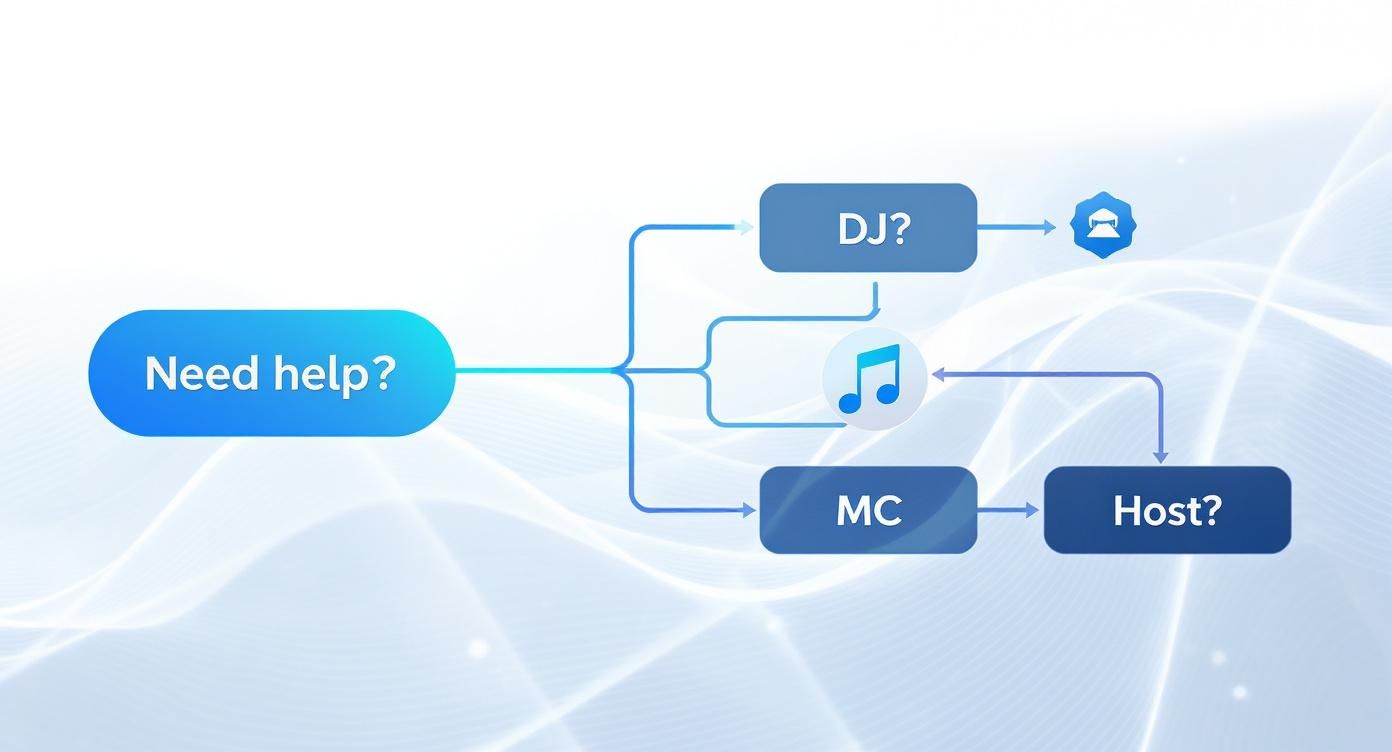
As you can see, if you need someone to truly steer the ship and manage the energy of the event, a dedicated Master of Ceremonies is exactly who you're looking for.
Taking the Guest Experience to the Next Level
A professional MC does so much more than just announce what’s next; they curate an entire experience. They have an incredible knack for reading the room, sensing when the energy is starting to fade and knowing precisely what to do to bring it roaring back to life. Their confidence on stage, storytelling skills, and ability to connect with everyone from your grandma to your boss are what create a truly engaging atmosphere.
They make every single guest feel seen and included. It's the little things, like remembering key people's names or crafting personalized introductions, that make a world of difference. Your friend might just read a name off a card, but a pro turns that same introduction into a genuine, heartfelt moment.
Here’s what that investment really gets you:
- Total Peace of Mind: You get to be a guest at your own party, fully present and enjoying yourself because you know a seasoned expert has the helm.
- A Polished Vibe: The whole event just feels more organized, professional, and elevated.
- Unforgettable Highlights: Pros know how to build anticipation and create emotional peaks, turning a simple awards ceremony or a grand entrance into one of the night's best memories.
- Effortless Problem-Solving: If a microphone cuts out or a presentation slide freezes, they handle it with grace and often a bit of humor, keeping the audience completely at ease.
At the end of the day, hiring a professional MC elevates your event from a simple get-together to a truly memorable occasion. It’s an investment in your own sanity and in creating amazing memories that your guests will be talking about long after the lights go out.
So, How Do You Actually Find and Hire the Right MC?
Alright, you're sold on the idea. Now comes the fun part: finding the perfect person to be the voice of your event. Think of this as casting the lead role in a movie—the right person doesn't just read lines; they bring the whole production to life. Hiring the right professional is a huge decision, so take your time and find someone whose style and energy really click with what you're imagining.
A great MC makes the whole planning process feel like a team effort. They get you excited and help you build a rock-solid game plan for a day (or night) that everyone will remember.
Your Go-To Hiring Checklist
Finding a true pro goes way beyond just looking at a slick website. You need to see them in their element and get a feel for how they work. This simple checklist will help you cut through the noise and pick someone with confidence.
- Watch Them Work: First things first, check out their performance videos. Do they own the stage? Does the crowd seem genuinely into it? This is the quickest way to get a gut feeling for their vibe.
- Read the Reviews: What are past clients saying? Dig through testimonials and reviews. You're looking for keywords like "professional," "adaptable," and "kept everything on track."
- Have a Real Conversation: A consultation is non-negotiable. This is your chance to see if you actually like them as a person. A fantastic MC is an even better listener, asking smart questions to understand what you truly want.
To keep everything straight, you can easily use a tool like our wedding vendor checklist template. It's perfect for tracking potential MCs, their contact info, and your gut feelings after each chat.
Key Questions to Ask a Potential MC
Once you’re sitting down for a chat, you need to have the right questions ready. Don't be afraid to dig in and really understand their process.
- How do you handle things when they go off-script, like a technical glitch or a sudden delay?
- Walk me through your process for building the event timeline and script. Is it a collaboration?
- What’s your secret to getting a quiet or low-energy crowd fired up?
- What do you need from me to make sure you're totally prepared for the day?
- Have you done our specific type of event before (e.g., a wedding, a corporate gala, a charity auction)?
As you get into the nitty-gritty of planning your event, bringing your MC into the loop early is one of the smartest moves you can make. Their answers here will tell you everything you need to know about their experience and how they think on their feet.
Let's Talk Money: Understanding MC Pricing
Finally, the budget. How much does a great MC cost? The honest answer is: it varies. A lot. Experience is the single biggest factor—a seasoned pro with a killer reputation is going to be a bigger investment than someone just getting started.
Other things that move the price tag include:
- Event Complexity: A four-hour wedding reception is a very different beast from a three-day corporate conference.
- Time on the Clock: How many hours will they actually be working? This includes all the pre-event planning and meetings.
- Demand: The best MCs are often booked solid a year or more in advance, and their rates reflect that.
It's important to remember that professional MC rates vary dramatically based on availability, reputation, and demand, with fees ranging from as little as $5,000 to as much as $50,000 per engagement.
When you hire a professional MC, you're not just paying for their time holding a microphone. You're investing in their expertise, their hours of preparation, and the incredible peace of mind that comes from knowing your event is in the hands of a true expert.
Still Have a Few Questions About Your MC?
Even with all the details covered, a few questions always seem to pop up when people are on the fence about hiring a Master of Ceremonies. Let's get right into them—these are the nitty-gritty details that can really make a difference.
Getting these answers straight helps you move forward with confidence, knowing you're not just hiring an MC, but finding the right partner to bring your event vision to life.
Do I Really Need an MC for a Small Event?
You bet. I'd argue that for smaller, more intimate events, a great MC is even more crucial. They're the secret ingredient that prevents those awkward silences and keeps the energy from fizzling out.
Think about it: they can help break the ice, introduce guests who might not know each other, and give the whole gathering a sense of purpose and flow. This frees you up to actually enjoy yourself and connect with people instead of constantly checking your watch and worrying about what’s next.
What Information Should I Give My MC?
The more you can give them, the better. To really nail the vibe and keep things running smoothly, your MC needs to be in the loop. Think of it as creating the ultimate event cheat sheet for them.
Here’s a quick rundown of what they'll need:
- A Detailed Schedule: The complete timeline, from the moment guests arrive until the very end.
- A "Key People" List: A who's-who of anyone they need to introduce or acknowledge. Getting the pronunciations right is a huge deal!
- Specific Talking Points: Any special announcements, inside jokes, or heartfelt thank-yous you want them to share.
- Vendor Contacts: Having the phone numbers for your planner, DJ, and venue manager on hand is a game-changer for seamless, behind-the-scenes coordination.
Can a DJ Also Be a Good MC?
This is a big one. Some DJs are fantastic MCs, but you have to be sure you're hiring a professional who is specifically a trained DJ-MC. Many DJs are comfortable making basic announcements, but a true DJ-MC brings a whole other skillset to the table.
A real pro has dedicated training in public speaking, reading a room, and directing the flow of an event—all on top of their musical talent. They're two very different jobs rolled into one.
Pro Tip: Always ask to see videos of them performing specifically as an MC. This is the best way to know if you're getting a true event director or just a DJ who isn't shy on the mic.
Ready to find a professional DJ-MC who can make your event unforgettable? The experts at 1021 Events have the skills and experience to manage the flow and create an incredible atmosphere from start to finish. Learn more about our services and book a consultation today!
Professional DJ and MC Services Near You
Based in Fort Atkinson, 1021 Events provides professional DJ and MC services for weddings, company parties, fundraisers and private events throughout Southern Wisconsin and Northern Illinois.
Explore our DJ and event services or check availability for your event.