
Choosing your wedding entertainment is one of the biggest decisions you'll make. It literally sets the soundtrack for your celebration. The age-old debate of wedding DJ vs band really boils down to this: A DJ brings a world of musical variety, while a band delivers a one-of-a-kind live performance.
The right choice isn't about which is "better"—it's about what feels right for the vibe you want to create.
Deciding Your Perfect Wedding Vibe
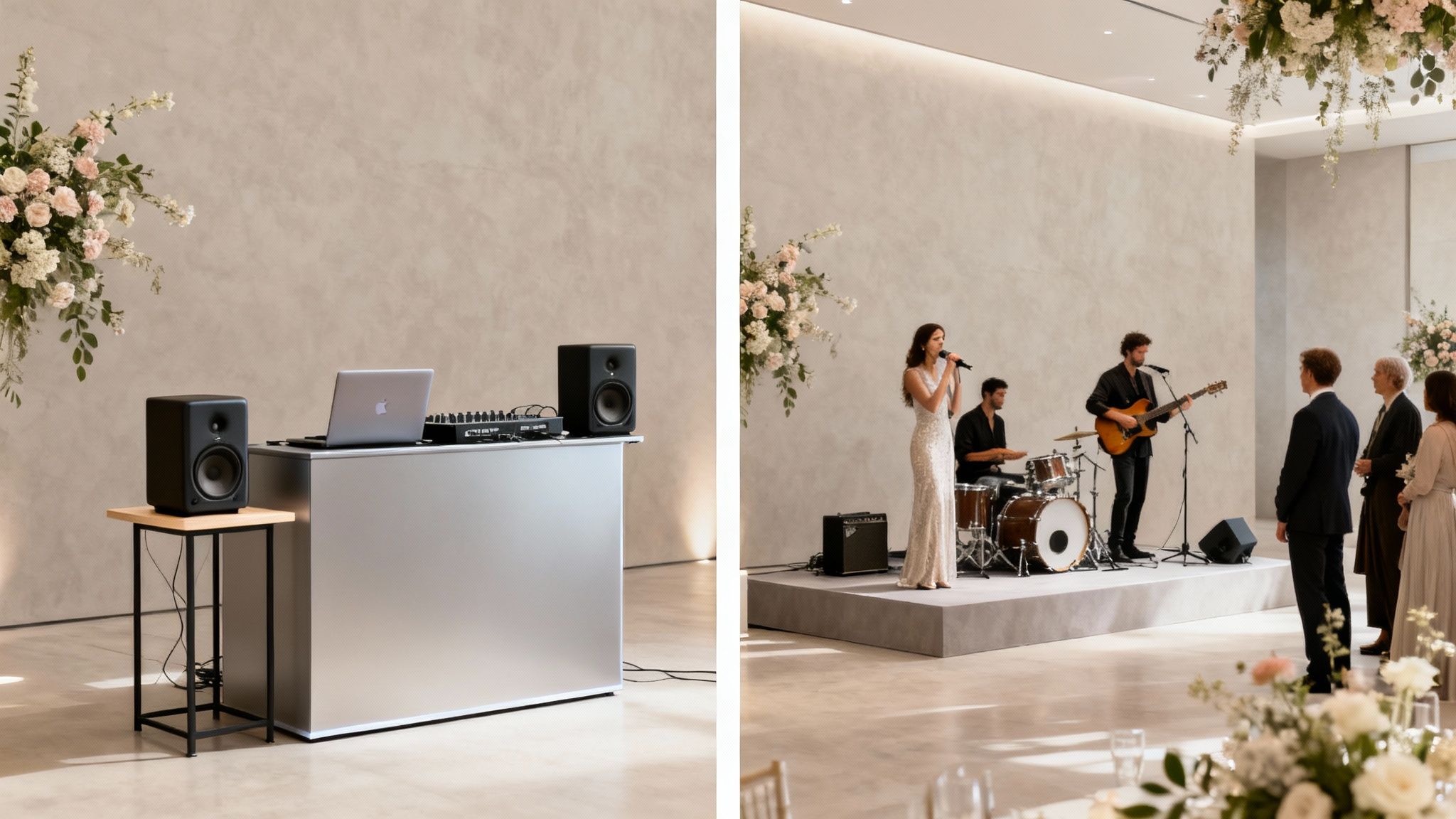
Think of your entertainment as the engine of your reception. It drives the energy, gets people mingling, and ultimately creates those unforgettable moments on the dance floor that you'll look back on for years.
The first step is understanding what each brings to the table. A great DJ is more than a playlist-pusher; they're a skilled emcee and a musical guide. They can seamlessly transition from Frank Sinatra for your grandparents to the latest TikTok hit for your cousins, all while keeping the energy up. It's the original artist, every time.
On the flip side, a live band is pure performance. There's a certain magic to the sound and stage presence of talented musicians playing together. It feels like a private concert just for you and your guests. A group like the Special Effects Band can turn a reception into an electrifying, high-energy show.
So, which one fits your dream wedding? Let's break it down. And if you're looking for even more inspiration beyond these two classics, check out our guide on wedding reception entertainment ideas.
DJ vs Band Quick Comparison at a Glance
Sometimes, seeing the main differences side-by-side makes the decision click. Here’s a quick rundown to help you see which option aligns best with your budget, space, and overall vision.
| Factor | Wedding DJ | Live Band |
|---|---|---|
| Cost | More budget-friendly, typically $1,500 – $2,500 | Higher investment, often $4,000 – $10,000+ |
| Musical Variety | Virtually unlimited; can play any song or genre | Limited to their specific repertoire and style |
| Space Needs | Minimal footprint, requires a small table and outlet | Requires a larger stage area and more power |
| Atmosphere | Creates a continuous, high-energy party vibe | Delivers a unique, live concert experience |
| Emcee Role | Typically included as part of the service package | May require a dedicated emcee or band leader |
This table gives you the 10,000-foot view. Now, let’s dig a little deeper into what each of these points really means for your big day.
So, What's This Really Going to Cost Me?
Let’s get right to it and talk money. When you're stuck in the great wedding DJ vs. band debate, your budget often casts the deciding vote. But remember, you’re not just paying for music—you're investing in the entire vibe of your big day.
Peeling back the layers on the price tag helps you see where the real value is. A DJ’s quote is usually pretty straightforward: one pro, their gear, and their time. A band, on the other hand, is a different beast entirely. You’re paying multiple musicians, hauling a truckload of equipment, and sometimes even footing the bill for their travel and dinner. It's easy to see how the price gap starts to widen right from the get-go.
The Upfront Cost: A Side-by-Side Look
The first thing you’ll notice is the sticker shock, and it’s a big one. This isn't a small price difference; it's a major budget decision that can ripple across your entire wedding plan.
The numbers don't lie. In 2022, the average couple in the U.S. spent around $1,500 on a wedding DJ. For a live band? That number jumped to about $3,900. That's a $2,400 difference, plain and simple, and it comes down to a band's much higher overhead. Think musician salaries, logistics, and all the moving parts.
The Bottom Line: While both get people dancing, they're two totally different products. A DJ is a cost-effective, all-in-one music solution. A band delivers a full-blown live concert experience, and it's priced accordingly.
But that initial quote is just the starting line. A bunch of other things can change that final number, so it’s smart to look beyond the base price.
What Actually Drives the Final Price?
So, what makes these costs go up or down? It's not just about how long they play. A few key things can really move the needle for both DJs and bands.
For a Wedding DJ:
- Street Cred: A veteran DJ with a killer reputation and a decade of weddings under their belt is going to charge more than a newcomer. You're paying for experience.
- The Extras: Want cool uplighting, a photo booth, or your initials in a fancy monogram on the dance floor? Most DJs offer these as add-ons, and they'll bump up the price.
- Time on the Clock: A standard 4-5 hour reception is usually included. If you need them to cover the ceremony and cocktail hour too, or keep the party going late, expect to pay more.
For a really detailed breakdown, check out our guide on the average cost of a wedding DJ.
For a Live Band:
- Headcount: This is the big one. A tight three-piece trio will cost way less than a ten-piece orchestra with a full horn section.
- Travel & Board: If your dream band is coming from out of state, you'll almost certainly be covering their gas, hotel rooms, and meals.
- Special Requests: If you need them to play that obscure indie song for your first dance, they'll have to learn it. That means rehearsal time, and that time isn't free.
Hidden Fees and Surprise Perks
When you're looking at quotes, you have to read the fine print. What looks like a steal at first might end up costing you more down the road if you’re not paying attention.
A DJ’s price is usually more of an all-inclusive deal. The fee typically covers all the sound gear, microphones for toasts, and their services as the emcee for the night. This makes your life a whole lot easier—one person is handling all your sound and announcements.
A band's contract, however, can have more curveballs. You might be on the hook for renting a stage, arranging specific power hookups, or even hiring a separate emcee if the bandleader doesn’t handle that part. But the trade-off is huge. The raw energy and visual punch of a live performance can be the single most memorable thing about your wedding, creating an electric, concert-like atmosphere that you and your guests will be talking about for years.
Crafting Your Perfect Wedding Playlist
Think of your wedding playlist as the soundtrack to your big day. It’s not just background music; it’s the score that tells your story, one track at a time. The classic wedding DJ vs band debate is really about how you want that story to be told. Do you want the authentic, original recordings that bring back specific memories? Or do you want a live interpretation that creates a brand new one?
A DJ is like a musical chameleon. They can effortlessly blend into the vibe of the room and navigate the wide-ranging tastes of a multi-generational crowd. They literally bring the original artists to your reception, playing everything from your parents' first dance song to that viral track your cousins can’t stop talking about.
This kind of flexibility is a DJ's secret weapon. You won't have any of those awkward silent moments between songs—just a smooth, high-energy mix that keeps the party going all night long.
The Power of an Endless Library
Let's be real: one of the biggest perks of hiring a DJ is their practically bottomless song library. They aren’t stuck with a single genre or a rehearsed setlist. This means they can be incredibly spontaneous and customize the music throughout the entire evening.
Most professional DJs come armed with libraries of 20,000 to 50,000 tracks, sometimes even more. This lets them switch from Frank Sinatra to Dua Lipa in a heartbeat or dig up that obscure request from your college roommate. This is a huge advantage over bands, who usually plan their setlist well in advance and might not be able to accommodate last-minute song ideas. If you want to learn more about how a DJ's huge library can shape a wedding, Wedding Spot has some great insights.
Having access to this much music is a game-changer for couples who want to mix different cultures, languages, or musical decades into their celebration. It’s the best way to make sure there's a little something for everyone.
The Art of a Curated Performance
A live band, on the other hand, delivers a completely different kind of experience. They aren't just playing songs; they're performing them. This single difference can turn your reception from a fun party into a full-blown concert, creating a vibrant focal point that gets everyone buzzing.
There’s just an undeniable energy that comes from a talented band. The raw sound of live guitars, drums, and powerful vocals creates an electric atmosphere that you just can't get from a recording. They feed off the crowd's energy, interact with your guests, and transform the dance floor into a truly shared, live moment.
A band’s performance is an artistic interpretation. They bring their unique style and flair to familiar songs, offering a fresh take that can make your first dance or your parent's anniversary song feel even more special and personalized.
Of course, a band's song list is naturally smaller than a DJ’s digital library. But a great band will work with you to build a setlist that totally nails your vibe. They're masters of their craft, whether it's soul, rock, jazz, or pop, and they deliver a polished, high-impact show. They may not play every song ever recorded, but the songs they do play are performed with a passion that really connects with everyone in the room.
And for those key moments that need a perfectly timed song, like walking down the aisle, it’s important to have a plan. Our guide to crafting the perfect wedding ceremony music playlist can help you figure out these crucial details, whether you go with a DJ or live musicians.
Making the Right Musical Choice for You
So, what's the final verdict? Honestly, the best choice really comes down to your musical tastes and the kind of atmosphere you're dreaming of for your wedding.
To help you decide, think about these scenarios:
- You have a wildly diverse guest list: If your crowd ranges from grandparents who love Motown to friends who are deep into modern hip-hop, a DJ is likely your best bet. They can jump between genres effortlessly to keep everyone happy and dancing.
- You want a sophisticated, high-energy show: If you're imagining a reception that feels more like an exclusive concert, a live band is the clear winner. Their stage presence and live sound create a dynamic, unforgettable centerpiece for the evening.
- You have a list of must-play songs: If hearing the original versions of your favorite tracks is absolutely non-negotiable, a DJ can guarantee you'll hear them exactly as you remember. A band, by nature, will always put their own creative spin on a song.
Creating the Perfect Vibe for Your Reception
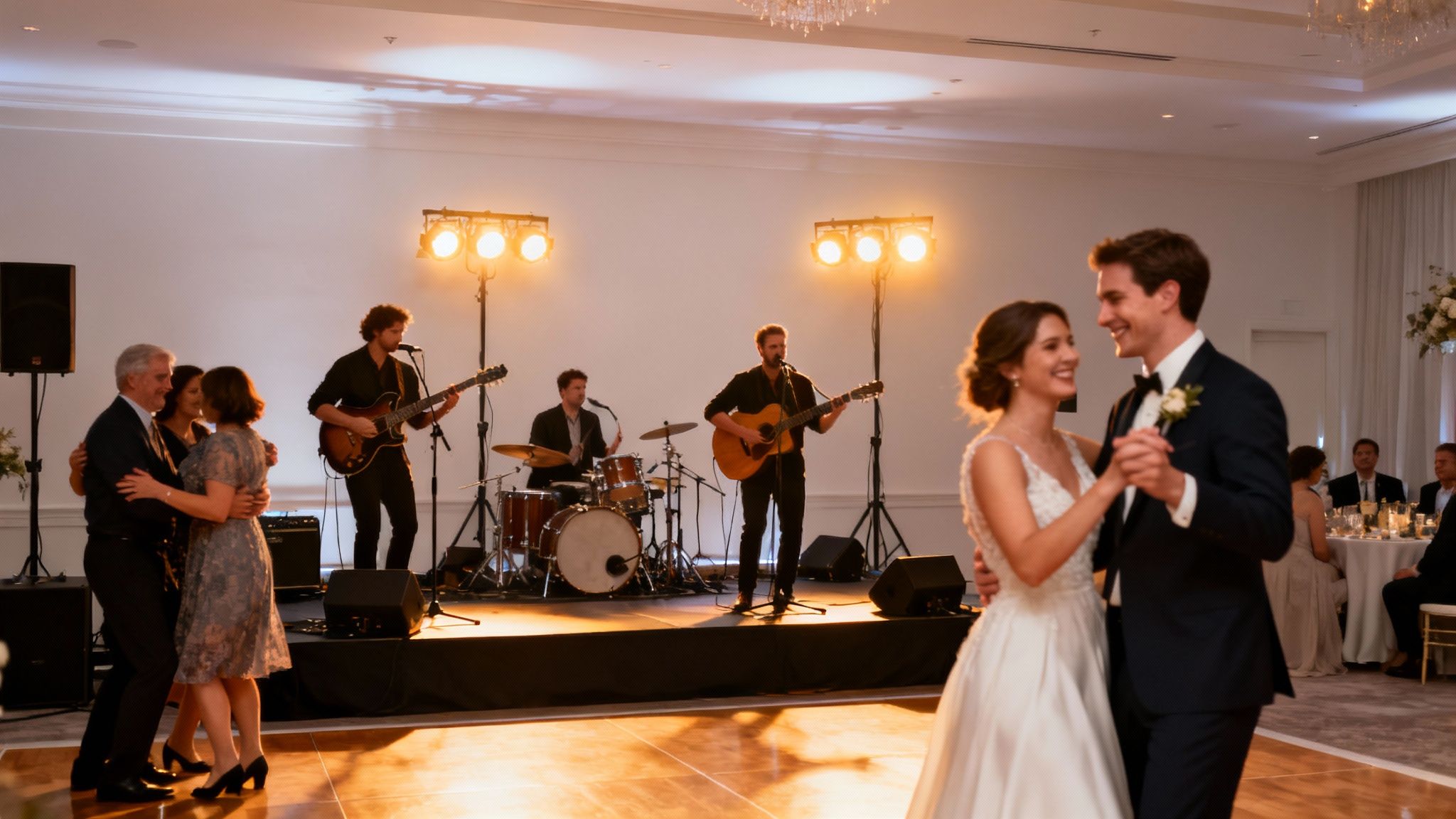
Let's be real: your entertainment choice is the single biggest factor that will define your reception's vibe. It’s what turns a nice dinner into an unforgettable party. This is where the wedding DJ vs band debate gets interesting, because we're not just talking about playlists anymore—we're talking about pure atmosphere.
A live band is a statement piece. They bring a huge, concert-like energy that’s impossible to ignore. Their performance is a full-on show, creating a high-energy, sophisticated focal point that naturally pulls people onto the dance floor.
A great DJ, on the other hand, is a master of momentum and flow. They are the ultimate party curator, stepping into the spotlight to emcee key moments but otherwise blending in to keep the energy building. Their job is to read the room and seamlessly guide the night from elegant dinner music to a wild dance party.
The Unmistakable Energy of a Live Band
A band’s superpower is its stage presence. They aren’t just playing music; they are performing. This creates a tangible connection with your guests, turning the reception into a shared, live event that everyone is a part of.
There's an electric quality to the raw sound of live instruments and vocals that a recording just can’t touch. The musicians feed off the crowd's energy, interact with guests, and can even throw in spontaneous moments that make your wedding feel completely unique.
A band essentially puts on a private concert for you and your guests. This makes the music an active, central part of the celebration rather than just background noise, encouraging even the most reluctant guests to get involved.
This "private show" atmosphere is perfect if you’re dreaming of a glamorous, high-impact celebration where the music is the star. It elevates your reception from a simple party into a truly memorable performance.
A DJ’s Skill in Curating the Vibe
A DJ’s influence is often more subtle, but it's just as powerful. Think of them as the "vibe architect" for your evening, meticulously building the energy from the first toast all the way to the last dance.
They do this with seamless transitions. You’ll never have those awkward pauses between songs that kill the dance floor momentum. A skilled DJ mixes tracks flawlessly, creating a continuous flow of music that keeps everyone locked in and moving all night.
Their role as an emcee is also crucial. A pro wedding DJ guides the night with a polished, confident presence, making sure announcements for the cake cutting, bouquet toss, and special dances happen right on cue. They keep the whole evening running smoothly so you can just relax and enjoy it. That ability to sync up with other elements is huge—you can learn more about how powerful that can be by exploring options for your wedding dance floor lighting.
Real-World Vibe Scenarios
To really nail down the difference, let’s walk through a couple of common wedding scenarios.
-
Scenario 1: The Sophisticated Black-Tie Affair
Imagine a formal wedding in a historic ballroom. A live jazz or soul band immediately sets a tone of classic elegance. Their dinner set is a sophisticated backdrop, and when it’s time to dance, they bring a grand, impressive energy. The sheer visual of a sharp-dressed band on stage just screams luxury. -
Scenario 2: The Ultimate Non-Stop Dance Party
Now picture a modern, high-energy reception where the main goal is to have a packed dance floor from beginning to end. Here, a DJ is the perfect choice. They can mix a custom playlist of your favorite upbeat pop, hip-hop, and EDM without missing a beat. Their skill in reading the crowd and switching genres on the fly creates an unstoppable party atmosphere that keeps guests on their feet for hours.
Navigating Space and Logistical Needs
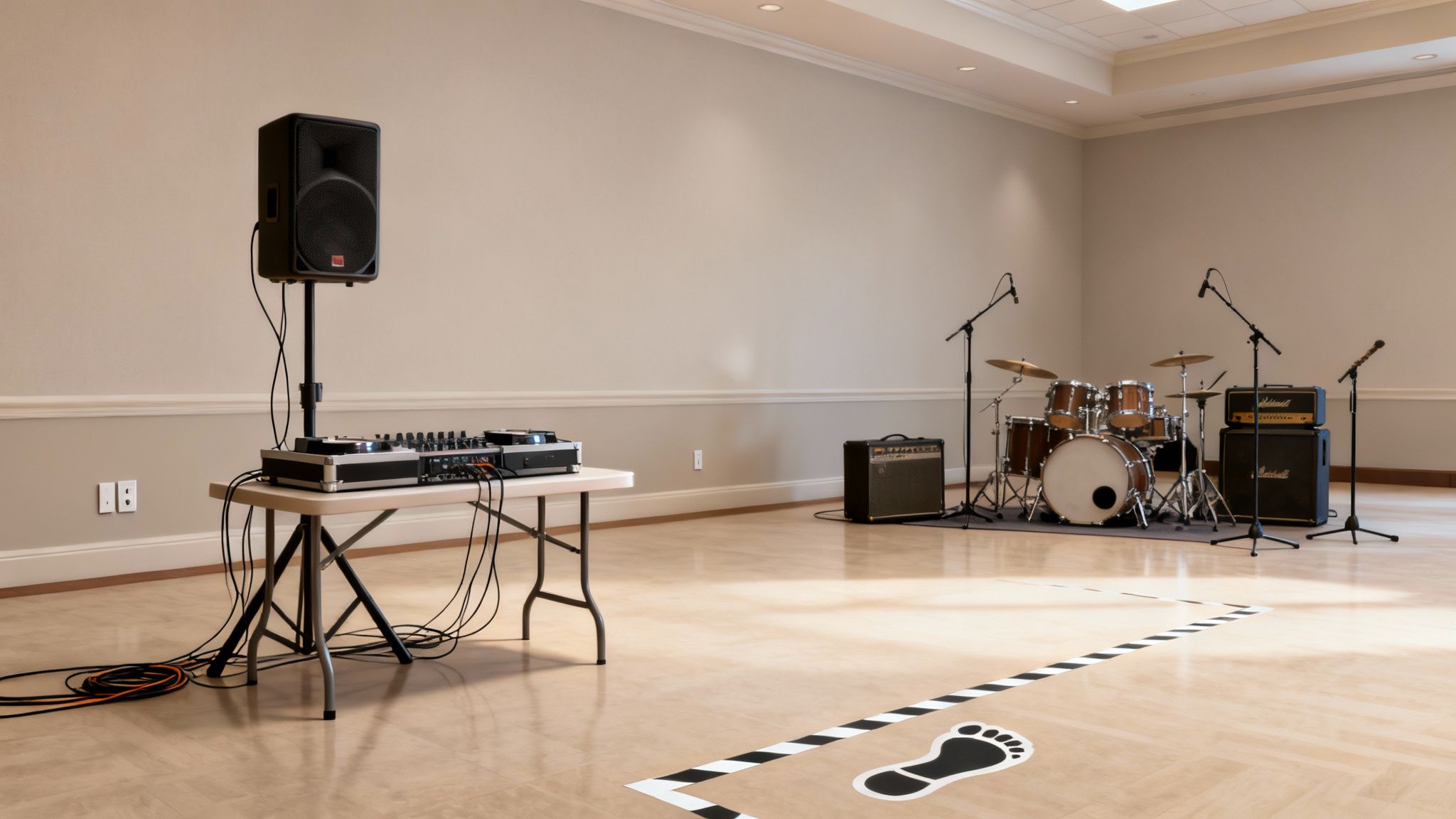
It’s easy to get lost in the music and the vibe, but the practical side of things—the logistics—can make or break your wedding day. When it comes to the wedding DJ vs. band debate, this is where you see some of the starkest differences. One is a lean, self-contained operation; the other is a full-blown production.
Think of your venue as a canvas. It’s beautiful, but it has boundaries. Before you get your heart set on that amazing 10-piece funk band, you absolutely have to know if they’ll fit, if the venue has enough juice to power them, and if you’ll be breaking any sound rules.
The Compact Footprint of a Wedding DJ
One of the most attractive things about hiring a DJ is just how little space they need. It’s a huge plus. Most professional DJs can comfortably fit their entire rig into a 6×8 foot nook, making them a fantastic option for pretty much any venue, from a cozy restaurant buyout to a sprawling ballroom.
A DJ's whole setup is designed for efficiency. They just need a solid table, a power outlet or two, and a bit of room for their speakers. It’s a simple, streamlined approach that makes coordinating with your venue a total cakewalk. We get into all the nitty-gritty in our guide to a professional wedding DJ setup.
A DJ’s minimal setup means they can be tucked into a corner, freeing up maximum space for what truly matters: your guests and the dance floor. This flexibility is a huge plus for smaller or non-traditional venues.
Their load-in and sound-check are also a breeze. A good DJ is usually set up and ready to roll in about an hour, which means less disruption while your other vendors are trying to get things done.
The Extensive Needs of a Live Band
Now, a live band is a different beast entirely. They bring an incredible energy, but they also bring a ton of gear that requires serious space and planning. We're not just talking about a few people with instruments; this is a production that needs its own dedicated zone to sound good and look right.
For a standard 5-piece band, you're likely looking at a stage area of at least 12×20 feet—and that's just for the musicians themselves. It doesn't even account for their big speakers, stage monitors, mixing board, and lighting. You have to ask yourself: can my venue give up that much prime real estate without making the guest tables or dance floor feel cramped?
Power is another big one. A band’s equipment can draw a lot of electricity. They’ll often need multiple, separate circuits to avoid blowing a fuse mid-song. This is a critical conversation to have with your venue manager from day one.
And don’t forget about the clock. Bands need a much bigger window for setup and sound check, sometimes up to 2-3 hours before guests start arriving. That sound check can be loud, so you have to schedule it carefully so it doesn’t interrupt your ceremony or cocktail hour.
Your Venue Coordination Checklist
To save yourself from a logistical headache on your wedding day, grab your venue coordinator and run through this checklist before you sign on the dotted line with any entertainment.
- Available Space: What are the exact dimensions you can offer for the performance area? Is there a built-in stage we can use?
- Power Capabilities: How many outlets are there, and are they on separate circuits? Can the venue’s electrical system handle a band’s power draw?
- Load-In Access: Is there a loading dock or a clear, easy path for bringing in heavy equipment? (Trust me, they’ll thank you for this.)
- Sound Ordinances: Are there any local noise restrictions or curfews we need to know about?
Getting these questions answered upfront ensures that whether you choose a DJ or a band, they'll have everything they need to perform without a hitch.
So, Who Wins Your Wedding?
Alright, let's wrap this up. When you're staring down the DJ vs. band decision, it’s not about which one is "better" in general. It's about what’s better for your wedding day, your vibe, and your crowd.
Think of it like this: A great DJ is like a master architect of the party. If you want a dance floor that is absolutely packed from the first song to the last, with seamless jumps from 90s hip-hop to today's top 40, a DJ is your person. They bring an insane amount of musical variety, making sure your grandma and your college roommate both have a reason to get up and dance.
A live band, on the other hand, is the main event. They are a performance. If your vision includes the raw, infectious energy of a live show—the kind of experience that feels like a private concert just for you and your guests—nothing beats a band. They create a focal point, an electric atmosphere that a playlist just can't touch.
Can You Have Your Cake and Eat It Too?
Absolutely. You don't have to be boxed into one choice. More and more couples are opting for a hybrid approach to get the best of both worlds, and honestly, it works beautifully.
Here are a couple of popular ways to pull it off:
- Ceremony Musicians + Reception DJ: Start with the elegant, classic vibe of a string quartet or an acoustic guitarist for the ceremony and cocktail hour. Then, when it's time to party, unleash a DJ to get everyone on their feet.
- Band with a DJ for Breaks: Hire that amazing band you love, but have a DJ ready to spin tracks during their breaks. This genius move keeps the energy high and the music flowing all night long. No awkward silences, just non-stop celebration.
This "best of both" strategy gives you that touch of live-music class while still having the endless library of a DJ to keep the party going.
Making the Final Call with Confidence
At the end of the day, your gut and your budget will probably lead you to the right answer. In major Western markets, DJs are definitely the more common choice, with over 60% of weddings in the UK and US going the DJ route. A lot of that comes down to cost. A great band in a city like Chicago can easily run you over $10,000, whereas a skilled DJ often lands in the $1,000 to $2,500 range. If you want to dig deeper into the numbers, you can explore insights on entertainment costs at Breezin.com.
The Bottom Line: Go with a DJ if you want ultimate control over the playlist, endless song variety, and a party that never stops. Choose a band if you want a high-energy, live concert experience that becomes the unforgettable centerpiece of your reception.
Of course, the music is just one piece of the puzzle. The space you choose to celebrate in sets the entire stage. For more on that, check out this guide on how to choose a wedding venue that truly reflects your style.
Trust yourself, look at your budget, and pick the entertainment that feels right. You've got this.
Answering Your Top Wedding Music Questions
Alright, so you've weighed the big stuff—cost, vibe, logistics. But even after all that, you probably have a few nagging questions. It’s often the little details that make the biggest difference to your guests' experience, and getting those right is what helps you finally settle the great wedding DJ vs. band debate.
Let's dig into some of the most common questions I hear from couples. Getting these answers should help you feel 100% solid in whatever you decide.
This little decision tree is a great way to see which path makes the most sense for your biggest priorities. Are you all about endless song variety, or is it the raw energy of a live performance that you're after?
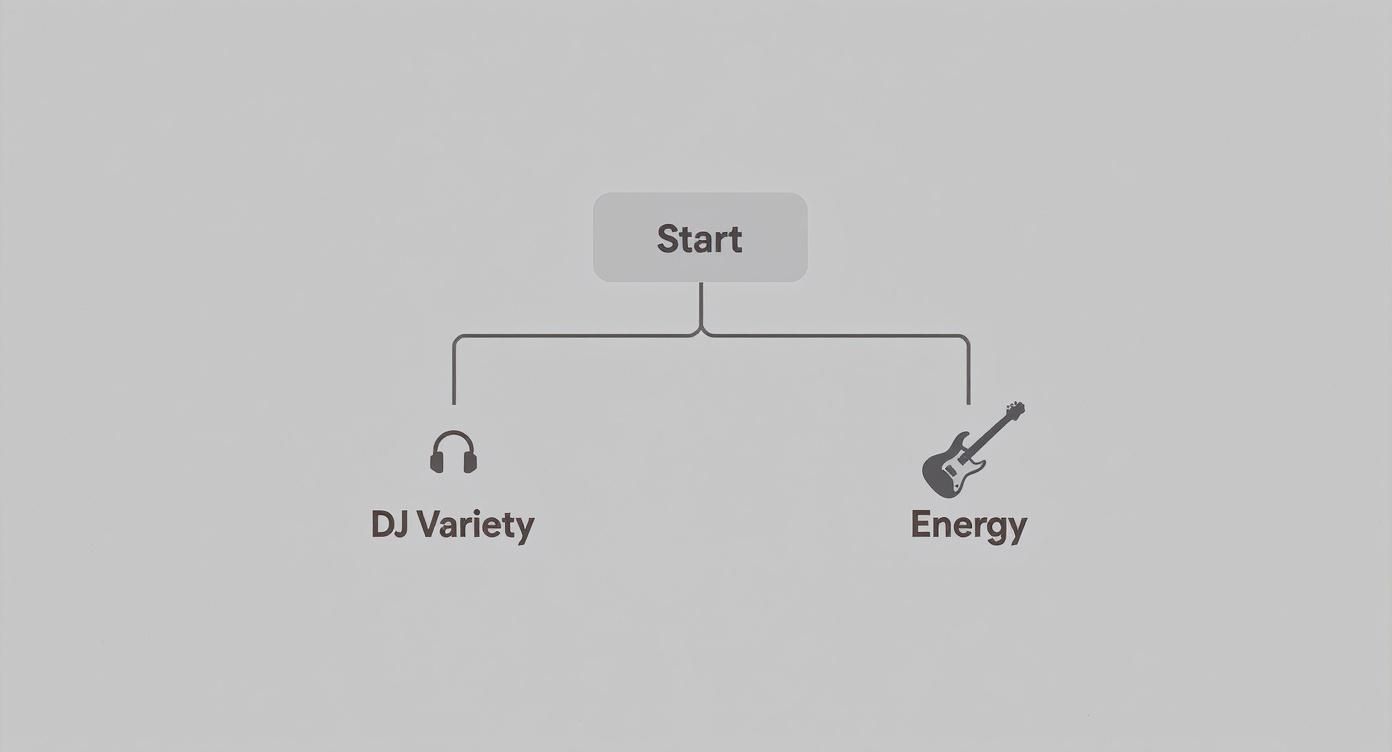
As you can see, it really boils down to a core trade-off: a DJ brings the entire world of music to your fingertips, while a band delivers a one-of-a-kind, high-energy show.
How Are Song Requests Handled?
This is a huge one, and where DJs and bands are worlds apart. A great wedding DJ is literally built for taking requests. With a massive digital library at their command, they can find almost any song in a heartbeat. It’s perfect for when your uncle suddenly needs to hear that one obscure 80s track. Most will chat with you beforehand about your "request policy"—do you want them to play anything, filter out the cheesy stuff, or stick to your do-not-play list like gospel?
A band, on the other hand, operates from a carefully rehearsed setlist. They can absolutely learn a few special songs for you ahead of time (like for your first dance), but they can't just bust out a random Top 40 hit they've never practiced together. Think of their performance as a curated concert, not an on-demand jukebox.
Key Takeaway: If letting your guests make spontaneous song requests is a big part of the fun for you, a DJ is the hands-down winner here. The flexibility is just unmatched.
What Happens When They Take a Break?
Let's be real—nobody can perform for four or five hours straight without a break. Both DJs and bands need downtime, but how they handle it creates a totally different feel and can really affect the party’s momentum.
When a DJ takes a break, you probably won't even notice. They’ll just cue up a pre-mixed set or a solid playlist that keeps the same vibe going. The music never stops, the energy on the dance floor stays up, and your guests are none the wiser that the DJ just stepped away for a minute.
A live band’s breaks are more noticeable. They're typically structured, lasting about 15-20 minutes for every hour they play. During that time, they’ll usually just run a playlist through their sound system. While it keeps the room from going dead silent, you can definitely feel the energy shift. Some couples get around this by hiring a DJ to spin during the band's breaks, which creates a really cool hybrid experience.
Who Acts as the Emcee?
Your emcee is the glue that holds the reception together, making announcements and keeping everything flowing. With a wedding DJ, the emcee role is almost always baked into their service. These are pros who are comfortable on the mic and know how to guide the evening from the toasts to the cake cutting.
For a band, it can be a bit of a mixed bag. Often, the bandleader or one of the singers will handle the emcee duties. But their main job is performing, so their announcing style might not be as polished as a dedicated DJ who does it every weekend. You'll definitely want to ask about this upfront; some bands might even suggest you find a separate emcee.
Feeling good about your entertainment choice is a massive weight off your shoulders. At 1021 Events, we live for creating the exact atmosphere you're picturing with our professional DJ/MC services, beautiful uplighting, and top-tier sound systems. Let us help you build a night no one will forget. Check out our wedding packages at https://www.1021events.com.