
Pulling off a memorable corporate event that feels seamless and delivers real results is a massive undertaking. It’s easy to get lost in the sea of details, from negotiating vendor contracts to ensuring the AV equipment doesn't fail at a critical moment. That’s where a solid game plan becomes your most valuable asset, and a detailed planning corporate events checklist is the foundation of that plan.
This isn’t just another list of to-dos; it’s a strategic roadmap designed to guide you through every phase of the process, from the initial brainstorm to the final ROI report. We’ve broken down the entire lifecycle of event planning into 10 manageable, actionable stages. This comprehensive guide covers everything you need to know, including defining clear objectives, managing your budget, selecting the perfect venue, and coordinating all on-site logistics.
The first step in orchestrating a flawless corporate event is understanding the big picture and creating a structured framework. If you need a deeper dive into structuring your initial approach, mastering how to create a project plan can provide the foundational skills necessary to manage the complex moving parts of any event.
Think of this article as your master checklist, built to eliminate guesswork and empower you to create an experience that wows your attendees and satisfies your stakeholders. Whether you're planning a small team-building retreat, a large-scale conference, or a glamorous product launch, these steps will provide the clarity and control you need. Let's dive in and transform your next corporate gathering from a source of stress into a resounding success.
1. Define Event Objectives and Goals
Before you even think about venues or catering, the first, most crucial step in any planning corporate events checklist is to define your "why." What is the fundamental purpose of this event? Establishing clear, measurable objectives is the bedrock upon which every other decision will be built, from the budget you allocate to the content you create.
Think of it this way: a product launch event for a tech company like Apple has a completely different goal (generating media buzz and driving Q4 sales) than Google's I/O conference (developer engagement and innovation showcase). Your goals will dictate the entire vibe, scale, and focus of your gathering.
How to Set Actionable Goals
Don't just say "we want a successful event." Get specific. The best approach is to use the SMART framework: Specific, Measurable, Achievable, Relevant, and Time-bound. This moves your objectives from vague wishes to concrete targets.
- Specific: Instead of "increase brand awareness," try "secure 10 media placements in industry-specific publications."
- Measurable: Instead of "improve employee morale," aim for "achieve a 90% or higher satisfaction score on the post-event employee survey."
- Achievable: Are your goals realistic given your budget, timeline, and resources?
- Relevant: Does this event align with broader company initiatives for the quarter or year?
- Time-bound: "Generate 200 qualified leads by the end of the fiscal quarter as a direct result of event networking."
Why This Matters
Clear objectives are your North Star. They empower your team to make aligned decisions, justify your budget to leadership, and, most importantly, measure success after the confetti settles. Knowing your KPIs from day one is essential for proving the value of your efforts. For a deeper dive, you can find a guide to measuring your event's return on investment at 1021events.com. This foundational step transforms your event from just another corporate function into a strategic business driver.
2. Establish Budget and Financial Controls
With your "why" firmly in place, the next logical step in your planning corporate events checklist is to figure out the "how much." Establishing a comprehensive budget isn't just about crunching numbers; it's about allocating resources strategically to bring your event objectives to life. This financial blueprint will guide nearly every decision you make, from vendor selection to marketing spend.
Think about how major companies approach their flagship events. Microsoft’s Ignite conference, for example, uses a sophisticated tiered budgeting system to manage costs across different regions, sessions, and attendee experiences. This ensures every dollar is accounted for and aligned with specific goals, preventing the financial chaos that can derail even the best-laid plans.
How to Build an Actionable Budget
A good budget is more than a list of expenses; it's a dynamic financial management tool. Start by outlining all potential cost categories and then implement controls to stay on track.
- Categorize Everything: Break down costs into major buckets like Venue, Catering, A/V & Production, Staffing, Marketing & Promotion, and Speaker Fees.
- Account for the Unseen: Always include line items for often-overlooked expenses like taxes, service fees, gratuities, insurance, and permits.
- Build a Buffer: The golden rule of event budgeting is to build in a contingency fund of at least 10-15% of your total budget. This reserve is your safety net for unexpected costs or last-minute opportunities.
- Track in Real-Time: Use a spreadsheet or event management software to track every expense as it occurs. This prevents surprises and allows for quick adjustments if one category goes over.
- Get Multiple Quotes: Before committing to any major vendor, obtain at least three competitive quotes to ensure you're getting fair market value.
Why This Matters
A meticulously planned budget is your best defense against scope creep and cost overruns. It provides the financial guardrails needed to execute your vision without breaking the bank and allows you to demonstrate fiscal responsibility to stakeholders. Knowing exactly where your money is going is crucial for proving ROI. For a head start, you can download a detailed event budget template at 1021events.com. This foundational step ensures your event is not only a creative success but a financial one as well.
3. Select and Secure Venue
Once your objectives are set and your budget is framed, the next critical piece of the planning corporate events checklist is finding the perfect space. The venue is more than just four walls; it’s the physical embodiment of your event's brand and the backdrop for your attendees' experience. It dictates everything from atmosphere and logistics to attendee comfort and technological capabilities.
Think about the difference in feel. A major tech conference like CES requires the sprawling, high-tech infrastructure of a Las Vegas convention center, while a luxury brand’s VIP client appreciation event might thrive in the exclusive atmosphere of a private museum or a chic rooftop lounge. The right venue amplifies your message and makes the experience seamless.
How to Find and Book the Right Space
Choosing a venue requires a detailed site visit and a sharp eye for logistical details. Don't just look at the glossy photos online; you need to walk the space and envision your event in action. This is where you move from abstract planning to concrete reality.
- Visit in Person: Always conduct a site tour, preferably at the same time of day your event will take place to check lighting and ambient noise.
- Confirm Capacity & Layout: Ask for the maximum capacity according to the fire code for various setups (theater, classroom, banquet) to ensure it fits your needs.
- Scrutinize Tech & A/V: Check the in-house A/V capabilities, Wi-Fi bandwidth, and power availability. Are there dead zones? Do you need to bring in an outside A/V team?
- Assess Accessibility: Evaluate parking, public transportation access, and ADA compliance to ensure all guests can arrive and navigate the space easily.
- Clarify Vendor Policies: Determine if they have an exclusive list of vendors (especially for catering) or if you can bring in your own partners. This can significantly impact your budget and options.
Why This Matters
Securing your venue early (6-12 months out for large events) gives you leverage in negotiations and guarantees you get the space that truly fits your vision, rather than settling for what's left. It solidifies your event date and allows all other planning, from vendor booking to marketing, to move forward with confidence. The contract is just as important as the space itself, so it's vital to understand every clause. For guidance on what to look for, you can use an event venue contract template from 1021events.com to ensure you’re covered.
4. Create Event Timeline and Project Schedule
With your goals set and budget approved, it's time to map out the "how" and "when." A detailed event timeline is your strategic roadmap, transforming a mountain of tasks into a manageable, step-by-step process. This schedule ensures every moving part, from securing a venue to finalizing the guest list, happens in the right order and on time, preventing last-minute scrambles and costly oversights.
Think of it this way: a massive conference like AWS re:Invent requires a 12+ month planning cycle to coordinate thousands of sessions and speakers. In contrast, an internal product launch might operate on an intensive 3-6 month timeline. The scale dictates the schedule, but the principle of backward planning remains the same for any successful entry on a planning corporate events checklist.
How to Build an Actionable Timeline
The most effective method is to work backward from your event date. Start with the big day and plot out major milestones in reverse. Using a project management tool like Asana or even a detailed spreadsheet can make this process collaborative and transparent for your entire team.
- Start with the End: Plug in your event date and work backward in weekly or monthly blocks.
- Identify Milestones: Mark major deadlines like "Venue Contract Signed," "Catering Menu Finalized," "Registration Opened," and "AV Tech Confirmed."
- Assign Tasks: Break down each milestone into smaller, assignable tasks with individual due dates. For example, "Venue Contract Signed" includes tasks like "Research Venues," "Conduct Site Visits," and "Negotiate Contract Terms."
- Highlight Dependencies: Identify "critical path" items. You can't book catering until the venue is confirmed, so the venue contract is a dependency for all subsequent vendor bookings.
- Build in a Buffer: Always add a two-week buffer right before the event for unexpected issues, final walkthroughs, and last-minute details.
Why This Matters
A well-documented timeline is your single source of truth. It keeps everyone accountable, provides a clear view of progress for stakeholders, and allows you to proactively manage potential bottlenecks before they become full-blown crises. It transforms reactive problem-solving into proactive project management. For a head start, you can explore this detailed guide for an event planning timeline template at 1021events.com. This proactive step is what separates a chaotic planning process from a smooth, well-executed corporate event.
5. Develop Marketing and Promotion Strategy
A fantastic event with an empty room is a planner's worst nightmare. Your marketing and promotion strategy is the engine that drives attendance, builds anticipation, and ensures your message reaches the right people. This goes beyond sending a single email; it’s a multi-channel campaign designed to create buzz from the moment you announce the date.
Think about it: HubSpot doesn't just post a link to a webinar; they build a full-funnel campaign with gated content, social media teasers, and targeted nurture sequences. This strategic approach transforms your event from a line item on a calendar into a must-attend experience that generates real business value.
How to Build a Buzzworthy Campaign
Your promotion should be a crescendo, not a single note. Start by identifying your target audience and the channels they frequent, then build a timeline that maps out your messaging from initial awareness to the final "see you tomorrow" reminder. The goal is to create momentum that keeps your event top of mind.
- Create Phased Messaging: Don't say the same thing for eight weeks. Structure your campaign in distinct phases:
- Awareness (6-8 weeks out): Announce the event, key speakers, and the core value proposition.
- Education (4-6 weeks out): Share deeper content, speaker spotlights, and session details.
- Urgency (2-4 weeks out): Introduce early-bird deadlines, limited-time offers, or "last chance" messaging to drive action.
- Reminder (Final week): Send logistical details and build final excitement.
- Leverage Multiple Channels: Relying on one channel is a recipe for low registration. Use a mix of email marketing for direct engagement, social media for shareable content like speaker quotes and countdown graphics, and retargeting ads to capture website visitors who didn't register.
- Empower Your Network: Turn your speakers, sponsors, and employees into brand ambassadors by providing them with a pre-made promotional kit, including graphics and suggested copy.
Why This Matters
A well-executed promotion strategy is about more than just filling seats; it's about attracting the right attendees who will engage with your content and contribute to your event's goals. It primes your audience, sets expectations, and starts the attendee experience long before they walk through the door. For more advanced techniques, explore our guide on how to increase event attendance at 1021events.com. This step ensures all your hard planning work pays off with a packed, energetic, and impactful event.
6. Manage Vendor Selection and Contracts
Your vendors are the expert partners who bring your event vision to life. From the caterer crafting the perfect menu to the A/V team ensuring every speaker is heard, your success hinges on their performance. Managing vendor selection and contracts isn't just about finding the cheapest option; it's about building a reliable, professional team that aligns with your event's quality standards.
Think of it like casting a movie. You need the right actors for each role. A major conference organizer like Freeman leverages pre-negotiated volume contracts to ensure consistency and cost savings, while a corporate planner might use a detailed scorecard to track vendor performance over multiple events. The goal is to move from a transactional relationship to a strategic partnership.
How to Build Your Vendor Dream Team
A systematic approach ensures you evaluate all vendors fairly and comprehensively. This process protects your budget, timeline, and the overall quality of your event. Don't leave these critical partnerships to chance.
- Request for Proposals (RFPs): Don't just get a price. Create a detailed RFP and send it to 3-5 potential vendors in each category (catering, A/V, security, etc.). This ensures you're comparing apples to apples.
- Evaluate and Score: Create a simple evaluation rubric based on key criteria: price, quality of portfolio, client references, flexibility, and communication style. This removes emotion from the decision.
- Contract Diligence: Never sign a standard contract without a thorough review. Key items to check are payment schedules (typically 50% deposit, 50% post-event), cancellation policies, and proof of liability insurance.
- Contingency Planning: Your contract should include contingency clauses for unforeseen circumstances. What happens if the keynote speaker's mic fails? What are the penalties for late delivery?
Why This Matters
Solid vendor management is your best defense against on-site disasters. It establishes clear expectations, defines responsibilities, and provides legal protection if things go wrong. From a security standpoint, it’s vital to understand the different types of event security and how to choose a provider to ensure guest safety. This step in your planning corporate events checklist transforms a list of suppliers into a cohesive, accountable execution team.
7. Plan Event Program and Content
With your venue secured and vendors in place, the next item on your planning corporate events checklist is to focus on the heart of the experience: the program and content. This is where you deliver the value promised to your attendees. Developing engaging content is the key to holding attention, achieving your event objectives, and creating a memorable experience that resonates long after it's over.
Think about the difference in programming between a highly technical event like Google Cloud Summit, which focuses on product education and customer success stories, and a broader industry conference like SXSW, which masterfully blends corporate keynotes, emerging trend discussions, and ample networking. Your content strategy dictates whether your event is purely educational, deeply inspirational, or primarily a networking hub.
How to Build a Compelling Agenda
A great agenda isn’t just a list of times and topics; it’s a carefully crafted journey for your attendees. The goal is to create a flow that balances structured learning with organic interaction, preventing fatigue and maximizing engagement.
- Survey Your Audience: Before finalizing topics, ask your target attendees what they want to learn. Use simple tools like SurveyMonkey or Google Forms to gauge interest in potential subjects and speakers.
- Mix It Up: A successful program includes a variety of content formats. Blend inspirational keynotes, deep-dive educational breakouts, hands-on workshops, and interactive elements like live Q&A sessions or roundtables.
- Strategic Scheduling: Place your most anticipated speakers or high-interest sessions in prime time slots to build momentum. Always schedule 15-minute breaks between sessions to allow for travel time, networking, and mental resets.
- Recruit Diverse Voices: Bring in a mix of speakers, including internal leaders, external industry experts, and even customers who can share real-world success stories. This adds credibility and variety to your content.
Why This Matters
Your event's content is the core reason people attend. A well-planned program directly impacts attendee satisfaction, reinforces your company's brand as a thought leader, and provides the substance needed to achieve your event goals, whether that's lead generation or employee training. It transforms a simple gathering into a must-attend strategic initiative that delivers tangible value.
8. Coordinate Logistics and Operations
With your big-picture strategy set, it's time to dive into the intricate details that make an event run smoothly. Coordinating logistics and operations is the hands-on, tactical part of your planning corporate events checklist. This stage covers everything from how guests will register and find parking to the precise setup of each room, ensuring a seamless and professional experience from start to finish.
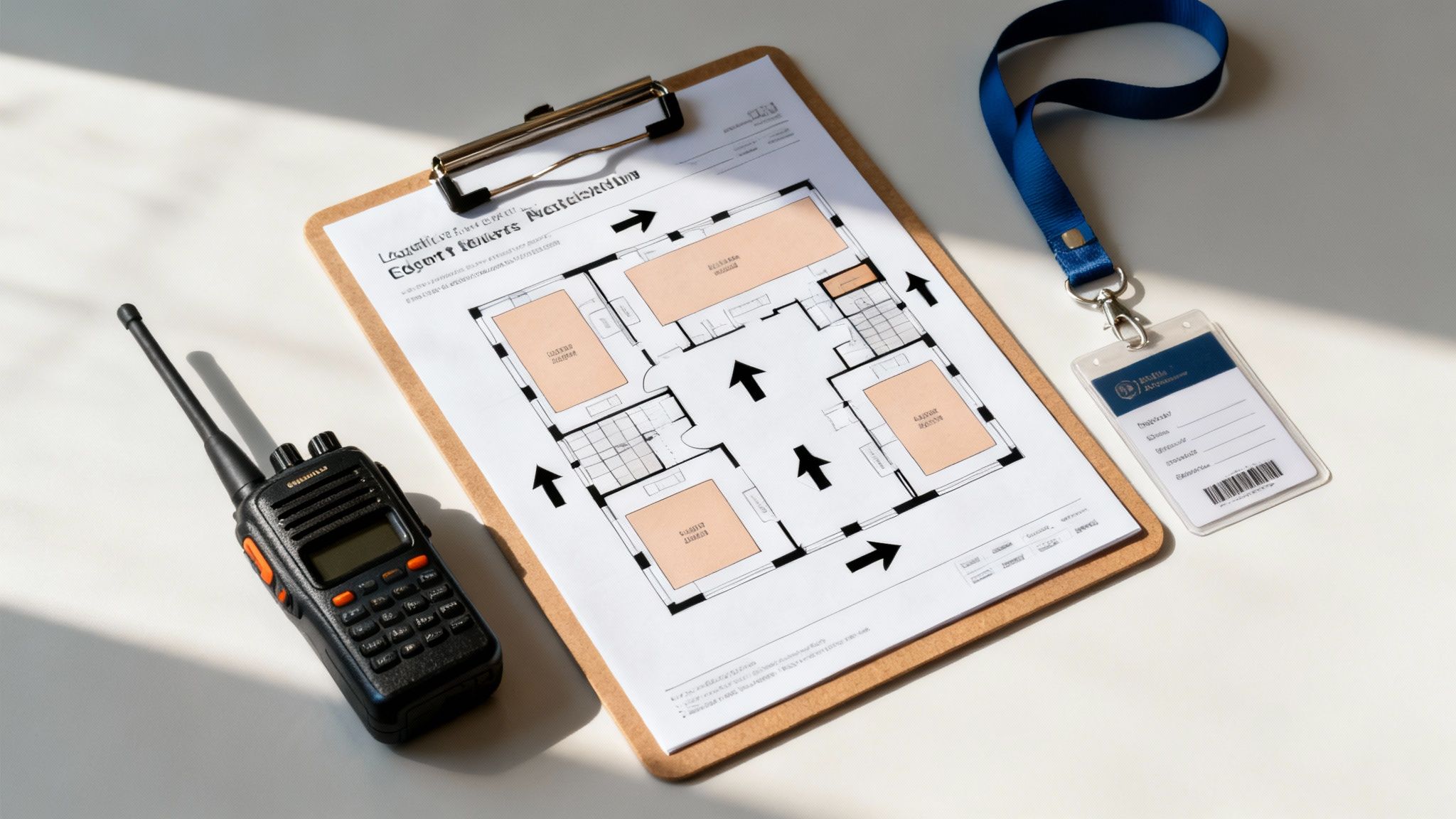
Think of this as the event's central nervous system. A large tech conference, for example, doesn't just happen; it relies on a detailed run-of-show document, minute-by-minute scheduling, and an on-site production team to manage crowd flow, tech cues, and catering timelines. Getting these operational details right prevents chaos and allows the event's purpose to shine through.
How to Master On-Site Execution
A flawless event day is the result of meticulous pre-planning. The goal is to anticipate needs and solve problems before they arise. Create a master document or "event bible" that contains every logistical detail, from floor plans to staff contact lists.
- Detailed Floor Plans: Don't just sketch a layout. Map out exact placements for registration desks, AV equipment, catering stations, and branding elements. Note power outlet locations and crowd flow pathways.
- Comprehensive Run-of-Show: Create a timeline that breaks down the entire event day into 15-minute increments, detailing everything from vendor arrival to post-event breakdown.
- Clear Registration Process: Implement an online pre-registration system to streamline check-in. Prepare for on-site registration with a dedicated, well-staffed area.
- Staff Briefing: Hold a mandatory pre-event briefing for all staff, volunteers, and vendors to review roles, schedules, and contingency plans.
- Tech Walkthrough: Conduct a full technology and AV rehearsal at least 24 hours before the event starts. Test microphones, projectors, lighting, and Wi-Fi under event-like conditions.
Why This Matters
Effective logistical coordination is the invisible force behind a successful event. It ensures attendees feel cared for, speakers feel supported, and the entire program unfolds without a hitch. This detailed planning not only minimizes on-the-day stress but also reinforces your brand's reputation for professionalism and attention to detail, making a lasting positive impression on every guest.
9. Implement Technology and Virtual Components
In today's connected world, technology isn't just an add-on; it's the central nervous system of a modern corporate event. Integrating the right tech stack enhances engagement, extends your reach to a global audience, and provides a goldmine of data. This step in your planning corporate events checklist involves selecting and implementing tools for everything from registration and mobile apps to live streaming and interactive sessions.
Think about how platforms like Hopin or Bizzabo transform a standard conference into a hybrid experience, allowing virtual attendees to network and participate just as actively as those in the room. Similarly, a simple tool like Slido can turn a passive keynote speech into a dynamic conversation with live polls and audience Q&A. Technology bridges gaps and elevates the attendee experience from passive to interactive.
How to Select the Right Tech
The key is to choose technology that serves your event goals, not just for the sake of having it. A seamless tech experience feels invisible and intuitive to the user.
- Registration & Ticketing: Use platforms like Eventbrite or Cvent to automate registration, process payments, and send confirmations.
- Event App: A dedicated mobile app is crucial for large events. It can house the agenda, speaker bios, venue maps, and facilitate networking between attendees.
- Engagement Tools: Incorporate live polling, Q&A sessions, and gamification to keep your audience captivated.
- Virtual & Hybrid Platforms: For events with a remote component, ensure your platform (like Zoom Events or vFairs) offers robust streaming, virtual booths, and networking lounges.
Why This Matters
Strategic technology implementation is a game-changer for proving ROI. It provides hard data on session attendance, engagement levels, and attendee behavior, which is invaluable for your post-event analysis. Furthermore, it makes your event more accessible and inclusive, allowing people to participate regardless of their location. A well-integrated tech stack streamlines logistics for your team and creates a more polished, professional, and memorable experience for everyone involved.
10. Execute Post-Event Follow-Up and Evaluation
The final step in our planning corporate events checklist happens after the lights go down and the last guest leaves. The event isn't truly over until you’ve executed a strategic follow-up and evaluation. This phase is critical for maximizing the event's impact, capturing its full value, and gathering the insights needed to make your next event even better.
Think of it like this: a sales team wouldn't stop after a great first meeting. They'd follow up to close the deal. Similarly, your post-event communication nurtures relationships, reinforces key messages, and proves the event's worth. Salesforce, for example, excels at this by publishing detailed recap videos and comprehensive event coverage that extends the conversation for weeks.
How to Execute a Powerful Follow-Up
Timeliness is everything. Your goal is to re-engage attendees while the experience is still fresh in their minds. A well-timed, value-packed follow-up sequence solidifies your brand's professionalism and keeps the momentum going.
- Within 24 Hours: Send a personalized "thank you" email. This is also the perfect time to deploy a short, mobile-friendly Net Promoter Score (NPS) or satisfaction survey to capture immediate feedback.
- Within 3 Days: Pass any qualified leads to your sales team with detailed context on their interactions at the event. Publish initial event highlights, like a photo gallery or a short "key takeaways" video, on social media.
- Within 1 Week: Share more substantial resources, such as presentation slides or full session recordings. It's also crucial to conduct an internal team retrospective to discuss wins and challenges while the details are fresh.
Why This Matters
Strategic follow-up transforms a one-time event into an ongoing engagement tool. It directly impacts your ability to measure success and justify the investment to stakeholders. By analyzing survey data, tracking leads generated, and calculating the revenue influenced, you can create a comprehensive report that demonstrates clear ROI. This data-driven approach is essential for securing budgets and earning buy-in for future initiatives, turning your event planning efforts into a repeatable, strategic business function.
10-Step Corporate Event Planning Comparison
| Item | Implementation complexity 🔄 | Resources required ⚡ | Expected outcomes ⭐📊 | Ideal use cases 💡 | Key advantages ⭐ |
|---|---|---|---|---|---|
| Define Event Objectives and Goals | Medium 🔄 — structured workshop and stakeholder alignment | Low–Medium ⚡ — leadership time, documentation, basic analytics | High ⭐📊 — clear KPIs, guided decisions, measurable ROI | All events; launches, strategy-driven meetings | Provides direction; enables ROI measurement; aligns stakeholders |
| Establish Budget and Financial Controls | Medium 🔄 — detailed estimation and approval workflows | Medium–High ⚡ — finance tools, vendor quotes, contingency funds | High ⭐📊 — cost control, prevents overruns, clear prioritization | Large-scale events; limited budgets; executive reporting | Prevents overspend; enables data-driven tradeoffs; audit trail |
| Select and Secure Venue | Medium–High 🔄 — site visits, contract negotiation, logistics checks | Medium–High ⚡ — deposits, venue requirements, site resources | High ⭐📊 — attendee experience, brand perception, logistics fit | In-person conferences, retreats, premium experiences | Impacts attendance and ambiance; secures logistics and dates |
| Create Event Timeline and Project Schedule | Medium 🔄 — reverse planning, milestones, dependencies | Low–Medium ⚡ — PM tools, coordinator time, regular reviews | High ⭐📊 — on-time delivery, reduced last-minute issues | Events with many dependencies or long lead times | Ensures accountability; identifies critical path; reduces risk |
| Develop Marketing and Promotion Strategy | Medium 🔄 — phased campaigns and creative production | Medium ⚡ — marketing team, creative assets, ad spend | High ⭐📊 — increased attendance, engagement, lead generation | Public events, product launches, demand-generation events | Drives registrations; builds excitement; generates leads |
| Manage Vendor Selection and Contracts | High 🔄 — RFPs, comparisons, legal review | Medium ⚡ — procurement time, contract negotiation, references | Medium–High ⭐📊 — quality delivery, cost savings, risk mitigation | Events requiring catering, AV, production, multiple vendors | Clarifies expectations; secures backup suppliers; negotiates value |
| Plan Event Program and Content | High 🔄 — speaker recruitment, agenda curation, rehearsals | Medium–High ⚡ — speakers, content production, moderation | High ⭐📊 — engagement, reputation, repurposable content | Conferences, thought-leadership forums, training events | Drives attendee engagement; enhances credibility; content reuse |
| Coordinate Logistics and Operations | High 🔄 — detailed on-site planning and contingency measures | High ⚡ — staffing, AV, signage, transport, setup crews | High ⭐📊 — smooth execution, attendee satisfaction, safety | Large in-person events, complex floor plans, multi-room events | Ensures professional delivery; minimizes on-site failures |
| Implement Technology and Virtual Components | High 🔄 — platform selection, integration, testing | High ⚡ — platforms, bandwidth, tech staff, support | High ⭐📊 — extended reach, analytics, accessibility | Hybrid/virtual events, global audiences, scalable programs | Extends audience; provides real-time data; enables hybrid formats |
| Execute Post-Event Follow-Up and Evaluation | Medium 🔄 — surveys, CRM updates, ROI analysis | Low–Medium ⚡ — CRM, analytics, content production time | High ⭐📊 — improved follow-up, lessons learned, revenue impact | Lead-driven events, recurring conferences, marketing ROI focus | Captures feedback; converts leads; informs future planning |
Turning Your Checklist into an Unforgettable Experience
And there you have it. From defining your core objectives and wrangling the budget to executing a flawless run-of-show and analyzing post-event feedback, you’re now equipped with a powerful roadmap. This planning corporate events checklist is more than just a list of tasks; it's a strategic framework designed to transform a good idea into a truly remarkable and results-driven experience.
Think of it as the scaffolding for your masterpiece. Each step, from securing the perfect venue to negotiating vendor contracts, is a foundational block. But the real magic happens when you move beyond simply checking boxes and start thinking about how each element contributes to the overall attendee journey.
From Logistics to Legacy
The most successful event managers understand that meticulous organization is the launchpad for creativity, not its replacement. When your logistics are buttoned up, you free up mental bandwidth to focus on what truly matters: creating moments that resonate.
- The "Why" Behind the What: Always circle back to your initial goals. Does your chosen entertainment align with your brand's message? Does the venue's atmosphere support the networking you want to foster? Every decision should be a deliberate step toward your objective.
- The Power of Production: Never underestimate the impact of technical execution. Crisp audio-visuals ensure your speakers are heard, dynamic lighting sets the mood, and professional photography captures the energy for future marketing. These aren’t just add-ons; they are essential tools for crafting a professional and immersive environment.
- The Human Element: Ultimately, events are about people. Your checklist helps you manage the countless details so you can focus on your attendees, your speakers, and your staff. A seamless experience for them is a direct result of your diligent behind-the-scenes work.
Mastering this planning corporate events checklist isn't about achieving perfection. It's about building a repeatable process that instills confidence, minimizes surprises, and empowers you to be proactive rather than reactive. It's the difference between just hosting an event and orchestrating an unforgettable brand moment that delivers tangible ROI and leaves a lasting positive impression.
Remember, the goal isn't just to get through the event; it's to create an experience so impactful that attendees are already looking forward to the next one. Use this guide as your trusted companion, adapt it to your unique needs, and watch as your meticulous planning blossoms into an event that not only meets but exceeds every expectation.
Ready to elevate your event's production from standard to stunning? The team at 1021 Events specializes in the critical production elements on your checklist, from custom Gobo lighting and crystal-clear audio to photo booths and breathtaking drone videography. Let us handle the technical details so you can focus on creating an unforgettable experience.