
Planning a corporate event can feel like trying to solve a Rubik's Cube in the dark. One wrong twist, and the entire structure falls apart. Whether you’re orchestrating a high-stakes product launch, a crucial annual conference, or a much-needed team-building retreat, the pressure is immense. The goal isn't just to pull it off, but to create an experience that resonates, engages, and delivers real value. But with so many moving parts, where do you even start? The endless spreadsheets, the frantic calls, the fear of forgetting a critical detail-it can quickly become overwhelming.
Forget the panic and the scattered sticky notes. This guide is your single source of truth, a comprehensive planning a corporate event checklist designed to bring order to the chaos. We're not just giving you a list; we're providing a strategic, phase-by-phase roadmap that covers everything from initial brainstorming to post-event analysis. Think of it as your project plan, breaking down an intimidating undertaking into 10 clear, manageable stages.
This isn't about generic advice. We'll dive into the specifics of setting clear goals, mastering your budget, securing the perfect venue, and coordinating all the complex logistics in between. Following this checklist will empower you to move from feeling reactive and stressed to being proactive and in control. Let's start building a framework for an event that will be remembered long after the last guest has departed, for all the right reasons.
1. Define Event Objectives and Goals
Before you even think about venue scouting or catering menus, pump the brakes and ask the most fundamental question: Why are we doing this? Defining your event objectives and goals is the single most critical step in any corporate event planning checklist. This isn't just about throwing a party; it's about creating a strategic initiative that serves a clear business purpose. Think of it as your event's North Star, a guiding principle that ensures every decision, from the guest list to the content, aligns with your desired outcome.

Without clear goals, you have no way to measure success or prove the event's return on investment (ROI) to stakeholders. Your objectives will dictate the event's format, tone, and overall strategy.
How to Set Powerful Event Objectives
Setting effective goals goes beyond vague aspirations like "improve morale." You need to get specific and make them measurable. The SMART framework (Specific, Measurable, Achievable, Relevant, Time-bound) is a fantastic tool here.
- Lead Generation: Instead of "get more leads," aim for "Generate 500 marketing qualified leads (MQLs) from event attendees within Q3." Salesforce’s Dreamforce is a masterclass in this, focusing on generating tens of thousands of qualified leads.
- Team Building: Instead of "boost morale," try "Increase employee engagement scores by 15% in the post-event survey."
- Product Launch: Rather than "launch our new software," a better goal is "Secure 1,000 sign-ups for our new product trial during the event and achieve 25 positive media mentions." Google's I/O conference exemplifies this by targeting multiple major product announcements and developer adoption.
Actionable Tips for Goal-Setting
To make this step effective, involve the right people from the start.
- Involve Stakeholders: Hold a kickoff meeting with key department heads (sales, marketing, HR, product) to gather input and ensure alignment.
- Document Everything: Create a formal event charter that outlines the primary and secondary objectives. Get signatures to solidify commitment.
- Establish a Baseline: You can't measure growth if you don't know your starting point. Before planning begins, document current metrics like sales figures, employee satisfaction scores, or lead conversion rates.
2. Establish Budget and Financial Framework
After you've defined your why, it's time to figure out the how much. Establishing a comprehensive budget is the financial backbone of your entire event. This step is more than just jotting down numbers; it's about creating a strategic financial framework that ensures you can deliver on your objectives without breaking the bank. A well-planned budget prevents surprise costs, empowers you to make smart spending decisions, and is crucial for calculating your event's final ROI.

Without a detailed budget, you're essentially flying blind. It acts as a guardrail, keeping your creative ideas grounded in financial reality and providing a clear path for every expenditure, from major venue costs to minor administrative fees.
How to Build a Powerful Event Budget
An effective budget is detailed, realistic, and flexible. Start by breaking down all potential costs into major categories and then itemizing each one. Don't forget to build in a contingency fund, typically 10-15% of the total budget, to handle unexpected expenses.
- Categorical Allocation: Major conferences like the Adobe Summit often follow a percentage-based model, allocating roughly 40% to venue/catering, 25% to speakers and talent, and 20% to technology and production.
- Zero-Based Budgeting: Tech giants like IBM reportedly use a zero-based budgeting approach for their Think conference. This means every expense must be justified for each new event, preventing budget bloat and ensuring every dollar spent aligns with current goals.
- Track-Specific Budgets: For massive, multi-faceted events like Oracle OpenWorld, maintaining separate budgets for different event tracks (e.g., sales, development, marketing) can provide greater control and clarity.
Actionable Tips for Budget Management
Keeping your budget on track requires diligence and strategic thinking from start to finish.
- Get Multiple Quotes: For major expense categories like venues, A/V, and catering, always obtain at least three competitive bids. This gives you negotiating leverage.
- Use Budgeting Software: Leverage event management platforms like Cvent to track expenses in real time, monitor spending against your budget, and generate financial reports.
- Build Vendor Relationships: Foster strong, long-term relationships with preferred vendors. Loyalty can often lead to better pricing, more flexible terms, and higher-quality service. To dive deeper into the nuances of financial planning, you can learn more about how to plan corporate events with a solid budget on 1021events.com.
3. Select and Secure Appropriate Venue
With your objectives defined and budget set, the search for the perfect physical space begins. Selecting and securing an appropriate venue is more than just finding a room large enough for your attendees; it's about choosing an environment that reinforces your brand, supports your event goals, and ensures a seamless experience for everyone involved. The venue sets the entire tone and has a massive impact on logistics, from accessibility to technical capabilities.
This step in the planning a corporate event checklist can make or break your event. A fantastic venue enhances the attendee journey, while a poor choice can create logistical nightmares and detract from even the best content.
How to Find a Venue That Fits Your Vision
Your venue choice must directly reflect your event's purpose. Consider the different approaches taken by major events, which illustrate how form follows function.
- Large-Scale Conferences: For massive events like Dreamforce, which hosts over 170,000 people, the solution is a campus approach. They utilize San Francisco's Moscone Center along with surrounding hotels and venues to create a sprawling, interconnected experience.
- Intimate Thought Leadership: TED Conferences often choose architecturally significant theaters. The goal isn't just capacity; it's about creating an intimate, focused atmosphere that enhances the connection between the speaker and the audience.
- Corporate Retreats: Companies planning retreats frequently opt for resort venues. These locations combine professional meeting spaces with built-in recreational activities like golf or spa services, facilitating both work and team bonding.
Actionable Tips for Venue Selection
Don't sign a contract based on photos alone. Due diligence at this stage prevents major headaches later.
- Conduct a Site Visit: Always visit your top 2-3 venue choices in person. Assess the ambiance, check the condition of the facilities, and visualize your event flow from registration to the main sessions.
- Negotiate the Contract: Don't be afraid to negotiate. Key points include cancellation policies, attrition clauses (penalties for not filling a room block), and a clear understanding of what's included versus what costs extra.
- Check Vendor Policies: Ask if the venue has an exclusive or preferred vendor list. Being locked into their caterer or AV provider can significantly impact your budget and creative control.
- Plan for Contingencies: If any part of your event is outdoors, what is the venue's rain plan? Confirm they have a suitable and available indoor backup space.
4. Develop Comprehensive Timeline and Project Plan
With your goals set and budget approved, it’s time to build the operational backbone of your event: a comprehensive timeline and project plan. This isn't just a simple to-do list; it's a detailed, reverse-engineered roadmap that breaks down every single task, assigns ownership, and sets firm deadlines. A well-structured plan is what separates a smooth, professional event from a last-minute scramble. It’s the master document that keeps everyone accountable and ensures no critical detail falls through the cracks.
A great project plan is essential for any successful corporate event production, transforming your strategic objectives into a series of manageable, sequential actions. It provides a single source of truth for your entire team and all stakeholders, preventing miscommunication and keeping the project on schedule and on budget.
How to Build a Powerful Project Timeline
Your timeline should work backward from the event date, mapping out every milestone and dependency. This "reverse planning" approach ensures that all lead times for vendors, marketing, and logistics are properly accounted for. Think of it as choreographing a complex dance where every move is perfectly timed.
- Large-Scale Events: For massive undertakings like Apple's product launches, planning can start as far as 18 months out, with every detail from supply chain coordination to media embargoes meticulously scheduled.
- Annual Corporate Meetings: A standard corporate conference or annual general meeting typically requires a 6 to 12-month planning cycle to secure top-tier speakers, venues, and sponsors.
- Trade Show Participation: Even a seemingly simpler event like participating in a trade show involves a dense 3 to 6-month timeline covering booth design, logistics, staffing, and pre-show marketing.
Actionable Tips for Project Planning
To make this step truly effective, leverage tools and processes that bring clarity and structure to your planning.
- Use Project Management Software: Don't rely on spreadsheets alone. Tools like Asana, Monday.com, or Microsoft Project are designed to manage complex timelines, dependencies, and team communication.
- Build in Buffer Time: The golden rule of event planning is that something will always go wrong. Build a 15-20% buffer into your timeline for critical path activities, like venue contracts or technology integration, to absorb unexpected delays.
- Schedule Weekly Check-ins: During the most intensive planning phases (e.g., the final three months), hold weekly stand-up meetings to review progress, identify roadblocks, and keep the team aligned.
- Create Visual Dashboards: For executive stakeholders who don’t need to know every granular detail, create a high-level visual dashboard that tracks key milestones and overall project health.
This timeline infographic visualizes the major phases of a typical 6-month corporate event planning cycle.
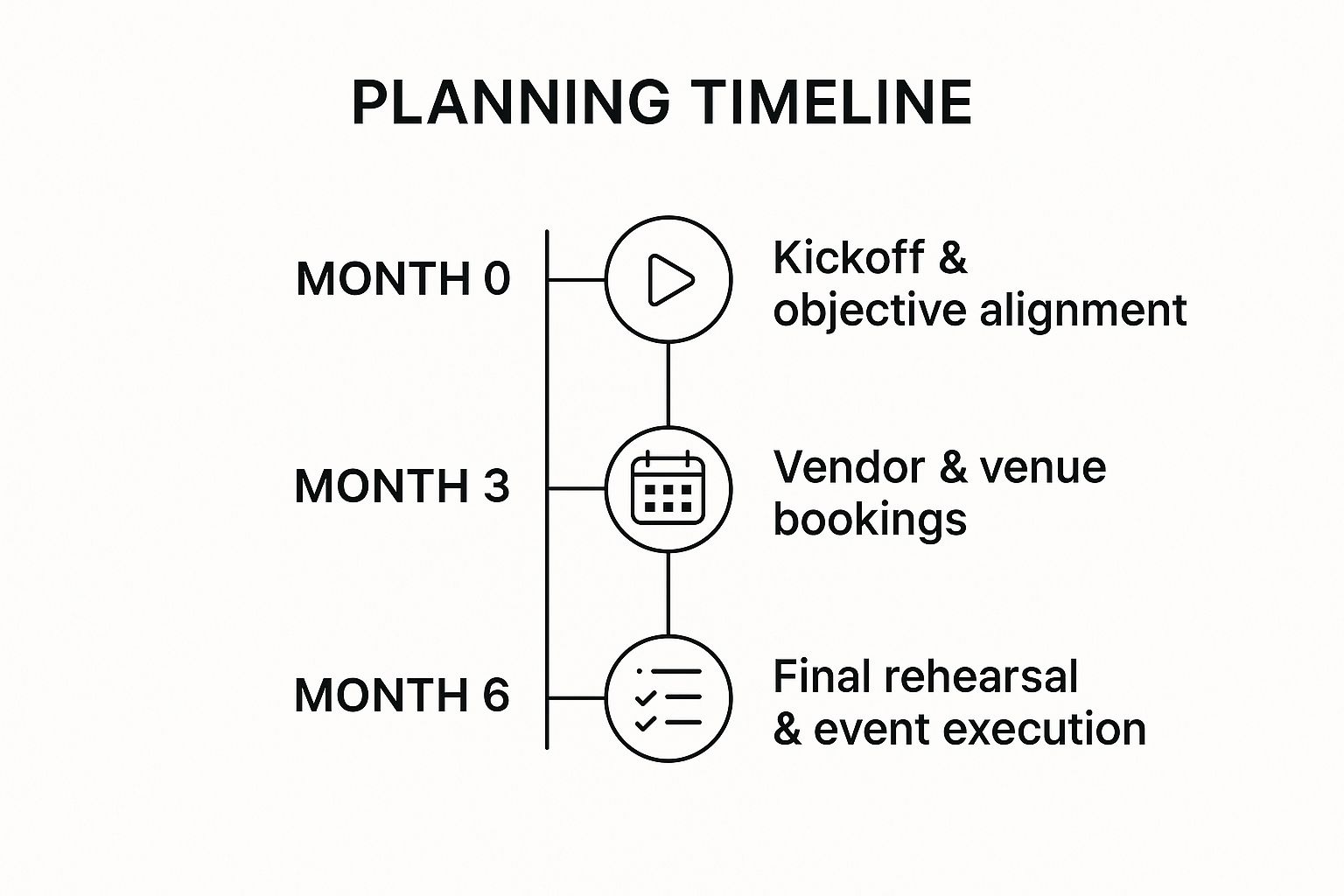
This visual progression underscores the importance of early strategic decisions, with foundational elements like objectives and vendor selection completed in the first half of the timeline to support the execution-focused activities later.
5. Plan Catering and Dietary Accommodations
Often considered a highlight or a lowlight, the food and beverage experience can make or break your event. Planning catering and dietary accommodations is far more than just picking a menu; it's about curating an experience that fuels your attendees, reflects your brand's values, and seamlessly integrates with your event's flow. Neglecting this crucial element of your corporate event planning checklist can lead to hungry, unhappy guests and logistical chaos.
A well-executed catering strategy enhances the overall attendee experience, accommodates diverse needs, and can even become a memorable part of the event itself. It shows you care about your guests' well-being and have considered every detail.
How to Execute a Flawless Catering Plan
The key is proactive planning and clear communication. Your catering should complement your program, not compete with it. Think about the event's format, schedule, and audience demographics when making decisions.
- Brand Alignment: A sustainability-focused company like Patagonia might opt for a farm-to-table caterer that uses local, organic ingredients to reinforce its brand ethos.
- Dietary Inclusivity: Medical conferences are masters of this, often requiring detailed allergen labeling and dedicated stations for common restrictions like gluten-free, dairy-free, and vegan to ensure attendee safety and comfort.
- Experience Enhancement: Google events often feature diverse, high-quality food stations that reflect a fun, innovative company culture, turning a simple lunch break into an engaging experience.
Actionable Tips for Catering Success
To avoid any F&B fiascos, build these practices into your planning process from day one.
- Survey Attendees Early: Add a mandatory field for dietary restrictions and allergies to your event registration form. This gives your caterer ample time to prepare.
- Schedule Food Thoughtfully: Time your food service to support your agenda. Place coffee stations near breakout rooms for quick energy boosts and schedule lunch breaks long enough to avoid lines and allow for networking.
- Offer Variety: Even without specific restrictions, people have preferences. Provide multiple options at each meal (e.g., a meat, a fish, and a vegetarian entree) to cater to different tastes.
- Embrace Local Flavor: If hosting an event in a city known for its cuisine, incorporate local dishes. This provides a unique and authentic experience for out-of-town guests.
6. Coordinate Technology and AV Requirements
In today's hyper-connected world, your event's technology and audiovisual (AV) setup can make or break the entire experience. This step in your planning a corporate event checklist is about more than just projectors and microphones; it’s about creating a seamless, immersive, and professional environment. From crystal-clear presentations and flawless live streams to engaging interactive apps, your tech stack is the central nervous system of your event.
A technical glitch can derail a keynote, frustrate attendees, and reflect poorly on your brand. Proper coordination ensures every technical component works in perfect harmony, from the main stage to the attendee's smartphone.
How to Master Your Event Tech
Effective AV and tech planning involves a detailed audit of your needs and rigorous testing. This means collaborating closely with your venue and a reliable AV provider, like Freeman or PSAV, to build a robust infrastructure.
- Immersive Product Demos: The Consumer Electronics Show (CES) is a prime example, using state-of-the-art video walls, interactive displays, and soundscapes to create unforgettable product showcases.
- Flawless Hybrid Experiences: Virtual and hybrid conferences, like those pioneered by VMware, rely on sophisticated streaming platforms and integrated engagement tools to bridge the gap between in-person and remote attendees.
- Iconic Presentations: TED Talks have set the gold standard for presentation tech, using high-quality cameras, lighting, and audio to produce broadcast-quality content that elevates every speaker. This level of professionalism is what you should strive for.
Actionable Tips for Tech Coordination
To avoid last-minute panic and ensure a smooth technical execution, build these practices into your workflow.
- Conduct Full Rehearsals: Run a complete technical walk-through with all speakers and presenters. Test microphones, clickers, presentation slides, and video cues to iron out any issues.
- Have Redundant Systems: Murphy's Law loves events. Have backup laptops, projectors, and internet connections (like a dedicated cellular hotspot) ready for critical presentations.
- Test Venue Wi-Fi Under Load: Before the event, test the venue's internet capacity by connecting multiple devices simultaneously to simulate real-world conditions. A weak signal can kill engagement.
- Integrate Tech and Entertainment: Consider how technology can enhance your event's fun factor. Modern photo booths, for example, often include digital sharing and custom branding. For more inspiration, explore these corporate event entertainment ideas from 1021events.com.
7. Manage Registration and Attendee Communications
Once your core strategy is set, it's time to focus on the people who will bring your event to life: the attendees. Managing registration and communications is far more than just selling tickets; it's the first direct interaction your audience has with your event. This process sets the tone, manages expectations, and collects crucial data that will inform everything from catering counts to content personalization. It's the operational backbone that ensures a seamless experience from the moment someone signs up to the final post-event thank you.
A clunky registration form or poor communication can create friction and deter potential attendees. A smooth, professional process, on the other hand, builds confidence and excitement, making it an essential part of any corporate event planning checklist.
How to Streamline Registration and Communications
Modern event management platforms like Cvent or Eventbrite have revolutionized this process. They offer integrated solutions for creating custom registration pages, processing payments securely, and sending automated, targeted communications.
- Integrated CRM: For sales-focused events, integrating your registration platform with a CRM like Salesforce is non-negotiable. This allows for immediate lead capture and tracking, as seen at Dreamforce, where every badge scan is a logged interaction.
- Mobile-First Experience: SXSW's mobile app is a prime example of excellent attendee management. It provides schedules, maps, and networking features, turning a complex festival into a navigable experience. This integration keeps attendees engaged and informed in real-time.
- Personalized Communication: Don't just send generic blasts. Segment your email list based on registration data (e.g., ticket type, industry, interests) to send highly relevant information, such as session recommendations or exclusive networking opportunities.
Actionable Tips for Attendee Management
To ensure this crucial step is executed flawlessly, focus on user experience and proactive communication.
- Test Everything: Before going live, rigorously test the entire registration flow. Complete a test purchase, check email confirmations, and ensure all links work. Get a few colleagues to do the same to catch any bugs.
- Offer Multiple Check-In Options: Prevent long queues on event day by offering multiple check-in methods. These can include self-service kiosks, mobile QR code scanning, and traditional staffed desks. To streamline the check-in process and enhance security for your attendees, gaining a thorough understanding what a visitor management system is can be invaluable.
- Automate Key Communications: Schedule reminder emails to go out one week before, one day before, and the morning of the event. Include key details like venue address, parking info, and the event schedule. These automated touchpoints keep your event top-of-mind.
8. Arrange Transportation and Accommodation
Once your venue is locked in and your date is set, the next logistical puzzle is figuring out how everyone will get there and where they will stay. Arranging transportation and accommodation is a crucial part of the planning a corporate event checklist, especially for multi-day events or those with attendees traveling from out of town. This step is about more than just booking rooms; it’s about creating a seamless, stress-free experience for your most important guests, speakers, and VIPs from the moment they leave home until they depart.
Poorly managed logistics can quickly sour an otherwise excellent event experience. Ensuring guests can travel and rest comfortably demonstrates a high level of care and professionalism, reflecting positively on your organization and setting the stage for a successful event.
How to Coordinate Travel and Lodging
Effective coordination means thinking through every touchpoint of the attendee's journey. From airport pickups to hotel blocks, your goal is to remove friction and provide clear, accessible options. This is a place where proactive planning pays huge dividends.
- Secure Hotel Blocks: For large events, negotiate with nearby hotels for a block of rooms at a discounted group rate. Tech conferences like Web Summit do this masterfully, partnering with dozens of hotels to offer a range of options for attendees.
- Organize Ground Transportation: Don't leave attendees guessing how to get from the airport to the hotel or from the hotel to the venue. Arrange for dedicated shuttle services, provide clear information on ride-sharing and public transit, or book private cars for speakers and executives.
- Communicate Clearly: Create a dedicated "Travel & Lodging" page on your event website with hotel booking links, shuttle schedules, maps, and airport information. Send this information out well in advance via email.
Actionable Tips for Smooth Logistics
A little foresight can prevent major headaches on the day of the event.
- Negotiate Early: The best time to secure group rates and room blocks is right after you book your venue. The longer you wait, the fewer options you'll have.
- Offer Tiers: Not everyone has the same budget. Try to secure room blocks at a few different hotels with varying price points to accommodate all attendees.
- Have a Contingency Plan: What happens if a shuttle breaks down or a flight is severely delayed? Have backup transportation on call and a clear communication plan to keep affected guests informed.
9. Implement Comprehensive Safety and Risk Management
Beyond logistics and guest experience, a planner's most solemn duty is ensuring everyone's safety. Implementing a comprehensive safety and risk management plan is non-negotiable in any modern corporate event planning checklist. This involves proactively identifying potential hazards, developing mitigation strategies, and preparing for emergencies. From a slip-and-fall accident to a major weather event, a robust safety plan protects your attendees, staff, brand reputation, and bottom line.
This step isn't just about avoiding disaster; it's about demonstrating corporate responsibility and ensuring compliance with local regulations and insurance requirements. A well-executed plan allows your event to run smoothly, giving stakeholders peace of mind.
How to Build a Powerful Risk Management Plan
A solid plan is proactive, not reactive. It requires thinking through every "what-if" scenario and documenting clear procedures. This framework should cover everything from minor first-aid needs to large-scale evacuation plans.
- Crowd Management: Large-scale events like San Diego Comic-Con masterfully implement tiered entry, clear signage, and trained staff to manage massive crowds and prevent dangerous bottlenecks.
- Health Protocols: In the post-COVID era, many events adopted health screening, sanitation stations, and clear communication on wellness policies to protect attendees.
- Contingency Planning: An outdoor corporate retreat requires a detailed weather contingency plan, including a backup indoor location, communication protocols for sudden changes, and pre-arranged transportation.
Actionable Tips for Event Safety
To make your safety plan effective, it needs to be practical and well-communicated.
- Conduct a Venue Walk-Through: Perform a thorough safety inspection of your chosen venue, checking for clear emergency exits, functional fire suppression systems, and potential trip hazards.
- Develop Written Procedures: Document everything. Create an Emergency Response Plan (ERP) that outlines procedures for medical emergencies, fires, security threats, and severe weather. Train all staff and volunteers on this plan.
- Secure Proper Insurance: Work with your provider to ensure your event has adequate liability coverage. Be transparent about all activities, from serving alcohol to using pyrotechnics.
- Arrange Secure Transport: When arranging transportation for your corporate event, especially for high-profile attendees or sensitive materials, you'll need to review the key considerations when choosing a secure transportation provider for sensitive events to ensure safety and professionalism.
10. Execute Post-Event Follow-up and Evaluation
The event isn't over when the last guest leaves. In fact, some of the most critical work begins now. Executing a systematic post-event follow-up and evaluation is where you prove your event's value and turn fleeting connections into lasting business relationships. This phase is about capturing data, measuring performance against the goals you set in step one, and solidifying the event's ROI.
Without a strong follow-up strategy, you risk losing momentum and failing to capitalize on the engagement you worked so hard to build. Think of it as the final, crucial step in your corporate event planning checklist that ensures all your effort translates into tangible results.
How to Execute Powerful Post-Event Actions
A successful post-event phase is organized and timely. It involves communicating with attendees, analyzing data, and reporting back to stakeholders.
- Sales & Lead Nurturing: B2B events excel here by immediately routing leads captured at the event into their CRM. For example, Salesforce’s post-Dreamforce follow-up is legendary, with finely tuned email sequences sent to attendees based on the sessions they attended and booths they visited.
- Content & Community Building: TED provides post-event access to presentations and continues the conversation through online forums. This extends the life of the event and keeps the community engaged long after it concludes.
- Feedback & Improvement: Use feedback to make your next event even better. Analyze survey data to identify what resonated with your audience and what fell flat.
Actionable Tips for Follow-up and Evaluation
To maximize your post-event impact, act quickly and strategically.
- Send Surveys Promptly: Deploy feedback surveys within 24-48 hours. The experience is still fresh, leading to higher response rates and more accurate feedback. To effectively gather this information, it helps to review detailed post-event survey questions examples.
- Schedule a Debrief Meeting: Gather your event team and key stakeholders for a post-mortem meeting within a week of the event. Discuss what went well, what challenges arose, and what could be improved.
- Automate and Segment: Create automated follow-up email sequences for different attendee segments (e.g., prospects, existing clients, VIPs). Personalize the message based on their interaction with the event. Learn more about how to measure event success to refine this process.
- Document Everything: Compile a comprehensive post-event report. Include final attendance numbers, budget vs. actuals, survey results, lead generation metrics, social media engagement, and documented lessons learned.
10-Step Corporate Event Planning Checklist Comparison
| Item | Implementation Complexity 🔄 | Resource Requirements ⚡ | Expected Outcomes 📊 | Ideal Use Cases 💡 | Key Advantages ⭐ |
|---|---|---|---|---|---|
| Define Event Objectives and Goals | Medium – requires stakeholder consensus | Moderate – time for planning and monitoring | Clear success metrics and strategic alignment | All corporate events needing focused direction | Provides clear planning direction and ROI |
| Establish Budget and Financial Framework | Medium-High – detailed tracking and controls | High – budgeting tools and approvals | Controlled spending and accurate ROI | Events with strict financial oversight | Prevents cost overruns and supports decisions |
| Select and Secure Appropriate Venue | Medium – requires early booking and negotiation | High – site visits and contractual work | Enhanced attendee satisfaction and experience | Events prioritizing atmosphere and capacity | Influences event tone and provides bundled services |
| Develop Comprehensive Timeline and Project Plan | High – detailed scheduling and dependencies | Moderate – project management tools | On-time event execution with accountability | Large or complex events needing strict coordination | Ensures task completion and resource management |
| Plan Catering and Dietary Accommodations | Medium – menu planning and logistics | Moderate – vendor coordination | Improved attendee satisfaction and inclusivity | Events focusing on attendee experience and culture | Enhances attendee energy and networking |
| Coordinate Technology and AV Requirements | High – technical setup and support | High – equipment and specialist staff | Professional presentations and wider reach | Hybrid or virtual events requiring AV excellence | Enhances engagement and content delivery |
| Manage Registration and Attendee Communications | Medium – system implementation and training | Moderate – software and staff | Streamlined check-in and valuable data | Events with large or diverse attendee bases | Simplifies processes and enables personalization |
| Arrange Transportation and Accommodation | Medium – vendor negotiations and logistics | Moderate – travel coordination | Reduced attendee stress and enhanced experience | Events with VIPs or out-of-town attendees | Saves costs and ensures smooth logistics |
| Implement Comprehensive Safety and Risk Management | High – protocols and training | High – expert input and equipment | Protected attendees and legal compliance | Large, high-profile, or outdoor events | Mitigates risks and safeguards reputation |
| Execute Post-Event Follow-up and Evaluation | Medium – data collection and analysis | Moderate – survey tools and staff time | Insights for improvement and higher ROI | All events seeking continuous improvement | Drives accountability and future success |
Transforming Your Checklist into an Unforgettable Experience
Well, there you have it. You've navigated the entire journey, from setting ambitious goals and wrestling with budgets to coordinating post-event feedback and crunching the numbers. This isn't just a list; it's a strategic framework, a comprehensive planning a corporate event checklist designed to be your steadfast guide through the chaos. By breaking down the monumental task of event planning into manageable, sequential phases, you empower yourself to move from a state of overwhelming stress to one of confident control.
Think of each section we covered as a foundational building block. Defining your objectives and budget creates the blueprint. Securing the perfect venue and mapping out a detailed timeline lays the concrete slab. Layering in catering, technology, and communications builds the walls and installs the wiring. Finally, executing on-site logistics and conducting a thorough post-event analysis is like putting on the roof and furnishing the rooms. Each step is critical, and skipping one can compromise the entire structure.
From Ticking Boxes to Creating Moments
The real magic of this checklist isn't just in the tasks themselves, but in the mindset it cultivates. It frees up your mental bandwidth from worrying about what you might have forgotten, allowing you to focus on how you can make each element exceptional.
- Beyond the Budget: Instead of just tracking expenses, you can strategically allocate funds to areas that will have the biggest impact on attendee experience, like a surprise guest speaker or an interactive tech installation.
- Beyond the Venue: You’re not just booking a room; you're selecting an environment that reinforces your brand's message and facilitates the type of interaction you want to foster.
- Beyond the Follow-Up: A post-event survey becomes more than a formality. It’s a goldmine of data that provides measurable ROI and actionable insights for your next event, ensuring continuous improvement.
This detailed approach ensures nothing falls through the cracks. It's the difference between an event that simply happens and an event that resonates. Your goal is to orchestrate a seamless experience where every touchpoint, from the initial registration email to the final thank you note, feels intentional, professional, and engaging.
Your Blueprint for Repeatable Success
The true value of mastering this planning a corporate event checklist extends far beyond a single successful conference or gala. You are building a repeatable system, a proven process that you can adapt and deploy for any future corporate function. This methodology transforms you from a frantic coordinator into a strategic event architect. You learn to anticipate challenges, manage stakeholder expectations, and consistently deliver events that not only run smoothly but also achieve tangible business outcomes.
So, take a deep breath. This checklist is your roadmap. Pin it, print it, and make it your own. Add your own specific tasks, tailor the timelines to your needs, and use it as a living document. The journey from a simple idea to a flawlessly executed event is complex, but with a solid plan in hand, you are more than equipped for the challenge. You are ready to create an experience that people will talk about long after the lights go down.
Plan Your Event with 1021 Events
Want experienced support for your corporate event? Based in Fort Atkinson, 1021 Events provides event planning, DJ/MC, photo booth, lighting, photography, and videography services throughout Southern Wisconsin and Northern Illinois.
Explore our services, then check availability through our inquiry form.