
Remember the last truly memorable work event? It probably wasn't another standard happy hour or the obligatory pizza lunch. In a world where top talent values culture as much as compensation, fostering genuine connection is no longer a 'nice-to-have'—it's a core business strategy that directly impacts retention and productivity. The real challenge is moving beyond generic perks to create experiences that actually resonate with your team and build momentum.
This guide cuts through the noise. We're providing a curated list of ten specific, actionable employee engagement activities ideas designed to build real camaraderie, boost morale, and create a workplace people are genuinely excited to be a part of. We'll explore fresh takes on classic concepts and innovative strategies that cater to diverse, modern teams, from in-office to fully remote. Beyond structured activities, remember the profound impact of daily rituals; discover the benefits of building a strong office coffee culture that energizes teams and connects people.
From peer-to-peer recognition programs to immersive team-building challenges, each idea is broken down with practical steps to ensure your engagement efforts translate into tangible, positive results. Let's dive in and start building a more connected, motivated, and vibrant team.
1. Peer-to-Peer Recognition Programs
Forget waiting for the annual review; peer-to-peer recognition programs are one of the most powerful and immediate employee engagement activities ideas because they empower your team from within. Instead of recognition flowing only from the top down, this system allows colleagues to celebrate each other's wins in real-time. This creates a powerful culture of appreciation where every contribution, big or small, gets seen and valued.
Think of it like this: a manager might see the final successful project, but a teammate sees the late-night effort and collaborative spirit that made it happen. By giving employees the tools to acknowledge that hard work, you build stronger bonds and reinforce positive behaviors. Companies like Google use a peer bonus system, while Zappos created its own internal currency called "Zollars" for employees to award each other.
How to Make It Work
A successful program is more than just a digital high-five. To implement it effectively, focus on making the process easy, meaningful, and visible.
- Set Clear Criteria: Define what actions align with company values and deserve recognition. This prevents the system from becoming a popularity contest and keeps the praise meaningful.
- Provide a Simple Platform: Use tools like Bonusly or Kazoo, or even a dedicated Slack channel or physical "kudos board," to make giving recognition effortless.
- Train Your Team: Teach employees how to give specific and genuine feedback. Instead of "good job," encourage comments like, "Thanks for helping me troubleshoot that client issue under pressure."
The goal is to foster a genuine cycle of gratitude. When done right, peer recognition doesn't just feel good; it directly impacts your bottom line by improving morale and retention. The data below offers a quick look at the tangible benefits of investing in such a program.
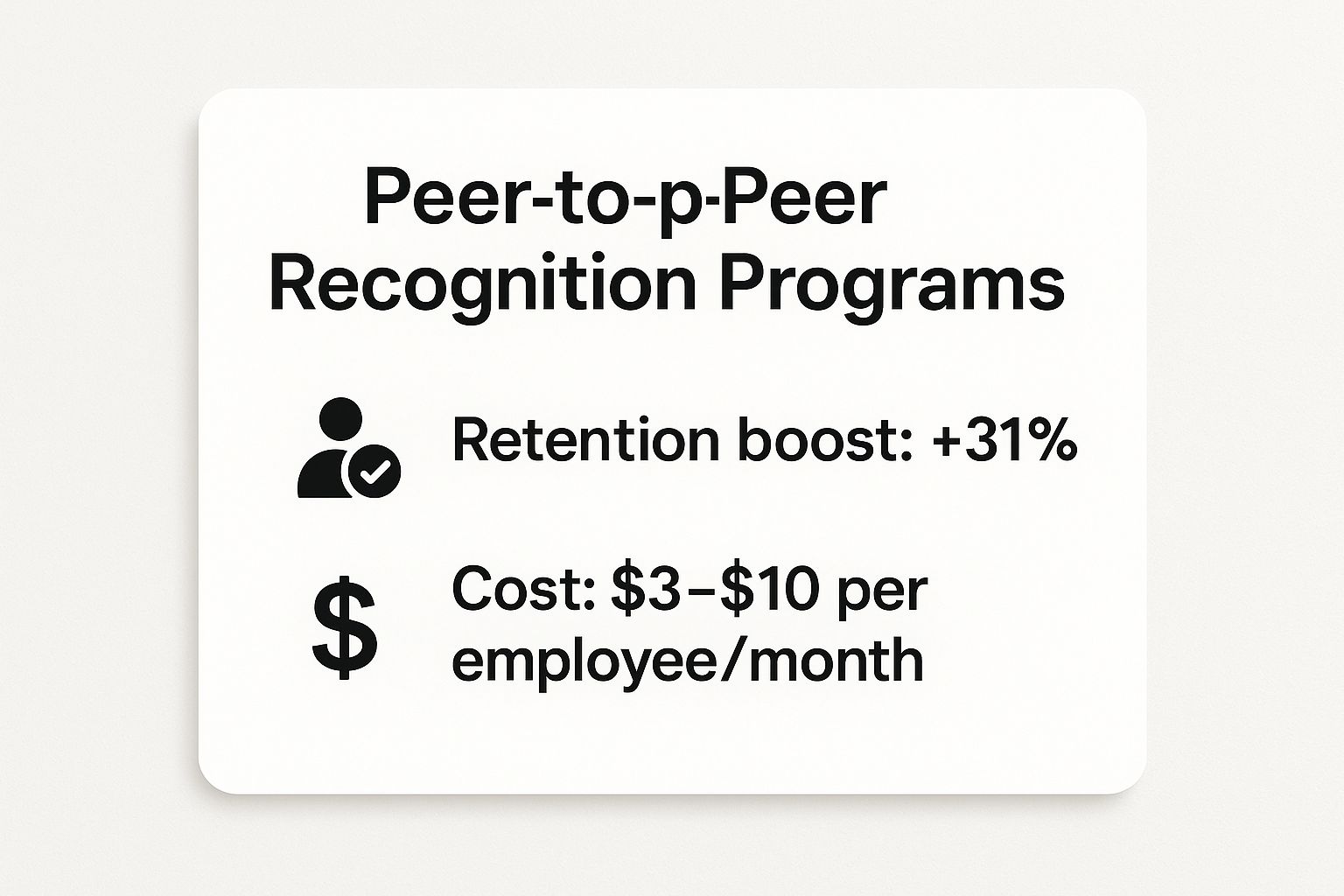
As the numbers show, the investment is minimal compared to the significant boost in keeping your top talent. These programs are just one of many employee appreciation event ideas that can transform your workplace culture.
2. Wellness Challenges and Fitness Competitions
Investing in employee well-being is one of the most impactful employee engagement activities ideas you can implement, and wellness challenges turn it into a fun, team-oriented event. These initiatives go beyond simply encouraging health; they create a supportive environment where colleagues motivate each other to build better habits, whether it's through a steps competition, a healthy eating challenge, or mindfulness practices. This shared journey fosters camaraderie and shows your team you care about their holistic health, not just their output.

Think about it: a company that sweats together, stays together. Programs like these build resilience, reduce stress, and can lead to lower healthcare costs. For example, Johnson & Johnson’s famous wellness program saved the company a staggering $250 million over a decade. LinkedIn even ran a "100-Day Challenge" where employees pursued various wellness goals with peer support, proving that collective effort amplifies individual success.
How to Make It Work
A great wellness challenge feels like a shared adventure, not a corporate mandate. To get it right, focus on inclusivity, positive reinforcement, and genuine support.
- Offer Variety and Choice: Not everyone is a marathon runner. Include diverse activities like yoga, meditation, healthy cooking, or financial wellness workshops to ensure there's something for every interest and ability.
- Prioritize Participation Over Winning: Frame the goal around collective progress and personal improvement. Use team-based challenges to foster collaboration rather than intense individual competition, and reward participation just as much as final results.
- Use Simple Tracking Tools: Leverage platforms like Wellable or even a shared spreadsheet or dedicated chat channel to make it easy for employees to log progress and cheer each other on.
The ultimate aim is to cultivate a culture of health that lasts long after the challenge ends. By making wellness a fun, social, and accessible part of your workplace, you're not just improving health metrics; you're building a more energized, connected, and engaged workforce.
3. Lunch and Learn Sessions
Trading a desk lunch for a learning opportunity is one of the most effective employee engagement activities ideas for blending professional development with social interaction. Lunch and Learn sessions are informal training or knowledge-sharing events held during the lunch hour. By providing a meal, you create a relaxed, communal atmosphere where employees can learn something new without sacrificing personal time. This approach respects your team's schedule while investing in their growth.
These aren't just your standard corporate presentations. It’s about creating a space for curiosity and connection. Companies like Google pioneered this culture, while Dropbox hosts its 'Talk@Dropbox' series featuring industry innovators. The goal is to make learning accessible and engaging, whether it's an internal expert sharing their skills or an external speaker discussing a new trend. It’s a low-pressure way to encourage continuous improvement and cross-departmental bonding.

How to Make It Work
A great Lunch and Learn feels more like a perk than a meeting. To achieve this, focus on relevance, consistency, and interaction.
- Poll Your People: Before planning a schedule, survey employees to discover what they actually want to learn about. This ensures topics are relevant and boosts attendance.
- Encourage Internal Experts: Invite team members to present on their areas of expertise. This gives them a platform to shine and validates their skills, building confidence and peer respect.
- Keep It Interactive: Move beyond a simple lecture. Incorporate a Q&A session, a small group activity, or a hands-on demonstration to keep everyone engaged and actively participating.
- Cater Thoughtfully: Providing lunch is key. It shows appreciation for your team's time and removes the logistical hassle of them finding their own food.
The key is to create a consistent and valuable program. When employees know they can regularly access interesting content and connect with colleagues over a free meal, it becomes a sought-after part of your company culture.
4. Volunteer and Community Service Programs
Connecting work to a greater purpose is a game-changer, and volunteer programs are among the most meaningful employee engagement activities ideas you can implement. These initiatives offer a structured way for your team to give back, fostering a sense of shared purpose that transcends daily tasks. By facilitating community service, you show employees that the company cares about more than just its bottom line; it cares about making a real-world impact.
This approach builds a powerful sense of pride and camaraderie. When teams work together to clean a local park or support a food bank, they build bonds on a much deeper level than they would in the office. Companies like Salesforce, known for its 1-1-1 model, and Timberland, which provides paid service time, have demonstrated that corporate citizenship is a powerful magnet for attracting and retaining passionate, value-driven talent.
How to Make It Work
A successful volunteer program feels authentic and accessible, not like a mandatory chore. To get it right, focus on alignment, choice, and celebration.
- Align with Employee Passions: Start by surveying your team to discover which causes resonate most with them. Aligning opportunities with their genuine interests ensures higher participation and enthusiasm.
- Partner with Established Non-profits: Don't reinvent the wheel. Collaborating with existing charitable organizations streamlines logistics and maximizes your impact.
- Offer Flexibility: Provide a mix of team-based events and individual opportunities. This allows everyone to participate in a way that fits their schedule and comfort level.
- Share the Impact: Document your team's efforts with photos and stories. Sharing these successes in newsletters or all-hands meetings reinforces the value of the program and celebrates contributors.
The goal is to create a program that empowers employees to make a difference while strengthening their connection to the company and each other. For those looking to take it a step further, understanding the logistics behind successful charity events is key. You can find out more about the nuances of non-profit event planning to ensure your efforts are both engaging and impactful.
5. Team Building Escape Rooms and Problem-Solving Challenges
If you're looking for one of the most immersive employee engagement activities ideas, look no further than an escape room. These time-bound challenges require teams to collaborate intensely to solve puzzles, find clues, and accomplish a shared goal before time runs out. It's a fantastic way to take your team out of the office environment and see how they communicate and problem-solve under friendly pressure.
Think of it as a live-action puzzle where success depends entirely on teamwork. Each person brings a unique perspective, and the challenge forces them to listen, delegate, and think creatively together. Big names like Microsoft and Accenture use escape room challenges to strengthen team dynamics and assess leadership skills in a high-energy setting. The shared experience creates a strong sense of accomplishment and camaraderie that translates back to the workplace.
How to Make It Work
A great escape room experience is more than just locking your team in a room; it requires thoughtful planning to maximize its team-building potential.
- Choose the Right Challenge: Select a room with a difficulty level and theme that suits your team's personality and experience. An overly difficult room can be demoralizing, while one that's too easy won't be engaging.
- Mix Up the Teams: Avoid letting employees stick to their usual cliques. Mix members from different departments or seniority levels to foster new connections and break down organizational silos.
- Schedule a Debriefing: The real value comes after the clock stops. Hold a brief session to discuss what worked, what didn't, and how they can apply the communication lessons learned to their daily projects.
The goal is to create a memorable, fun event that also hones critical soft skills. Whether in person or through virtual options like 'The Escape Game Remote Adventures', this activity builds trust and resilience.
By turning problem-solving into a game, you give your team a fresh way to practice collaboration. These kinds of fun team building activities offer a powerful break from the norm and leave a lasting positive impact.
6. Flexible Work Arrangements and Remote Work Options
Trusting your employees with autonomy over their schedules is one of the most impactful employee engagement activities ideas you can implement. Instead of a rigid 9-to-5, this approach gives employees control over when, where, and how they work. This includes options like remote work, flexible hours, or compressed workweeks, acknowledging that peak productivity and personal responsibilities don't always fit into a traditional office day.
This strategy signals a shift from tracking hours to valuing outcomes. It empowers your team to create a work-life balance that truly works for them, boosting morale and job satisfaction. Companies like GitLab and Automattic have built their entire models on being fully remote, while Microsoft Japan famously saw a 40% productivity jump after testing a four-day workweek, proving that flexibility fuels efficiency.
How to Make It Work
A successful flexible work policy is built on a foundation of clear communication and trust. To implement it effectively, you need to establish a framework that supports both employee freedom and business goals.
- Set Clear Communication Protocols: Establish "core hours" when everyone is expected to be available and decide on primary communication channels like Slack or Microsoft Teams.
- Focus on Outcomes, Not Hours: Shift performance management to be based on results and project completion rather than the time an employee spends online. This empowers employees and builds trust.
- Invest in the Right Tools and Training: Provide the necessary technology for seamless collaboration and train managers on how to effectively lead distributed teams and prevent proximity bias.
The goal is to create an environment where autonomy and accountability go hand-in-hand. When done correctly, this approach not only enhances engagement but also expands your talent pool and reduces overhead. You can explore more about the various flexible work arrangements benefits to see how they can transform your organizational culture.
7. Professional Development Workshops and Skill-Building Programs
Investing in your team's growth is one of the most impactful employee engagement activities ideas because it sends a clear message: you see a future for them at your company. Professional development programs show employees they are valued assets worth nurturing, not just cogs in a machine. This goes beyond a single training session; it’s about creating a culture of continuous learning that empowers individuals to build their careers.
When an employee learns a new skill, they become more confident, capable, and motivated. This directly benefits the organization with increased innovation and productivity. Think about Amazon's "Career Choice" program, which pre-pays tuition for in-demand fields, or Google's "g2g" (Googler-to-Googler) initiative, where employees teach each other. These companies understand that growth opportunities are a powerful retention tool.
How to Make It Work
A successful development program must align with both individual aspirations and business needs. To get it right, focus on personalization, accessibility, and practical application.
- Align with Career Goals: Work with employees to create individual development plans. A learning needs assessment can help identify skill gaps and opportunities that excite your team.
- Offer a Diverse Mix: Provide a blend of technical training (like coding bootcamps) and soft skills development (like leadership or communication).
- Make Learning Accessible: Offer flexible formats like online courses, in-person workshops, and dedicated "learning hours" during the workday to accommodate different schedules and styles.
The objective is to build a skilled, adaptable, and loyal workforce. By championing professional growth, you not only improve individual performance but also cultivate internal leaders who will drive your company forward. Discovering the right format is key, and exploring various professional development workshops ideas can help you tailor a program that truly resonates with your team.
8. Regular Team Social Events and Celebrations
Nothing builds rapport quite like sharing a laugh or a meal outside of a formal meeting. Regular team social events are fantastic employee engagement activities ideas because they break down hierarchical barriers and foster genuine connections. These gatherings create a space for employees to interact as people, not just colleagues, reinforcing a sense of community and belonging.
Think beyond the occasional happy hour. A strong social calendar shows you're invested in your team's well-being and relationships. Companies known for their vibrant cultures, like Google and Zappos, make these events a cornerstone of their strategy. From celebrating project milestones with a special lunch to hosting annual company-wide retreats, these activities build lasting memories and strengthen team cohesion.
How to Make It Work
Successful social events feel inclusive and fun, not like a mandatory work function. To get it right, focus on variety, inclusivity, and thoughtful planning.
- Survey Your Team: Ask what they actually want to do. A poll can help you choose activities that appeal to the majority, whether it's a bowling night, a cooking class, or a volunteer day.
- Mix It Up: Rotate event types to cater to different personalities and preferences. Alternate between after-hours events and activities held during the workday to respect personal time.
- Include Everyone: Ensure remote employees can participate through virtual options or by sponsoring their travel for larger gatherings. Always offer non-alcoholic beverages and a variety of food options to accommodate everyone.
The goal is to create authentic opportunities for connection that energize your team. When employees feel a real bond with their coworkers, they are more likely to collaborate effectively, support one another, and feel a deeper commitment to the company.
9. Innovation Time and Passion Project Programs
Ready to unlock your team's hidden genius? Innovation time programs are one of the most transformative employee engagement activities ideas because they give employees the most valuable resource: time to think. Popularized by companies like Google with their "20% Time," this model carves out dedicated work hours for employees to pursue passion projects, explore new ideas, or develop innovations outside their day-to-day tasks. This fosters a powerful sense of autonomy and ownership.
Think of it as an internal incubator for creativity. An engineer might develop a tool that streamlines a company-wide process, or a marketer might prototype a new app. Iconic products like Gmail and even Post-it Notes were born from this exact approach. By officially sanctioning this creative exploration, you're sending a clear message: we trust you, we value your ideas, and we're willing to invest in your curiosity. This builds a culture where innovation isn't just a buzzword; it's a practice.
How to Make It Work
A successful program requires structure and support to prevent it from fizzling out. To implement it effectively, focus on clear guidelines, visible support, and a celebration of the process, not just the outcome.
- Set Clear Guidelines: Define the scope upfront. Clarify how much time is allocated, what resources are available, and how intellectual property will be handled. This provides a safe framework for experimentation.
- Create a Showcase: Host regular "demo days" or showcase events where participants can share their projects. This not only celebrates their work but also sparks cross-departmental collaboration and inspiration.
- Encourage, Don't Mandate: Make participation voluntary. The best ideas come from genuine passion, not forced obligation. Ensure managers are trained to protect this time from being overtaken by daily tasks.
The goal is to cultivate an entrepreneurial mindset. When employees are given the freedom to fail and the space to innovate, they become more invested in the company's long-term success. It's an investment in your people that pays dividends in both breakthrough ideas and sky-high morale.
10. Employee Resource Groups (ERGs) and Affinity Networks
Move beyond one-off events and build lasting connections with Employee Resource Groups (ERGs). These voluntary, employee-led groups are one of the most impactful employee engagement activities ideas because they create authentic communities within your company. Organized around shared characteristics, interests, or life experiences like gender, ethnicity, or veteran status, ERGs provide a powerful platform for support, professional development, and advocacy.
Think of ERGs as a way to ensure every employee feels they belong. While a company-wide town hall addresses the entire organization, an ERG can address the specific needs and aspirations of a particular group, making individuals feel seen and heard on a deeper level. Pioneered by Xerox in the 1970s, companies like Microsoft, Google, and Salesforce have championed these groups, creating networks like the "Black Googler Network" and "BOLDforce" (Black Organization for Leadership and Development) that drive both cultural and business initiatives.
How to Make It Work
A thriving ERG program requires more than just permission; it needs genuine institutional support to foster a truly inclusive environment and drive meaningful change.
- Secure Executive Sponsorship: Assign a senior leader to each ERG to provide guidance, champion their cause, and bridge the gap between the group and company leadership.
- Provide a Budget and Resources: Empower ERGs to host events, bring in speakers, and celebrate milestones by allocating a dedicated budget. This shows the company is invested in their success.
- Connect ERGs to Business Goals: Integrate ERG insights into product development, marketing strategies, and talent acquisition. Their unique perspectives are a valuable business asset.
The goal is to cultivate spaces where employees can connect, grow, and contribute their unique perspectives. When supported properly, ERGs become a cornerstone of your diversity, equity, and inclusion (DEI) efforts, boosting morale, improving retention, and strengthening your company from the inside out.
Employee Engagement Activities Comparison
| Program Type | Implementation Complexity 🔄 | Resource Requirements ⚡ | Expected Outcomes 📊 | Ideal Use Cases 💡 | Key Advantages ⭐ |
|---|---|---|---|---|---|
| Peer-to-Peer Recognition Programs | Low to Medium | Low to Medium (digital platforms) | Boosts retention by +31%, morale | All-sized orgs, especially remote/distributed | Builds appreciation culture; cost-effective |
| Wellness Challenges and Fitness Competitions | Medium | Medium ($5-20 per employee/month) | Reduces absenteeism up to 25%, improves health | Health-focused orgs aiming to reduce insurance costs | Promotes preventive health; boosts productivity |
| Lunch and Learn Sessions | Low | Low ($10-30 per session for food) | Encourages knowledge sharing, flexible learning | Orgs wanting continuous learning without productivity loss | Cost-effective; builds community |
| Volunteer and Community Service Programs | Medium to High | Medium to High (depends on scope) | Increases loyalty, enhances employer brand | Orgs focused on social impact and culture | Strengthens team bonds; attracts socially conscious talent |
| Team Building Escape Rooms and Challenges | Medium | Medium ($25-40 per person) | Improves communication, reveals leaders | Teams needing collaboration and problem-solving | Fun, engaging; develops leadership skills |
| Flexible Work Arrangements and Remote Work | Low to Medium | Low to Medium (tech investments) | Increases retention by up to 86%, productivity +13-35% | Knowledge workers prioritizing work-life balance | Boosts satisfaction; reduces commute stress |
| Professional Development Workshops | Medium to High | Medium to High ($1,000-5,000 per employee annually) | Increases retention by 34%, builds internal talent | Orgs prioritizing talent retention and promotion | Drives performance; attracts growth-oriented candidates |
| Regular Team Social Events and Celebrations | Low to High | Low to High ($20-200 per person) | Boosts morale, improves cross-departmental communication | Orgs wanting to strengthen culture and relationships | Fosters camaraderie; reinforces values |
| Innovation Time and Passion Project Programs | Medium | Medium (opportunity cost of time) | Produces new products, increases creativity | Tech & creative orgs focusing on innovation | Empowers autonomy; encourages experimentation |
| Employee Resource Groups (ERGs) and Networks | Low to Medium | Low to Medium ($5,000-50,000 annually per ERG) | Improves inclusion, 24% higher engagement | Medium to large orgs committed to DEI | Enhances belonging; develops diverse leadership |
Putting Your Engagement Plan into Action
We've covered a wide range of employee engagement activities ideas, from peer-to-peer recognition programs that build camaraderie to professional development workshops that invest in personal growth. The journey from a list of ideas to a thriving, engaged workforce isn't about implementing every single one. Instead, it's about making a strategic, sustained commitment to your company culture.
True engagement blossoms when employees feel seen, heard, and valued. The most impactful initiatives are those that reflect your team's unique personality and needs. Whether you launch a high-energy wellness challenge, a thought-provoking "Lunch and Learn," or a passion project program, the underlying goal remains constant: to create an environment where people feel connected, supported, and empowered to do their best work.
From Ideas to Impact: Your Next Steps
The key takeaway is that employee engagement is not a one-off event; it's an ongoing conversation. The most successful strategies are built on a foundation of feedback, variety, and consistency. Start by asking your team what they'd genuinely enjoy. You might be surprised to find that a simple, regular team social event resonates more deeply than an elaborate annual party.
To truly understand what's working, you need a way to gauge the results of your efforts. Once you've implemented a few new engagement activities, it's essential to understand their impact; learning how to measure employee satisfaction provides valuable insights into whether your initiatives are hitting the mark. This feedback loop is crucial for refining your approach and demonstrating the real ROI of investing in your people.
Cultivating a Thriving Workplace Culture
Ultimately, mastering these employee engagement concepts is valuable because it transforms your workplace from a place people have to be into a place they want to be. An engaged team is more innovative, productive, and resilient. They become your company's greatest advocates, helping to attract and retain top talent in a competitive market.
Don't feel pressured to do everything at once. Pick one or two ideas from this list that align with your company’s values and budget. Start small, be consistent, and watch as these focused efforts cultivate a positive, energetic, and deeply connected workplace. The investment you make in your employees' well-being and development will always pay the most valuable dividends.
Ready to transform your next corporate event into an unforgettable engagement experience? Let 1021 Events help you bring these ideas to life with professional planning, dynamic entertainment, and engaging add-ons like interactive photo booths. Visit 1021 Events to see how we can help you celebrate your team and build a stronger company culture.