
Trying to plan a corporate event can feel like you're spinning a dozen plates at once. It's a high-stakes game where one dropped plate can throw the whole thing into chaos. This is exactly why bringing in a local corporate event planner is less of a luxury and more of a necessity. They’re the pro who steps in to keep everything spinning, turning a stressful undertaking into a smooth, successful event that actually delivers on your business goals.
Why a Local Corporate Event Planner Is Your Secret Weapon

It’s easy to look at an event planner as just another line item in the budget. But a good local pro is a strategic investment, not an expense. They bring something you just can't get from a national firm or a DIY approach: home-field advantage.
Think about it. A local planner knows the city inside and out. They know which venues look great on paper but have terrible acoustics, which caterers are consistently reliable, and which hidden-gem spots you’d never find on your own.
This is where their network becomes your biggest asset. Let’s say the chic downtown venue you had your heart set on is booked solid for the next year. For you, that's a dead end. For a connected local planner, it's a quick phone call to the venue manager they’ve built a relationship with over dozens of events. Suddenly, a last-minute cancellation or an unlisted opening might just pop up. That’s the kind of access money can’t buy.
Unlocking Exclusive Access and Better Rates
Relationships are everything in the event industry, and vendors always prioritize the planners who bring them consistent work. That relationship translates directly into perks for your event:
- Preferred Pricing: Planners often get industry-insider rates that aren't available to the public. Those savings can easily offset their planning fee.
- Better Service: When a caterer or AV team is working with a trusted partner, they're more invested. They'll go the extra mile to make sure everything is perfect.
- More Flexibility: Need to make a last-minute change? A vendor is far more likely to bend over backward to help out a planner they have a long-standing relationship with.
And let's be real, the competition is stiff. The global events market is on track to hit $1.34692 trillion by 2025, with corporate events making up a huge 35% of that pie. With 66% of companies planning to host more events, locking down the best resources is a battle. A planner’s network isn't just a nice-to-have; it's essential.
A great local planner doesn't just save you time. They become your advocate, negotiator, and quality control all in one, making sure every dollar you spend is working toward your event's success.
The Strategic Difference Beyond Logistics
Sure, managing logistics is a huge part of the job, but a top-tier corporate event planner thinks much bigger than that. They start by digging into your company's actual goals. Are you trying to generate new sales leads? Boost team morale after a tough quarter? Launch a new product with a bang?
They get to the "why" behind your event and then design an entire experience to hit those specific targets. A great planner becomes a temporary extension of your marketing and leadership teams. They ensure every single detail—from the custom branded gobos on the wall to the MC's opening lines—reinforces your brand and your message.
This is what separates a true planner from someone who just coordinates. If you want to dive deeper, understanding the difference between an event coordinator vs. an event planner can help you figure out what level of support you really need. Ultimately, a local planner uses their expertise to turn your vision into a flawless reality that people are still talking about weeks later.
How to Actually Find the Best Local Event Planners
So, you typed "corporate event planners near me" into Google. And now you’re staring at a wall of search results. It’s a mix of actual local pros, big national directories, and a few sites that just seem… off. The real work starts now: cutting through the noise to find the genuine experts.
Your first mission is simple. Build a solid shortlist of planners who are actually local and know what they're doing. This isn’t just about finding someone in the same zip code; it’s about finding a pro who lives and breathes your city’s event scene—they know the venues, the vendors, and how to get things done.
A great place to start is the Google Maps "Local Pack" that usually pops up at the top of your search. Think of this as your first filter. I always look for companies with a real, physical address in my city, not just a vague "service area." A brick-and-mortar office is often a good sign of an established, professional operation.
Doing Your Digital Homework
Got a few names? Awesome. Now it’s time to put on your detective hat. You're looking for proof that they are who they say they are, and that means checking for consistency across a few key places. A slick website is nice, but it's just the start.
- Dig Into Google Reviews: Don't just glance at the star rating. Read what people are actually saying. Are clients talking about their annual conference, product launch, or company holiday party? Vague praise like "They were great!" is useless. I want to see a review that says, "They nailed the AV for our sales kickoff and the custom gobos were a huge hit." That’s gold.
- Check Them Out on LinkedIn: A planner's LinkedIn profile is their professional playbook. I look at their work history for names of corporate clients and relevant job titles. I also check to see if they're connected with local venue managers, caterers, and AV techs. It's a dead giveaway that they have a real network.
- Really Look at Their Website Portfolio: Photos are just photos. I'm looking for the story behind the pictures. Do they have case studies or blog posts detailing the goals, challenges, and results of past corporate events? This shows they’re proud of their strategic work, not just the pretty floral arrangements.
A planner with a strong, consistent digital footprint across multiple platforms is showing you they're professional and have nothing to hide. When their Google listing, website, and LinkedIn all tell the same story of corporate event success, you’re probably on the right track.
Looking Beyond a Simple Google Search
While Google is your starting point, it shouldn’t be your only stop. Industry-specific platforms are absolute goldmines for finding vetted professionals who live and breathe corporate events.
Websites like Cvent or The Vendry are built for exactly this purpose. Planners on these sites usually have to meet certain standards, which does some of the initial vetting for you. Better yet, these platforms let you filter for planners with specific experience, whether you’re planning a massive trade show or an intimate executive retreat.
This is how you get past the generalists. Look, planning a wedding is a completely different beast than producing a multi-day business conference. You need someone who gets the corporate world—from branding and proving ROI to seamless tech integration.
Nailing Down Your Shortlist
By this point, you should have a small, solid list of promising candidates. The goal isn’t to pick a winner just yet. You're aiming to identify 3-5 strong contenders to schedule a call with.
This curated list represents the planners who passed your initial sniff test. They have a real local presence, rave reviews that mention specific corporate wins, and a portfolio that matches the kind of event you're planning. Taking the time to go beyond a basic search is critical. You can get a better sense of what to look for by exploring what makes the best event production companies near me stand out. This will get you ready for the next, most important step: vetting your top choices to find the perfect partner.
How to Vet Planners and Find the Perfect Match
Alright, you've done your homework and have a solid shortlist of local event planners. Now for the crucial part—digging in to see who really has the chops to pull off your corporate event. This isn’t just about hiring someone to book a venue; you're looking for a genuine strategic partner.
The first thing to do is a deep dive into their portfolio. And I mean really look at it. Go beyond the glossy, professional photos on their website. A pretty picture of a ballroom is nice, but it tells you nothing about whether the planner solved a last-minute AV meltdown or smoothly managed a complex registration for 500 attendees.
You've got to find the evidence of real corporate work.
Reading Between the Lines of a Portfolio
Don't just mindlessly scroll through their photo gallery. You're looking for case studies, client testimonials that mention specific companies, and detailed descriptions of the events they've managed.
As you review their past work, ask yourself a few key questions:
- Is it actually corporate? Can you spot examples of branded stage designs, custom gobos, conference breakout sessions, or slick product launch setups? Or is their portfolio wall-to-wall with weddings and birthday parties?
- What's the scale? Are you seeing photos of intimate executive dinners, or are there massive conferences and trade shows? Look for clues that hint at attendee numbers and the logistical complexity involved.
- Do they show their work? The best planners I know aren't afraid to share behind-the-scenes content or write blog posts about the challenges they’ve tackled for a client. It’s a huge green flag because it proves they are problem-solvers, not just decorators.
If a portfolio feels thin on recent, relevant corporate events, consider it a major red flag. You absolutely need a planner who gets the unique demands of a business audience, from hitting ROI goals to maintaining perfect brand consistency.
The All-Important First Call
Once you've sized up their work, it's time to hop on a call. This is your chance to get a real feel for their personality, communication style, and hands-on expertise. Don't just sit back and let them run through a sales pitch. You should be driving the conversation with specific, targeted questions.
Treat it like an interview. Because that's exactly what it is.
A great planner won't just answer your questions; they'll ask you insightful ones in return. They should be trying to understand your event's goals, your company culture, and your definition of success. If the conversation feels one-sided, they might be more interested in the sale than the partnership.
Coming into this call prepared shows you’re serious and helps you accurately compare each planner side-by-side.
To make sure you cover all your bases, I’ve put together a checklist of questions. Use this during your consultations to figure out if a planner truly understands your business needs and has what it takes to deliver.
Key Questions to Ask a Potential Corporate Event Planner
| Category | Question | What You'll Learn |
|---|---|---|
| Process & Style | Can you walk me through your typical planning process for a corporate event of our size? | Reveals their organization, methods, and if their workflow fits with your team's style. |
| Process & Style | How do you prefer to communicate with clients—weekly calls, emails, a project management tool? | Sets expectations for communication cadence and ensures you’re on the same page from day one. |
| Process & Style | What's your approach to contingency planning? Can you give an example of a time you handled a crisis? | This separates the pros from the amateurs. You're looking for proof of grace under pressure. |
| Experience & Network | Which local venues and vendors do you have the strongest relationships with? | Strong local ties mean better deals, more reliable service, and insider access. |
| Experience & Network | What percentage of your business is corporate vs. social events? | You want a specialist. A planner with 80% corporate experience thinks differently than one with 20%. |
| Experience & Network | How do you stay current with event technology and trends? | Shows their commitment to innovation and their ability to bring fresh ideas to the table. |
| Budget & Fees | How do you structure your fees—a flat rate, a percentage of the budget, or hourly? | Provides clarity on their pricing model so you can compare apples to apples. |
| Budget & Fees | What is typically not included in your management fee (e.g., travel, on-site staff meals)? | Helps you avoid surprise costs and understand the total investment. |
| Budget & Fees | Can you provide a sample budget from a past event similar to ours? | Gives you a realistic look at their financial management skills and attention to detail. |
This initial conversation is your best tool for vetting a planner. Listen carefully. Are their answers specific and confident, or vague and full of fluff? How they handle this call is a pretty good indicator of how they’ll handle your event. For even more insider knowledge, digging into some expert event coordinator tips can give you an even better sense of what to look for in a top-tier pro.
Ultimately, finding the right planner is about finding a fit in both skill and personality. They will become an extension of your team, so you need to be sure you can trust their judgment and enjoy working with them when the pressure is on. This process ensures you choose a partner who won’t just plan your event, but elevate it.
The Services That Turn a Good Event into a Great One
Beyond just managing timelines and vendors, a truly great event planner knows how to create an experience. They get that a corporate event isn't just another meeting on the calendar—it's a huge opportunity to show off your brand. The real difference between a forgettable function and one that people talk about for months? It almost always comes down to the production value.
Think of these services as the tools in their toolkit for building an atmosphere, keeping everyone's attention where it needs to be, and making sure the memories stick. A seasoned planner doesn't just "hire a DJ." They find a professional MC who can truly command a room and set the right vibe. They don't just "rent lights." They design a whole visual world that puts your brand in the spotlight.
More Than a Playlist: The Power of a Pro DJ and MC
Let’s be honest, most people completely underestimate what a DJ/MC does at a corporate event. They’re not just there to press play on a background playlist. A true professional is the quarterback of your event. They’re the ones managing the flow, making sure announcements land perfectly, and keeping the energy exactly where you want it.
Ever been to an event with those painfully awkward silences during networking breaks? Or a clunky, jarring transition from a keynote speaker to the awards ceremony? A pro MC makes those moments disappear. They read the room, seamlessly shifting the music and tone from high-energy celebration to sophisticated cocktail hour, making the entire event feel polished and intentional.
Crafting an Atmosphere with Light and Sound
A generic hotel ballroom can feel pretty bland and uninspiring. This is where a planner’s eye for lighting and audiovisuals (AV) really shines. With some smart uplighting, they can drench a room in your company’s colors, instantly making the space feel like it’s yours. It’s a relatively simple touch, but the psychological impact is huge—it feels custom, intentional, and high-end.
Visuals can take it even further. Imagine your company logo projected onto a wall or dance floor with a custom gobo. It’s a classy way to reinforce your brand without being in-your-face. Toss in some atmospheric effects like a light haze to make the light beams pop, and you’ve suddenly created a dynamic, engaging environment that looks amazing both in person and on camera.
Great production isn't just about looking good; it's about solving problems. Crystal-clear audio means every word from your CEO is heard. Dynamic lighting keeps your audience engaged and focused on the stage.
Flawless AV is completely non-negotiable today. Hybrid events have become the norm, with 78% of planners now incorporating them. With 85% of event professionals relying on event software, you need a planner who can make the tech work for everyone, both in the room and online. These services are the new backbone of any modern event.
Creating Lasting Impressions and Marketing Assets
The buzz from a great event shouldn't fade when the lights come up. An experienced planner knows this and builds in elements that keep delivering value long after the last guest heads home. It's all about creating content that people want to share.
Think about adding a few high-impact elements like these:
- Photo and Video with Drone Footage: Sure, you need a great photographer and videographer. But adding drone footage gives you that stunning, cinematic perspective of the venue and the crowd. That kind of content is pure gold for your social media and future marketing.
- Modern Photo Booths: We're not talking about flimsy props and a curtain. Today’s photo booths create slick, high-quality, branded images and GIFs that attendees actually want to post online, giving your event a huge organic boost.
- Custom Branded Elements: Everything from a custom step-and-repeat backdrop to unique visual effects ensures your company’s brand is front and center in every photo and video that gets shared.
This level of planning often extends to the venue itself, whether that means booking a massive conference hall or finding a suitable boardroom near you for a crucial executive meeting.
Ultimately, a planner who gets the full picture of modern production can deliver an event that people don't just attend, but truly experience. You can see how all these pieces fit together by exploring what goes into professional corporate event production and how it can completely elevate your next gathering.
Navigating Budgets and Timelines Realistically
Let's talk about the two things that will absolutely make or break your corporate event: money and time. A great planner is your reality check for both. They take your big ideas and ground them in a concrete action plan with a budget that isn't just a fantasy.
Without that expertise, it’s frighteningly easy to blow your budget and fall behind schedule before the first invitation even goes out.
The money talk has to happen on day one. A seasoned pro will show you where the cash really goes, pushing past the obvious big-ticket items like the venue and caterer. They’ll make you confront all the little line items that have a nasty habit of derailing an event.
Deconstructing the Corporate Event Budget
One of the most common mistakes I see is people completely underestimating all the small costs that add up. Sure, the venue might be the biggest check you write, but it’s often just a piece of the total spend. A planner helps you see the entire puzzle.
Here’s a quick look at what often gets forgotten:
- Permits and Insurance: Depending on your city, you might need special permits for noise, serving alcohol, or even setting up a tent. Liability insurance isn’t optional; it’s a must.
- Contingency Fund: What’s the plan if your keynote speaker gets sick or a freak storm forces a last-minute change? A 10-15% contingency fund isn't a "nice-to-have"—it's your safety net.
- Staffing and Gratuities: This covers everyone from the folks at the registration desk to security, servers, and bartenders. Tips are often built right into the contracts.
- Marketing and Promotion: How are you telling people about your event? You have to budget for email campaigns, social media ads, and any printed materials.
The whole point is to build a budget based on reality, not wishful thinking. To get a feel for how these categories break down, our comprehensive event budget template is a great place to start.
A Realistic Planning Timeline
Time is just as precious as money. A rushed schedule leads to sloppy mistakes, fewer vendor choices (the good ones book up fast!), and a ton of unnecessary stress. A good planner works backward from your event date, mapping out a timeline with clear, achievable milestones.
For a mid-sized corporate conference of about 200 people, a typical schedule might look something like this:
- 6-9 Months Out: Lock in your goals and budget. This is when you hire your planner and book the venue.
- 4-6 Months Out: Secure your other key vendors—catering, AV, photographer. Start developing the event branding and marketing plan.
- 2-4 Months Out: Open registration. Finalize your speaker lineup and agenda.
- 1 Month Out: Confirm all the logistics with every single vendor. Finalize menus and give the caterer your final headcount.
- 1 Week Out: Do a final walk-through of the venue. Get all your on-site materials printed and prepped.
- Event Day: Your planner takes the reins and runs the show, handling everything on-site so you don't have to.
A detailed budget isn't just a spreadsheet; it's a strategic roadmap. It ensures every dollar you spend is directly tied to the experience you want to create and the goals you want to achieve.
Following an essential event planning timeline template is a non-negotiable part of the process for any pro. It’s how we keep all the moving parts from crashing into each other.
The services required for events have also changed dramatically, which directly impacts both the timeline and the budget.
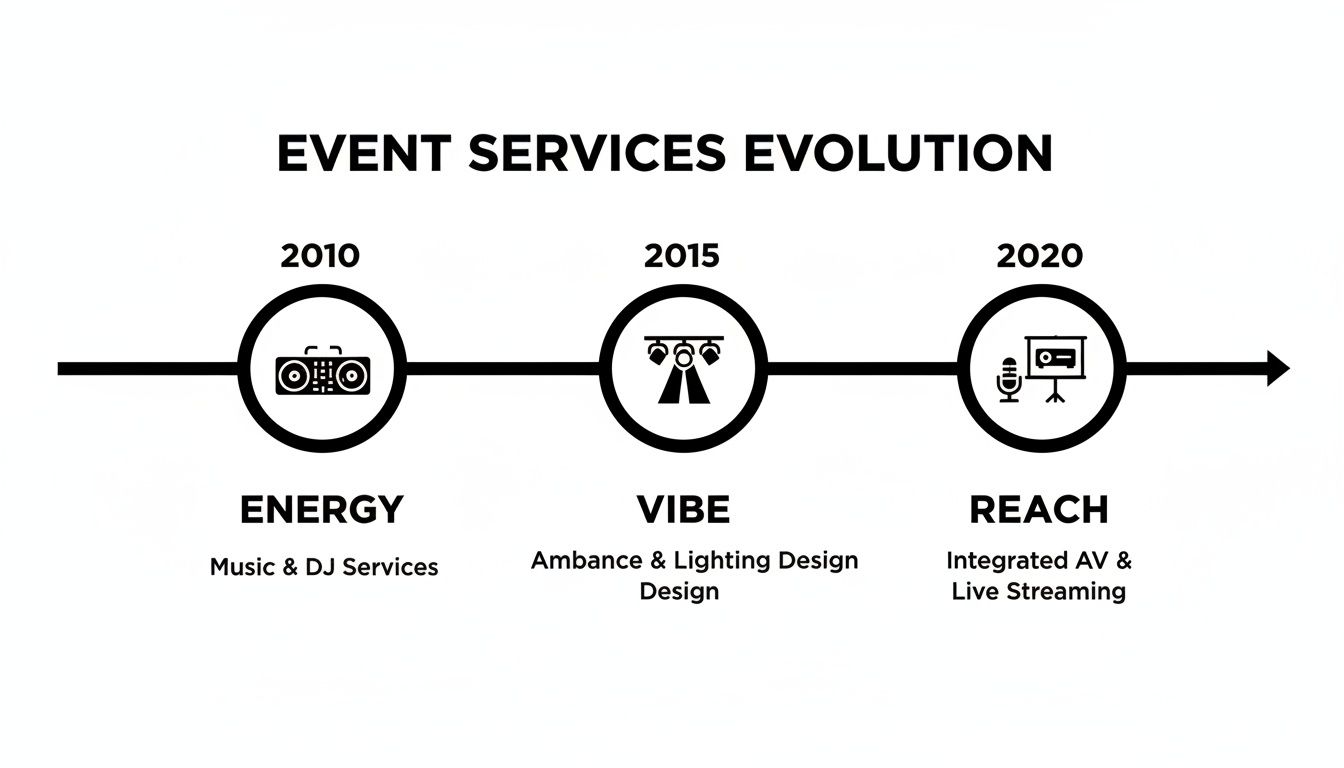
As you can see, we’ve moved way beyond just music and some lights. Today’s events often demand fully integrated AV and live streaming, which requires much more lead time and technical planning.
This kind of logical timeline gives your planner the breathing room they need to negotiate better deals and coordinate every last detail. So when you search for "corporate event planners near me," what you're really looking for is a partner who can masterfully manage both your money and your clock.
Answering Your Final Questions About Hiring an Event Planner
Alright, so you’ve narrowed down your list of potential planners. This is where the rubber meets the road, and a few final questions always seem to surface. Getting clear on these details is what separates a good event from an unforgettable one.
Let’s dig into the common questions that come up right before a company pulls the trigger, so you can sign that contract feeling completely confident.
Venue Coordinator vs. Corporate Event Planner: What's the Real Difference?
This is, without a doubt, the most important distinction to get right. Mixing these two roles up is a classic mistake, and it can cause some serious headaches later on.
Here’s the simplest way to think about it: the venue coordinator works for the venue. Their job is to look out for the venue's best interests—making sure you follow their rules, coordinating their in-house staff, and managing their equipment. They’re your go-to person for anything related to the physical space.
A corporate event planner, on the other hand, works for you. They are your advocate, your strategist, and your project manager for the entire event. Their loyalty is 100% to your company and your vision.
Think of it like this:
- Your planner is the architect of the entire experience. They design the strategy, hire and manage all the vendors (from the caterer to the AV team), build the master timeline, and sweat every single detail.
- The venue coordinator just manages what happens within their own four walls. They aren’t going to help you source a keynote speaker or brainstorm ideas for your event’s marketing campaign.
Assuming the venue coordinator can do the planner's job is one of the costliest assumptions you can make. Your planner manages the entire project; the coordinator is just one of the many contacts they’ll handle for you.
How Do Corporate Event Planners Charge for Their Services?
Nobody likes surprise fees. A true professional will be completely transparent about their pricing from the get-go. Most planners use one of three common models, and which one is best really boils down to the size and scope of your event.
You’ll usually see one of these structures:
- Percentage of the Total Budget: This is a go-to for larger, more complex events. The planner’s fee is typically 15-20% of the total event cost. It’s a model that scales with the work involved—as the event grows, so does the management required.
- Flat Project Fee: This is my personal favorite for events with a well-defined scope. You agree on a fixed price upfront, so there are no surprises. It gives you total budget certainty, which is a huge relief for most finance departments.
- Hourly Consulting Rate: This is less common for full-service planning but perfect for specific, smaller tasks. Maybe you just need someone to help you lock down a venue or review your vendor contracts. This lets you bring in an expert for a set number of hours.
Always, always ask for a detailed proposal that spells out exactly what’s included in their fee—and just as importantly, what’s not. Getting this in writing is key to a smooth partnership.
Can I Just Hire a Planner for the "Day-Of"?
Yes, absolutely! This is a fantastic option if your internal team has the bandwidth to handle the upfront planning but you need a seasoned pro to take the reins and execute everything on the day.
But a heads-up: the name "day-of coordination" is a bit misleading. In reality, it’s more like "month-of management." A planner will typically jump in about four to six weeks out from your event date.
In that final stretch, they’ll become the single point of contact for all your vendors, create the minute-by-minute production schedule, run the final walk-through, and basically learn the event inside and out. Then, on the big day, they act as the on-site director, putting out fires you never even knew existed. This frees up your team to do what they’re supposed to be doing: connecting with guests and focusing on your business goals.
The real value of a great planner isn't just in the logistics they handle. It's in the ROI they generate. Their vendor relationships and negotiation skills can often save you more than their fee costs you. Beyond that, a flawlessly executed event boosts your brand's reputation and deepens client relationships—a return that keeps paying off long after the last guest has gone home.
Searching for a corporate-event planner near Fort Atkinson, elsewhere in Southern Wisconsin, or in Northern Illinois? 1021 Events can support your event with planning, DJ/MC entertainment, sound, lighting, photography, videography, photo booths, and coordinated production. Explore our corporate event services, then send an inquiry through EMP DJ to discuss your goals.