

A wedding coordinator is your secret weapon, the person who steps in to make sure all your hard work and planning actually come to life on the big day. Think of them as the stage manager for your wedding—they’re backstage with a headset, running the show so you can be front and center, soaking it all in.
Your Wedding Day Quarterback: What a Coordinator Actually Does
After months of picking out everything from the perfect shade of linen to the last song of the night, a coordinator is the person who takes all those puzzle pieces and clicks them together. They aren't planning the event for you; they're managing the event with you, making sure your vision becomes a flawless reality.
They become the go-to person for every single vendor. The photographer needs to know where to be for the first look? They ask the coordinator. The DJ has a question about the timeline? They ask the coordinator. This keeps you and your family from being bombarded with questions, letting you stay completely in the moment. It’s this kind of essential support that's helping the wedding planning market boom, with projections showing it could hit a staggering $95.35 billion in the U.S. by 2030.
Juggling the Moving Parts
A coordinator is a master of multitasking, handling everything from keeping the timeline on track to making sure every vendor is on the same page. As your wedding day quarterback, they also ensure all the little details, like transportation, are handled perfectly. For example, they can help you lock in the best wedding car hire options so your grand entrance is just as amazing as the rest of your day.
The real magic of a great coordinator is their ability to solve problems you never even knew existed. A sudden downpour? A vendor running ten minutes late? They'll handle it quietly and efficiently behind the scenes.
This proactive, problem-solving mindset is the heart of what we call event coordination. Ultimately, your coordinator is your advocate, your timeline keeper, and your professional troubleshooter, all rolled into one.
Planner vs. Coordinator vs. Venue Manager: Untangling the Roles
Diving into the wedding world can feel like you’re suddenly expected to know a whole new language. You'll hear terms like "planner," "coordinator," and "venue manager" thrown around, and it's easy to think they all do the same thing. But trust me, they have very different jobs, and knowing who does what is the secret to a stress-free wedding day.
Think of a wedding planner as the architect of your wedding. They’re with you from the very beginning, helping you dream up the entire vision. They help set your budget, find and vet every vendor, negotiate contracts, and design the look and feel of the whole event. They're building the entire wedding blueprint with you.
A wedding coordinator is more like the general contractor who comes in to execute that blueprint. You've already done the heavy lifting—you’ve picked your team and made the big decisions. The coordinator steps in about four to eight weeks before the wedding, takes all your plans, and makes sure they actually happen. They’re the logistical maestro who brings it all to life on the day.
So, What About the Venue Manager?
This is where things can get a little fuzzy for a lot of couples. The venue manager (sometimes called a venue coordinator) is an amazing resource, but it's crucial to remember: they work for the venue, not for you.
Their job is to look after the property. They'll make sure the building is unlocked, the air conditioning is on, and the bathrooms are clean. Their focus is squarely on the venue itself and any services it provides, like in-house catering or bar staff.
A venue manager protects the venue's interests. A wedding coordinator protects your interests. Your coordinator is your personal advocate, making sure every single vendor—from the florist to the DJ—delivers exactly what you paid for.
Here’s a real-world example: if your cake shows up with the wrong flavor, your wedding coordinator is the one who gets on the phone to sort it out. If a pipe bursts in the kitchen, that's a problem for the venue manager to solve.
To make this crystal clear, here’s a quick-glance table breaking down who handles what.
Who Does What: A Role Comparison
| Responsibility | Wedding Planner | Wedding Coordinator | Venue Coordinator |
|---|---|---|---|
| Vendor Selection | Researches & helps hire all vendors | Manages vendors you've already hired | Manages in-house venue staff only |
| Budget Management | Creates & manages the entire budget | Confirms final payments & distributes tips | Manages your venue-related invoice |
| Wedding Design | Develops concept, color, & style | Implements your established vision | Ensures venue policies are followed |
| Timeline Creation | Builds the master plan from day one | Creates & executes the final day-of timeline | Provides a venue access timeline |
| Point of Contact | Is the main contact for all vendors | Becomes main contact 4-8 weeks out | Is the main contact for venue questions |
| Rehearsal | Plans & runs the ceremony rehearsal | Directs the ceremony rehearsal | Is usually not present at rehearsal |
| Day-of Execution | Oversees entire event from start to finish | Is the on-site director for the wedding day | Oversees venue operations (lights, AC) |
As you can see, their responsibilities are distinct. A coordinator is laser-focused on bringing your specific plan to life.
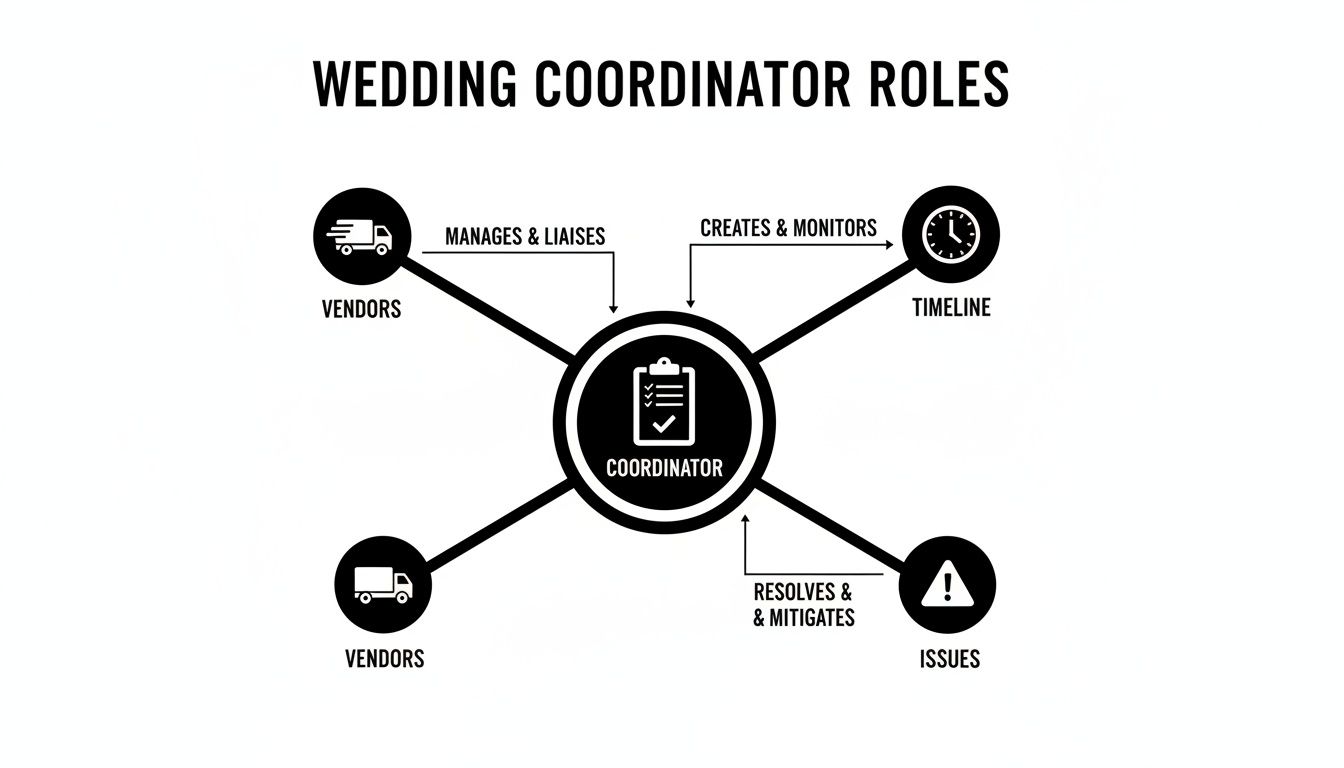
This visual really nails it: your coordinator acts as the central hub, managing every moving part so you don't have to. For a much deeper breakdown, check out our guide on the differences between an event coordinator vs. an event planner. Getting the right pro in your corner is everything.
A Day in the Life of a Wedding Coordinator
Ever wondered what your wedding coordinator is really doing while you’re enjoying mimosas and getting your hair done? It’s so much more than just carrying a clipboard and looking official. Think of them as the director of your personal movie, making sure every scene unfolds just right—and seamlessly fixing any issues you'll never even hear about.
Picture your wedding morning. While you're laughing with your bridesmaids, your coordinator is already at the venue. They're the first person on-site, walking through the empty space with the master timeline, double-checking that every table and chair is exactly where you planned it months ago.

Then, their phone starts going off. First, it’s the florist confirming the delivery time. A minute later, the baker calls asking for the best place to wheel in the cake. Your coordinator handles it all, acting as the central hub so your phone stays blissfully silent.
The Art of Juggling Logistics
Once vendors start arriving, the coordinator morphs into a friendly but firm air traffic controller. They’re pointing delivery trucks to the right entrance, showing the DJ where to find the power outlets, and making sure everyone sticks to the schedule.
Here’s a little glimpse into their multi-tasking world:
- Overseeing Setup: They're making sure linens are smooth, place cards are in perfect alphabetical order, and the lighting is creating the exact mood you wanted.
- Vendor Check-ins: The photographer, officiant, and band all get a personal welcome, a copy of the final timeline, and a quick brief on any special cues.
- Final Touches: They are the ones lighting every single candle, straightening the welcome sign, and doing that one final, meticulous walkthrough before a single guest steps foot inside.
This behind-the-scenes hustle is what makes the magic happen. If the caterer is running 10 minutes behind, your coordinator is already on it, subtly adjusting the schedule and looping in other vendors to keep the day flowing perfectly—all without ever bothering you.
Navigating the Unexpected
This is where a great coordinator earns their stripes. Let’s say a freak shower pops up minutes before your outdoor ceremony. Before you even have a chance to worry, your coordinator is already executing the rain plan, directing staff to move chairs inside, and letting the musicians know about the new location.
A wedding coordinator’s job isn’t just to follow the plan; it’s to protect the plan from reality. They are professional problem-solvers who handle hiccups discreetly, ensuring the day feels effortless for you and your guests.
They’re prepared for anything, from a missing cake knife (they always have a spare) to a bridesmaid’s broken zipper (their emergency kit is the stuff of legends). They're the ones lining up the wedding party for the walk down the aisle, giving the DJ a nod for the first dance, and syncing with the kitchen to make sure dinner is served piping hot.
All night long, they are the quiet force keeping your event on track. They manage the flow from the toasts to the bouquet toss, letting you and your family just be present and soak it all in. To see just how many details they're managing, check out our day-of wedding coordinator checklist for a full breakdown.
And when the party winds down? They’re still there, overseeing the breakdown crew, and making sure your gifts and personal items are safely packed up. They are, without a doubt, the first to arrive and the very last to leave.
Understanding Wedding Coordinator Costs
Let's get right to it and talk money. When you're neck-deep in spreadsheets and vendor quotes, every single dollar counts. Hiring a wedding coordinator is definitely another line item on the budget, but it’s one of those rare expenses that can actually save you money—and a whole lot of sanity—down the road.
The best way to think about a coordinator's fee isn't as a cost, but as an investment in your own peace of mind. Their value is so much more than just what you see on the wedding day itself. When you're figuring out the big financial picture, from how much to spend on an engagement ring to the final bar tab, a coordinator helps all those moving parts work together smoothly.
Typical Pricing Structures
When you start looking, you'll see that coordinators usually price their services in a few different ways, depending on how much help you’re looking for.
- Flat Fee: This is the most popular way to go. You get a set price for a clearly defined package, like "Month-Of Coordination." It's awesome for budgeting because you know exactly what you're paying from the get-go—no surprises.
- Percentage of Budget: This is more common with full-service wedding planners who are with you from the very beginning. They might charge 15-20% of your total wedding budget. You won't see this model as often for day-of or month-of coordination.
- Hourly Rate: Just need an expert opinion on your timeline or help with one specific task? Some coordinators offer their services by the hour, which gives you a ton of flexibility.
A coordinator’s true value is their ability to prevent costly mistakes. They’ll comb through vendor contracts to spot hidden fees, make sure you don't over-order on rentals, and solve little logistical hiccups before they blow up into budget-busting emergencies.
The Return on Your Investment
So, what are you actually getting for your money? An experienced coordinator brings a network of trusted vendor relationships to the table. Those connections can often mean access to exclusive discounts or little perks you wouldn't be able to get on your own.
Believe it or not, a good coordinator can save couples up to 20-30% simply through smart vendor negotiations and by steering them away from expensive mistakes. It's a huge part of what they do.
When you're weighing the cost, just remember that a coordinator's fee often pays for itself. It’s not just about the potential savings, but about the priceless gift of actually being able to relax and soak in every moment of your wedding day. To get a firm grip on your numbers, a solid event budget template can be a lifesaver. A coordinator’s expertise is what ensures that carefully planned budget is executed perfectly.
Finding the Right Coordinator for Your Wedding
Okay, let's get real for a minute. Picking a wedding coordinator isn't just about checking a box or finding someone whose schedule is open. You're bringing someone into your inner circle during the most high-stakes part of the whole planning journey. The right person is a blend of experience, a personality that clicks with yours, and a level of trust that lets you actually breathe.
Think of it this way: you're hiring the director for the biggest production of your life. You need someone who just gets you and your vision, not just on paper, but intuitively. This is the person you'll lean on to tackle any curveballs and wrangle your entire vendor team, so that gut feeling of connection is non-negotiable.
Key Questions to Ask Potential Coordinators
Before you even think about signing a contract, you need to have a real, heart-to-heart conversation. Showing up to these chats with a solid list of questions will help you cut through the sales pitch and figure out if they're truly the one. Forget the fluffy stuff; you need to know how they operate under pressure.
Here are a few essential questions to get the conversation rolling:
- Experience & Style: "Tell me about a wedding you've coordinated that had a similar vibe or guest count to ours. What was that like?"
- Problem-Solving: "What's the wildest thing that's ever gone wrong on a wedding day, and how did you handle it without the couple ever knowing?"
- Vendor Communication: "How do you get up to speed with our other vendors? Can you walk me through how you build and send out the final timeline?"
- Emergency Preparedness: "What's in your 'oh-crap' kit? What kind of backup plans do you always have in your back pocket?"
A truly great coordinator won't just say they're organized—they'll prove it. Don't be shy about asking to see a sample timeline or a communication plan from a past wedding. It’s the best way to get a real feel for their professionalism and how they manage every little detail.
Having a solid interview process is a must for all your vendors, not just the coordinator. To make sure nothing slips through the cracks, a good wedding vendor checklist template can be a lifesaver for tracking your interviews and notes. Remember, your coordinator is the captain of this ship. Take your time, trust your gut, and choose wisely.
How Coordinators and Production Partners Create a Flawless Event
A great wedding coordinator is the director of your wedding day. They have the script—your master timeline—and they know exactly how every single scene is supposed to play out. But even the best directors need a top-notch crew and the right equipment to create a blockbuster. That's where a professional event production company steps in.
This combination is the secret sauce for turning a nice wedding into an unforgettable, flawlessly produced experience. Your coordinator is the strategic brain of the operation, while the production team is the technical and artistic muscle that brings the whole vision to life.
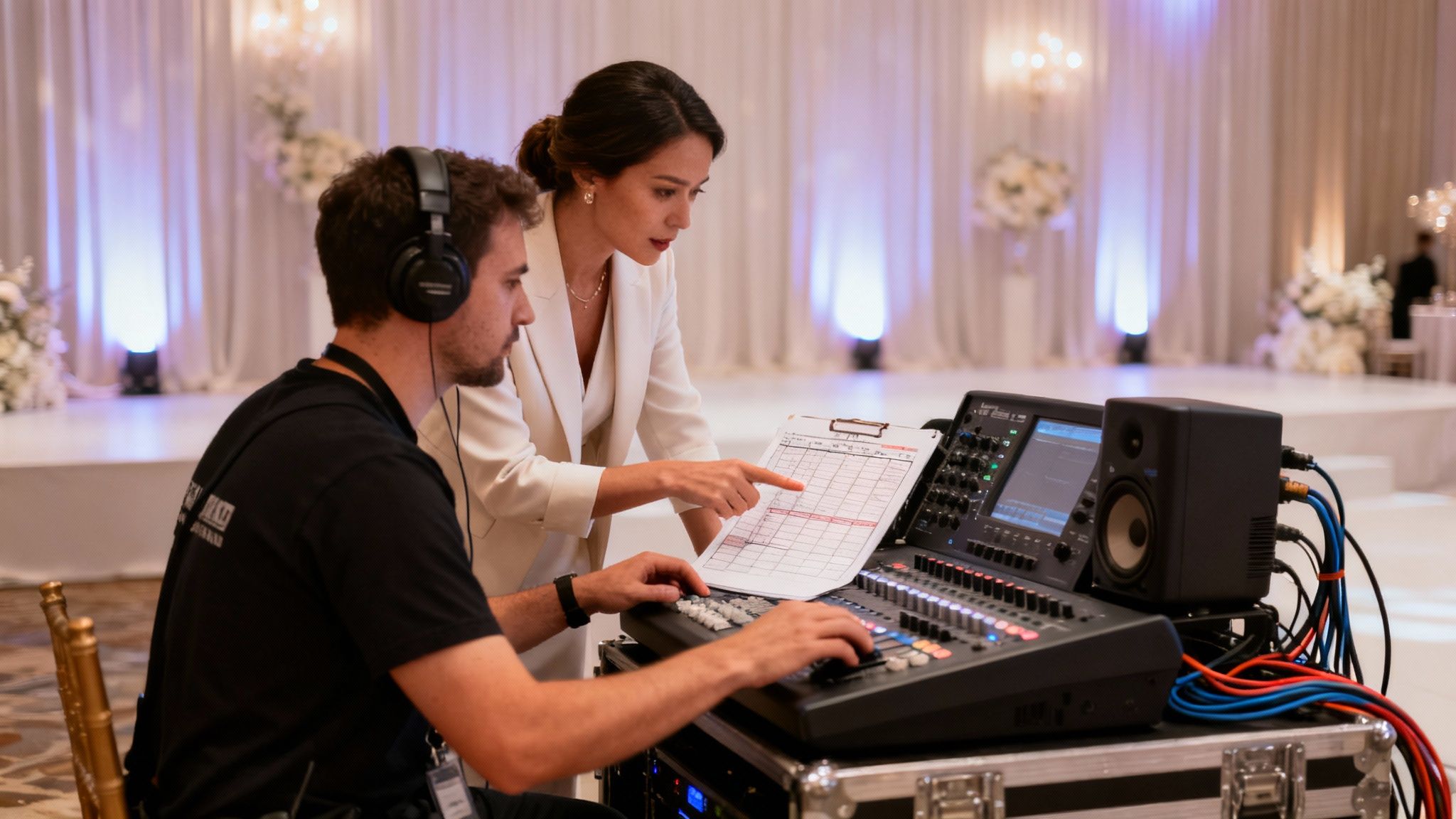
Simply put, the coordinator figures out the "what" and "when," and the production team delivers the "how" with spectacular results.
The Conductor and the Orchestra
Here’s another way to think about it: your coordinator is the conductor of an orchestra. They stand at the front, armed with the musical score (your timeline), signaling each musician to come in at the perfect moment. The production team is the orchestra—the seasoned musicians with finely-tuned instruments ready to create something beautiful.
Let's say it's time for your grand entrance. Your coordinator gives the cue. A professional production partner like 1021 Events makes sure that when that cue is given:
- The sound hits just right: The perfect song starts playing through a pro-grade sound system, at exactly the right volume to build energy without being deafening. No awkward silences, no feedback shrieks.
- The lighting creates the mood: Custom uplighting instantly changes color, spotlights hit the doors, and the whole room shifts to build anticipation for your big reveal.
- Special effects are on point: If you dreamed of a dazzling cold spark entrance, they fire off at the precise second you step into the room, making for an absolutely epic photo op.
This synergy is what creates a high-impact wedding. The coordinator manages the flow and communicates the vision, while the production team provides the technical artistry and high-end gear to make it all happen seamlessly.
This back-and-forth between logistics and creative execution is what makes every moment feel so polished. From a custom monogram Gobo light appearing over the dance floor to making sure the toasts are heard loud and clear in the back of the room, the coordinator and production team work together to make it all look easy. That’s how you get a truly flawless production.
Got Questions About Wedding Coordinators? We’ve Got Answers.
When you start diving into wedding planning, it can feel like you're learning a whole new language. A lot of couples get stuck on who does what, so let's clear up some of the most common questions about wedding coordinators.
My Venue Has a Coordinator. Do I Still Need to Hire My Own?
Short answer: Yes, you absolutely should. Here’s the deal—a venue coordinator works for the venue, not for you. Their main priority is making sure the lights are on, the doors are unlocked, and their in-house staff is doing what they’re supposed to do. They're there to protect the venue's interests.
Your personal wedding coordinator, on the other hand, works only for you. They are your advocate, your point person, and your problem-solver. They manage all your vendors (the photographer, the DJ, the florist—everyone), not just the ones connected to the venue. They run the timeline you created together and make sure every single detail, big and small, is exactly how you pictured it.
When Should I Hire a "Day-Of" Coordinator?
The name "day-of" is a little misleading, and it's a common point of confusion. You definitely don't want to wait until the week of your wedding to book them! The sweet spot is usually 3 to 6 months out from the big day.
This gives your coordinator plenty of time to really get to know your vision, dig into all your vendor contracts, and build out a rock-solid timeline. They can introduce themselves to your whole vendor team and spot any potential hiccups long before they become real problems. If you wait until the last minute, you’ll find that the best ones are already booked, and you might end up paying a premium.
A wedding coordinator’s real magic happens in the preparation. Giving them a few months to get completely up to speed on your wedding means they can execute it flawlessly, not just show up cold and react to whatever’s happening.
Can a Wedding Coordinator Actually Save Me Money?
It might seem counterintuitive since it's another expense, but a good coordinator can definitely save you money. For starters, they have great relationships with other vendors in the industry and can often negotiate better rates or get little perks thrown in that you wouldn't be able to get on your own.
Even more valuable, though, is their expertise in helping you avoid costly mistakes. They’ll catch hidden fees in contracts, suggest smart ways to stretch your budget, and solve small issues before they blow up into expensive, day-of emergencies. That kind of financial peace of mind is priceless.
A coordinator is the master of the plan, and a production partner brings that plan to life with a "wow" factor. At 1021 Events, we team up with coordinators to deliver incredible sound, lighting, and special effects that make a wedding truly unforgettable. Learn how we can elevate your celebration.