

Building a wedding timeline is all about working backward. You start with the big moments—like your ceremony start time and when the reception wraps up—and then you fill in the gaps. From hair and makeup in the morning to vendor arrivals, everything gets a slot.
The real secret? Building in buffer time between each event. A little extra padding is your best defense against unexpected delays, turning what could be a complex, stressful day into a smooth, manageable flow.
Why a Timeline Is Your Wedding Day MVP

Think of your wedding timeline as the director's script for the biggest movie of your life. It’s not just a boring list of times; it's the master plan that ensures every scene unfolds exactly as you pictured, from getting ready with your crew to that epic sparkler send-off.
Going without a timeline is like trying to improvise a feature film. It might work, but it's far more likely to lead to chaos, stress, and missed photo ops. A well-thought-out timeline is honestly the most valuable tool you'll have for a stress-free day. It gets all your vendors—the photographer, DJ, caterer, and venue manager—on the same page, transforming them from separate contractors into one cohesive team. When everyone knows the game plan, the day just flows.
The True Purpose of a Wedding Schedule
Here’s the thing: the magic of a wedding timeline isn't really about sticking to a rigid schedule. It’s about protecting your sanity and your ability to enjoy the day. A solid plan gives you the freedom to be fully present and soak in every single moment instead of constantly glancing at the clock and worrying about what’s next.
A detailed timeline helps you:
- Prevent Vendor Confusion: Your photographer won’t be wandering around looking for the wedding party during cocktail hour, and the DJ will have the first dance song cued up at the perfect moment.
- Avoid Rushed Moments: By budgeting enough time for each part of the day, you won't feel like you're being herded from one thing to the next. You'll actually have time to breathe.
- Carve Out Time for Yourselves: A great timeline intentionally blocks off moments for you and your partner to connect, whether that's a private first look or just five quiet minutes alone before you're introduced at the reception.
- Maximize Your Investment: You’ve spent a ton of time, energy, and money on this celebration. A timeline makes sure you get to enjoy all of it, from the delicious food to a packed dance floor.
The biggest joy-killer on a wedding day is feeling rushed. Your timeline is the antidote. It gives you permission to relax and actually savor the experience you worked so hard to create.
Ultimately, knowing how to map out your day gives you the gift of presence. It’s the behind-the-scenes framework that holds everything together, including all those little details that make your event special. A good structure lets you let go, trust your team, and focus on what really matters: celebrating your love.
And speaking of making your event special, the timeline helps you fit in all the fun stuff. For some great ideas, check out our guide to the 10 unforgettable wedding reception must-haves.
Nailing Down Your Timeline Anchors: Where to Start
Before you get lost in the weeds of planning every single minute, you need to lock in a few non-negotiable "anchors." Think of these as the big rocks you place in the jar first; everything else will just fill in around them. Get these right, and the rest of your timeline will practically build itself.
The first and most important anchor is your ceremony start time. Seriously, everything flows from this single decision—from when your hair and makeup artist shows up to when the DJ plays the last song of the night.
The other non-negotiable is your venue's hard end time. This is when the party is officially over, the lights come on, and everyone (vendors included) has to be packed up and gone. Knowing this deadline is absolutely crucial for making sure you don't get rushed through the best parts of your reception.
How to Pick the Perfect Ceremony Start Time
Choosing your ceremony time isn't just about what looks pretty on the invitation. It’s a strategic decision, and the biggest factor is almost always the sunset.
You've heard of the "golden hour," right? It's that magical time just before sunset when the light is soft, warm, and absolutely perfect for photos. To get those dreamy portraits without yanking you away from your guests for too long, you have to plan for it.
Here’s how I walk my couples through it:
- Find the Sunset Time: First thing's first. Google the exact sunset time for your wedding date and location. No guesswork here!
- Block Out Golden Hour Photos: Set aside at least 30 minutes for your couple's portraits during this window. I usually aim to sneak my couples out during cocktail hour or as dinner is just getting started so they don't miss much.
- Set the Ceremony: Now, work backward. Your ceremony needs to end about 60-90 minutes before that golden hour photo session begins. This gives you time for the ceremony itself, family photos, and a seamless transition for your guests into cocktail hour.
Let’s say sunset is at 7:30 PM. Your golden hour photos should happen from roughly 7:00 PM to 7:30 PM. For that to work, your ceremony should wrap up by 6:00 PM. If you're planning a standard 30-minute ceremony, a 5:30 PM start time is your sweet spot.
The whole point is to get all of your important, naturally-lit portraits done before you lose the light. Working backward from sunset is the secret sauce to getting the photos you’ve dreamed of without making your wedding day feel like a frantic photoshoot.
Let the Season and Location Guide You
Where and when you get married has a massive impact on this. A summer wedding in an open field gives you tons of daylight to play with, so a later ceremony is no problem. But if you’re planning a winter wedding, you have to start much earlier to beat that 4:30 PM sunset.
It’s not just a gut feeling, either. Wedding data clearly shows that the time of year and location dictate the flow of the day. Global wedding reports reveal distinct patterns: couples getting married in Italy and France often choose June, while Mexico's peak season is October, and many in India marry in February. These choices are directly tied to daylight and weather, which in turn dictate the best times for outdoor events and photography. You can actually see how destination choices impact planning trends and see these patterns for yourself.
The Power of Planning Backward from the End
Okay, you’ve got your ceremony time locked in. The next pro move? Jump to the end of the night and work your way back. This is the best way to make sure all the big reception moments fit without feeling rushed.
Start with that hard stop time from your venue. Let's imagine they kick everyone out at 11:00 PM.
- 11:00 PM: Venue is empty. Music is off, lights are on.
- 10:45 PM: Time for the Grand Exit or the last dance.
- 9:00 PM – 10:45 PM: Open dancing. This is the real party!
- 8:45 PM: Cut the cake. This is a great, natural signal to guests that the dance floor is about to open up.
- 8:30 PM: Toasts and speeches (usually best done while guests are finishing dinner).
- 7:30 PM: Dinner service begins.
- 7:15 PM: Grand Entrance into the reception.
By sketching out the reception like this, you create a solid framework. This is the schedule you'll hand over to your DJ or band leader, your caterer, and your photographer. Getting them all on the same page is everything.
A great vendor team will make this process a breeze, but you have to give them the right information. If you're still pulling your team together, our comprehensive wedding vendor checklist template can be a lifesaver for keeping track of it all. Once these anchors are in place, every other decision you make about your timeline will feel so much clearer.
Building Your Timeline, Piece by Piece
Okay, you've locked in your big-ticket items—the ceremony and reception times. Now for the fun part: filling in all the moments in between. This is where the day really takes shape, and the trick is to think about it in manageable chunks of time, creating a smooth flow from morning mimosas to the final send-off.
Let's be honest, the "getting ready" portion of the day is where timelines first go off the rails. It always, always takes longer than you think. Trying to rush through hair, makeup, and those first excited moments with your crew is a surefire way to start the day stressed.
Don't Rush the Morning: Nailing the Pre-Ceremony Timing
Getting ready is more than just getting your hair done. It's an event in itself. Your photographer is there snapping detail shots, you're sharing laughs (and maybe a few happy tears) with your wedding party, and the energy is buzzing. Underestimating this block of time is probably the most common mistake I see couples make.
Here's how to think about it:
- Hair & Makeup: A great pro tip is for the bride to go second-to-last. This keeps your look perfectly fresh for the ceremony but also builds in a natural buffer if the schedule starts to slip.
- Photographer's Arrival: Have your photographer show up a good 60-90 minutes before you need to leave. This gives them plenty of time to capture those gorgeous shots of your dress, rings, and invitations, plus all the candid "getting ready" action, without feeling rushed.
- Getting Dressed: Seriously, schedule 30 minutes just for getting into your outfit. Between intricate buttons, layers of tulle, or just soaking in the moment, it takes longer than you'd expect.
Your wedding day should never feel like a race to the finish line. The fastest way to kill the joy is to feel rushed. We always build in 15-20 minute cushions between each major task. If hair runs a little late, no big deal—it won’t derail the entire day.
Think of it this way: your season, venue, and ceremony time are the foundation. Now we're just building the frame on top of it.
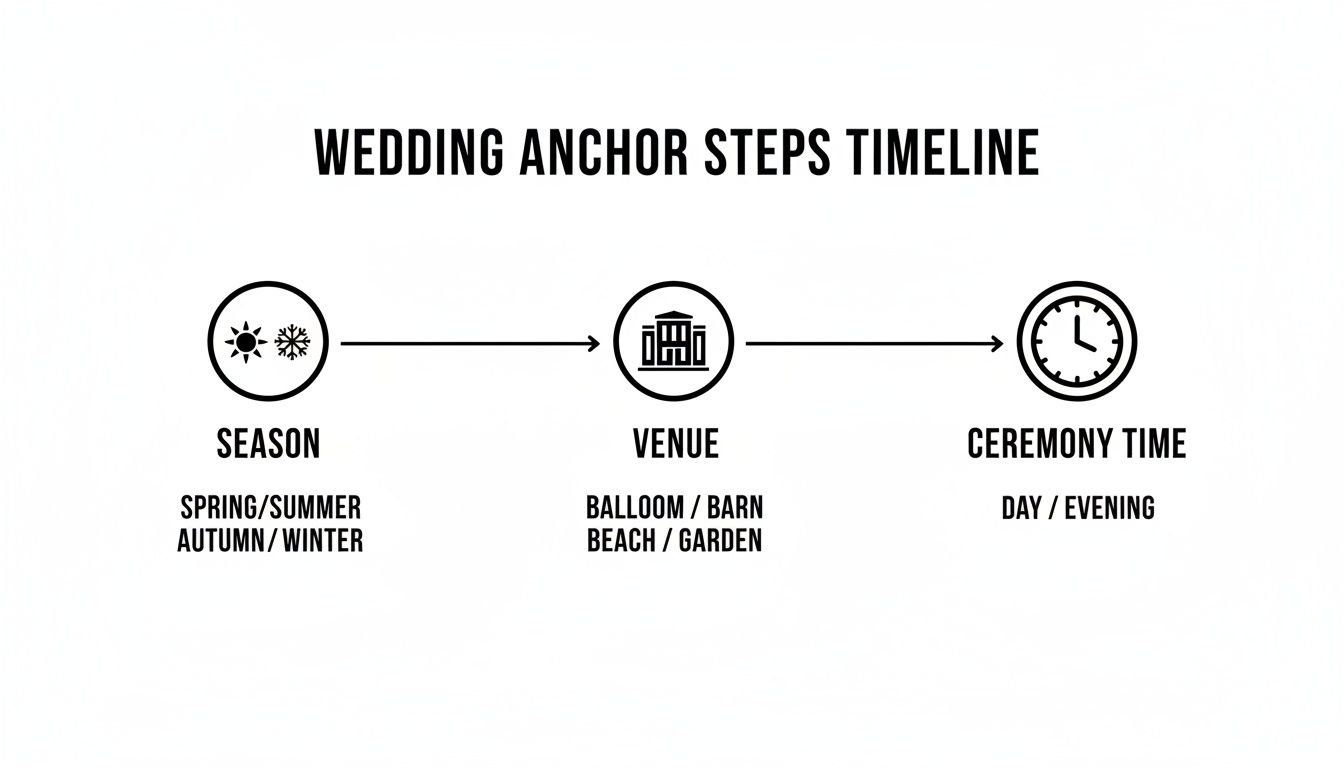
This visual is a perfect reminder that all these smaller details are built upon those three core decisions you’ve already made.
From "I Do" to "Let's Dance"
Once you're dressed and ready, the pace of the day really picks up. The ceremony, cocktail hour, and reception are the heart of your wedding, and each has its own unique flow.
The Ceremony (30-60 Minutes)
Most non-religious ceremonies clock in at around 30 minutes. If you're adding special readings, unity rituals, or religious elements, you'll probably want to block out 45-60 minutes. The key is to be tucked away and out of sight at least 30 minutes before the invitation time. Guests always show up early!
Cocktail Hour (60 Minutes)
This is such an important transition. It lets your guests grab a drink and mingle while you're off taking photos. If you've done a first look, you might even get to sneak in for the last half of your own cocktail hour! It's also prime time for vendors to do final sound checks and for the reception space to get its finishing touches.
The Reception (4-5 Hours)
This is your longest block of time, and you want to structure it to keep the energy up. A great flow usually looks something like this:
- Grand Entrance: The perfect way to kick off the party and get everyone hyped.
- Dinner Service: Budget about 90 minutes for this, from salads hitting the table to the last plates being cleared.
- Toasts & Speeches: The sweet spot for speeches is during dinner. It keeps everyone captive and engaged.
- Special Dances: You can do your first dance right after your entrance to make a statement, or save it for after dinner to officially open the dance floor.
- Cake Cutting: This is more than just a photo op; it’s a signal. It subtly lets older guests know it’s a polite time to head home if they're ready, and it gets everyone primed for dancing.
And as you're planning, remember that real-world deadlines matter, too. Getting your final numbers from your wedding RSVP forms is crucial because it directly impacts your caterer and seating chart, which are cornerstones of the reception timeline.
Putting It All Together: A Sample Timeline
So what does this all look like in practice? Here is a simple, effective breakdown for an 8-hour wedding day with a 5:30 PM ceremony.
Sample Wedding Timeline Breakdown (8-Hour Event)
This table maps out a typical wedding day, showing how each activity flows into the next to create a seamless experience for you and your guests.
| Time Slot | Activity | Key Participants & Vendors |
|---|---|---|
| 2:00 PM | Photographer arrives | Photographer, Wedding Party |
| 4:00 PM | First Look & Couple Portraits | Couple, Photographer |
| 4:30 PM | Wedding Party Photos | Couple, Wedding Party, Photographer |
| 5:00 PM | Couple hides; Guests arrive | Couple, Coordinator, Ushers |
| 5:30 PM | Ceremony Begins | All Guests, Officiant |
| 6:00 PM | Cocktail Hour Starts | Guests, Catering Staff, Bartenders, DJ |
| 7:00 PM | Guests Invited to Dinner | MC/DJ, Coordinator |
| 7:15 PM | Grand Entrance & First Dance | Couple, DJ/MC |
| 8:30 PM | Toasts & Speeches | Speakers, DJ/MC |
| 9:00 PM | Cake Cutting & Open Dancing | Couple, DJ, Photographer |
| 10:45 PM | Last Dance & Grand Exit | All Guests, DJ/MC, Coordinator |
| 11:00 PM | Guests Depart; Vendor Breakdown | All Vendors |
This framework is a solid starting point that keeps the day moving without ever feeling chaotic.
Of course, every wedding is unique! For more detailed options you can tweak, grab a downloadable wedding timeline template to customize for your own celebration. It’s an amazing tool for building out your perfect schedule.
Getting Your Vendors on the Same Page
You’ve poured your heart into crafting the perfect wedding timeline, getting every last detail just right. That’s a huge accomplishment! But here's a little secret from the inside: a timeline is only as good as the team that brings it to life.
Getting your vendors on the same page isn’t just some final box to check. It’s the single most important move to transform your plan into a beautifully orchestrated, stress-free day where nothing slips through the cracks.
Think of your photographer, DJ, caterer, and venue coordinator as the crew running a live show. Each one is a specialist, but they all need to be working from the same script—your timeline. When they’re in sync, the magic happens. The music swells at just the right moment for your big entrance, the photographer is in position for the cake cut, and dinner feels effortless.
Creating the Master Vendor Timeline
While your wedding party needs the "where to be and when" version, your vendors require something much more granular. This is your master vendor timeline, and it should be loaded with the specific cues and technical details they need to nail their jobs. Don't just write "First Dance"—get specific. Include the song title and who’s cueing the start.
Here are the non-negotiable details to include:
- Arrival & Setup Times: Be crystal clear. State exactly when each vendor needs to be on-site and, just as importantly, when they need to be fully set up and ready to go.
- Key Moment Cues: Pinpoint the times for every major event—the ceremony processional, grand entrance, first dance, toasts, cake cutting, and the final grand exit.
- Vendor Contact List: Create a simple list with the name and cell phone number for the primary contact from each vendor. Also, include your day-of coordinator or a trusted point person (not you or your partner!).
- Special Instructions: This is for the fun stuff! Note when the cold sparks should fire, a specific lighting sequence needs to start, or when the MC has to make a unique announcement.
Send this master timeline out to every single vendor at least one week before the wedding. This gives them plenty of time to review it, flag any questions, and connect with each other. This document is now the shared blueprint for your entire day.
Your DJ or MC is Your On-Site Director
While a wedding planner is an absolute game-changer, a skilled DJ or MC often becomes the unofficial director of the reception. A great one doesn't just play music; they read the room, guide the flow of the evening, and keep the energy electric. This is exactly why hiring an experienced pro who gets the rhythm of an event is so crucial.
Your MC is the voice of your timeline, bringing it to life in real-time. They’re the one who will:
- Announce the wedding party with energy and flair.
- Gracefully introduce the people giving toasts.
- Gather guests for the cake cutting and parent dances.
- Keep the dance floor packed and the party flowing.
They essentially become the central communication hub, often coordinating with the catering captain about dinner service and giving the photographer a heads-up for key moments. When you're building your timeline, always remember that your MC is the person who will execute it, making every transition feel seamless and natural to your guests.
Trusting a professional DJ/MC to run the show allows you to let go of the schedule and just be the guests of honor at your own party. Their expertise in reading the room and managing the clock is one of the best investments you can make for a stress-free reception.
Modern weddings are also getting more complex. Timelines now have to account for new technology, diverse entertainment, and high levels of personalization. Nearly 49% of couples now use QR codes for things like save-the-dates, a 42% jump since 2021. You can find more fascinating data about how wedding planning trends are evolving and what it means for your timeline.
The Final Vendor Confirmation Call
About a week out from the big day, get all your key vendors on a quick conference call or an email thread. This is your final huddle. Run through the timeline one last time, confirming arrival times and locking in any final details.
This small step can prevent massive headaches. It guarantees everyone is working from the final version of the plan and gives them a chance to ask any last-minute questions. It solidifies their role as a unified team with one shared goal: making your day absolutely perfect. For a deeper dive, our day-of wedding coordinator checklist provides a fantastic framework for these final vendor conversations.
Insider Tips for a Flexible and Realistic Timeline
The secret to a wedding timeline that actually works isn't about controlling every single second. It’s about building a schedule that can bend without breaking. Real-world weddings are messy, beautiful, and full of little human moments—and your timeline needs to have room to breathe.
This is where the pros spill their best-kept secrets. We’re going to move beyond just plugging in times and get into the art of creating a flexible, realistic, and genuinely fun experience for everyone involved, especially you.
Embrace the Magic of Buffer Time
If you take only one piece of advice from this, let it be this: build in buffer time. Think of it as your day’s built-in insurance policy against stress. Something will run a few minutes late; it's practically a wedding day guarantee. Hair and makeup might go over, a groomsman could lose his tie, or traffic might be a nightmare.
Without that cushion, one tiny delay can set off a domino effect, leaving you feeling rushed and panicked. But with buffer time? Those little hiccups get absorbed, and no one is the wiser.
- Pre-Ceremony Cushion: Add an extra 20-30 minutes after hair and makeup are supposed to be done, right before you need to get into your dress. This is always a high-energy, high-stress transition, and you'll be grateful for the extra breathing room.
- Travel Padding: Moving between locations? Add at least 15-20 minutes on top of what your GPS says. This covers traffic, getting everyone organized and into cars, and those inevitable last-minute bathroom breaks.
- Post-Ceremony Pause: Plan for 15 minutes of quiet right after the ceremony, before you dive into family photos. This gives you two a private moment to soak it all in and lets your coordinator wrangle the family without you feeling rushed.
A wedding day is a massive undertaking. The Knot’s data shows the average engagement lasts 15 months, with couples putting in over 300 hours of planning. Breaking a project that huge into manageable, well-paced phases is the only way to stay sane.
Tame the Timeline Troublemakers
Every wedding has them—those parts of the day that are notorious for running long and throwing the whole schedule off track. The trick is to know what they are ahead of time so you can plan for them.
The goal isn't a rigid, minute-by-minute itinerary. It's a flexible framework that guides the day's flow. It ensures you never feel like you're playing catch-up at your own wedding.
Here are the usual suspects and how you can get ahead of them:
- Family Photos: This is, without a doubt, the number one timeline-wrecker. To keep things moving, give your photographer a detailed shot list with the exact names of every person in each group. Pro tip: assign a family member who knows everyone to be the "photo wrangler" and help gather people. This is way more effective than your photographer shouting names into a crowd.
- Long-Winded Speeches: Toasts are a beautiful tradition, but they can easily derail a reception. Give your speakers a clear time limit (3-5 minutes is the sweet spot) and give the order to your DJ or MC. They'll know how to gracefully keep things on schedule.
- The Bustle: Don't forget about the bustle! A complicated one can easily take 15-20 minutes. Make sure you and your maid of honor practice it beforehand, and block out dedicated time for it right after the ceremony or just before your grand entrance.
Schedule Moments Just for You
In the whirlwind of greeting guests, taking photos, and hitting the dance floor, it's surprisingly easy to forget to actually connect with your new spouse. The best timelines I've ever worked with intentionally carve out private moments for the couple. This isn't a luxury; it's a necessity.
Maybe it's a first look before the ceremony or a private last dance after all the guests have lined up for the send-off. One of my favorite tricks is to have the caterer set aside a small table for you to eat dinner alone for 15 minutes before you join the reception. You'll actually get to eat, and those quiet moments will become some of your most cherished memories of the entire day.
Of course, for all the other little surprises, having a well-stocked wedding day emergency kit is a lifesaver. And to keep everyone in the loop as your flexible plan unfolds, consider tools for scheduling communications to send key updates to guests and vendors right when they need them.
Answering Your Biggest Wedding Timeline Questions
Even the most buttoned-up schedule will have you asking, "But what about…?" It's totally normal. Nailing down your wedding timeline means wrestling with all those little what-ifs that can keep you up at night. Let's walk through the most common questions I get from couples and give you some clear, real-world answers so you can finalize that schedule with confidence.
Think of this as the final polish on your master plan. Getting these details right is what turns a good timeline into a seamless one.
How Much Time Do We Actually Need for Photos?
This is the big one, and the answer almost always circles back to whether or not you're doing a "first look." The path you choose here really dictates the flow of your day, so it’s a huge piece of the timeline puzzle.
If you decide to see each other before walking down the aisle, you can knock out a massive chunk of your formal photos ahead of time. It’s a huge stress-reliever. I always suggest planning for about 90 minutes to comfortably cover your first look, portraits of just the two of you, wedding party photos, and immediate family shots. You won't feel like you're on a speed-dating photo shoot.
On the other hand, if you're saving that moment for the ceremony, your entire cocktail hour becomes photo time. You'll need that full 60 minutes to wrangle everyone and capture all those important group shots after you've officially tied the knot.
Expert Tip: No matter which route you take, always try to sneak away for just 15 minutes around sunset for those dreamy "golden hour" photos. The light is absolutely magical, and frankly, it’s a beautiful, quiet moment for just the two of you to reconnect.
When’s the Best Time for Speeches and Toasts?
The sweet spot for speeches is definitely during dinner. Having them happen between courses, or just after the main course is served, means you have a captive—and happy—audience. It keeps the energy flowing and feels like a natural part of the evening's entertainment.
Another popular option is to have them right after your grand entrance. This gets the more formal parts of the reception done and dusted early on, leaving the rest of the night wide open for dancing and celebrating. My advice? Limit the toasts to 4-5 speakers and gently ask them to keep their wonderful words to around 3-5 minutes each. Your DJ or MC is your best friend here; they'll help manage the flow and keep everything running smoothly.
What Is "Buffer Time" and How Much Do We Need?
Ah, buffer time. This is your secret weapon against wedding day chaos! It's just a fancy term for those small, empty pockets of time—usually 15-20 minutes—that you intentionally build into your schedule. These little cushions are there to absorb any surprise delays, whether it's traffic, a misplaced boutonnière, or a family member who just has to ask you a question right now.
Trust me, you can't have too much buffer time. Here are a few non-negotiable places to add it:
- After hair and makeup: This is a classic spot for delays, so a buffer here prevents a domino effect of stress.
- Before you leave for the ceremony: It gives you a moment to catch your breath, have a sip of water, and just be.
- Between locations: If you're traveling from the hotel to the ceremony to the reception, build in extra time. It’s a must.
This is the one detail that separates a frantic, rushed day from a relaxed, joyful one. It ensures one tiny hiccup doesn’t derail your entire schedule, allowing you and your partner to actually enjoy the ride.
How Do We Share the Timeline with Everyone?
Smart communication is everything. You don't—and shouldn't—send the exact same, hyper-detailed schedule to every single person. The trick is to create different versions for different groups.
Your vendors need the master document. This is the timeline bible with every single cue, song choice, and specific instruction they need to do their jobs perfectly.
Your wedding party just needs the highlights. Give them a simplified version that clearly spells out where they need to be and when, especially for key moments like photos and the processional lineup.
For your guests, keep it simple and sweet. A welcome sign or a small note in the ceremony program with the big events like "Dinner at 7:00 PM" and "Let's Dance at 8:30 PM" is more than enough. It keeps them in the loop without bogging them down with details they don't need.
At 1021 Events, we live and breathe this stuff so you don't have to. Your wedding day should be about celebration, not logistics. From a Pro DJ/MC who can masterfully guide your timeline to photographers and videographers who know how to be in the right place at the right time, our team is dedicated to making your day feel effortless. Let us handle the details so you can focus on making memories. Learn more about our comprehensive wedding services and let's get planning.