
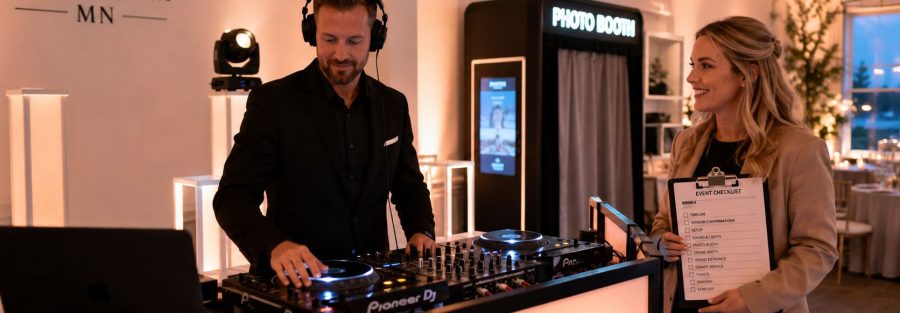
You're probably staring at a guest list, a venue date, and a vendor inbox that's already too full. The DJ question feels simple until you realize the person behind the booth is also the one who keeps the night moving, fills dead air, and prevents your carefully planned timeline from slipping off the rails.
In Alexandria, that matters even more than people think. It's a smaller market, so the options can look limited at first glance, but the quality gap between a polished pro and a weekend hobbyist is huge. If you hire wrong, you'll feel it in the first 20 minutes of the event, usually when the introductions are late, the volume is wrong, or the room goes awkwardly quiet.
Why Hiring the Right DJ Matters More Than You Think
A couple planning a wedding in Alexandria usually starts with the fun stuff, the playlist, the first dance, maybe a few songs they love from college. Then the practical problems show up. Who is announcing the wedding party, who is cueing the ceremony audio, and who is keeping dinner from dragging? That's where a real DJ earns their fee.
A good DJ does more than play tracks. They read the room, steer transitions, and keep the event from feeling like a series of disconnected moments. A weak one can make even a beautiful venue feel flat, because the energy dips every time there's a pause, a bad mic handoff, or a sloppy introduction.
The real job is coordination
That's why I tell clients to think of the DJ as part entertainer, part traffic controller. If you're trying to build a reception flow that stays smooth from ceremony through dancing, the DJ has to manage timing as much as music. If you want a deeper look at that side of the work, the breakdown on Pro Sound DJ setup and event flow is worth a read.
The mistake I see constantly is people obsessing over genre range and ignoring execution. A DJ can have every playlist in the world and still fail if they can't pronounce names, keep to the schedule, or adjust when the photographer needs three extra minutes before entrances.
Practical rule: Hire for timing, communication, and control, not just for song selection.
That's why a smart buyer in the dj alexandria mn market should care less about whether a DJ “covers all genres” and more about whether they can run the room without calling attention to themselves. If the DJ is good, you notice the flow. If they're bad, you notice them constantly.
How to Find and Vet DJs in Alexandria MN
Start with the obvious filter, then get disciplined fast. Local listings for Alexandria-area DJs often show event-focused work, including weddings, parties, corporate events, karaoke, and special events. That's useful, because it tells you you're not shopping for a club act. You're looking for someone who can carry a timeline and speak clearly to a mixed crowd.

Ask the questions that expose real experience
A decent first call should tell you a lot. Ask how many weddings or corporate events they've handled, whether they offer ceremony audio plus reception MC service, and whether they can manage music for older guests, younger guests, and everyone in between. In Alexandria-area listings, vendors like DJ Thumper Entertainment and Mark Anthony DJ Productions position themselves around weddings and events, and Mark Anthony states over 15 years of experience and “hundreds of weddings” in the listing on Yelp, which is the kind of operational volume that matters more than a long genre list when you care about timing and emceeing.
Use the next filter to test reliability. Ask for references from recent events, not vague testimonials from years ago. Ask what happens if they get sick, if the controller fails, or if the timeline shifts by 30 minutes because the photographer needs more time.
What I'd ask before I trust them
- Do you handle ceremony audio and reception MC work yourself, or do you split those roles? You want to know who's speaking and cueing.
- Can you move from older hits to current charts without killing the dance floor? Mixed-age events need range, not a random playlist dump.
- What's included in your setup, and what's extra? Lighting, karaoke, and second systems are often treated as add-ons.
- Can you show me a sample run-of-show from a real event? That reveals whether they understand pacing.
- Can you give me two recent references? Recent matters more than polished marketing language.
The right comparison tool for your shortlist is a real interview. If you want a structured question set, the guide at DJ interview questions for event planning is useful because it forces vendors to talk about process instead of just style. You can also compare their answers against a planning framework like Wedding Studio, especially if you're building a wedding vendor list from scratch and need to keep the conversation practical.
A DJ who answers slowly, dodges specifics, or talks only about music taste is telling you what you need to know.
And don't get hypnotized by setlist length. Local profiles usually brag about catalog size, but they don't prove on-time starts, polished announcements, or how the DJ handles a crowded dance floor after dinner. Ask for those details directly. If they can't explain their workflow, they probably don't have one.
Venue and Acoustics Considerations for Alexandria Events
A DJ setup lives or dies by the room. In Alexandria, that means you need to think about acoustics, power access, load-in paths, and how long the venue stays open. The music can be great and still sound muddy if the room has hard surfaces, odd corners, or a speaker position that fights the layout.

Venue hours change the whole production plan
DJ's Tap House & Grill gives a useful local benchmark because its hours are concrete, 11:00 AM–11:00 PM Sunday through Thursday and 11:00 AM–12:00 AM Friday and Saturday, with happy hour windows of 4–6 PM and 9–11 PM. That matters when you're planning a rehearsal dinner, reception, or after-party near downtown, because you can't treat setup like an open-ended task. If you're building a sound plan for that kind of room, the notes on wedding sound system rental are a good reference point for thinking through coverage and placement.
The practical rule is simple. Confirm when the DJ can load in, where the gear can enter, and whether music can run past 11 PM on weekdays or midnight on weekends. If the venue wants a hard stop, the DJ has to know that before they build the final dance block.
Ask for technical specs in writing
People get sloppy, and sloppy costs money. Most local listings mention music or karaoke, but they don't publish standardized specs like wattage, SPL targets, number of wireless mics, or lighting coverage area. So ask for those in writing. Don't assume the room, the outlets, or the package are automatically right for your event.
- Speaker placement: Ask where the DJ plans to set mains and whether the room has any dead zones.
- Acoustic trouble spots: High ceilings, glass, and hard floors can create echo and make speech muddy.
- Power access: Map outlets before event day so the DJ isn't improvising with extension runs.
- Load-in access: Confirm doors, stairs, elevators, and parking distance for gear.
- Time limits: Make sure the DJ's plan matches the venue's actual schedule.
Alexandria's public event scene also includes recurring live music, DJ nights, and venue entertainment, so your DJ isn't operating in a vacuum. A room that hosts live sound regularly might be a better fit than a space that only sees dining traffic. The point is to treat the venue like an active technical variable, not a backdrop.
Understanding DJ Packages and Add-On Services
A lot of people buy the wrong package because the brochure sounds exciting. They pay for stuff they won't use, then skimp on the basics that shape the event. The better move is to compare service tiers by function, not by marketing language.
| Service Tier | Core Services | Add-Ons | Best For |
|---|---|---|---|
| Basic DJ | Music playback, MC announcements, standard setup | Usually none | Small private parties, simple gatherings |
| Standard Event DJ | DJ, MC, timeline support, ceremony audio options | Uplighting or extra mic support | Weddings and corporate events that need smooth pacing |
| Expanded Production | DJ, MC, lighting, sound upgrades, visual enhancements | Photo booth, monogram projection, haze, cold sparks, drone video | Events where guest experience and branding both matter |
Buy the add-ons that change the room
Uplighting matters when the venue needs atmosphere. A photo booth matters when you want guests to do more than dance and leave. Branded lighting and a custom monogram projection make sense for corporate work because they reinforce identity without adding another vendor. Drone footage is more useful for events that need promotional content or a visual recap.
If you want a simple way to think about it, match the add-on to the event's real goal. If the goal is memories, photo booth. If the goal is brand presence, lighting and monogram. If the goal is to compress multiple roles into one vendor relationship, hybrid production starts to make sense. The broader service menu from 1021 Events covers DJ, uplighting, sound systems, videography, drone coverage, haze, cold sparks, and photo booths, which is the kind of bundle that fits this hybrid direction.
Don't pay for a shiny extra unless it solves a problem you actually have.
For a wedding, the link between DJ and photo booth is especially strong because guests want entertainment that lasts past the dance floor. That's why the comparison on photo booth and DJ packages is useful before you commit to a bundle.
What I'd skip
Skip anything that sounds cool but doesn't support your actual timeline or guest flow. Cold sparks, haze, and drone footage can be great in the right setting, but they're not substitutes for a DJ who can read the room or an audio setup that makes speeches clear. If your budget is tight, fix the fundamentals first.
Timeline and Vendor Coordination Strategies
A DJ doesn't operate in isolation. If the photographer, caterer, and venue staff aren't synced, the DJ ends up absorbing the blame for delays they didn't cause. The fix is a clean timeline and one point person who answers the phone.

Build the communication chain early
Start with the booking conversation, then move to the run-of-show, then to final confirmation. Share playlists, do-not-play notes, and pronunciation guides for every important name in the room. That includes the wedding party, VIP guests, award recipients, or keynote speakers if it's a corporate event.
Introduce the DJ to the photographer and catering manager before the event. Those are the people who will force timing changes, usually for good reasons, and the DJ needs to know how to react without freezing up. If someone gives a toast late, the DJ should know whether to hold the next song, skip an intro, or extend dinner music.
A clean coordination sequence
- Book the DJ and venue together. Don't lock one and hope the other works around it.
- Finalize the playlist and run-of-show. Keep it realistic, not aspirational.
- Share vendor contacts. The DJ needs direct access to the people who can solve problems.
- Do a final walk-through. The room, the power, and the entrance cues should all be checked.
- Name one day-of contact. Everyone needs to know who makes decisions fast.
The local market also supports coordination in a practical way because Alexandria has enough recurring entertainment and venue activity that timelines matter. If you've got a reception near a busy downtown venue or a weekend event with other programming nearby, the DJ has to work around the actual pace of the space, not an idealized schedule.
Give the DJ the truth about your event flow, not the fantasy version.
That's especially important if your event mixes ceremony, dinner, and dancing in one room. The DJ should know when to keep energy low, when to make announcements, and when to push the floor.
Contract Essentials and Final Decision Making
The contract is what keeps your event protected. If the dates, times, setup windows, payment terms, and cancellation policy are missing from the paperwork, you are relying on memory, and memory is a poor planning tool. Keep your shortlist tight and only trust vendors who put the details in writing.

What belongs in the agreement
The contract should clearly list the performance date, time, and location, the total cost and payment schedule, the cancellation policy, the equipment included, and the setup and breakdown windows. It should also cover song request rules, any restricted genres, and the backup plan if the DJ gets sick or gear fails. If insurance is part of the vendor's process, get that in writing and compare it with your broader event coverage needs using vendor liability coverage guidance.
If the DJ is bringing a sound system, lights, or extra microphones, the agreement needs to say so. Verbal promises do not matter once the gear is already in the truck and the invoice is waiting.
Make the final choice with a simple filter
Choose the DJ who responds quickly, explains things clearly, and answers contingency questions without dodging them. If one quote is cheaper but the vendor avoids contract details, that is not a bargain, it is a risk. When you are reviewing the legal side of event audio, it also helps to understand how to license music for events, especially if your event uses unusual playback setups or branded content.
A good proposal should make the event easy to picture, and a good contract should make the risk easy to manage. If either one feels vague, keep looking. That standard matters even more in Alexandria, where venue acoustics, load-in timing, and room access can turn a decent DJ into a headache if the details are sloppy.
For local events, the hidden problems are rarely about music taste. They are usually about whether the DJ can fit through the loading entrance, whether the venue has enough power where the booth needs to sit, and whether someone on-site can answer questions fast when the schedule shifts. Ask those questions before you sign, and ask for the exact person who will handle last-minute changes.
If you want fewer surprises, make sure the DJ has the right gear for the room, the right timing for the venue, and the right paperwork to cover the job. That is the difference between a vendor who can keep the night moving and one who creates avoidable problems.