You’re probably doing what many others do when they search dj duluth mn. You’ve got a venue to lock in, a timeline that keeps changing, family or coworkers with opinions, and one nagging thought in the back of your mind. If the music feels off, the whole event feels off.
That stress is real because a DJ isn’t just a person with speakers and a laptop. At a wedding, they shape the pacing of the day. At a corporate gala, they help the room feel polished instead of awkward. At a private party, they decide whether guests drift out early or stay until the lights come up.
In Duluth, that job gets more specific. The room matters. The weather matters. The architecture matters. A ballroom on the lake needs a different production plan than a historic estate, a barn outside town, or a nonprofit fundraiser in a multi-use venue. The smartest choice isn’t just finding somebody who can play songs. It’s finding somebody who understands how to build the atmosphere around your location, your crowd, and your goals.
Your Duluth Event Starts Here Not with Stress
The most common planning mistake is treating entertainment like a final checklist item. It isn’t. Music connects the biggest moments of the night. It covers transitions, fills silence, supports speeches, and controls the energy in the room when guests are deciding whether to sit, mingle, or dance.

What couples and planners are actually looking for
Most searches for dj duluth mn start with pricing, reviews, and availability. Those matter. But they don’t answer the harder question. Who can take a plain room and make it feel like your event?
That gap shows up most clearly around production add-ons. One underserved angle in Duluth DJ searches is the integration of advanced production like drone videography and cold sparks. A 2025 trend analysis found that 68% of couples in mid-sized markets seek tech-enhanced personalization, which points to a real gap in local search results focused mostly on affordable DJ listings, as noted by The Knot’s Duluth affordable wedding DJ marketplace.
Relief usually comes from a better question
Instead of asking, “Who’s available to DJ my event?” ask this:
- How will the room sound during dinner and speeches
- What happens during transitions
- How does the lighting change the mood after sunset
- Can the setup fit the venue without looking intrusive
- What visual moments will guests remember the next day
Those questions shift the conversation from playlist to experience.
Practical rule: If your DJ conversation never gets into room layout, timing, lighting, and guest flow, you’re not planning production. You’re only booking music.
In Duluth, local knowledge helps because the city has its own rhythm. Lakefront venues behave differently than enclosed halls. Historic spaces reward restraint. Large rooms need visual warmth, not just more volume. That’s where an event producer earns their keep. They reduce the number of decisions you have to make alone and turn scattered ideas into a usable plan.
The real goal isn’t hiring a vendor
The goal is getting to your event day without carrying the whole show on your back.
That means working with a team that can think beyond songs and into flow. It means someone notices where the head table sits, where the first dance happens, where to place speakers so toasts sound clear, and when to hold back effects because the room already has enough character.
When that happens, planning gets lighter. You stop chasing a DJ and start shaping a celebration.
Beyond the Playlist The Art of Event Production
A DJ plays music. An event producer directs the room.
That difference matters more in Duluth than people expect because local crowds know the feel of live events. Duluth’s DIY music culture runs deep. The Homegrown Music Festival) started in 1999 with 10 local bands and later grew to feature over 200 performers, which says a lot about the city’s appetite for memorable, well-executed experiences.
Why production changes everything
When people say an event “felt smooth,” they’re rarely talking about one thing. They’re responding to a stack of decisions that worked together.
A producer thinks about:
- Sound placement: Clear toasts, controlled dance floor energy, and no harsh hotspots near tables.
- Lighting timing: Warm during dinner, dramatic for entrances, active later when the floor opens up.
- Visual coherence: Effects that fit the venue instead of fighting it.
- Cue management: Grand entrances, speeches, cake cutting, and final songs without awkward pauses.
That’s why event production planning matters. It connects technical choices to guest experience.
Loud isn’t the goal
A lot of people still judge DJs by one simple metric. Can they get the room loud?
That’s the wrong standard for most weddings, fundraisers, and company events. Strong production gives you clarity first. Guests should hear speeches cleanly. People at tables should still be able to talk during dinner. When it’s time to open the dance floor, the energy should rise without making the whole room feel like a nightclub that ignored the guest list.
Good event audio doesn’t call attention to itself during the formal parts of the night. Then it takes over exactly when you want it to.
A full room needs more than music
A packed dance floor often starts long before the first dance set. It starts with confidence in the room. Guests relax faster when the event feels organized. Lighting signals what part of the evening they’re in. Microphones work the first time. Introductions don’t drag. Nobody is wondering where to stand or what’s happening next.
That’s also why planners should think beyond entertainment and into operations. If an event includes open public access, celebrity guests, or a large attendance footprint, it’s smart to coordinate logistics with specialists who understand effective security for event hire. Security, production, and floor management all affect how comfortable guests feel.
Duluth rooms reward intention
The biggest reason to treat DJ work as production is simple. Duluth venues have personality. Some have lake views that need subtle lighting. Some have hard surfaces that can make speech audio unforgiving. Some are expansive and need visual structure so they don’t feel empty early in the evening.
A camera operator records what’s there. A director decides what the audience feels. Event production works the same way.
The 1021 Events Toolkit Crafting Your Perfect Atmosphere
The right production tools solve specific event problems. They’re not random add-ons. They fix weak transitions, flat-looking rooms, muddy audio, and those long stretches where guests aren’t sure what’s coming next.

One option local planners compare is a DJ lighting package from 1021 Events, which groups music and atmosphere choices in a way that fits weddings, private parties, and branded events. That kind of package structure is useful because it forces the planning conversation beyond songs.
DJ and MC work controls the flow
A strong DJ set isn’t just a list of tracks. It’s pacing.
For weddings, that means reading the room between cocktail hour, dinner, formal dances, and open dancing. For corporate events, it means understanding when announcements should sound crisp and brief, not theatrical. For fundraisers, it means helping the room shift from mission-focused programming into a social finish without losing momentum.
The MC side matters just as much as the music side. A calm, clear voice keeps transitions from turning clunky.
Sound systems should fit the room
A good sound system isn’t defined by size alone. It’s defined by how well it matches the space.
In the Duluth market, professional DJ packages for top-tier providers start around $750 for a 4 to 6 hour reception, including UHD Pro Audio systems and intelligent lighting, according to this Duluth DJ job and package reference on Indeed. That same verified market reference also notes add-ons like monogram Gobo projections as a popular personalization choice.
Here’s what that means in practice:
| Event need | What works | What doesn’t |
|---|---|---|
| Toasts and speeches | Clean mic gain and balanced speaker placement | One overly loud speaker near the head table |
| Dinner ambience | Even background level across the room | Music so low it disappears, or so loud it kills conversation |
| Dancing | Controlled build in volume and energy | Jumping straight from dinner to peak-level output |
Lighting does more work than people realize
Uplighting changes architecture. It can warm up a ballroom, add depth to plain walls, and tie a venue into your wedding colors or brand palette.
A few practical uses:
- For weddings: Match the room to florals, attire, or the mood of the season.
- For corporate events: Reinforce company colors without making the room feel like a trade show booth.
- For private parties: Turn a neutral venue into something that feels custom.
Effects should support a moment, not distract from it
Cold sparks, atmospheric haze, and monogram Gobos can look fantastic. They can also look forced if they’re used at the wrong time.
Use them with intent:
- Cold sparks: Best for entrances, a first dance, or a final high-energy reveal.
- Atmospheric haze: Helps lighting beams show up on camera and in person, especially in larger rooms.
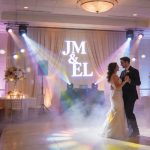
- Monogram Gobos: A clean way to brand a dance floor, wall, or backdrop with initials or an event identity.
Field note: The best effect is the one guests remember without being able to name the hardware behind it.
Photo booths and video coverage do different jobs
People often lump these together, but they serve different parts of the night.
A photo booth gives guests something active to do. It’s social and immediate. Drone coverage and videography do something else. They preserve scale, movement, and location. In Duluth, where venue surroundings often matter as much as the room itself, that distinction becomes important. A ballroom with a lake view and an estate on the hill don’t deserve the same visual treatment.
Personalization works best when these tools are chosen for the venue, the audience, and the pacing of the event, not because they looked trendy on a checklist.
Bringing Duluth Venues to Life Venue Specific Magic
A production plan should change with the room. That’s where many dj duluth mn searches come up short. They treat every venue like it needs the same setup, the same lighting style, and the same footprint.
It doesn’t.

DECC needs scale without emptiness
The DECC is one of the clearest examples of why venue-specific strategy matters. Its wedding venue details list the Harbor Side package at $4,925 for 250 to 450 guests, and that package includes the ballroom, dressing rooms, roof deck, skirted DJ tables, and dance floors. Those built-ins can reduce setup time by 45 minutes, which changes how a production crew allocates time and budget inside the room.
That matters because large lakefront spaces can feel amazing once they’re full, but visually cold when they’re only half-active early in the evening.
For DECC, the smart move usually looks like this:
- Use uplighting to define the perimeter so the room feels intentional before dancing starts.
- Keep speech audio focused and clean because large rooms punish muddy microphone work fast.
- Reserve effects for key moments instead of running everything all night.
- Place the dance floor visually at the center of the room’s identity so guests understand where the action lives.
A Harbor Side reception often benefits from a monogram projection or a focused lighting wash that draws attention inward. Without that, the room can feel wider than the event itself.
Historic estates need restraint
Glensheen and similar estate-style venues ask for a different hand. You don’t force a nightclub look into a historic property. The production style should feel discreet, polished, and almost invisible until the key moments happen.
That usually means smaller visual footprints, careful speaker placement, and lighting choices that respect existing architecture. A soft color wash can add atmosphere without flattening the room’s character. A poor setup does the opposite. It makes an elegant venue feel rented instead of lived in.
Historic spaces reward control. The goal is to support the architecture, not compete with it.
This is also where drone coverage can make sense if the venue permits it and the timeline supports it. At a property with visual scale, aerial footage captures context that indoor camera angles can’t.
Barns and rural venues need practical planning
Rustic venues outside central Duluth often look simple on paper and become complicated on load-in day. The issues are rarely aesthetic first. They’re operational.
Common friction points include:
- Long carry distances from parking or loading areas
- Outdoor ceremony locations away from the reception room
- Power access that isn’t where you want it
- Sound spill from hard walls, metal surfaces, or open doors
- Quick weather pivots that affect ceremony audio
The strongest production plans for these spaces build flexibility in from the start. Separate ceremony and reception sound can matter. Lighting should help shape the room after dark because rustic venues often rely heavily on ambient fixtures that look warm but don’t do much for dance energy.
A good barn setup feels easy to guests. Behind the scenes, it usually took more forethought than a downtown ballroom.
Corporate venues need branding without stiffness
When companies book Duluth venues for banquets, annual meetings, or donor events, they often lean too hard in one direction. Either it feels overproduced and corporate, or it feels like a wedding setup with a logo dropped on top.
The middle ground works better. Brand colors should appear in lighting. Music should fit the audience without sounding generic. Stage announcements should be clean and brief. If there’s an awards segment or keynote, the production should support credibility first, then loosen up once the formal program ends.
If you’re still comparing locations, a venue choice affects everything from load-in to visual design. This guide on how to choose a wedding venue is useful because it pushes the conversation past aesthetics and into logistics.
Here’s a quick venue-by-venue view:
| Venue type | Production priority | Best visual move | Common mistake |
|---|---|---|---|
| DECC ballroom | Warm up scale and define focal points | Perimeter uplighting and a central projection | Letting the room feel too wide early |
| Historic estate | Respect architecture | Subtle lighting and discreet audio | Overlighting the space |
| Barn or rural hall | Build flexibility | Layered lighting for evening mood | Underestimating setup logistics |
| Corporate event room | Support brand and program flow | Color-based lighting accents | Making it feel too stiff |
A short video gives a good sense of how movement, lighting, and room energy work together during a live event.
The point isn’t to bring the same package to every room. The point is to make the venue feel like it was designed for your event.
The Process and Packages Your Path to an Amazing Event
Relaxation comes with understanding the process. Unknowns create stress. A clear booking path gets rid of a lot of it.
How the planning usually works
A solid DJ and production process starts with a conversation about the event itself, not a pitch about gear. The basics come first. Venue, guest mix, timeline, floor plan, ceremony needs, formalities, and the overall tone of the night.
After that, the planning gets more technical:
Define the event flow
Figure out what has to happen, in what order, and what needs audio support.Match the room to the setup
This includes speaker placement, mic needs, lighting zones, and visual priorities.Build the music approach
Not just must-play songs. Also crowd age range, energy preferences, and any do-not-play boundaries.Choose enhancements carefully
Add uplighting, a Gobo, cold sparks, a photo booth, or video coverage only if they suit the room and the goal.
What entry-level to premium usually looks like
In Duluth, professional DJ packages from top-tier providers typically start around $750 for a 4 to 6 hour reception, including UHD Pro Audio systems and intelligent lighting, with monogram Gobo projections often added for personalization, based on this average wedding DJ cost discussion.
The important part isn’t only the starting figure. It’s what changes as you move up in scope.
| Package level | Usually includes | Best fit |
|---|---|---|
| Starter | DJ/MC coverage, core reception sound, basic intelligent lighting | Smaller receptions and straightforward timelines |
| Mid-range | Expanded lighting design, additional sound support, more customization | Most weddings and polished private events |
| Premium | Visual effects, branded or personalized touches, multi-part coverage | High-impact weddings, gala events, and complex productions |
Where budgets get spent wisely
Some add-ons produce visible value immediately. Others only make sense if the venue can support them.
Good budget priorities often look like this:
- Spend first on sound and MC control: If guests can’t hear toasts or the timeline feels awkward, no effect will fix that.
- Use lighting to transform plain rooms: This is often the most noticeable upgrade per dollar in neutral venues.
- Add personalization when the base is already strong: Gobos, booth activations, and special effects work better once the fundamentals are handled.
If the budget is tight, improve the room before you chase novelty.
What doesn’t work
The most expensive mistake isn’t necessarily booking a high rate. It’s splitting responsibilities among too many partial vendors without one person owning the flow.
That’s when timing slips, someone misses a cue, a speech starts before the mic is ready, or the lighting never changes after dinner because nobody was assigned to think about it.
Clear packages help because they define scope. Even if you build a custom plan, everyone should know what’s covered, what’s optional, and who’s responsible for each transition.
For most Duluth events, the best package isn’t the biggest one. It’s the one that matches the venue and removes friction from the night.
Ready to Create Your Lasting Memory
The right dj duluth mn choice does more than fill a dance floor. It gives structure to the event, confidence to the host, and a room that feels like it belongs to the moment instead of just being rented for it.
That’s the part people remember. Not the equipment list. Not the planning emails. They remember how smooth the introductions felt, whether the speeches landed clearly, how the room looked once the lights dropped, and whether the night ever lost momentum.
When production is handled well, you get to be present. Couples enjoy their reception. Corporate hosts can focus on guests instead of cueing the next announcement. Party organizers stop troubleshooting and start participating.
The strongest events in Duluth usually share the same trait. Someone made venue-specific decisions instead of applying a generic setup.
A good response from guests often sounds simple: everything felt easy, the room looked right, and the night never dragged. That’s usually the result of careful planning, controlled execution, and a production team that understands how Northern Minnesota venues behave.
If that’s the kind of event you want, the next move is simple. Start a conversation early, share the venue, talk through the timeline, and build from there. The less guesswork you leave for event day, the more freedom you’ll have to enjoy it.
Your Questions Answered
How do DJs handle outdoor events in Duluth weather
Outdoor events in this area need more than a speaker and an extension cord. Wind, temperature swings, open space, and last-minute weather changes all affect sound and setup.
That matters even more as outdoor events keep gaining attention around regional gatherings. In Duluth, that trend has been tied in part to large-scale seasonal events such as the June 26 to 27, 2025 Duluth Airshow, which drew strong public attention and reinforces the need for weather-resilient setups and high-volume sound systems for large open areas, as discussed in this Duluth Airshow feature from B105 Country.

For outdoor weddings and private events, ask about:
- Weather backup plans: Indoor pivot, tent coordination, and timeline flexibility.
- Coverage strategy: Open air changes how sound travels. The ceremony area and reception area may need different solutions.
- Power planning: Outdoor sites often have workable power, but not always where you want it.
- Effect suitability: Some visual effects make more sense after sunset or in protected spaces.
How far outside Duluth will a DJ travel
That depends on the company, the event size, and the logistics involved. Many crews serve the wider Northern Minnesota area and Lake Superior region, especially for weddings, retreats, and destination-style events.
The better question is what changes when travel is involved. Load-in windows, lodging, venue access, and backup planning matter more than the mileage itself. If your event is outside town, confirm those details early.
How do you build a playlist for mixed age groups
The best mixed-crowd music planning isn’t about trying to please every person with every song. It’s about sequencing. Start with broad familiarity, use transitions carefully, and avoid getting stuck in one era for too long unless the crowd clearly wants it.
A practical music conversation should cover:
- Must-play songs: The songs that define the event for you.
- Do-not-play songs: Just as important, especially for weddings.
- Guest profile: Family-heavy, younger crowd, professional audience, or a true mix.
- Energy goals: Background elegance, party atmosphere, or somewhere in the middle.
If you want a smart planning shortcut, this list of questions to ask your wedding DJ is useful because it gets into timing, music style, coordination, and backup thinking.
A good mixed-age dance floor usually comes from smart sequencing, not from chasing every request in real time.
Do I need uplighting at my venue
Not always. Some rooms already carry their own visual character. Others need help.
Uplighting makes the biggest difference in ballrooms, neutral banquet spaces, and larger rooms that feel plain once guests enter. In highly decorative venues, subtle lighting is often enough. The goal is to support the room, not repaint it.
Are cold sparks and monogram projections worth it
Sometimes yes. Sometimes no.
They’re worth it when there’s a clear moment attached to them. A first dance, a grand entrance, a branded gala reveal, or a focused dance floor statement can all justify the choice. They’re less useful when they’re added late without considering venue layout, ceiling height, guest sightlines, or timing.
What should I ask before I book a DJ in Duluth
Start with the issues that affect the night directly:
- How will you handle my specific venue
- What’s included in the base setup
- How do you manage timeline transitions
- What happens if the weather changes
- How do you balance dinner music, speeches, and dancing
- Which add-ons fit my room
Those questions reveal a lot faster than asking for a giant song list or a vague promise to “keep the dance floor packed.”
If you want help turning a venue, a timeline, and a rough idea into a polished event, talk with 1021 Events. A short consultation can clarify what fits your space, what’s worth adding, and what you can skip so the final plan feels intentional from start to finish.