You’re probably in one of two places right now.
Either you’ve started planning an event and realized entertainment affects almost everything, or you’ve already looked at a few DJ websites and noticed they all sound the same. Great music. Great energy. Great memories. That doesn’t help much when you’re trying to decide who can carry a wedding reception, support a corporate timeline, or keep a fundraiser lively without making it feel chaotic.
That’s often where clients get stuck. They think they’re hiring someone to play songs, when they’re really hiring someone to shape the pace, sound, mood, and guest experience of the entire event.
A good dj entertainment company isn’t just a music vendor. It’s an experience architect. The right team helps a room feel polished before guests arrive, keeps announcements clear, builds energy at the right moments, and knows when to step back so the event still feels like yours. If you’re planning a wedding, corporate function, private party, or charitable event, that difference matters more than most hosts realize at the start.
The Difference Between a Party and an Experience
You can feel the difference almost immediately when you walk into a well-produced event.
One room has music playing. People mingle. The schedule sort of happens. The transitions are awkward. The lighting is whatever the venue already had. Nothing is technically wrong, but nothing feels intentional either.
The other room feels designed. Guests know where to look. The sound is clear without being harsh. The entrance lands. The dinner mood feels warm. The dance floor opens with confidence instead of hesitation. That doesn’t happen by accident.

What hosts are really feeling
Most clients don’t start by saying, “I need an experience architect.”
They say things like:
- “I need the night to flow.” They’re worried about awkward gaps.
- “I want people dancing, but not forced.” They want energy that feels natural.
- “I need someone reliable.” They don’t want to manage vendors on event day.
- “I want it to feel like us.” They care about atmosphere, not just logistics.
Those are all entertainment questions, even when they don’t sound like it.
A seasoned DJ entertainment company reads those concerns and translates them into decisions about timing, floor layout, microphone use, lighting color, song pacing, effects, and guest interaction. That’s a much broader job than pressing play.
Why this matters more than people expect
Music touches every part of an event because it connects moments that would otherwise feel separate.
The ceremony, cocktails, dinner, speeches, entrances, first dance, presentations, photo ops, and open dancing all need a thread holding them together. A strong entertainment team creates that thread. They make the night feel like one complete story instead of a stack of unrelated segments.
Practical rule: If your entertainment provider only talks about playlists, you’re not hearing the full plan.
That’s why the best results usually come from companies that think in layers. Sound. Timing. Lighting. Hosting. Visual moments. Guest comfort. Backup planning. They don’t just ask what songs you like. They ask how you want the room to feel.
And that’s the shift that makes planning easier. Once you stop seeing the DJ as a stand-alone vendor and start seeing them as the person guiding the atmosphere, your questions get better. Your decisions get clearer. Your event starts to take shape in a more realistic way.
Beyond the Playlist What a DJ Entertainment Company Really Does
Hiring a solo DJ is a bit like hiring a talented chef for a dinner. Hiring a DJ entertainment company is more like bringing in a full event dining team. The food may still be excellent in both cases, but the second option usually covers timing, service flow, setup, cleanup, coordination, and the overall guest experience.
That same difference shows up in entertainment.
A single DJ may be good at mixing music. A company usually brings a broader system. That system often includes music curation, MC work, sound planning, coordination with other vendors, and contingency prep. For clients, that means fewer loose ends.
The DJ as music curator
A professional DJ doesn’t just build a playlist. They shape momentum.
That includes selecting songs that fit the room, deciding when to raise or lower energy, and blending tracks in a way that feels smooth rather than abrupt. According to a corporate event DJ guide, professional DJs manage sound so music supports the event instead of overpowering it, often keeping background audio around 70 to 85 dB in appropriate settings, and they use techniques like harmonic mixing in compatible keys, which can reduce audible errors by up to 80% (PTP DJ guide).
If you’ve ever heard a transition that made the room feel clunky, that’s usually not bad luck. It’s a skill gap.
Good DJs also read a room in real time. If guests are talking comfortably during dinner, they don’t force dance-floor volume. If a dance set is working, they don’t interrupt momentum with the wrong request at the wrong moment.
For a practical example of what a full-service approach can include, some companies bundle the music side with hosting and production support, like the options outlined at https://1021events.com/dj-and-entertainment/.
The MC as the voice of the event
The MC role confuses a lot of clients because they assume it means someone loud, cheesy, or overly theatrical.
A skilled MC does almost the opposite. They give structure without stealing attention. They make announcements cleanly, pronounce names correctly, cue the next part of the evening, and help guests understand what’s happening without sounding like a game-show host.
That matters at weddings when you need to move from cocktails to entrances to dinner. It matters at corporate events when timing and professionalism are essential. It matters at fundraisers when there are speeches, donation pushes, and transitions that need to feel polished.
The behind-the-scenes team
This is the part many hosts don’t see until something goes wrong at an event that wasn’t properly managed.
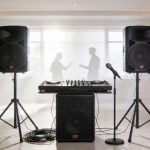
A DJ entertainment company often acts like a quiet production team. They coordinate load-in timing, speaker placement, microphone checks, cue points, room transitions, and communication with planners, venue staff, photographers, and videographers.
Here’s what that can look like in practice:
Before the event
They review the timeline, special songs, pronunciation notes, venue rules, and power access.During setup
They position speakers and microphones to improve clarity and reduce feedback.During the event
They track timing changes and adjust without making the event feel rushed or disorganized.If something shifts
They adapt. A late dinner, extended speech, or weather delay doesn’t derail the entire night.
A calm event usually has a lot of invisible decision-making behind it.
Why the system matters
A lot of event stress comes from handoffs. One person handles music. Another handles announcements. Someone else manages lighting. No one owns the experience as a whole.
That’s when little issues pile up. The room is too bright for dancing. The speech mic squeals. The introduction starts before the photographer is ready. The first dance song starts at the wrong point.
A DJ entertainment company reduces those gaps because the work is connected. The music supports the timeline. The MC supports the room. The technical setup supports both.
That doesn’t mean every event needs the largest package possible. It means clients should understand what they’re buying. You’re not just hiring someone to stand behind a booth. You’re hiring a coordinated process.
Crafting the Vibe Core Services and A-La-Carte Add-Ons
Once you understand the entertainment company’s role, the next question is simpler. What builds the atmosphere?
The initial focus is often on songs. Songs matter, but the feeling of an event comes from several layers working together. The foundation handles clarity and flow. The next layer shapes the room itself. The final layer creates moments guests remember later.

The foundation
If the basics aren’t right, no add-on can save the event.
That foundation usually starts with DJ and MC services, plus a sound system that fits the venue. Sound isn’t glamorous on paper, but guests notice it instantly. If the music is muddy, speeches are uneven, or the volume is harsh, the room feels off no matter how pretty the decor is.
The equipment side matters too. The global DJ equipment market was valued at USD 552 million in 2024 and is projected to reach USD 884 million by 2032, with a projected 7.1% CAGR, driven by demand for professional gear. The same market report notes that pro-grade controllers from brands such as Pioneer DJ and Denon DJ can reduce setup time by 30% to 50% (Intel Market Research). For clients, the takeaway is simple. Better gear doesn’t just look more polished. It helps a team set up efficiently and deliver cleaner audio.
If you’re comparing service options, it helps to look at what’s included in a real package structure, such as https://1021events.com/dj-lighting-package/.
What basic lighting actually does
Clients often treat lighting like a decorative extra. It’s usually more important than that.
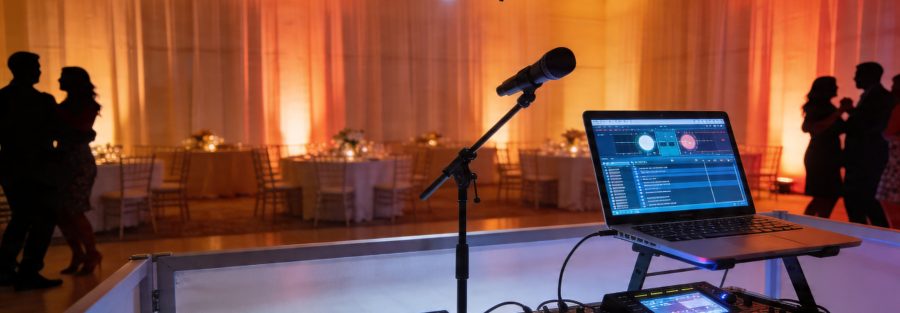
Basic lighting helps guests see focal areas, softens empty corners, and tells the room when the event mood is shifting. Dinner lighting should feel different from dance-floor lighting. A formal corporate program should look different from an after-party. Even subtle changes can make the room feel more intentional.
The atmosphere shapers
At this point, an event starts feeling custom instead of standard.
Uplighting
Uplighting changes the architecture of a room without changing the room itself.
Wall color, ceiling features, draping, and columns all look different once they’re lit with purpose. Warm tones can make a ballroom feel romantic. Cooler tones can make a corporate event feel sleek. Brand colors can reinforce identity without turning the event into a billboard.
Haze and visual depth
Atmospheric haze is one of those tools guests notice without always knowing why.
It helps light beams show up in the air, gives the room visual texture, and makes dance lighting feel more dimensional. Used lightly and professionally, it creates depth rather than fog. That’s useful when you want a dance floor to feel immersive instead of flat.
The room doesn’t have to be extravagant to feel dramatic. It just has to be designed with intention.
Custom playlists and music design
This part is more layered than “must-play” and “do-not-play” lists.
A thoughtful entertainment partner looks at the arc of the event. Cocktail music should support conversation. Dinner music should sit comfortably under the room. Open dancing should start with confidence. The best playlists are usually built around guest behavior, not just favorite songs in isolation.
The unforgettable moments
These are the features people often talk about the next day because they created a clear memory marker.
Cold sparks
Cold sparks add a ceremonial feel to a big moment.
Used for entrances, first dances, reveal moments, or exits, they create visual punctuation. The effect says, “this moment matters.” It works because it’s brief and timed, not constant.
Monogram Gobo projections
A monogram Gobo turns the floor, wall, or backdrop into a personalized visual feature.
For weddings, it can reflect initials or a shared name. For corporate events, it can reinforce branding. For charity events, it can display a campaign message, sponsor identity, or event mark in a way that feels integrated into the room.
Photo booths
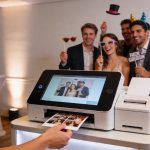
A photo booth isn’t just an activity. It’s a pressure-release valve.
Not every guest wants to dance. Some want a smaller, social form of participation. Photo booths give those guests something fun and easy to do, while also creating keepsakes that outlast the event itself.
Photo and video coverage
Entertainment and memory preservation overlap.
A room can look amazing in person, but if no one captures it well, part of the investment disappears after the night ends. Event photo and video teams can document not just people, but atmosphere. Wide room shots, dance-floor energy, details in the lighting, and aerial drone footage all help tell the full story later.
A simple way to think about add-ons
Here’s a useful filter when you’re deciding what to include:
| Layer | What it affects | Example result |
|---|---|---|
| Foundation | Clarity and flow | Guests can hear speeches and follow the event naturally |
| Atmosphere | Mood and visual identity | The room feels romantic, polished, modern, or branded |
| Memory makers | Shareable and emotional moments | Guests remember the entrance, dance floor, or photo booth experience |
A strong event usually includes at least one service from each layer.
That’s why the dj entertainment company model works so well when done properly. It treats the night as an environment, not a playlist. Sound makes the event function. Lighting makes it feel intentional. Effects and media make it memorable.
How to Evaluate and Hire the Right Entertainment Partner
Entertainment is one of those categories where a polished website can hide a lot. Good photos don’t tell you how a team handles pressure, whether they prepare properly, or what happens if the timeline changes an hour before guests arrive.
That’s why hiring well matters. In a highly competitive DJ market, only 1.6% of DJs are booking five or more gigs at a time, out of more than 134,147 DJ profiles tracked globally (Attack Magazine’s analysis of DJ economics). The point isn’t to chase hype. It’s to remember that true working professionals are a small slice of a very crowded field.

Start with process, not personality
Personality matters. You want someone calm, clear, and pleasant to work with.
But process tells you more.
Ask how they plan events. Ask what information they need from you. Ask how they handle timelines, announcements, song requests, venue coordination, and backup gear. A professional should answer those questions easily because they’ve built a repeatable system.
If you’re comparing vendors across categories, not just entertainment, this outside guide on how to choose the best service is useful because it focuses on the basics clients often overlook, like communication standards, professionalism, and what to verify before committing.
Look for proof of range
Some DJs are strong in clubs and weak at weddings. Some are polished in weddings but awkward at corporate programs. Some can mix well but don’t know how to host a room.
You’re not just hiring for taste in music. You’re hiring for the type of event you’re producing.
A company that handles parties, weddings, and business events should be able to explain the differences in tone without sounding confused. A wedding MC needs warmth. A corporate MC needs restraint. A fundraiser needs emotional timing and strong cueing.
10 essential questions to ask before signing a contract
Who will be at my event?
Don’t assume the person on the sales call is the person performing.How do you build the timeline with other vendors?
You want coordination, not isolation.What does your MC style sound like in real life?
Ask for examples. “Fun” means different things to different people.What equipment do you bring for sound and microphones?
This reveals how seriously they take technical execution.What is your backup plan if gear fails or someone gets sick?
A real answer should be specific.How do you handle guest song requests?
The answer should balance flexibility and crowd control.What do you need from us before the event?
Organized teams usually have a planning workflow.How do you adapt if the timeline changes on the day of the event?
This tells you whether they stay calm under pressure.Can we review sample mixes, event footage, or live clips?
Edited promo reels aren’t enough by themselves.What is included in writing?
If it’s not in the agreement, treat it as uncertain.
If you want to compare what a dedicated party-focused service setup can look like, review https://1021events.com/hire-a-party-dj/.
5 red flags that signal you should walk away
They stay vague about equipment.
If they can’t explain their setup clearly, planning may be sloppy.They promise to do everything.
Overpromising usually shows up later as under-delivery.They don’t ask many questions about your event.
A company that doesn’t ask about your crowd, venue, and schedule probably uses the same template for everyone.Their contract is thin or confusing.
Clarity protects both sides.Their communication feels inconsistent before you book.
It usually doesn’t improve after money changes hands.
Here’s a useful video to watch while you evaluate options:
Hiring gets easier when you stop asking, “Do I like this DJ?” and start asking, “Do I trust this team to carry the room?”
That question changes everything. It moves you away from hype and toward reliability.
Bringing the Vision to Life Sample Event Packages
Packages make more sense when you stop reading them like price menus and start reading them like design plans.
The right mix of services depends on the event’s purpose. A wedding usually needs emotional pacing. A corporate gala needs polish and brand control. A fundraiser often needs both celebration and strategic energy. The package should reflect that goal.

The elegant wedding
A couple wants the reception to feel romantic at first, then lively later. They don’t want a club atmosphere from the opening minute. They want guests to feel welcomed, speeches to land clearly, and the dance floor to build naturally.
The service mix for that kind of event usually starts with a DJ and MC, clean ceremony and reception sound, and lighting that flatters the room rather than overwhelms it. Then come the emotional accents. Soft uplighting during dinner. A monogram projected onto the floor. Cold sparks for a first dance or grand exit. Photo coverage and video that capture both people and room atmosphere.
What makes this package work isn’t the number of features. It’s pacing. Each layer appears at the right time.
The branded corporate gala
A company is hosting clients, executives, and team members in the same room. The event needs to feel professional without becoming stiff. Announcements need to be clear. Transitions must stay tight. Visual branding should be visible, but not tacky.
In that setting, the entertainment plan usually centers on control and consistency. The MC style stays measured. Sound coverage supports speeches, video playback, and room announcements. Lighting often supports the brand palette. A Gobo or projection element can reinforce identity at the entrance or on a focal wall. A photo booth with a custom backdrop gives guests a simple interactive feature without disrupting the schedule.
This kind of event benefits from restraint. The room should feel intentional, not overloaded.
The high-energy charity fundraiser
A fundraising event has a different rhythm. It needs warmth, momentum, and moments that encourage participation.
That often means a more dynamic music plan, strong cueing around live appeals or key speeches, and visual choices that help the room feel active. Lighting changes matter here because they can signal transitions from dining to program moments to post-program celebration. A photo booth can keep guests engaged during quieter windows. Video and drone coverage can help the organization tell the story afterward.
This is also where values can shape the event. Some hosts want entertainment that reflects the mission and audience with care, especially when the crowd is diverse or community-centered. That’s a smart consideration because tone matters as much as energy at a charitable function.
The strongest event package is the one that solves the event’s purpose, not the one with the longest feature list.
Sample Event Packages by 1021 Events
| Event Type | Core Services | Atmosphere Add-Ons | Key Outcome |
|---|---|---|---|
| Elegant Wedding | DJ/MC, ceremony and reception sound, timeline coordination | Uplighting, monogram Gobo, cold sparks, photo and video coverage | Romantic flow early, confident dance-floor energy later |
| Branded Corporate Gala | DJ/MC, clear speech support, structured cueing | Brand-colored lighting, logo projection, custom photo booth backdrop | Professional tone with a polished branded environment |
| High-Energy Charity Fundraiser | DJ/MC, program support, announcement management | Dynamic lighting, photo booth, video coverage, aerial visuals | Stronger room engagement and more memorable mission moments |
If you want to see how entertainment and guest interaction can be bundled together, https://1021events.com/photo-booth-and-dj-packages/ shows one example of how those pairings can be structured.
What clients usually get wrong about packages
They often shop by item count instead of outcome.
They compare one company’s list of included services against another company’s list without asking how those services work together. A package with fewer elements can produce a better event if the design is more thoughtful. A package with every possible extra can still feel disjointed if there’s no clear plan for when and why each feature appears.
That’s the core value of working with a dj entertainment company that thinks like a planner. The question isn’t, “What can you add?” The better question is, “What will help this room feel the way we want it to feel?”
When clients ask that, package decisions get much easier.
Your Event Is More Than a Party It Is a Memory
Events are often remembered in fragments.
They remember how the room felt when they walked in. They remember whether speeches were easy to hear. They remember one transition that felt smooth, one song that brought everyone to the floor, one visual moment that made the night feel bigger than expected. That’s why entertainment matters so much. It connects those fragments into a memory that feels complete.
A strong dj entertainment company helps build that memory on purpose.
Not by making the event louder. Not by stuffing it with random effects. By understanding what the event needs, matching the tools to the moment, and keeping the whole experience cohesive from start to finish. That might mean crisp sound and calm hosting at a corporate function. It might mean warm lighting and a well-timed dance-floor build at a wedding. It might mean interactive features and mission-sensitive pacing at a charity event.
The details matter because guests feel them even when they can’t name them.
The right music mix, the right announcement style, the right visual layer, the right timing on a major moment. Those choices shape whether the event feels scattered or effortless. And when you’re hiring entertainment, that’s the standard worth aiming for.
If part of your event vision includes preserving the atmosphere on film, https://1021events.com/event-videography-services/ shows how video coverage can support that broader experience design.
The best planning decisions usually come from clarity. Know the feeling you want. Know the moments that matter most. Then choose a partner who can translate that vision into sound, timing, lighting, and guest experience without making you manage every moving part yourself.
If you’re planning an event and want help turning ideas into a full guest experience, 1021 Events offers DJ/MC services, lighting, effects, photo booths, and media coverage for weddings, corporate events, parties, and charitable functions. You can start the conversation with 1021 Events and discuss what kind of atmosphere, pacing, and memory you want your event to create.