
You've got a vision for a spectacular wedding, a game-changing corporate launch, or the party of the century. But turning that dream into a seamless reality? That's where a professional event planner comes in. Hiring the right one is arguably the single most important decision you'll make in the entire process. The wrong choice can lead to budget blowouts, vendor nightmares, and a mountain of stress. The right one ensures a flawless, unforgettable experience where you actually get to relax and enjoy your own event.
So, how do you distinguish the true professionals from the rest? It all comes down to asking the right questions. This isn't just about finding someone who is available; it's about finding a strategic partner who understands your goals, can navigate complex logistics, and will advocate for your best interests from start to finish. Before you even begin to interview candidates, it helps to understand the full scope of what goes into organizing an event. Familiarizing yourself with a comprehensive event planning checklist can give you a solid foundation and help you frame more specific questions.
This guide provides the ultimate checklist of questions to ask an event planner before you sign any contracts. We’ll break down exactly what to ask, what to listen for in their answers, and the subtle red flags to watch out for. Think of this as your playbook for finding the perfect planner who can execute your vision flawlessly.
1. What Experience Do You Have With Events Similar to Mine?
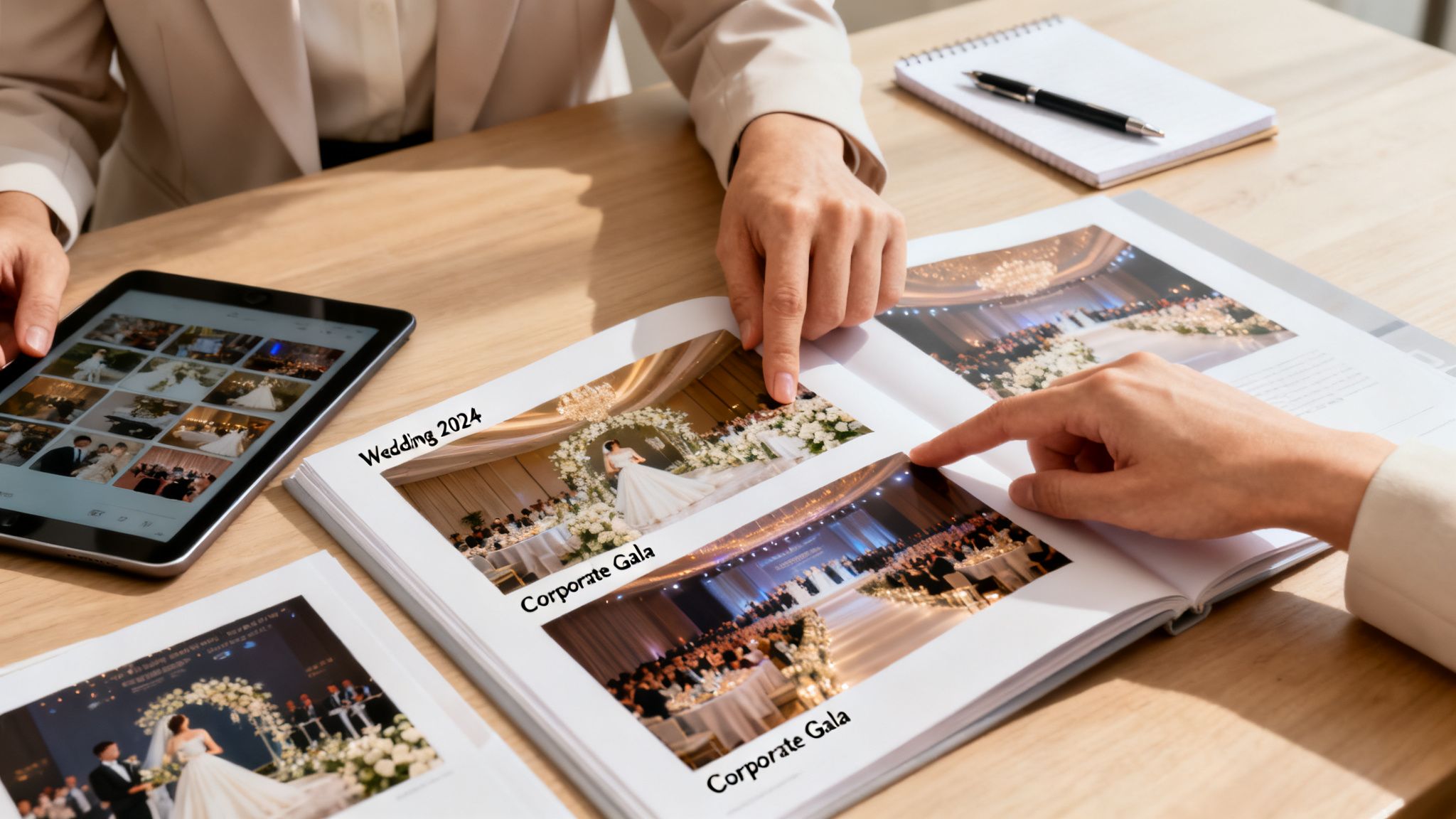
This question is your starting line, and it’s arguably one of the most important questions to ask an event planner. It cuts straight to the chase: can they handle your specific vision? An event planner might be brilliant at coordinating intimate 50-person weddings, but that skill set doesn't automatically translate to a 500-attendee corporate product launch. You're looking for proof they understand the unique nuances, vendor networks, and potential pitfalls of your type of event.
Think of it like hiring a specialist. If you needed heart surgery, you wouldn't go to a general practitioner. Similarly, for a high-stakes charity gala, you want a planner who has navigated donor expectations and fundraising logistics before, not someone whose primary experience is in sweet sixteen parties. At 1021 Events, we pride ourselves on a diverse portfolio, but we always lead with examples that directly match a client's needs to build that initial confidence.
Putting It Into Practice
Don’t just ask the question and accept a simple "yes." You need to dig deeper to truly gauge their expertise. Frame your inquiry with specific details about your event.
Actionable Follow-Up Questions:
- For a Wedding: "Have you planned a destination wedding for over 150 guests with events spanning multiple days? Can you walk me through the logistical challenges you faced and how you solved them?"
- For a Corporate Event: "Our goal is a tech product launch. Could you share a case study of a similar launch you managed, focusing on AV coordination and creating an immersive brand experience?"
- For a Charity Gala: "We need to raise $250,000 at our annual gala. What experience do you have with fundraising events of this scale, specifically with silent auctions and sponsor management?"
What to Look For (and What to Avoid)
A confident planner will be excited to share their successes. A hesitant or vague one might be a red flag.
Green Flags:
- Detailed Case Studies: They provide 3-5 examples of similar events, complete with photos, videos, and specific outcomes.
- Eager to Share References: They offer contact information for past clients who held similar events.
- Problem-Solving Stories: They openly discuss a challenge from a past event and explain their strategic solution.
Red Flags:
- Vague Answers: They say "we've done lots of events like that" but offer no specific examples.
- Portfolio Mismatch: The photos and events they show you don't align with the style, size, or complexity of your event.
- Hesitation to Provide References: A major warning sign that past clients may not have been satisfied.
2. What Is Included in Your Planning Services and What Are Additional Costs?
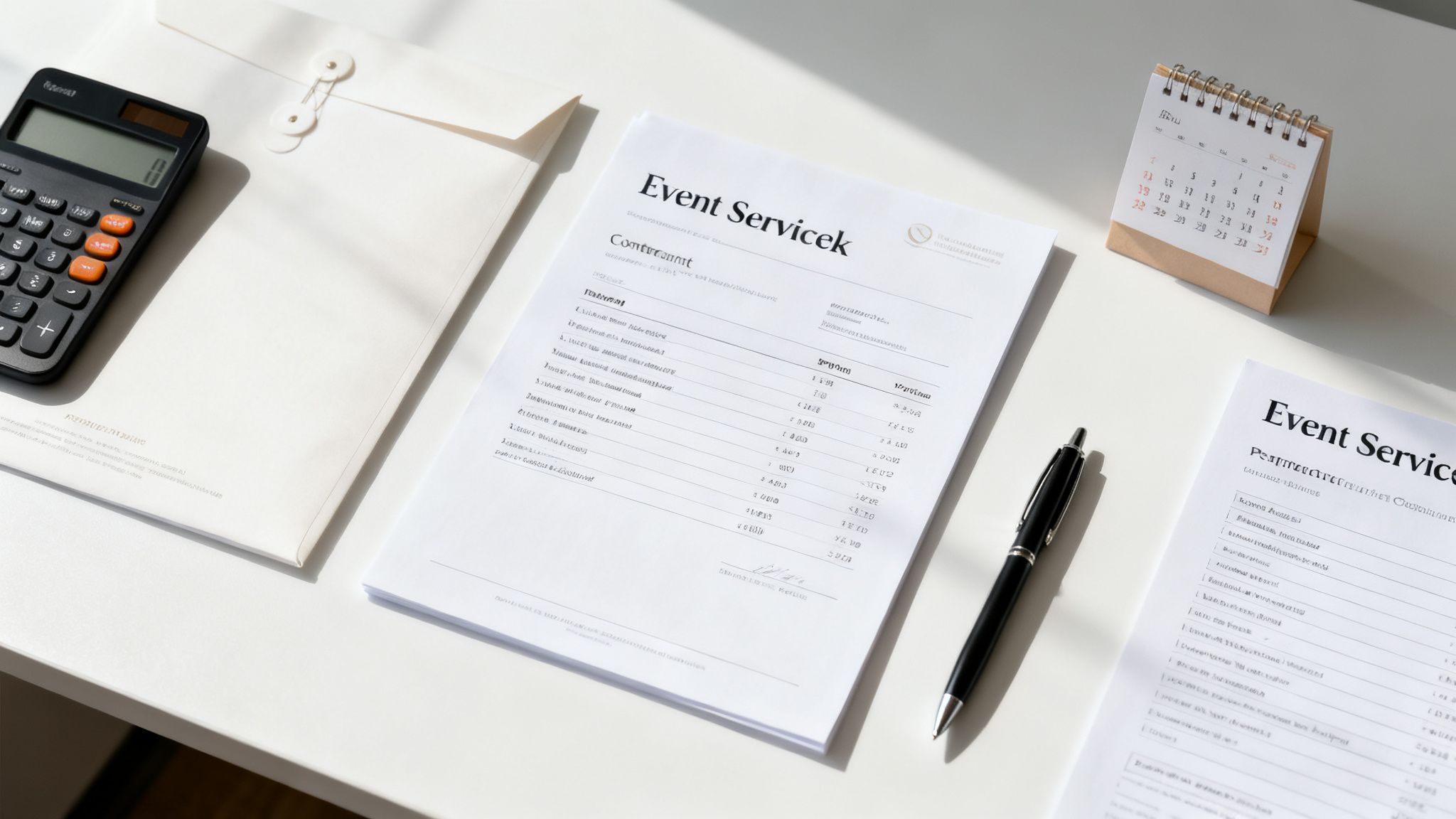
This is the "no surprises" question. A fantastic event planner might offer a range of packages, from full-service planning to day-of coordination, but the lines between them can get blurry. Understanding precisely what's included in their fee versus what counts as an "à la carte" extra is crucial for managing your budget and expectations. This question helps you avoid the dreaded scope creep, where small, un-budgeted additions snowball into a major expense.
You need to know if their base package covers vendor sourcing, contract negotiation, timeline creation, and on-site management, or if some of these are add-ons. For instance, at 1021 Events, we provide clients with a crystal-clear service menu from the start, detailing exactly what our planning fee covers and listing optional enhancements like advanced lighting design or special effects, so there's no confusion down the road.
Putting It Into Practice
Get granular with your questions to uncover any potential hidden fees. A professional planner will appreciate your thoroughness and have a detailed proposal ready.
Actionable Follow-Up Questions:
- For a Wedding: "Your package includes vendor management. Does that cover negotiating contracts and managing payments, or just providing a list of names? Is setup and teardown supervision included in your day-of coordination fee?"
- For a Corporate Event: "Does your fee include coordinating with the venue's AV team, or is there a separate tech management charge? If we add a branded photo booth last minute, how is that priced?"
- For a Private Party: "I see 'event design' is included. Does this cover creating digital mockups? Are services like sourcing custom monogram gobos or atmospheric effects like a fog machine considered extra?"
What to Look For (and What to Avoid)
Clarity and transparency are the goals. A planner who is upfront about costs is one you can trust with your budget.
Green Flags:
- A Detailed Proposal: They provide an itemized list of all included services and a separate menu of optional add-ons with clear pricing.
- No Vague Language: They use specific terms like "up to 10 hours of on-site coordination" instead of "day-of management."
- Clear Payment Schedule: The contract outlines the deposit, milestone payments, and final due date.
Red Flags:
- A Single, All-Inclusive Number: They give you one price without breaking down what it covers.
- "Don't Worry About It" Attitude: They dismiss detailed budget questions, which often leads to surprise bills later.
- Hidden Service Charges or Fees: They fail to mention administrative fees, travel costs, or taxes until the final invoice.
3. How Do You Handle Vendor Selection and Management?
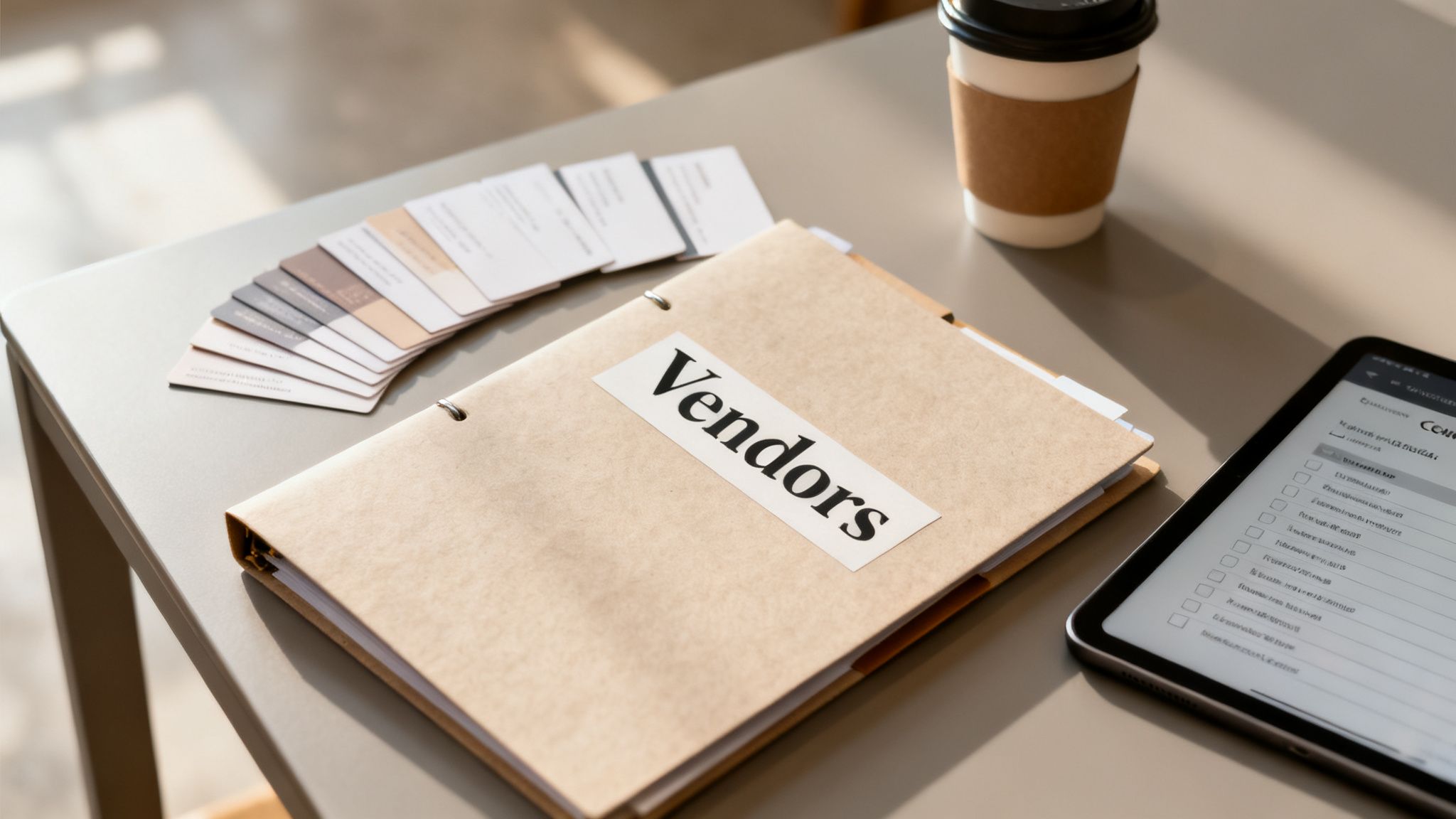
An event planner is like a conductor for an orchestra of vendors: the caterer, florist, photographer, AV team, and entertainer all need to play in perfect harmony. This question is crucial because it reveals how the planner curates, manages, and holds accountable the team of professionals who will ultimately execute your vision. Their process for selecting and managing these partners directly impacts the quality, reliability, and cost of your event.
A well-connected planner with strong, long-standing vendor relationships can unlock benefits you wouldn't get otherwise, such as better pricing, priority service, and a seamless collaborative spirit. At 1021 Events, we view our vendor network as an extension of our own team, ensuring every partner is vetted for quality, professionalism, and a shared commitment to excellence.
Putting It Into Practice
Simply asking if they have "good vendors" isn't enough. You need to understand their methodology, flexibility, and how they handle the inevitable hiccups that can occur.
Actionable Follow-Up Questions:
- On Vetting: "Can you describe your process for vetting a new vendor? What specific criteria do they need to meet to be added to your preferred list?"
- On Flexibility: "Am I required to use your preferred vendors, or can I bring in my own, like a photographer I already love? If so, how does that change our working relationship?"
- On Management: "How do you manage communication between all the vendors in the weeks leading up to the event and on the day itself? What’s your role if a vendor underperforms?"
- On Compensation: "Do you receive a commission or referral fee from the vendors you recommend? If so, is that disclosed to me?"
What to Look For (and What to Avoid)
A planner's vendor management style speaks volumes about their transparency, organization, and dedication to your event's success.
Green Flags:
- A Curated Preferred List: They have a well-organized list of trusted vendors in different budget tiers and are happy to explain why they recommend each one.
- Transparency About Fees: They are upfront about any commissions or management fees related to vendors.
- A Clear Management Plan: They can articulate their process for creating timelines, confirming contracts, and managing day-of logistics for all vendors.
Red Flags:
- Vendor Lock-In: They insist you can only use their vendors, with no flexibility. This can limit your options and may indicate they prioritize their commissions over your preferences.
- No Vetting Process: They can't explain how they qualify vendors, suggesting they might just pick the cheapest or most convenient option.
- Vagueness on Problem-Solving: They give a non-committal answer when asked how they'd handle a vendor issue, like a caterer running late.
4. What Is Your Process for Understanding My Vision and Preferences?
An event planner can have flawless logistics, but if the event doesn't feel like you, it's a missed opportunity. This question digs into their creative and collaborative process. You're trying to understand how they will translate your abstract ideas, Pinterest boards, and personal style into tangible design elements and a cohesive atmosphere. A great planner acts as a creative partner, not just a project manager.
Their process reveals how much they value personalization. Will they take the time to learn your company's brand ethos for a corporate retreat or understand the love story behind your wedding? At 1021 Events, our discovery phase is intensive; we use detailed questionnaires and collaborative mood boards to ensure every element, from a custom monogram gobo to the photo booth backdrop, perfectly reflects the client's vision.
Putting It Into Practice
Don’t settle for a simple "we'll talk about it." Ask for the specific tools and methods they use to capture and refine your creative vision. This is where you see if their process is structured for success.
Actionable Follow-Up Questions:
- For a Wedding: "How do you handle differing opinions between partners on key design elements? Can we see an example of a mood board or design proposal you created for a past couple?"
- For a Corporate Event: "Our brand guide is very specific. What is your process for integrating our brand colors, logos, and messaging into the event's design and AV presentations?"
- For a Private Party: "I have a lot of ideas but don't know how to connect them. Do you offer design concept services to help build a cohesive theme from scratch?"
What to Look For (and What to Avoid)
A planner who is passionate about design will be excited to walk you through their creative methodology. A planner who is purely logistics-focused may give this area less attention.
Green Flags:
- A Structured Discovery Process: They mention specific tools like questionnaires, shared Pinterest boards, or design software.
- A Collaborative Approach: They talk about design mockups, revision rounds, and client approval checkpoints.
- Personalized Examples: They show you how they incorporated a client's personality into past events (e.g., a custom cocktail named after a pet).
Red Flags:
- Process is Unclear: They can't articulate how they move from initial ideas to a final design.
- One-Size-Fits-All Mentality: They seem to push pre-set packages or themes without asking about your unique preferences.
- Dismissive of Your Ideas: They don't seem interested in your inspiration or quickly shut down your suggestions without offering alternatives.
5. How Do You Manage the Budget and Keep Costs Under Control?
This question moves past the creative vision and into the critical logistics of financial management. A beautiful event that blows the budget is not a success. This question helps you understand a planner's process for tracking expenses, handling unforeseen costs, and maximizing your return on investment. You're looking for a financial steward, not just a creative director. An effective planner is transparent, proactive, and strategic with every dollar.
Financial stress can ruin the planning experience. You need a partner who can prevent scope creep, find savings, and provide regular, clear updates. At 1021 Events, we build a detailed, line-item budget from day one and treat it as a living document, ensuring you always know where your money is going. This fiscal discipline is a core part of our service.
Putting It Into Practice
Ask them to walk you through their exact financial process. A good planner will have a clear, established system for managing client funds and will be happy to share it.
Actionable Follow-Up Questions:
- "What software or tools do you use for budget tracking, and how often can I expect to receive a financial report?"
- "Can you provide an example of how you negotiated with a vendor to secure a better rate or added value for a previous client?"
- "What is your process for handling budget changes or additions? How do we approve new expenses?"
What to Look For (and What to Avoid)
A planner's attitude toward budget management reveals their professionalism and business acumen. Listen for specifics, not just assurances.
Green Flags:
- Proactive Reporting: They have a set schedule (e.g., bi-weekly or monthly) for providing detailed budget-to-actual reports.
- Negotiation Stories: They share specific instances where they saved clients money, such as securing premium DJ services at 15% below market rate or recommending cold spark effects for dramatic impact at a lower cost than fireworks.
- Clear Change Order Process: They have a formal system for documenting and approving any changes that affect the budget.
Red Flags:
- "We'll make it work" Attitude: They are dismissive of budget concerns without providing a concrete plan.
- No Tracking System: They don’t have a specific tool or spreadsheet they can show you for managing finances.
- Hidden Fees: They are not transparent about their own fee structure or how vendor commissions are handled.
6. What Happens on the Day of the Event? What Is Your Role and Timeline?
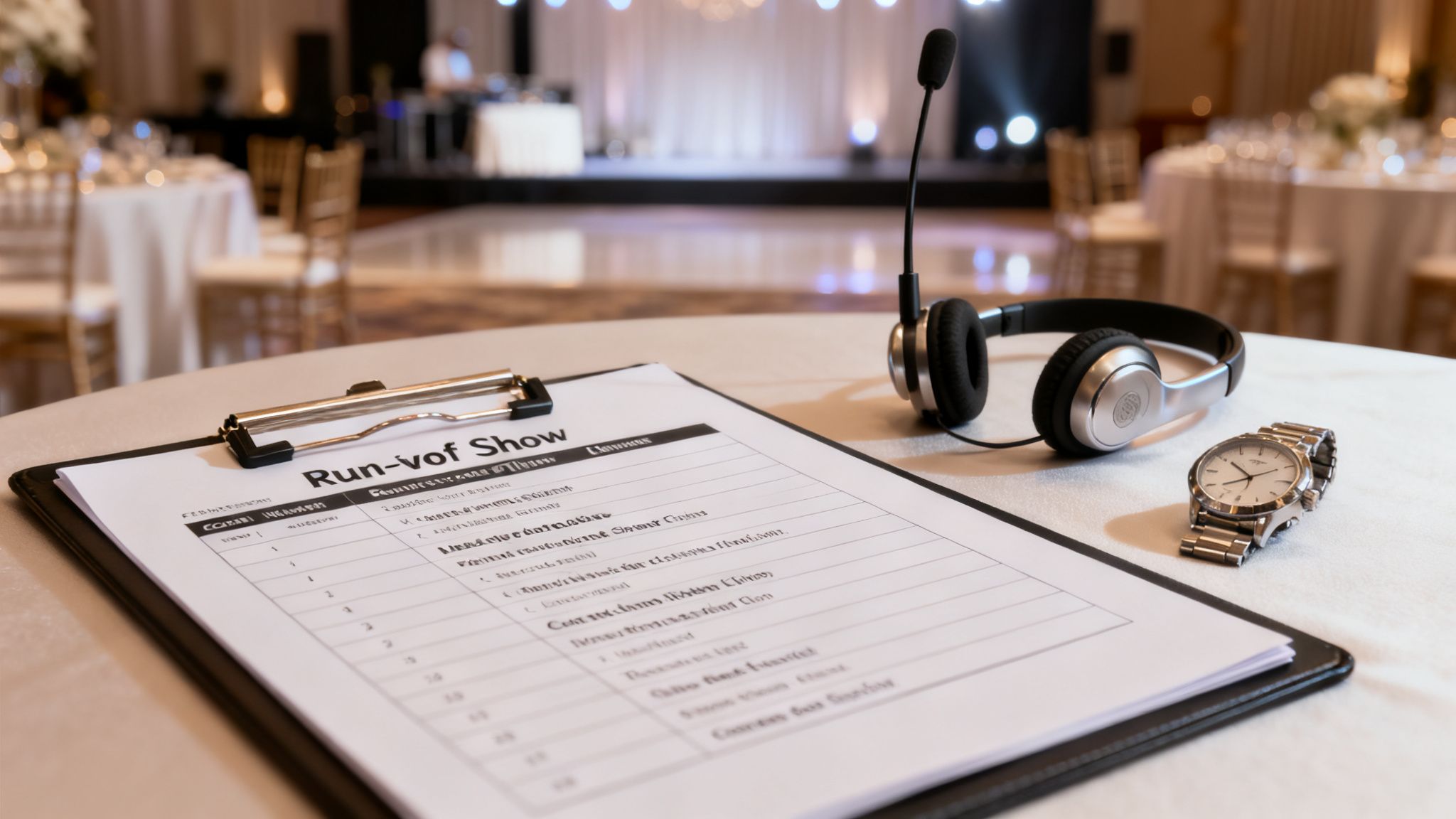
Planning is crucial, but flawless execution on the event day is what truly defines a great planner. This question drills down into their on-site process, revealing their hands-on involvement when it matters most. You're hiring them to manage the chaos so you can enjoy the moment, so you need to know exactly how they orchestrate the day, from the first vendor arrival to the final guest's departure.
A professional planner's role on the day-of is part director, part firefighter, and part logistical wizard. They are the central point of contact, ensuring the timeline flows smoothly and any unforeseen issues are resolved before you even know they exist. At 1021 Events, we build a comprehensive "run-of-show" that acts as our playbook, allowing us to manage everything from AV checks to photo booth setup with precision.
Putting It Into Practice
Go beyond a simple "will you be there?" to understand their entire day-of operational plan. Their answers will reveal their level of preparedness and commitment to your event's success.
Actionable Follow-Up Questions:
- "Can you provide a sample 'run-of-show' or day-of timeline from a previous event? How detailed does it get?"
- "What is your standard arrival and departure time on the event day? Do you have an assistant or team, and what are their specific roles?"
- "Walk me through how you handle a common day-of issue, like a key vendor running late or an equipment malfunction with the DJ or lighting."
What to Look For (and What to Avoid)
A proactive, detail-oriented response is a sign of a seasoned professional. Evasion or a lack of a clear plan is a major red flag.
Green Flags:
- A Detailed Timeline: They can produce a sample "run-of-show" that breaks the day down into 15-minute increments.
- Proactive Problem-Solving: They describe having contingency plans for common issues and a clear command structure for decision-making.
- Clear Team Roles: They can clearly articulate who will be on-site, when they will arrive, and what each person is responsible for.
Red Flags:
- No Formal Timeline: They say they "just go with the flow" on the day of the event.
- Vague Responsibilities: They can't clearly define their role or who the main point of contact will be for vendors and guests.
- Lack of Contingency Plans: They seem surprised by questions about what could go wrong, indicating a lack of experience in crisis management.
7. How Do You Handle Unexpected Problems or Changes on Event Day?
This is where a good planner proves they are worth their weight in gold. Meticulous planning is essential, but the true test of a professional is how they react when things inevitably go sideways. A sudden downpour during an outdoor ceremony, a key vendor stuck in traffic, or a technical glitch with the AV system can derail an event without a calm, experienced leader at the helm. This question uncovers their crisis management skills, resourcefulness, and ability to think on their feet.
You're not just hiring someone to execute Plan A; you're hiring a problem-solver who has already thought through Plans B, C, and D. An experienced planner anticipates potential issues and builds contingency plans into the event framework from day one. At 1021 Events, our run-of-show documents include specific contingency steps for common risks, ensuring we can pivot seamlessly without alerting you or your guests to the drama behind the scenes.
Putting It Into Practice
Go beyond asking if they have a backup plan. You want to hear about real-world scenarios where their improvisation and quick thinking saved the day. Frame your questions to understand their process under pressure.
Actionable Follow-Up Questions:
- General: "Can you tell me about the most significant unexpected challenge you've faced during an event and walk me through, step-by-step, how you resolved it?"
- For an Outdoor Event: "What are your specific contingency plans for severe weather? Do you have backup venues or tenting companies on standby, and what is the trigger point for making that call?"
- For a Tech-Heavy Event: "If our primary AV system or special effects equipment fails, what is your redundancy plan? Do you have backup gear or technicians on-site?"
What to Look For (and What to Avoid)
A great planner will see this question as an opportunity to showcase their expertise, not as an accusation that things will go wrong. Their response reveals their confidence and preparedness.
Green Flags:
- Specific Examples: They readily share stories of past challenges and their successful resolutions.
- A Clear Process: They describe a communication protocol for informing you of issues and explain what level of authority they have to make decisions on the spot.
- Proactive Mindset: They talk about "risk mitigation" and "contingency planning" rather than just "problem-solving."
Red Flags:
- Overconfidence: An answer like "nothing ever goes wrong at my events" is a major red flag. It shows a lack of experience or honesty.
- No Concrete Plans: They can't provide specifics about backup vendors, weather plans, or emergency protocols.
- Panicked Storytelling: The way they describe past problems sounds chaotic and reactive rather than calm and strategic.
8. Can You Provide References and Examples of Your Work?
Talk is cheap, but a portfolio and glowing references are solid gold. This question moves beyond what a planner says they can do and asks them to show you. It’s your chance to see their work through the eyes of past clients and witness their creative vision in action. A planner’s portfolio is their visual resume, while references are the firsthand accounts of their professionalism, problem-solving skills, and ability to deliver on promises.
Think of it as due diligence. You wouldn't buy a car without a test drive or read reviews, so why would you hire someone for a major event without checking their track record? A strong portfolio proves their aesthetic matches yours, and speaking with a past client can reveal how they handle pressure when, for example, the keynote speaker’s flight is delayed or a freak storm rolls in. At 1021 Events, we lead with our portfolio, showcasing everything from dynamic corporate lighting to elegant wedding photo booth setups, so you can see the quality before you even ask.
Putting It Into Practice
Don’t just glance at a few pretty pictures. Scrutinize the portfolio and be strategic when contacting references. This is your opportunity to get an uncensored look at their process and final product.
Actionable Follow-Up Questions:
- For Their Portfolio: "Could you show me a full gallery from one or two events that are similar in budget and style to mine? I'd love to see how the event flowed from start to finish, not just the highlight reel."
- For a Reference (Wedding): "How did the planner handle communication in the final weeks leading up to your wedding? Did they effectively manage the vendors and the timeline on the day of?"
- For a Reference (Corporate): "Was the planner respectful of your budget? Were there any unexpected costs, and how were they addressed?"
What to Look For (and What to Avoid)
A confident planner will be proud of their past work and happy to connect you with satisfied clients. Evasiveness is a major red flag that shouldn’t be ignored.
Green Flags:
- A Curated, Relevant Portfolio: They immediately pull up galleries of events that mirror your size, style, and complexity.
- Enthusiastic References: They provide a list of 3-5 recent clients who are expecting your call and happy to share their positive experiences.
- Strong Online Presence: They have a collection of 5-star reviews on sites like The Knot, WeddingWire, and Google that praise their creativity and professionalism.
Red Flags:
- Outdated or Irrelevant Work: The portfolio is from several years ago, or they can’t show you anything that looks like what you’re envisioning.
- "Confidentiality" Excuses: They claim they can’t provide references due to client privacy without offering any alternative solutions.
- Inconsistent Stories: The planner’s description of an event doesn’t quite match what their former client tells you.
9. Are You Insured and What Liability Coverage Do You Carry?
This question might feel a bit formal, but it's a non-negotiable checkpoint for hiring any legitimate event professional. Asking about insurance isn't about mistrust; it’s about risk management. Proper insurance coverage is the safety net that protects you, your guests, your vendors, and the planner from the financial fallout of accidents, property damage, or unforeseen disasters. It’s a clear indicator that you're dealing with a professional who takes their business and your investment seriously.
Think of it as the foundation of your event. Without it, one small accident, like a guest tripping over a cable or a vendor damaging a venue wall, could lead to a massive lawsuit with you in the middle. At 1021 Events, we view our comprehensive liability insurance not just as a requirement, but as a core part of the peace of mind we provide our clients. A planner without insurance is a risk you simply cannot afford to take.
Putting It Into Practice
Go beyond a simple "yes" to understand the specifics of their coverage. The details of their policy are what truly matter, so be prepared to ask for proof and clarification on what is and isn't covered.
Actionable Follow-Up Questions:
- "Could you please provide a Certificate of Insurance (COI) so we can review your coverage types and limits?"
- "Does your general liability policy meet the minimum requirements for our venue? Many venues require at least a $1 million policy."
- "What is your process for ensuring all vendors you hire for our event also carry their own liability insurance?"
What to Look For (and What to Avoid)
A professional planner will have their insurance information ready and will be happy to discuss it. Any defensiveness or hesitation is a major red flag.
Green Flags:
- Ready to Share: They immediately offer to send you their Certificate of Insurance (COI).
- Comprehensive Coverage: They carry, at a minimum, General Liability and Professional Liability (Errors & Omissions) insurance.
- Vendor Requirements: They have a standard procedure for collecting and verifying insurance from all subcontractors.
Red Flags:
- No Insurance: They claim they don't need it or that the venue's insurance is enough. This is a deal-breaker.
- Hesitation or Defensiveness: They act cagey or make you feel uncomfortable for asking about their policy.
- Refusal to Provide a COI: A legitimate business will always provide proof of their insurance coverage upon request.
10. What Is Your Communication Style and How Often Will We Connect During Planning?
Event planning is a partnership, and like any good relationship, it thrives on clear and consistent communication. This question sets the stage for your working dynamic, revealing how a planner keeps you informed, involved, and confident. A mismatch in communication styles can lead to missed details, unnecessary stress, and frustration, turning a collaborative process into a constant chase for updates. You're looking for a rhythm that matches your own preferences, whether you're a hands-on client who wants daily updates or someone who prefers a weekly summary.
The goal is to find a planner whose process feels transparent and reliable. A planner who proactively sets expectations for emails, calls, and meetings shows they respect your time and understand the importance of keeping you in the loop. At 1021 Events, we establish a communication plan from day one, ensuring our clients know exactly when and how they'll hear from us, so there are never any surprises. This alignment is crucial for a smooth and enjoyable planning journey.
Putting It Into Practice
Go beyond asking about their style; define what successful communication looks like for you. Use your own needs to frame the conversation and see how they adapt their process to fit you, not the other way around.
Actionable Follow-Up Questions:
- For a hands-on client: "I prefer to be very involved. Could we set up a shared project management board and have brief weekly check-in calls to review progress and next steps?"
- For a busy professional: "My schedule is tight, so I rely heavily on concise email updates. Can you commit to a detailed weekly summary email with action items clearly laid out?"
- For a couple planning together: "How do you typically manage communication with two primary points of contact to ensure we're both informed and all decisions are approved by both of us?"
What to Look For (and What to Avoid)
A planner's response will tell you everything about their organizational skills and client-first mentality. Look for structure and flexibility.
Green Flags:
- A Clear Communication Plan: They outline a standard process (e.g., weekly emails, bi-weekly calls) but are willing to tailor it to your needs.
- Use of Project Management Tools: They mention using platforms like Asana, Trello, or Aisle Planner to keep everything organized and transparent.
- Proactive Updates: They talk about sending updates before you have to ask for them.
Red Flags:
- "Just call me whenever": While it sounds flexible, this can signal a lack of structure and potential for disorganization.
- Vague Response Times: They don't provide a clear window for returning calls or emails, which can lead to anxiety.
- Inflexible Process: They are rigid about their communication method and unwilling to accommodate your preferences.
10 Key Questions to Compare Event Planners
| Question | 🔄 Implementation Complexity | ⚡ Resource Requirements | 📊 Expected Outcomes | Ideal Use Cases | ⭐ Key Advantages |
|---|---|---|---|---|---|
| What Experience Do You Have With Events Similar to Mine? | Low — portfolio/references review | Moderate — time to review case studies & contacts | Greater predictability; fewer surprises | Events with specific format or scale (weddings, galas, launches) | Industry-specific know-how; established vendor relationships |
| What Is Included in Your Planning Services and What Are Additional Costs? | Moderate — contract and package analysis | Moderate — document review and pricing comparisons | Transparent budgeting; clearer ROI | Budget-sensitive clients; multi-service events | Clarity on scope; prevents unexpected fees |
| How Do You Handle Vendor Selection and Management? | High — vetting, negotiation, coordination | High — vendor network and management time | Consistent quality and smoother logistics | Large or multi-vendor events | Access to vetted vendors; better pricing and reliability |
| What Is Your Process for Understanding My Vision and Preferences? | Moderate — discovery sessions, mood boards | Moderate — meetings, creative materials | Personalized design aligned with client goals | Bespoke weddings; brand-centric corporate events | Tailored experience; higher client satisfaction |
| How Do You Manage the Budget and Keep Costs Under Control? | Moderate — ongoing tracking and change control | Moderate — budgeting tools, negotiation effort | Controlled spend; reduced overruns | Fixed-budget events; cost-conscious clients | Cost transparency; value optimization |
| What Happens on the Day of the Event? What Is Your Role and Timeline? | High — detailed run-of-show and on-site leadership | High — on-site team, equipment, early setup | Smooth execution; reliable timing and transitions | Full-production events; complex schedules | Professional on-site coordination; quick issue resolution |
| How Do You Handle Unexpected Problems or Changes on Event Day? | High — contingency planning and authority lines | High — backup vendors/equipment and rapid response | Minimal disruption; preserved guest experience | Outdoor events; high-risk technical elements | Resilience under pressure; preserves event integrity |
| Can You Provide References and Examples of Your Work? | Low — request and review portfolio/refs | Low — time to verify references and media | Verified competence; realistic expectations | First-time hires; high-stakes engagements | Evidence-based selection; demonstrated track record |
| Are You Insured and What Liability Coverage Do You Carry? | Low — request certificate and policy details | Low–Moderate — possible insurance fees or requirements | Legal/financial protection for client and planner | Venues requiring insurance; high-liability events | Risk transfer; professional legitimacy and compliance |
| What Is Your Communication Style and How Often Will We Connect During Planning? | Low–Moderate — set channels and cadence early | Moderate — scheduled meetings, PM tools | Clear expectations; fewer miscommunications | Long-term planning; remote or busy clients | Aligned expectations; documented decisions and timelines |
Making Your Final Decision with Confidence
You’ve made it through the ultimate checklist of questions to ask event planner candidates, and now you’re equipped with more than just a list. You have a strategic framework for uncovering the personality, professionalism, and creative prowess behind every potential partner. The goal was never just to ask questions; it was to understand the why behind each one, empowering you to read between the lines and find the perfect match for your unique event.
Think of this process like casting the director for the movie of your big day. The answers you've gathered are your audition notes. Did they just list services, or did they paint a picture of how they'd bring your vision to life? Did their crisis management plan sound like a textbook answer, or did it demonstrate real-world, quick-thinking problem-solving? This is where the decision moves beyond the resume and into the realm of connection and trust.
Synthesizing the Answers: From Information to Insight
Now comes the crucial step: turning their responses into a clear decision. Don't just look at the answers individually. Instead, connect the dots to see the bigger picture of what it would be like to work with them.
- Experience + Vision Alignment: Did their experience with similar events (Question 1) perfectly complement their understanding of your unique vision (Question 4)? A planner who has done a hundred rustic barn weddings but gets genuinely excited about your futuristic, neon-themed corporate gala is a gem. It shows versatility and passion, not just repetition.
- Budget Management + Vendor Network: How did their approach to budget management (Question 5) align with their vendor selection process (Question 3)? A planner who promises to be frugal but only works with the most expensive, high-end vendors might create a conflict down the line. Look for synergy between their financial stewardship and their industry connections.
- Communication Style + Day-Of Role: Does their communication promise (Question 10) match the level of involvement they described for the event day (Question 6)? If they promise weekly check-ins but plan to be hands-off on the day itself, that's a potential mismatch in expectations. You want a consistent presence from start to finish.
Trust your gut. The planner who not only answers confidently but also asks insightful questions back is a true partner. They’re not just trying to get the job; they're genuinely invested in understanding your goals and ensuring a flawless execution.
Beyond the Interview: Final Due Diligence
Before you sign on the dotted line, a couple of final steps can solidify your choice. Reviewing their portfolio and references (Question 8) is non-negotiable. As you look through their past work, don't just admire the pretty pictures. Ask yourself if you see variety, creativity, and attention to detail.
Pro Tip: When checking references, ask the former client this specific question: "What is one thing you wish your planner had done differently?" Even with a glowing review, this question can reveal valuable insights into their working style or areas for improvement.
Additionally, many planners and event companies provide resources to help you feel more comfortable with their processes. To further aid in your decision-making, it can be helpful to review a potential planner's Frequently Asked Questions page on their website. This often provides pre-emptive answers to smaller logistical questions and offers another glimpse into their transparency and professionalism.
Choosing an event planner is the single most important decision you'll make in your planning journey. By asking these targeted questions, you're not just hiring a coordinator; you're investing in peace of mind. You're selecting a creative ally who will champion your vision, manage the chaos, and orchestrate a seamless experience, allowing you to be a guest at your own event. That's the ultimate return on investment.
Ready to see how a dedicated, full-service event team answers these questions? At 1021 Events, we pride ourselves on a transparent, collaborative process that puts your vision first, from stunning lighting and crystal-clear AV to the perfect photo booth experience. Visit 1021 Events to learn how our experts can transform your ideas into an unforgettable reality.
Plan Your Event with a Trusted Local Team
Planning a wedding, party, fundraiser, or corporate event in Fort Atkinson, across Southern Wisconsin, or Northern Illinois? Explore 1021 Events planning, coordination, and production services, then start your event inquiry to discuss your priorities and timeline.