
Ever wondered what actually makes an event feel special? It's not just the guest list or the food. It's the magic behind the curtain, the stuff that gives you goosebumps. That's event production.
Think of it this way: if an event planner is the architect who designs the blueprint for a house, the event producer is the master builder who brings that blueprint to life. They're the ones on the ground, rolling up their sleeves and managing every technical and creative detail to build an unforgettable experience from scratch.
So, What Is Event Production, Really?
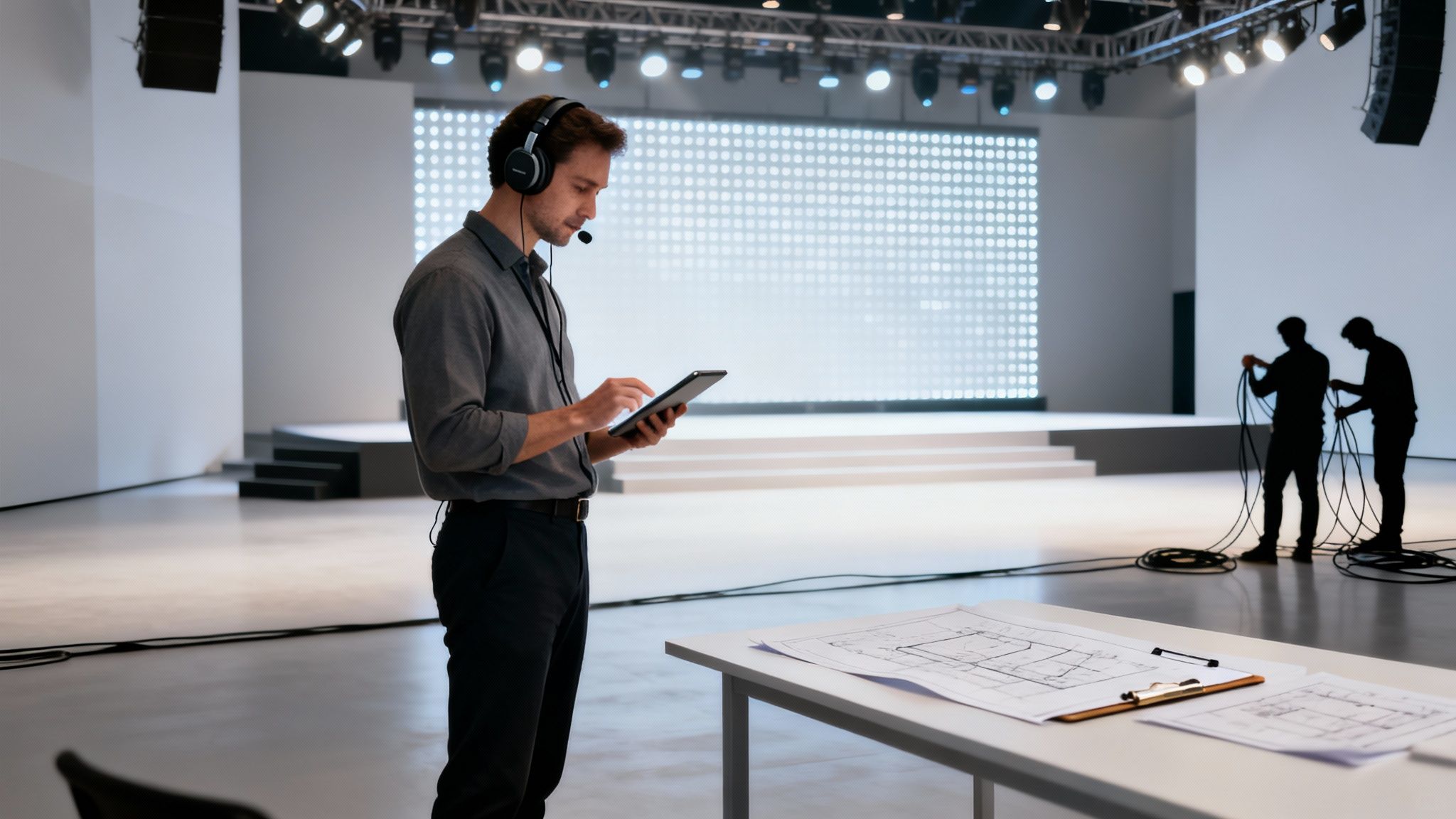
It’s easy to mix up event production with planning or management. They're definitely related, but they play very different roles. Planning focuses on the what, who, and where—the budget, the venue, the schedule.
Production, on the other hand, is all about the how. It’s the hands-on execution. We’re talking about the sound, the lights, the stage, the video—all the sensory elements that immerse your audience and make your message stick. It’s a craft that blends pure artistry with military-grade precision.
The 3 Pillars of Great Event Production
When you boil it down, top-tier event production stands on three core pillars. Get these right, and you're not just hosting an event; you're creating a moment.
- Technical Services: This is the nuts and bolts. We’re talking crystal-clear audio so the back row can hear every word, stunning visuals on massive LED walls, and flawless camera work for the live stream. It’s the science behind the show.
- Creative Effects: This is where the soul of the event comes from. It’s the dramatic lighting that sets the mood, the custom stage design that becomes the centerpiece, and the branded content that tells your story without saying a word.
- On-Site Execution: This is the boots-on-the-ground logistics. Producers manage the run-of-show, direct the crew, handle all the complex rigging and power needs, and are the first ones to solve any problem that pops up. They make sure the whole operation runs like a well-oiled machine.
Event production is the powerful combination of technical skill and creative vision that turns an ordinary space into an extraordinary experience. It’s the invisible force making sure every technical cue, lighting change, and sound effect happens exactly when it's supposed to.
While they are different disciplines, knowing what is event management is key to understanding how they work together. Simply put, planners dream it up, and producers make it happen.
To break it down even further, here's a quick look at where the producer's responsibilities lie.
Event Production At A Glance
This table highlights the core tasks that define event production, showing how they translate the planner's vision into a tangible reality.
| Core Responsibility | What It Involves |
|---|---|
| Audio-Visual (AV) | Managing microphones, speakers, mixers, projectors, screens, and cameras. |
| Lighting Design | Creating mood and focus with stage lights, ambient lighting, and special effects. |
| Staging & Scenic | Building the physical stage, backdrops, and environmental elements. |
| Content & Media | Producing and managing on-screen graphics, videos, and presentations. |
| Rigging & Power | Safely hanging equipment from the ceiling and managing electrical distribution. |
| Show Flow & Cueing | Calling the technical cues for speakers, videos, and lighting changes in real time. |
Ultimately, event production is the engine that drives the entire attendee experience, ensuring every element works in perfect harmony.
The Three Phases Of Bringing An Event To Life
A great event doesn't just happen. It's built. Pulling off a successful production is a journey that takes an idea from a simple concept to a full-blown experience, and it's a lot more involved than just what you see on show day.
Think of it like making a movie. There's a ton of work that goes into scripting, casting, and planning before the cameras ever start rolling. Then you have the actual shoot, and finally, the editing that happens long after the actors have gone home.
Event production follows a similar path, broken down into three critical phases. Each one builds on the last, ensuring every detail is nailed down, every moment is executed flawlessly, and everything is wrapped up professionally.
Phase 1: Pre-Production
This is where the magic really begins. Long before a single speaker is plugged in, the pre-production phase is all about intensive planning, design, and coordination. This is where we take the big-picture vision and turn it into a concrete, step-by-step plan.
During this stage, we dive deep to understand the event's goals, its core message, and the exact vibe you're trying to create. That understanding drives every single decision that follows, from the tech specs to the creative touches. It’s a time for heavy collaboration, mapping out logistics, and getting ahead of any potential problems.
Key activities in pre-production include:
- Logistical Planning: This is the nuts and bolts—from venue walkthroughs and creating detailed floor plans to scheduling exactly when the trucks will arrive and depart.
- Technical Blueprints: We draft the technical designs for all the audio, video, and lighting. This ensures every piece of equipment plays nice together and works perfectly in the space.
- Budgeting and Sourcing: This is where we allocate the budget for gear, crew, and all the other moving parts, then go out and find the best partners and vendors for the job.
- Content Creation: If the event needs custom graphics, walk-in videos, or specific presentation slides, this is when we create, test, and finalize all of it.
Pre-production is where 90% of the problems are solved before they even have a chance to happen. It's the meticulous preparation that makes the live event feel effortless and smooth.
Phase 2: On-Site Production
Alright, this is showtime. The on-site production phase is where the plan comes to life. All those blueprints, schedules, and creative ideas get executed in real-time as the production team arrives on-site to build the entire environment from the ground up.
This phase is all about action. It requires a skilled crew of technicians—audio engineers, lighting designers, camera operators, and stagehands—all working in sync under the direction of the event producer. Their job is to manage the live show, run the equipment, and be ready to pivot and solve any curveballs that come their way.
For a closer look at how this on-the-ground team works together, check out our guide on what is event coordination.
Phase 3: Post-Production
The work isn't over just because the last guest has left. The post-production phase is all about wrapping things up cleanly and making sure the event's value lives on. This starts with the systematic teardown of all the equipment, staging, and decor, making sure we leave the venue exactly as we found it.
But it’s about more than just packing up boxes. This final phase is also where we analyze how things went, gather feedback, and start repurposing all the great content we captured. Given that the global events industry was valued at over $1.4 trillion, with projections nearing $2.9 trillion by 2035, maximizing the return on that investment is critical. You can find more insights about the growth of the event industry on eventgroove.com.
This is often where the real long-term value is created—by editing video footage into highlight reels, packaging key moments for social media, and extending the event’s impact for weeks or even months to come.
The Technical Magic Behind The Scenes
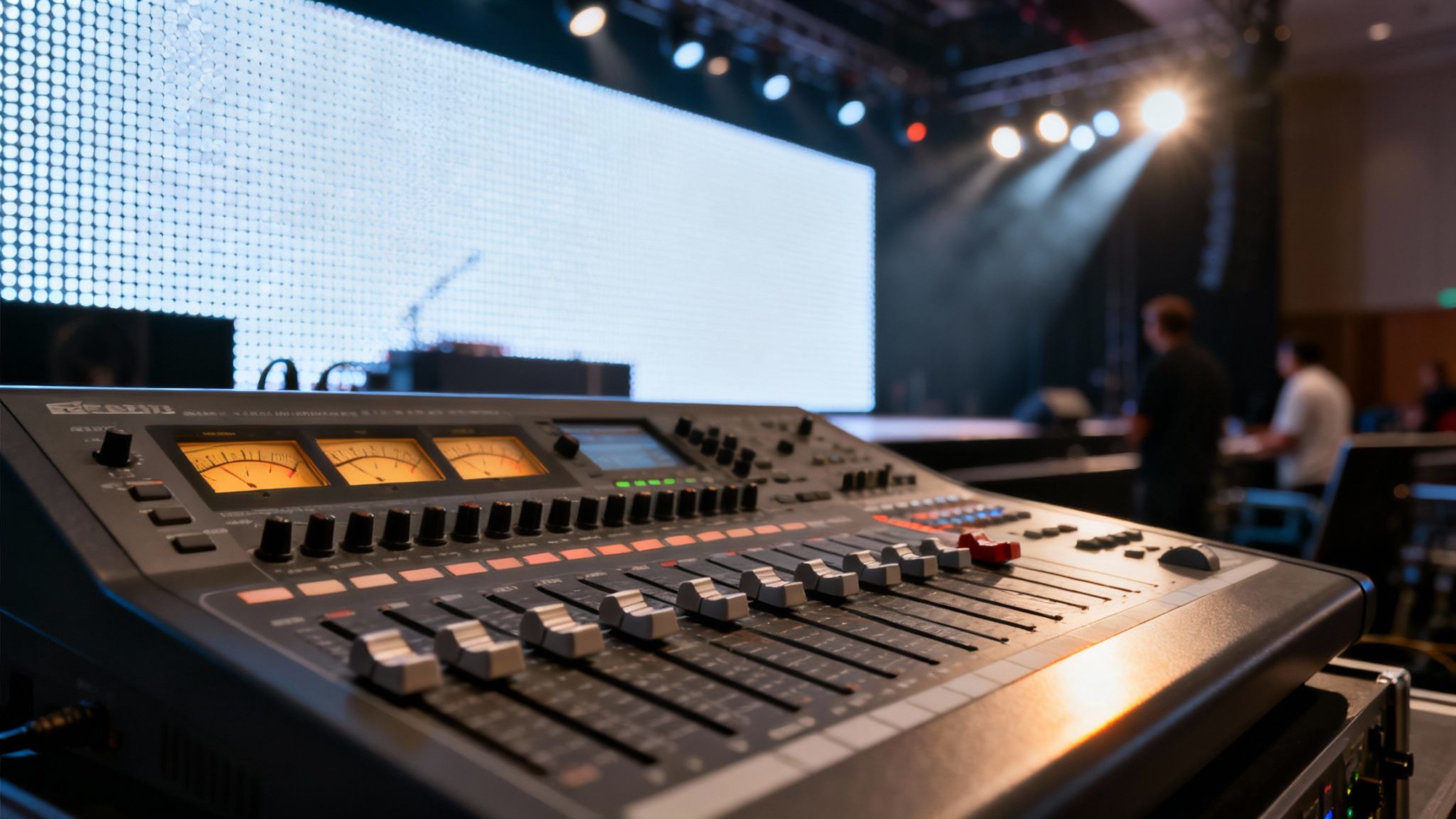
This is where the real wizardry happens. If the planning stage is the architect’s blueprint, then the technical production—the audio, visuals, and lighting (AVL)—is what brings the structure to life. It's the engine room of the entire experience, responsible for everything your audience sees, hears, and feels.
When AVL is done right, it's practically invisible. You just know that you can hear every word the speaker says, even from the back of a massive ballroom. You feel the buzz from a dynamic video presentation. You get lost in the mood set by the perfect lighting.
But when it's done wrong? It's the only thing anyone remembers. Getting this part right is what separates an amateur event from a professional production.
Sound Delivers The Message
Let’s be honest: audio is probably the most critical piece of the puzzle. If your audience can’t hear what’s being said, the whole point of the event is gone. Professional audio is so much more than just plugging in a microphone and turning up the volume.
It’s about designing a sound system that gives everyone, from the front row to the nosebleeds, the exact same crystal-clear experience. It means choosing the right speakers for the room's acoustics, juggling a dozen mics for a panel discussion without a single screech of feedback, and mixing everything live to keep the sound perfectly balanced.
Think of it like this: Great audio isn’t about being loud; it’s about delivering clarity. It’s the difference between hearing a speech and truly connecting with its message.
Visuals Build The World
These days, what people see is just as powerful as what they hear. Visual production is all about transforming a blank canvas—a conference room, a stage, an outdoor space—into a totally immersive environment.
We're way beyond a simple projector and screen here. Today's events use a whole arsenal of visual tools to grab an audience's attention:
- LED Walls: These are game-changers. They create stunning, seamless backdrops for anything from branded graphics to live video feeds that make your content impossible to ignore.
- Projection Mapping: This is pure magic. We can turn almost any surface, like the side of a building or a custom-built stage set, into a dynamic, moving canvas for video.
- Multi-Camera Production: For any event being streamed or recorded, using multiple cameras gives it that polished, broadcast-TV feel that keeps online and in-person viewers locked in.
All these pieces work together to build a world around your message, making it stick with people long after they’ve left.
Lighting Drives The Emotion
Lighting is the unsung hero of event production. It does way more than just let people see—it tells them how to feel. It’s one of the most powerful tools we have for setting a mood, directing focus, and subtly reinforcing a brand’s identity.
A smart lighting design can make a huge room feel warm and intimate, pump up the energy for a big reveal, or create an elegant vibe for a formal gala. It’s how we guide the audience’s eyes to the main speaker or highlight a key moment on stage. When done well, it’s the glue that holds the entire visual experience together. For a deeper look, check out our guide to event lighting rentals to see how different lights create specific effects.
At the end of the day, these three pillars—audio, visuals, and lighting—are the instruments a producer uses to conduct a symphony of sight and sound, creating an experience that feels effortless and unforgettable.
Crafting Those Unforgettable "Wow" Moments
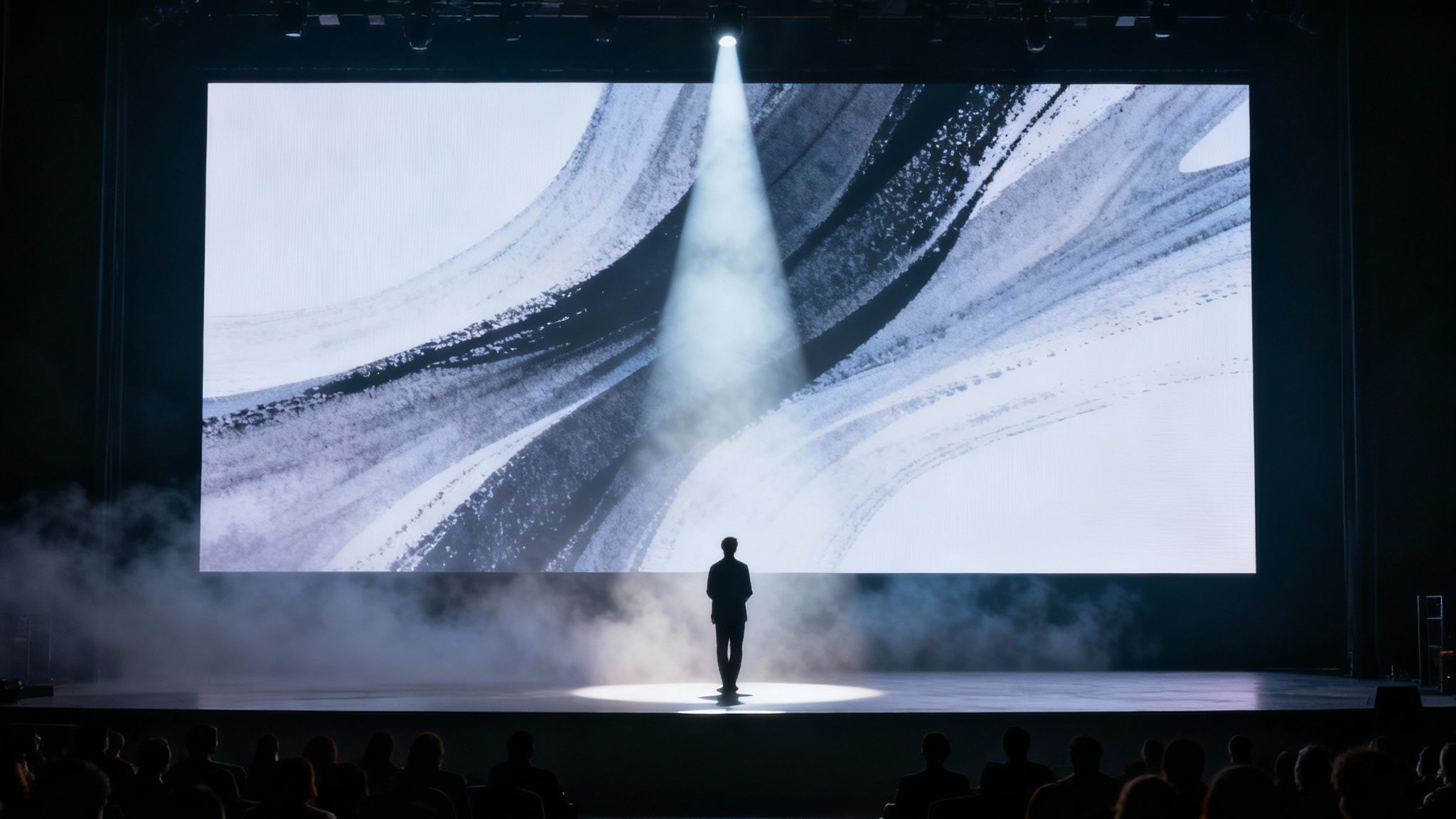
Perfect audio and a crystal-clear screen are the price of admission for a good event. They're essential, but they're not what people remember. The real art of event production is in creating those powerful, goosebump-inducing moments that attendees will be talking about for years to come.
This is where technical precision meets pure creativity. It's the secret sauce that transforms a standard meeting into a completely immersive experience, turning a generic venue into a world that tells your story and makes every single person feel like they're part of something special.
Setting The Scene With Smart Scenic Design
Scenic design is so much more than just building a stage. It’s about creating an entire environment that brings your event's theme to life. Think about the difference between giving a speech in a beige, boring conference room versus presenting from a custom-built set that screams your brand’s identity. The vibe is completely different.
A well-thought-out scenic design immediately:
- Grabs attention and sets the tone from the moment guests arrive.
- Strengthens your brand using custom structures, colors, and textures.
- Directs the audience's focus right where you need it to be.
It’s all about making the physical space a core part of the story you're telling. And it isn't just about the big stuff; even small, thoughtful details like high-quality custom name labels for events add to that premium, unforgettable feeling for your guests.
The goal is to make the environment an active participant in the event. When the setting feels intentional and immersive, the content becomes more impactful, and the overall experience feels more cohesive and engaging.
Bringing Your Message To Life With Custom Content
Let's be honest, static PowerPoint slides just don't cut it anymore. To keep an audience genuinely engaged, you need dynamic, custom content. This could be anything from slick, animated logo loops and motion graphics to professionally shot videos that tell a powerful story.
This custom media ensures your on-screen visuals look just as professional as the rest of the production. You're not using some generic template; you're getting graphics and videos designed from the ground up for your brand and your message. It creates a seamless, polished feel that audiences notice.
Adding That Final Sparkle With Special Effects
Used at just the right moment, special effects are the exclamation point on your event. They are incredible tools for creating surprise, building a ton of excitement, and making sure your key announcements land with a massive impact.
These effects add a touch of theatricality that can turn a simple moment into a core memory. The creative options are nearly endless, but here are a few favorites:
- Atmospheric Haze: This isn't just smoke. A subtle haze catches the light, adding incredible depth and drama to the stage lighting.
- Cold Sparks: Want the look of pyrotechnics without the fire marshal's headache? These dazzling fountains are completely safe and perfect for grand entrances or award reveals.
- Interactive Displays: Imagine digital walls or floors that react to people's movements. This is a fantastic way to turn passive observers into active participants.
By layering these creative elements onto a rock-solid technical foundation, an event producer does more than just run a show—they create a true experience. It’s this thoughtful fusion of design, content, and special effects that delivers those genuine ‘wow’ moments. To dive deeper, check out all the different special effects for events and how we put them to work.
Mastering The Modern Hybrid And Virtual Stage
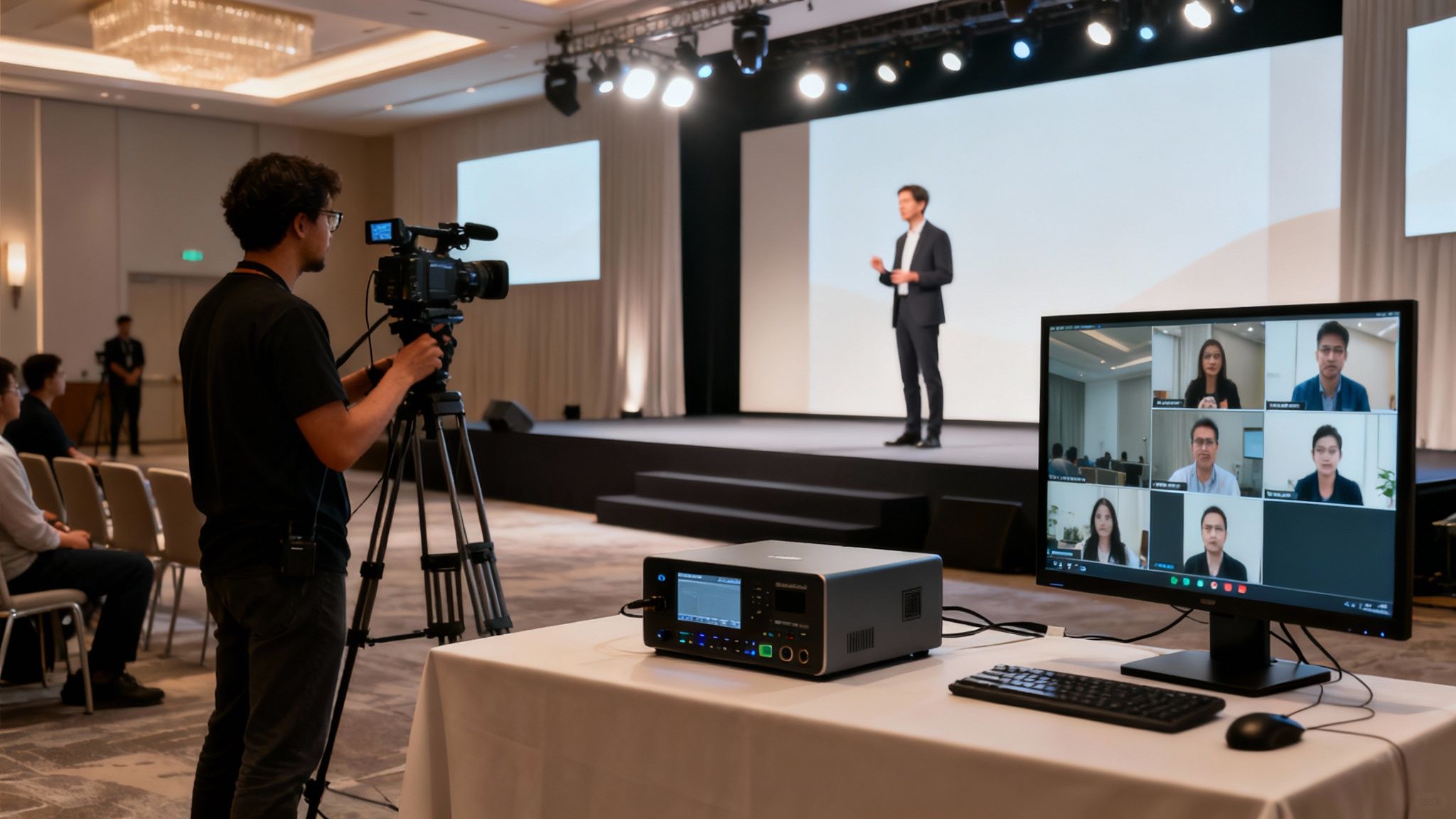
The idea of what makes an "event" has completely changed. It’s no longer about getting everyone into one room. These days, your audience is everywhere—in the venue, yes, but also on their laptops, tablets, and phones across the globe. This has opened up a whole new world for event production: the hybrid and virtual stage.
Getting this right demands a totally different way of thinking. You can't just point a camera at the stage and call it a day. The real challenge is producing two distinct but connected experiences at the exact same time. Your online audience needs to feel just as important and engaged as the people sitting in the front row.
Think of it like producing a live TV special that also happens to have a studio audience. The energy in the room is crucial, but the show's success really hinges on how well it comes across on screen. That's the heart of modern event production.
Bridging The Digital Divide
The single biggest hurdle with hybrid and virtual events is preventing the remote experience from feeling like a consolation prize. This is where professional production comes in. It's the bridge that closes that gap, creating one seamless, high-energy experience for everyone, no matter where they are.
This requires a very specific set of skills and a whole lot of tech.
- Broadcast-Quality Streaming: We're talking multiple cameras, professional switching, and flawless audio. The goal is to deliver a polished, dynamic feed that feels like a real broadcast, not a shaky webcam stream.
- Interactive Engagement Tools: Great production weaves in tools like live polls, Q&A sessions, and chat functions right into the stream. This gives the virtual audience a real voice and a way to participate, not just watch.
- Camera-First Design: Everything from the lighting and sound to the stage backdrops is designed to look amazing on camera, not just to the naked eye. This ensures the folks at home get the best possible view.
To see how all these pieces fit together, check out our deep dive on hybrid event production, where we break down exactly how to create that unified experience.
The New Rules Of Engagement
These new event formats have completely shaken up the industry. The virtual event market alone rocketed from $193.45 billion to $236.69 billion in just one year, and it’s expected to smash $537.18 billion by 2029. The growth is just undeniable.
A successful hybrid event isn't just an in-person event with a camera. It’s a unique production that intentionally serves two distinct audiences, ensuring both feel connected, engaged, and part of the same shared moment.
In this new reality, a producer has to be part broadcast director and part live event manager. It's a fascinating blend of skills. For a great example of how this plays out in another industry, looking into the benefits of live streaming performances for musicians offers some really interesting parallels.
Ultimately, understanding what event production means today is about knowing how to make an event’s energy and impact travel far beyond the venue walls. It’s about creating an unforgettable experience for every single attendee, whether they're in the room or on the other side of the world.
Common Questions About Event Production
Let's be honest, the world of event production can feel a bit overwhelming at first. You hear a lot of terms thrown around—producers, planners, AV, staging—and it's easy to get lost. So, let's clear the air and tackle some of the most common questions people have.
Think of this as your quick-start guide. It’ll help you understand what’s what so you know exactly what to look for when you're ready to bring in the pros.
What Is The Difference Between An Event Planner And An Event Producer?
This is easily the most common question, and the answer is simpler than you think. Imagine you're building a custom home.
The event planner is your architect. They design the blueprint. They're focused on the big picture: the event's goals, the budget, the venue, the guest list, and the overall vision. They figure out the "what" and the "why."
The event producer is your general contractor. They're the ones on-site making sure that blueprint becomes a reality. They manage the crew, the gear, and all the tech—sound, lighting, video, staging—that brings the experience to life. They are masters of the "how," ensuring every single technical detail is executed perfectly.
Does Every Event Need Professional Production Services?
Not necessarily. If you're hosting a small internal meeting for your team in a conference room, you probably don't need a massive LED wall and a sound engineer.
But, the moment you want to create a specific atmosphere or ensure a flawless delivery, that’s when a producer’s touch becomes invaluable. If you need crystal-clear audio so everyone in the back can hear, a presentation that runs without a single hiccup, or lighting that makes the room feel electric, that's production. The bigger your audience and the bolder your vision, the more critical a professional production partner becomes.
Ultimately, event production is what controls the entire sensory experience for your audience. When it’s done well, it’s invisible—the sound is perfect, the slides just work, the lighting feels right. But when it's bad? It's all anyone will notice, and it can completely derail your message.
What Should I Look For When Hiring An Event Production Company?
When you’re ready to bring in a pro, finding the right fit is everything. A little due diligence upfront saves a world of headaches later. Focus on these three areas:
- Check Out Their Portfolio: This is non-negotiable. Look at their past work. Does the style and scale of their events resonate with what you're trying to achieve? Do their projects look polished and professional?
- Gauge Their Communication Style: A great production company acts like a true partner. They should be asking smart questions and listening to your goals, not just trying to sell you the most expensive gear package. You want a collaborator, not just a vendor.
- Kick the Tires on Their Technical Chops: Don’t be afraid to ask about their team, their equipment, and their process. A killer portfolio, a collaborative spirit, and genuine technical expertise are the three pillars of a fantastic production partner.
How Does Event Production Impact The Attendee Experience?
It's everything. Event production is the invisible engine that drives how your attendees see, hear, and feel your event. It sets the tone the second they walk through the door and makes sure your key messages land with impact.
It’s what makes a keynote speaker sound powerful and clear instead of muffled. It’s the difference between a product reveal that feels dramatic and exciting versus one that falls flat. It’s what makes a gala feel elegant and immersive. When production is dialed in, your audience can just relax and soak in the experience—which is exactly what you want.
Ready to create an unforgettable experience without the stress? The team at 1021 Events has the expertise and creative vision to bring your event to life with flawless production. Let’s talk about your vision today.
Planning an event in Fort Atkinson, Southern Wisconsin, or Northern Illinois? 1021 Events can coordinate planning, DJ/MC entertainment, sound, lighting, photography, videography, photo booths, and other production elements. Explore our event production services, then send an inquiry through EMP DJ to discuss your event.