
Planning a party really comes down to three main phases: dreaming up the vision, sorting out the logistics, and nailing the execution. The secret sauce? Giving yourself plenty of time and starting with a crystal-clear goal, whether you're planning a low-key hangout or a full-blown gala.
Laying the Groundwork for a Great Party

Before you even think about invitations, the best parties begin with a single, powerful question: Why?
Figuring out the purpose of your event is, without a doubt, the most crucial first step. It's the bedrock for every single decision that follows, from who you invite to what's on the menu.
Is this a casual birthday bash where old friends can just kick back and catch up? Or is it a polished corporate event designed to wow potential clients? The "why" always tells you the "how."
Think of it this way. A backyard barbecue is all about relaxed fun. That goal naturally leads to a simple buffet, a self-serve drink cooler, and a playlist of crowd-pleasing tunes. On the flip side, a formal 25th-anniversary dinner is meant to feel elegant and celebratory. That goal points toward a seated, multi-course meal, thoughtful wine pairings, and maybe even a string quartet.
The secret to a truly memorable party isn't an unlimited budget—it's a clear, well-defined vision. When you know the feeling you want to create, the practical steps to get there become much clearer.
First, Define Your Party Goals
This is simpler than it sounds. Just jot down a sentence or two that gets to the heart of what you're trying to achieve. This little statement will become your North Star, guiding you through all the planning chaos.
- For a Corporate Holiday Party: "Our goal is to celebrate a great year and make the team feel genuinely appreciated in a festive, upscale setting."
- For a Kid's Birthday Party: "We want to create a magical, super-fun day for our daughter and her friends, packed with games and a theme she loves."
- For a Casual Friendsgiving: "The plan is to gather our chosen family for a cozy, stress-free meal focused on amazing food and even better conversation."
Having this clarity helps you say "no" to things that don't fit the vibe and keeps your energy—and your money—focused on what actually matters. It’s how you avoid that generic, trying-to-please-everyone party that no one really remembers.
Connecting Party Goals to Your Plan
See how a clear goal influences the theme and vibe for different types of gatherings.
| Event Type | Primary Goal | Potential Vibe & Theme |
|---|---|---|
| Wedding | Celebrate the couple's love story with friends & family | Romantic & personal; maybe a "Garden Romance" theme |
| Corporate Launch | Impress clients and generate buzz for a new product | Sleek & professional; could be a "Future Forward" theme |
| Private Birthday Party | Create a fun, memorable experience for the guest of honor | Laid-back & celebratory; perhaps a "Taco 'Bout a Party" fiesta |
A focused goal makes every other decision, from food to music, fall into place so much more easily.
Now, Choose a Theme That Feels Right
Once you know your "why," you can start playing with themes. A theme is more than just decorations; it's the glue that holds the whole experience together. The best ones feel like a natural extension of your party's goal, not something cheesy or forced.
It’s no surprise that the global party supplies market is set to hit USD 33.04 billion by 2033. People love a good theme! It pulls them into the experience and makes the event feel special. A "Roaring Twenties" theme for a New Year's Eve bash instantly gives you ideas for jazz music, classic gin cocktails, and a flapper-inspired dress code. It simplifies so many decisions.
Finally, Set a Realistic Budget
With your goal and theme locked in, it's time to talk money. Think of your budget as a tool, not a restriction. It’s what helps you bring your vision to life without the post-party financial hangover.
Start by identifying your top three priorities. Is it incredible food, a live band that gets everyone dancing, or a photographer who can capture the magic? Put more of your budget toward those "must-haves" and find creative ways to save on the things that matter less to you.
To stay organized and make sure you haven't forgotten anything, using a comprehensive event planning checklist is a game-changer. For an even more detailed guide, check out our own party planning checklist, which will walk you through everything from start to finish. Getting this groundwork right is the blueprint for a party that feels intentional, cohesive, and genuinely fun for you and your guests.
Building Your Guest List and Invitations
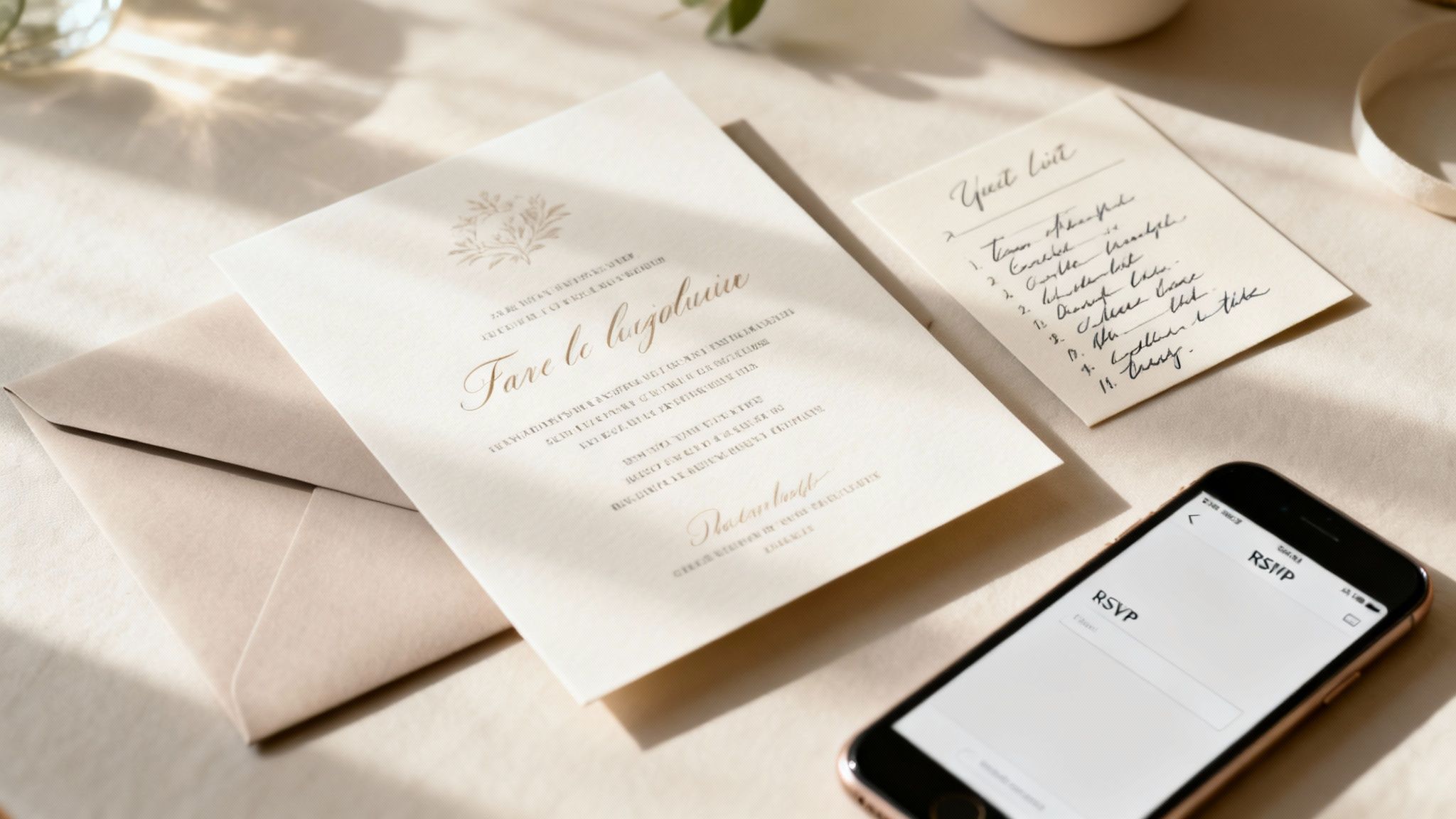
Let's be real: the people make the party. You can have the best food, the perfect playlist, and incredible decor, but the true magic comes from the energy in the room. This is why crafting a guest list is less about hitting a number and more about curating a vibe.
Think of yourself as a chemist, mixing different elements to get just the right reaction. Your goal is to blend social circles—work friends, family, college buddies, neighbors—to create a lively atmosphere where new connections can spark.
For an intimate dinner party, you might stick to one or two social groups to keep conversations flowing easily. But for a big holiday bash? Mixing it up is the secret ingredient to that buzzing, energetic feel that makes a party unforgettable.
Crafting the Perfect Guest Mix
First things first, jot down your "must-haves"—the people the party is actually for or the close friends you can't imagine celebrating without. From there, you can build outward. Think about who gets along with whom and who might really hit it off with someone new.
Don't be afraid to invite people from different corners of your life. An interesting guest list is one of the best ways to guarantee your party is anything but boring. The goal is a comfortable, engaging mix.
Navigating the whole plus-one situation can be tricky. My go-to rule is to offer a plus-one to anyone in an established relationship. For single friends, it's really your call, depending on your budget and space. Just try to be consistent to avoid any hurt feelings.
Pro Tip: I always recommend creating an A-list and a B-list. Your A-list is for the non-negotiables. As the "no" RSVPs start trickling in, you can begin sending invites to your B-list without the stress of over-inviting or going over capacity.
Digital vs. Paper Invitations
Once your list is locked in, it’s time to spread the word. The choice between digital and paper invitations usually comes down to formality, budget, and convenience. Neither is better than the other; it’s all about what fits your event.
- Digital Invites (Evite, Paperless Post): These are fantastic for more casual events like birthdays, backyard BBQs, or holiday get-togethers. They're easy on the wallet, good for the planet, and make tracking RSVPs an absolute breeze.
- Paper Invites: For more formal occasions—think weddings, milestone anniversaries, or high-end corporate events—a physical invitation sets a sophisticated tone from the get-go. They feel more personal and often become a tangible keepsake for guests.
A popular hybrid approach I love is sending a beautiful paper invitation that directs guests to an event website to RSVP. You get the elegance of a traditional invite with the efficiency of digital tracking. No matter which route you take, getting those RSVPs is crucial. If you're worried about response rates, it’s worth looking into a few strategies for how to increase event attendance to make sure you have a full house.
What Every Invitation Must Include
Clarity is everything. The last thing you want is a dozen texts on the day of the party asking for the address or start time. Your invitation needs to have all the essentials, clear as day.
- The Who, What, and Why: Name the guest(s) of honor and state the reason for the party (e.g., "Join us to celebrate Sarah's 30th Birthday!").
- The When: Always include the full date along with the start and end times. Listing an end time is a subtle but helpful cue for guests and prevents the party from dragging on forever.
- The Where: Give the full, clear address. If parking is a nightmare, add a quick note about the best places to park. Your guests will thank you.
- RSVP Information: Clearly state the "RSVP by" date and how you want them to respond (e.g., "Please RSVP to Jane via text by October 25th").
- Dress Code (Optional but so helpful): A simple line like "Festive Cocktail Attire" or "Backyard Casual" takes the guesswork out of it and helps everyone feel more comfortable.
Managing Your Budget and Vendors
https://www.youtube.com/embed/-Gh9WSLmrjw
Let's be real: great parties don't just magically happen. Behind every memorable event is a solid plan, especially when it comes to the money and the moving parts. A well-crafted budget is your secret weapon against those last-minute financial surprises that can totally kill the vibe.
Think of your budget less as a set of rules and more as a roadmap. It’s what helps you decide where to put your money to get the biggest impact, making sure your vision comes to life without causing a financial hangover.
Nailing Down Your Party Budget
First things first, you need to get a handle on the numbers. This sounds way more intimidating than it actually is. Just open up a spreadsheet (or even a notebook) and start jotting down every single thing you might have to pay for. Don't forget the small stuff!
Your list will probably have categories like these:
- The Space: What’s the rental fee for your venue?
- Food & Drinks: This is everything from the caterer and the cake to the bartender and the booze.
- The Vibe: What are you paying for a DJ, band, or other performers?
- The Gear: Think tables, chairs, fancy linens, glassware, maybe even a tent.
- Decor: Flowers, balloons, lighting, and all those little themed touches.
- The Help: Do you need servers, bartenders, or a cleanup crew?
Once you’ve got your list, start plugging in some estimated costs. My advice? Always be a little generous here. It's so much better to overestimate and have a little cash left over than to underestimate and be scrambling at the end. If you want a head start, this pre-made event budget template is a fantastic tool to get you organized.
Where to Splurge and Where to Save
Okay, not every line item on your budget is created equal. A huge part of hosting a successful party is knowing what your non-negotiables are. Figure out the two or three things that will truly make or break the guest experience and give them a bigger slice of the budget pie.
I’ve found that the things people remember most are the food, the entertainment, and the photos. Years from now, your guests will still be talking about that amazing taco bar or the DJ who kept everyone on the dance floor until the very end.
On the flip side, get creative with where you can save. Maybe you send out cool digital invitations instead of spending a fortune on paper and postage. Or perhaps you get a few friends together for a fun afternoon of DIYing your own centerpieces. These little swaps can save you a surprising amount of money and add a really personal touch.
Building Your A-Team of Vendors
Unless you're planning a super small, casual get-together at home, you're probably going to need to bring in some pros. This is your vendor team—caterers, DJs, photographers, rental companies, you name it. Finding the right people is absolutely critical to a stress-free event.
I always start by asking friends for their recommendations. A good personal referral is gold. After that, I hit up online reviews to see who the top-rated local vendors are. Once you have a shortlist, it's time to start making calls. Be ready with the key details: your date, your rough guest count, and the overall vibe you're going for.
This is especially true for rentals. The global party and event rental market is on track to hit USD 8.15 billion by 2033, which just shows how essential these services are for pulling off a polished look. You can get a better sense of this industry's growth and importance from the party and event rental market report.
Key Questions to Ask Potential Vendors
Before you sign on any dotted lines, you need to play detective. Asking the right questions upfront protects you and makes sure everyone is on the same page. No one likes unpleasant surprises.
No matter who you're talking to, always ask:
- "Are you available on my date?" The first and most important question, obviously.
- "Can I get a detailed quote?" Make sure it clearly lists all fees, taxes, and any other potential charges. No hidden costs!
- "Do you have liability insurance?" This is non-negotiable. A true professional will have it.
- "What's your cancellation policy?" Life happens. You need to know the what-ifs for both sides.
- "Can you share a few references?" Talking to a vendor's past clients is one of the best ways to know if they're the real deal.
Get specific, too. For a caterer, ask if they offer menu tastings. For a DJ, find out if you can give them a "do not play" list (we all have one). The final, crucial step is to get everything in writing. A clear, detailed contract is the foundation of a great partnership and your ticket to a stress-free party.
Designing an Unforgettable Guest Experience
This is where the real magic happens. While vendors and logistics are the bones of your party, the guest experience is its soul. It's that perfect mix of sights, sounds, and flavors that turns a get-together into something people will be talking about for weeks.
The whole point is to create an atmosphere that feels effortless and inviting. You want to guide your guests on a journey from the moment they arrive to the final goodbye. This isn’t about blowing the budget on huge, flashy things; it’s about the small, thoughtful touches that show you were thinking about them.
Setting the Mood with Music and Lighting
Never, ever underestimate how much music and lighting can shape the energy in a room. Seriously, these two things set the mood faster and more powerfully than almost anything else you can do.
Think of your lighting as a living part of the party—it should change as the night goes on. As guests walk in, you want warm, welcoming light. Think ambient lamps, twinkling string lights, or even candlelight instead of harsh overheads. This helps people relax and makes conversation feel more natural. Later, when you're ready to get people on the dance floor, you can switch to more dynamic, colorful lighting.
Music should follow the same arc. I always build playlists that evolve with the party's energy:
- The Welcome: Start with something chill. An instrumental or a low-key indie playlist works perfectly as people arrive and grab their first drink. It should be background music, not something that forces people to shout over it.
- Dinner & Drinks: As things get going, shift to music with a bit more of a pulse but keep the volume moderate. Classic soul, upbeat funk, or familiar throwbacks are great here—just enough to get heads nodding.
- Peak Party: Once dinner's done, it's go-time. This is when you unleash the high-energy dance tracks. A great playlist flows seamlessly, keeping the energy up.
A well-curated playlist is like having a great DJ—it reads the room and takes people on a journey. The biggest mistake I see is when hosts just hit play on a random Spotify list and walk away. Be intentional.
Planning Food and Drinks That Wow
Your menu is a massive part of the experience. It needs to taste amazing, of course, but it should also fit the theme and vibe of your party. For a casual backyard hang, a build-your-own taco bar or a gourmet slider station is fun and gets people interacting. For something more formal, you might lean toward elegant passed hors d'oeuvres and a seated dinner.
The bar setup is another detail that can make or break the flow. Nobody wants to wait in a long, frustrating line for a drink. A pro tip is to set up a self-serve station for beer, wine, and a big dispenser of a pre-mixed signature cocktail. This frees up your bartender to handle the more complex drinks and keeps everyone happy.
Speaking of which, a signature cocktail is such a great touch. It adds personality and is an instant conversation starter. Name it something clever that ties into your theme, like a "Mint to Be Mojito" for a wedding shower or a "Main Squeeze Margarita" for a summer birthday.
Crafting a Smart Layout
How you arrange the furniture and food stations has a huge impact on how people mingle. The goal is to avoid bottlenecks and encourage movement. Don't stick all the chairs in one corner and the food in another; you'll end up with two separate, static groups. Instead, create different "zones" throughout the space.
- Scatter a few high-top tables around for people to gather at.
- Create a comfy lounge area with a few sofas or armchairs, set slightly away from the main action for quieter conversations.
- Place the bar and food stations in different spots to keep traffic flowing smoothly.
This kind of strategic layout encourages your guests to explore the space and bump into new people, making the whole party feel more dynamic. A good floor plan is like a silent host, gently guiding people all night long. For more creative ways to keep everyone engaged, check out these party entertainment ideas.
Ultimately, creating an incredible experience is all about anticipating what your guests will need and enjoy. It’s the sum of all those little details—the perfect song playing at just the right time, a clever cocktail, or just a comfortable spot to chat—that people will remember long after they've gone home.
Your Day-Of Party Execution Plan
The big day is finally here. After weeks—or even months—of planning, budgeting, and making lists, it’s time to shift gears from planner to host. Having a solid day-of plan isn't about creating a rigid, stressful schedule; it's your secret weapon for staying calm, being present, and actually enjoying the party you worked so hard to create.
Think of it as a flexible roadmap. It guides you from the moment the first vendor arrives to when the last happy guest heads home. The goal is simply to know what needs to happen and when, so you're not scrambling to make decisions on the fly.
The Morning Of The Party
Your day should start with a calm final review, not a frantic rush. Wake up, pour yourself a coffee, and look over your master timeline one last time. A quick, friendly text to your key vendors—like the caterer or DJ—just to confirm arrival times can set your mind at ease.
This is also the perfect time to delegate. Seriously. Your main job today is to be the host, not the stagehand.
- Designate a Point Person: Pick a trusted friend or family member to be the go-to for any questions from vendors or guests. This one move saves you from answering "Where's the bathroom?" a hundred times.
- Assign Small Jobs: Ask one friend to be in charge of the playlist, another to keep an eye on the drink station, and maybe a third to manage the gift table. People are usually happy to help!
- Communicate Clearly: Let your helpers know exactly what you need from them. A little direction goes a long, long way.
My best tip for the day of? Do a final walkthrough about an hour before guests are set to arrive. Check the lighting, start the music at a low volume, light any candles, and make sure the bathrooms are stocked. This final check catches all the little things before anyone else even sees them.
These are the core elements you're managing to create that perfect party atmosphere.
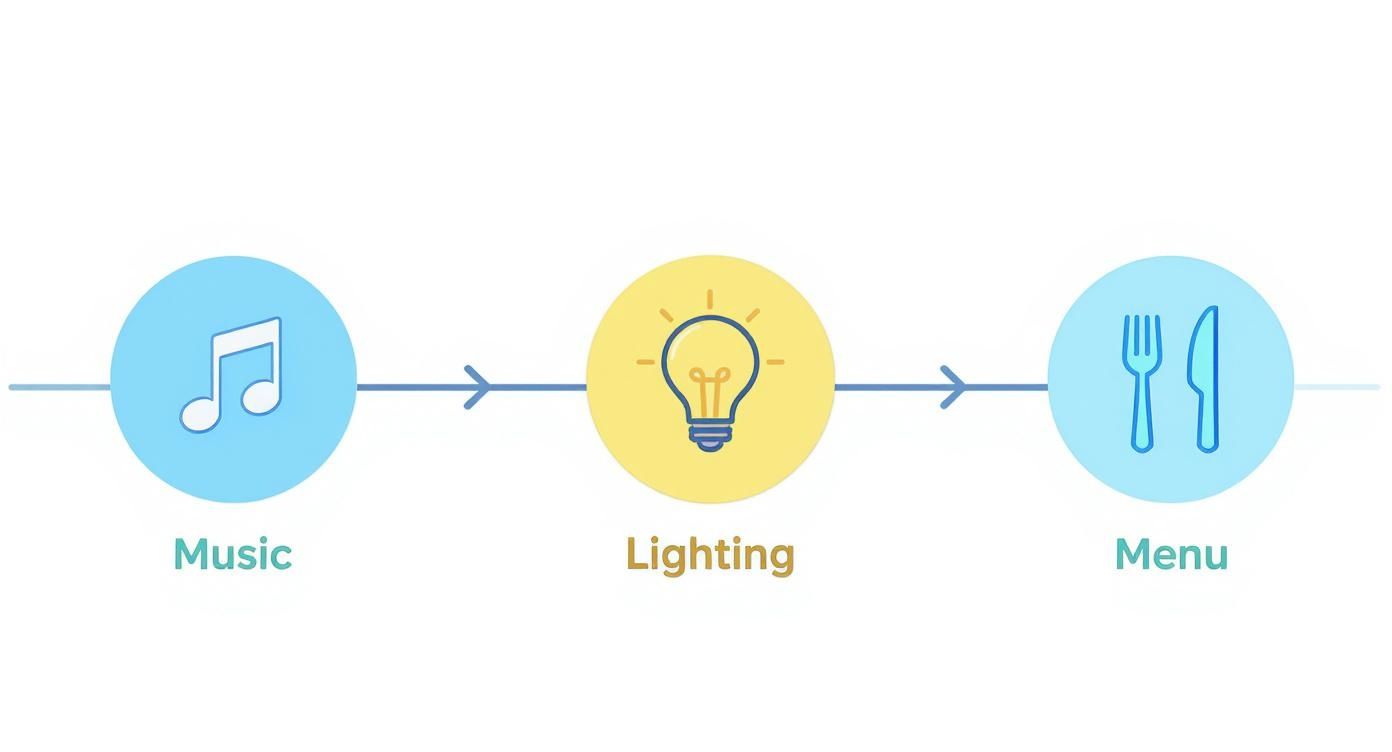
When you strategically layer the music, lighting, and your menu, you can guide the energy of the party from a relaxed welcome to a high-energy peak and back down again.
During The Event
Once guests start showing up, your only priority is to make them feel welcome. Greet people at the door, take their coats, and offer them a drink right away. It's a simple act that immediately puts people at ease.
As the party gets going, your role shifts to being a connector. Introduce people who don’t know each other, especially if you can point out a shared interest. A simple, “Sarah, you have to meet Tom—he’s also a huge fan of vintage horror movies!” can spark a great conversation. Knowing how to be a good party host is less about perfect execution and more about creating these warm, personal connections.
The demand for well-executed events is absolutely booming. In fact, over 41% of event professionals are now hosting more events than before, with nearly 70% of corporate gatherings in North America expected to be in-person. This trend just goes to show how much people value face-to-face celebrations and why flawless day-of management is so important.
Handling The Unexpected
Let’s be real: no matter how well you plan, something small will likely go sideways. A vendor might hit traffic, you could run low on ice, or an unexpected plus-one might show up. The key is not to panic.
Having a few simple backup plans ready can make all the difference. To make it easy, here’s a simple timeline you can adapt for your own event that shows how to map out the key tasks and responsibilities.
Example Party Day Timeline
| Time Block | Key Task | Person Responsible |
|---|---|---|
| 1:00 PM | Final walkthrough of the venue space | You (Host) |
| 2:00 PM | Caterer and Bartender Arrive & Set Up | Vendor Team |
| 3:30 PM | DJ/Band Arrives for Sound Check | Vendor Team |
| 4:00 PM | Check lighting, music, and thermostat | Your Designated Helper |
| 4:30 PM | Quick "team huddle" with helpers | You (Host) |
| 5:00 PM | Party Starts! Greet guests | You & Partner/Co-host |
| 7:00 PM | Main food is served | Caterer |
| 9:00 PM | Check in with vendors, check supplies | Your Designated Helper |
| 10:00 PM | Start cleanup in non-guest areas | Cleanup Crew / Helper |
This just gives you a framework. The most important thing to remember is that your guests will take their cues from you. If you’re relaxed and having a good time, they will be too. Embrace the little imperfections—they often make for the best stories later. A successful party is one where everyone, including the host, has a fantastic time.
Got Party Planning Questions? We've Got Answers.
Even the most experienced hosts have those moments of doubt. Did I order enough wine? Is it too early to send invites? It’s completely normal to second-guess yourself when you're juggling a dozen different details.
We’ve rounded up some of the most common questions that pop up during the planning grind. Think of this as your personal cheat sheet for navigating those tricky spots with confidence, so you can spend less time stressing and more time getting excited.
How Far in Advance Should I Start Planning?
This is the big one, and the honest answer is: it really depends on the party. The more people and moving parts you have, the more of a head start you’ll need to lock in the good stuff without scrambling.
Here’s a rough timeline based on my experience:
- The Big Ones (Weddings, Galas): Give yourself a solid 9-12 months. This isn’t overkill, I promise. The best venues, photographers, and bands book up a year or more out, so getting in early means you get your first choice, not what’s left over.
- Mid-Sized Parties (Milestone Birthdays, 50-100 people): A 3-6 month runway is perfect. It gives you plenty of breathing room to find a great venue, hire a caterer, and get invitations out the door without that constant feeling of being behind schedule.
- Casual Get-Togethers (Dinner Parties, Backyard BBQs): You can easily pull these together in 2-4 weeks. The focus here is less on vendors and more on the guest list, the menu, and creating a great, relaxed atmosphere.
My golden rule? The moment you have a date, book the things you can't be flexible on. That usually means the venue and any must-have entertainment. Everything else can fall into place around those key anchors.
What's the Best Way to Handle RSVPs?
Save yourself the headache and go digital. Seriously. Trying to track RSVPs through texts, emails, and phone calls is a recipe for chaos. Digital tools keep everything in one tidy, easy-to-read spot.
I’m a big fan of services like Evite or Paperless Post for most events. If you're feeling crafty, a simple Google Form works wonders, too. For something more formal like a wedding, a beautiful paper invitation that directs guests to an RSVP website is the perfect blend of classic and convenient.
No matter which route you take, set a clear RSVP deadline—usually 2-3 weeks before the event. This gives you a buffer to chase down the stragglers and give your vendors a final, accurate headcount without any last-minute panic.
How Can I Create a Killer Vibe on a Budget?
You don’t need a Hollywood budget to create an amazing atmosphere. The two most powerful tools in your arsenal are also the cheapest: lighting and music.
First, kill the harsh overhead lights. It's the fastest way to make a space feel cold and sterile. Instead, use lamps, candles (safely, of course!), or inexpensive string lights to create pools of warm, inviting light. It instantly makes a room feel cozier and more intimate.
Next, your playlist. This is your secret weapon for guiding the party's energy. Start with something chill for when guests are arriving and mingling, then gradually ramp it up as the night goes on. Instead of spreading your budget thin on tiny decorations nobody will notice, go for one or two "wow" moments, like a fun photo backdrop or a couple of stunning floral arrangements.
How Much Food and Drink Do I Actually Need?
This used to stress me out so much, but there are some trusty industry guidelines that take the guesswork out of it.
For Food:
- Pre-Dinner Nibbles: If you're just serving appetizers before a meal, 3-5 bites per person is plenty.
- Appetizer-Only Party: If the apps are the meal, you’ll want to bump that up to 8-12 bites per person.
For Drinks:
- The go-to formula is two drinks per person for the first hour, then one drink per person for every hour after that.
Of course, you know your friends best. If you’ve got a thirsty crew, adjust accordingly. It’s always better to have a little extra than to run dry. Here’s a pro tip: ask your local liquor store about their return policy. Many will take back unopened bottles, which means you can overbuy without any risk.
Bringing a great party to life is all in the details. At 1021 Events, we live for those details—transforming your vision into an unforgettable experience with professional DJ/MC services, custom lighting, and high-quality photo and video. Let us help you make it happen. You can learn more at https://www.1021events.com.
Hosting a memorable party in Fort Atkinson, Southern Wisconsin, or Northern Illinois? 1021 Events can help you create an engaging guest experience with professional DJ/MC entertainment, sound, lighting, an interactive photo booth, and coordinated enhancements. Explore our party services, then send an inquiry through EMP DJ to check availability.