
So, you're piecing together your wedding budget, and you’ve landed on one of the most important vendors: the DJ. This isn't just a background expense; the person you hire will literally set the tone and energy for your entire reception. It’s a huge deal.
The average cost for a professional wedding DJ in the U.S. typically lands somewhere between $1,500 and $4,000. And yes, that’s a pretty wide range. Most seasoned pros will fall right in the middle of that, but it's important to remember you're not just paying for a human jukebox. You're investing in the whole vibe of your party.
What's the Real Average Cost for a Wedding DJ?
Let's break down that average cost. It’s easy to get sticker shock, but you need to understand the value packed into that price. Think of it this way: you’re not just hiring someone to hook up an iPhone to a speaker. A true professional wedding DJ is an entertainer, a master of ceremonies (MC), and an audio expert all rolled into one. They're the ones who keep the party alive and on schedule.
That's why a single number doesn't tell the whole story. The final quote you get is a mix of different factors that all contribute to the quality and scope of what they’ll deliver on your big day.
The Big Things That Shape the Price
No DJ just pulls a number out of a hat. The cost is a direct reflection of what it takes to make your wedding a success. For most couples, a good starting point for a quality, experienced DJ is around the $2,000 mark. This is a solid baseline for professional-level service.
Of course, that number can go up or down depending on a few key things. DJs in big cities like New York or L.A. will naturally cost more than those in smaller towns, simply because of demand and the cost of doing business. The length of your reception also plays a huge part—a standard 4-to-6-hour party will be less than an all-day affair that includes the ceremony, cocktail hour, and a long reception. Curious how this stacks up against other types of parties? You can learn more about what you can expect to pay from this helpful guide.
Here are the most common things that drive the cost:
- Experience & Reputation: A DJ with a decade of rave reviews and a calendar that’s always booked is going to be a bigger investment than someone who's just getting started. You're paying for their expertise.
- How Long They'll Be There: The clock starts ticking from the moment the first guest arrives until the last song plays. More hours mean a higher price.
- Location, Location, Location: A DJ in a major city costs more. Also, if your venue is way out in the middle of nowhere, expect a travel fee to be added.
- The Gear & Extras: It’s not just about the music. High-end sound systems, dance floor lighting, uplighting, and fun add-ons like a photo booth will all bump up the final price.
Budgeting Beyond the Basics
Okay, so the base price gets you music and a sound system. But what about creating a truly memorable party? This is where you can add enhancements to really elevate the experience.
MCing, for example, is a skill all its own. While many DJs include it, a great MC is worth their weight in gold. They don't just announce the cake-cutting; they guide your guests through the evening, making sure everyone knows what's happening and keeping the energy flowing seamlessly from one moment to the next.
A great DJ does more than play songs; they craft an experience. They read the room, mix music seamlessly to keep the energy high, and act as your reception's director, ensuring every moment flows perfectly into the next.
To help you see how these pieces fit together, here's a quick breakdown of what you can generally expect at different price points.
Quick Look at Wedding DJ Price Tiers
This table gives you a snapshot of the different tiers of DJ services. It's a great way to align what you're willing to spend with the kind of experience you're hoping for.
| DJ Tier | Typical Price Range | What You Generally Get |
|---|---|---|
| Budget/Entry-Level | $500 – $1,200 | A newer DJ, often a solo operator with basic equipment. Good for smaller, more casual weddings. MCing skills and music library may be limited. |
| Professional | $1,500 – $3,000 | An experienced DJ with professional-grade sound gear, basic lighting, and solid MC skills. This is the sweet spot for most couples. |
| Premium/Elite | $3,500 – $6,000+ | A top-tier entertainer or a full-service company. Includes advanced lighting, photo booths, and highly polished MC skills. The "wow" factor experience. |
Ultimately, finding the right budget for your wedding DJ is about looking past that initial average number. Think about the kind of atmosphere you want, the level of experience you value, and what it will take to make the soundtrack to your wedding absolutely perfect.
So, What's Really Behind a DJ's Price Tag?
Ever get a couple of wedding DJ quotes and feel like you're comparing apples to oranges? It's a common story. One quote might come in at a cool $800, while another soars past $3,500. That huge gap isn’t just random—it’s all about the value, experience, and the actual services packed into that price.
Think of it like buying a car. A basic model gets you from point A to point B, no problem. But if you want the smooth ride, the killer sound system, and all the high-tech safety features, you’re going to invest more. The same exact logic applies to wedding DJs. You’re not just paying someone to press play; you're investing in the entire vibe of your reception.
Let's pull back the curtain on the key things that determine where a DJ falls on this price spectrum. Getting a handle on these factors is the first real step to finding the perfect fit for your wedding day and your wallet.
Experience and Reputation Are Everything
This is the big one. A DJ's experience is probably the single biggest driver of their cost. A seasoned pro who has navigated hundreds of weddings brings a level of skill to your event that you just can't put a price on. They aren't just a walking playlist—they're expert crowd-readers, quick-thinking problem-solvers, and low-key event coordinators.
- The New DJ: Someone just starting out will likely charge less because they're focused on building their portfolio. They might have incredible passion and great taste in music, but they may not have the polished MC skills or the deep experience to handle a sudden timeline shift or a technical hiccup without breaking a sweat.
- The Seasoned Professional: A veteran DJ with a stellar reputation has seen it all. They know how to gracefully transition from a quiet dinner set to heartfelt toasts and then ignite the dance floor. They have an almost psychic ability to read the room's energy and drop the perfect track that gets your grandma and your college buddies dancing together.
That expertise is what you're really paying for. Their ability to deliver a smooth, stress-free party is often worth the investment all on its own.
The Quality of Their Gear Matters
Believe it or not, the equipment a DJ uses has a direct impact on the whole atmosphere of your wedding. Professional-grade gear isn’t just about being loud; it’s about delivering crisp, rich sound that fills the space beautifully without sounding harsh or getting distorted.
A professional DJ invests thousands—often tens of thousands—of dollars into their setup. This includes high-quality speakers, reliable mixers, wireless microphones for toasts that everyone can actually hear, and, crucially, backup equipment for every single component. That investment in quality and reliability is baked into their price.
A cheaper DJ might be using consumer-grade speakers from a big-box store. That can lead to muddy sound, or worse, a complete technical failure right in the middle of your party. When you see that higher price tag, you’re buying peace of mind, knowing the gear is top-notch and reliable.
The Calendar Dictates Demand
Your wedding date plays a surprisingly huge role in what you'll pay. Just like hotels and airlines, DJs have their own peak and off-peak seasons.
A Saturday wedding in June or October? That's prime real estate. Demand is through the roof, so DJs can and will charge their full rate. But if you're getting married on a Friday, a Sunday, or in a less popular month like January or March, you might find DJs have a lot more flexibility with their pricing.
Booking on an off-peak day can sometimes shave 10-20% off the total cost. It’s a simple game of supply and demand that can absolutely work in your favor if your date is flexible.
It's More Than Just a Six-Hour Party
Finally, it's so important to remember that the price reflects way more than the hours the DJ is spinning tunes at your reception. A truly professional DJ spends an average of 15-25 hours on a single wedding. That time is spent on:
- Initial consultations and planning meetings to really get your vision.
- Music curation and meticulously building playlists based on your (and your guests') tastes.
- Coordinating with your venue and other vendors to make sure the timeline is seamless.
- Travel, setup, and teardown time on the day of (which can easily be 2-4 hours).
- The actual performance for your ceremony, cocktail hour, and reception.
When you look at the total cost and divide it by the actual hours they're working for you, the price suddenly makes a lot more sense. You’re not just hiring a vendor for a night; you’re bringing on an event professional who is dedicated to making your day a massive success from the moment you book them.
How Your Wedding Location Impacts DJ Costs
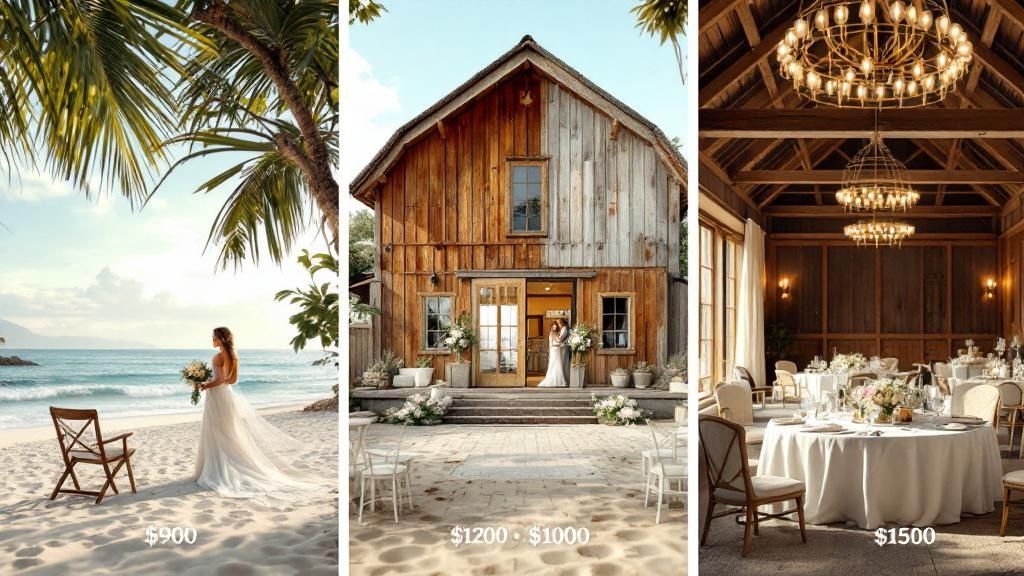
Ever notice how a cup of coffee costs way more in a big city than in a small town? The same exact principle applies to wedding DJs. Where you tie the knot has a huge impact on what you'll pay, and your venue's zip code is honestly one of the biggest factors in the whole equation.
It all boils down to simple economics. A DJ working in downtown Manhattan has to cover astronomical business costs—everything from equipment storage to gas and parking—that a DJ in a quiet Ohio suburb just doesn't. Those operating costs get baked right into their pricing. And it’s not just about the cost of living; it's also about good old-fashioned supply and demand.
Major cities are wedding magnets. With a constant stream of events, the best local talent is always in high demand. That competitive pressure allows experienced, sought-after DJs in major metro areas to charge a premium for their skills.
Why City DJs Cost More
The price gap between a big city and a small town isn't just random. When you understand what’s driving the difference, you can look at quotes with a much sharper eye.
Here’s a breakdown of why you'll see that price bump in urban areas:
- Higher Overhead: Think about it—gear storage, business insurance, vehicle maintenance, marketing… it all costs more in a major city. Those expenses are passed on to the client.
- Fierce Market Demand: Cities like New York, Los Angeles, and Chicago host thousands of weddings every year. This creates a massive demand for professional DJs, and there are only so many top-tier pros to go around.
- Competition Breeds Quality: You'd think more competition would lower prices, but it often does the opposite. To stand out in a crowded market, the best DJs invest heavily in five-star equipment, unique skills, and incredible marketing, which naturally increases their value and their rates.
A Quick Look at Regional Price Differences
So, what does this actually look like on a map? While prices are always shifting, there's a definite pattern you can count on. DJs on the East and West Coasts, especially in those sprawling metropolitan areas, are almost always going to be on the higher end of the price scale.
For budgeting purposes, a good starting point for a wedding DJ is somewhere between $800 and $2,500+. But remember, that's just a baseline. Location can easily swing that number up or down. A DJ in a major city will charge more than one in a small town simply because of different overhead costs and market demand.
On the flip side, you’ll typically find more wallet-friendly options in the Midwest and the South, particularly if you're outside big event hubs like Nashville or Austin. This isn't a reflection of quality! It's just a matter of local market conditions. That's why it's so important to compare any quote you get against local averages to make sure you're getting a fair deal.
And don't forget about travel fees! If your venue is out in the boonies or requires your DJ to drive a couple of hours, you should expect to see that added to the bill. This covers their time on the road, fuel, and maybe even an overnight stay. Always ask about travel costs upfront so there are no last-minute surprises. A big part of what you're paying for is also their gear, and our guide on getting the best sound for your wedding can give you a lot more insight into that piece of the puzzle.
What's Actually in a Wedding DJ Package?
When you first start looking for a wedding DJ, the quotes can feel a little all over the place. That's because it's not a simple one-price-fits-all service. Most DJs offer different packages, kind of like a menu at a restaurant, letting you pick and choose what makes sense for your big day.
Getting a handle on what's inside these packages is the secret to not overpaying. Let's start with the basics.
What Comes in a Standard DJ Package
Think of a "standard" or "essential" package as the foundation of your party. It’s got all the must-haves to get people on the dance floor and keep the energy up all night long. While every DJ is a bit different, here’s what you can generally count on being included:
- A Set Number of Hours: Most base packages will cover 4 to 6 hours of performance time. For most receptions, that’s the sweet spot.
- Professional Sound System: This means good, high-quality speakers that are right for your venue's size. Your music will sound crisp and clear, not like it’s coming from a busted car stereo.
- Wireless Microphones: Absolutely essential for toasts, speeches, and announcements. This way, Grandma in the back can hear every word without your Best Man having to shout.
- Basic Dance Floor Lighting: Usually a simple setup with a few colored lights. It’s just enough to signal that it’s time to party and create a fun vibe on the dance floor.
- The DJ/MC: You're not just getting a playlist-pusher. You're getting a professional Master of Ceremonies who will guide the evening, make announcements, and keep everything flowing smoothly.
This kind of package is perfect if your main goal is a fantastic dance party without a ton of extra frills. It nails the most important job: creating an incredible atmosphere with great music.
The image below gives you a quick snapshot of what you can expect to spend, how many hours that covers, and what it boils down to per hour. It’s a great reality check for budgeting.
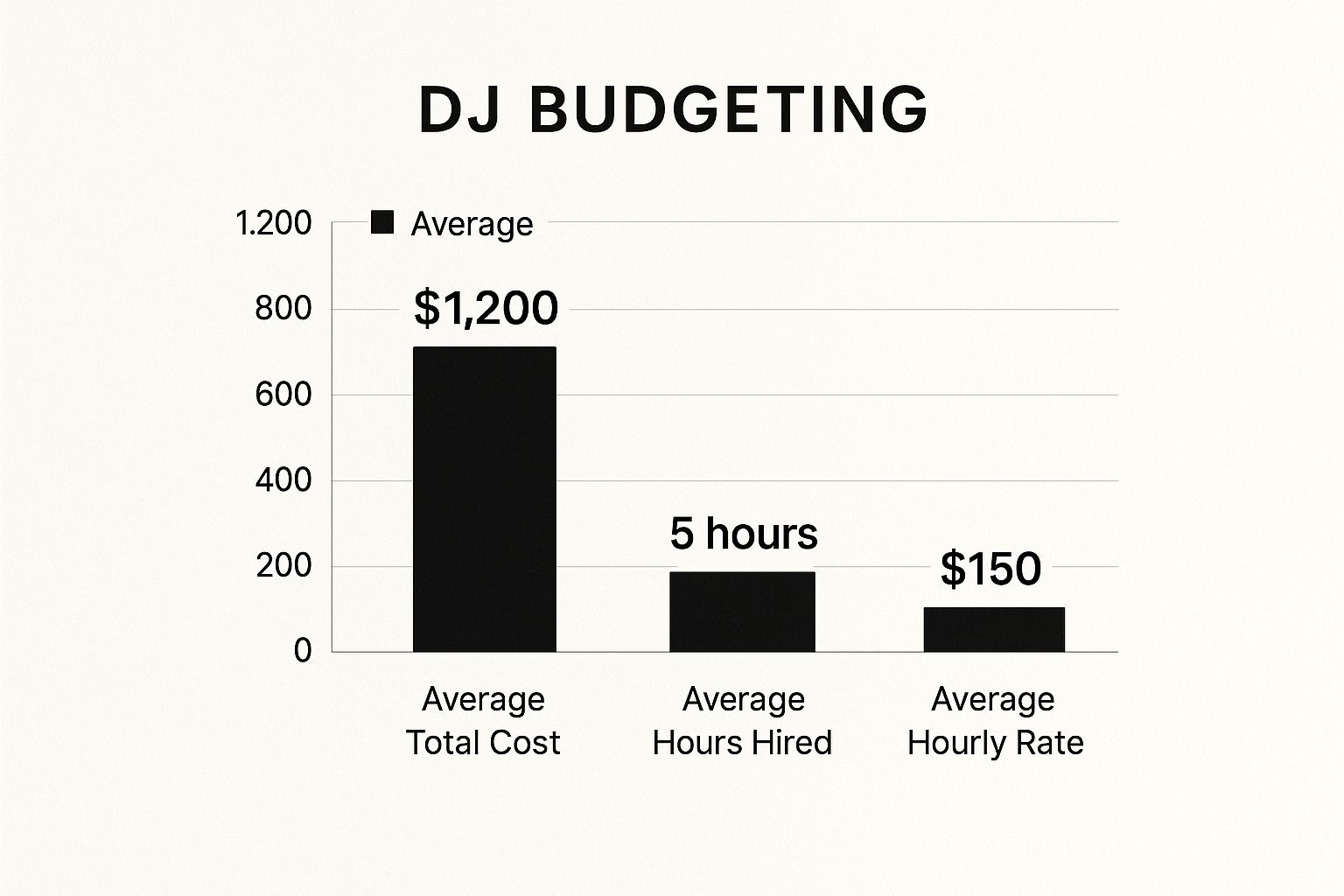
As you can see, while the total cost might seem like a big number, it covers a solid chunk of your wedding day, making the hourly rate feel much more reasonable.
Leveling Up: Premium Packages and Fun Add-Ons
So, you want to take your reception from a great party to a truly unforgettable experience? This is where the fun stuff comes in. Premium packages and à la carte add-ons are how you customize the vibe and really make it your party. These extras are what typically push the average cost of wedding dj services higher.
When you look at the national numbers, the average cost to hire a wedding DJ usually falls between $800 and $3,500. Most couples end up spending in the $2,500 to $3,000 range for a seasoned pro. A full-service DJ with a premium setup might run you $1,500 to $2,500 or more, and those offering luxury extras like custom lighting often start above $2,500. You can explore more about these pricing dynamics to see the full picture.
So, what are you getting for that extra money? Here are some of the most popular upgrades people go for.
When you're looking at DJ quotes, you'll see a lot of optional services designed to elevate your event. These add-ons are often bundled into higher-tier packages or can be purchased individually. Here’s a quick look at what some of the most common ones are and what they might add to your bill.
Comparing Common DJ Package Add-Ons
| Service / Add-On | Description | Average Added Cost |
|---|---|---|
| Ceremony Sound | A separate, smaller sound system and a lapel mic for your officiant to ensure guests hear your vows. | $250 – $500 |
| Uplighting | Lights placed on the floor around the room, aimed up the walls to wash them in your wedding colors. | $400 – $1,000+ |
| Custom Monogram | A projected light (called a "gobo") with your initials or wedding date, usually on the dance floor or a wall. | $200 – $400 |
| Photo Booth | A booth with props for guest photos. Often bundled with the DJ at a better rate than a separate vendor. | $500 – $1,200 |
| "Dancing on Clouds" | A special dry ice machine creates a low-lying fog effect for a magical first dance. | $300 – $600 |
Ultimately, knowing what’s standard versus what’s an upgrade is your superpower. It helps you read between the lines on quotes and decide where your money will make the biggest impact on creating the wedding celebration you’ve always imagined.
How to Save Money on Your Wedding DJ
Let's be real—weddings are expensive. But locking in an amazing DJ for your reception doesn't have to mean blowing your budget. With a few savvy moves, you can find a top-notch pro who gets your vibe and respects your wallet. It all comes down to being a little flexible and knowing where the real value is.
Honestly, the best first step is to think outside the traditional wedding box. The day and time of year you choose can be a goldmine for savings. DJs, just like venues, have their peak seasons. A Saturday in October is prime real estate, but a Friday or Sunday wedding often comes with a much friendlier price tag.
Be Flexible with Your Date
The absolute simplest way to cut costs is to sidestep peak demand. A professional DJ might knock 10-20% off their price just for booking them on a less popular day. Think about a Friday evening celebration or even a Sunday brunch wedding. These off-peak dates don't just save you money on the DJ; you'll likely see a discount from your other vendors, too.
This is a classic win-win. You get the same incredible talent for less money, simply because you're filling a spot on their calendar that might have otherwise stayed empty.
Smartly Negotiate Your Package
Most DJ packages are a starting point, not a final, take-it-or-leave-it deal. If a high-end package is loaded with features you don't really care about, don't be shy about asking if they can be removed for a better price.
For example, do you truly need a full-blown laser light show and a fog machine? If those extras aren't your thing, there’s no harm in politely asking to have them taken out of the package.
The trick is to negotiate based on value, not just cheapness. Figure out which services are non-negotiable for your big day, and work with the DJ to create a custom package that fits your priorities and your budget.
This approach shows the DJ you respect their work while also being a responsible spender. To walk into that conversation prepared, it helps to be super organized. Using a comprehensive wedding DJ checklist can help you pinpoint exactly what you need and what you can live without.
Think About Bundling Services
Lots of DJ companies are more like full-service entertainment hubs. They do a lot more than just spin tracks. You might find that your favorite DJ also offers:
- Photo Booths: A guaranteed hit at any reception, and often cheaper when bundled.
- Uplighting: The easiest way to completely change the feel of your venue with color.
- Videography Services: Some of the bigger entertainment companies have their own video teams.
By booking multiple services through one company, you can usually snag a much better deal than hiring everyone separately. It also makes your life way easier by giving you one point of contact for several key parts of your reception. It’s a smart, efficient way to make your budget go further and still get all the awesome features you've been dreaming of.
Why a Great DJ Is an Investment in Your Wedding
When you’re staring down a budget spreadsheet, it's so easy to view the DJ as just another line item. You start thinking, "How can I get this for the cheapest price possible?" I've seen it a hundred times, but that mindset completely misses the point. A professional wedding DJ isn't just an expense; they're a direct investment in how your entire reception feels and flows.
Think of your DJ as the director of your party. Honestly, they do so much more than just hit "play" on a Spotify playlist. A truly skilled DJ is your event's conductor, seamlessly blending the roles of Master of Ceremonies, timeline manager, and vibe creator into one crucial package.
More Than Just Music
You really see the value of an experienced DJ when things don't go perfectly to plan. What happens if Uncle Bob's toast goes on forever, the catering gets delayed by 15 minutes, or the dance floor suddenly feels empty? An amateur might freeze up. A pro? They adapt on the fly. They have a sixth sense for managing the energy and keeping your guests entertained, often fixing problems before you even know they're happening.
This knack for managing the night's momentum is what you're really paying for. They’re constantly coordinating with your photographer, the catering captain, and the venue manager to make sure every big moment—from the grand entrance to the cake cutting—happens without a hitch. If you're curious about how a pro structures an evening, take a look at our guide for creating a perfect wedding DJ timeline.
A great DJ’s job is to make your wedding feel effortless. They read the room, mix music that gets your specific crowd moving, and ensure the whole night unfolds beautifully. That's how the investment pays off—with a packed dance floor and memories that last.
In the end, while the average cost of a wedding DJ is a practical number for your budget, their real worth is measured in the flawless vibe of your reception. They're the ones who make sure the party is vibrant, fun, and totally stress-free for you and every single one of your guests.
Common Questions About Wedding DJ Costs Answered
Alright, so you've crunched the numbers and compared a few packages. Now you're in the home stretch, but a few nagging questions are probably bouncing around your head. This is totally normal! Let's clear up some of the most common questions couples have about wedding DJ prices so you can feel 100% confident in your choice.
How Far in Advance Should I Book My Wedding DJ?
My best advice? Aim to lock in your DJ 9 to 12 months before your wedding date. Seriously. The really great, in-demand pros get their calendars filled up a year or more out, especially for those popular Saturday dates in May, June, or October.
Booking early isn't just about snagging your first choice. It also means you lock in their current rates. This protects you from any price hikes that might happen if you wait until closer to the big day.
Do I Need to Tip My Wedding DJ?
While a tip is never required, it’s definitely a standard and much-appreciated gesture if your DJ rocked the house and made your night incredible. Think of it as a final "thank you" for keeping the energy high and making sure everything ran smoothly.
A good rule of thumb for a DJ tip is 10-20% of their total fee, usually handed off in cash at the end of the reception. And honestly, another tip they value just as much? A glowing online review. It helps their business immensely.
Are MC Services Usually Included in the Price?
For any true professional, the answer is almost always yes. A wedding DJ isn't just a "human jukebox"; they are also your MC (Master of Ceremonies). This is a massive part of the value they bring to your reception.
This means they’ll be the friendly, professional voice handling all the key moments—from the grand entrance of the wedding party to announcing the toasts, cake cutting, and first dance. But, and this is important, always double-check that MC duties are explicitly listed in your contract. This little step avoids any awkward surprises. For more on this, have a look at our complete list of questions to ask your wedding DJ before you sign on the dotted line.
What's the Real Difference Between a DJ and a Playlist?
This question gets right to the heart of what you're paying for. A playlist is just a list of songs. A great DJ is an entertainer, a crowd psychologist, and your event's director all rolled into one.
Here’s what a DJ does that a Spotify playlist just can't:
- Reads the Room: A skilled DJ is constantly watching the dance floor. Is that last song a dud? They’ll pivot on a dime and seamlessly mix into a track that pulls everyone back out. They feel the energy and react to it.
- Manages the Timeline: They act as your MC, making sure the entire evening flows perfectly from one event to the next without any awkward silences or lulls.
- Brings Pro-Grade Gear: You're not getting a couple of home speakers and an iPad. They bring professional, reliable sound systems and microphones to ensure everything sounds crisp and clear.
- Acts as a Problem-Solver: If a speaker starts buzzing or a mic dies during a toast, they have the backup equipment and know-how to fix it instantly. The party doesn't stop.
At the end of the day, a playlist is static and predictable. A living, breathing DJ is dynamic, ensuring your reception is a fun, stress-free, and totally unforgettable party.
Plan Your Event with 1021 Events
Ready to discuss DJ and MC options for your wedding? Based in Fort Atkinson, 1021 Events serves couples throughout Southern Wisconsin and Northern Illinois.
Explore our services, then check availability through our inquiry form.